Features

For those new to tech culture, or even just interested in how the industry and its many inventions work, the associated terminology can sometimes feel like an unknown, foreign language. But, like most things in life, when you remove the jargon and insert short, simple explanations for what things really mean, they become immediately less intimidating and more accessible to all.
The ScienceBlog tech nine is designed to give the less scientifically inclined a basic introduction to some of the industry’s more commonly used terms. This glossary will not guarantee that the reader speaks fluent techie overnight, but it is a useful conversation aid and gateway into the industry.
The name given to a fast growing, new or emerging company that has launched a product in response to a marketplace need or opportunity - think AirBnB, borrowmydoggy.com and Uber. Startup companies tend to rely on the backing of other more established businesses or investors to fuel early development.
2) Unicorn
Forget fantastical mystical horned horses, in the land of technology, the word is used to describe a startup company valued at over $1 billion. How do the two connect, you might ask? Well, one’s a mythical and much-sought after beast which countless authors have written extensively about, and the other’s a horse with a cone on its head. But, when you join the dots and think of them symbolically as rare (so rare, many see them as too good to be true), wonderful things, a picture emerges. For investors, unicorns are the ultimate business opportunity. Mention one in passing to a tech insider, and watch their eyes light up.
While more often spotted in the tech forests of Silicon Valley, Oxford University has its own unicorn in the shape of handheld DNA sequencer developer Oxford Nanopore, which was valued at £1.25bn after its recent £100m investment.
3) Tech cluster / innovation community
The ultimate power gathering, a tech cluster is the name given to a group of thriving tech companies, situated in close proximity to both each other and surrounding a renowned research university. The most famous example is California’s Silicon Valley, home to tech trailblazers’ eBay, Google, Facebook and Pixar, to name a few. Slightly lesser known and unfortunately named by comparison, the UK’s Silicon Roundabout, also known as Old Street Roundabout in East London, is growing rapidly and includes CrowdCube and Deliveroo.
Home to the top ranked university in the world, it is little surprise that Oxford is one of the most active tech clusters in Europe. The region is buzzing with innovators, entrepreneurs, and investors, with a rapidly increasing level of activity.
4) Spinouts
In the world of university innovation, a spinout is a company that has university research underpinning its core product of service. Markedly different to a regular startup, spinouts require a strong bond with the academic community to succeed and significantly more resources and time to get to market, but the overall chance of success is much higher and the impact of such companies can be literally world-changing. A great example of a successful spinout is Oxford University’s very own Oxbotica, who develop next generation autonomous vehicles.
Oxford University Innovation (OUI), the university’s research commercialisation company, is one of the most impactful offices of its kind, worldwide. In 2016, it set a European record for spinout generation, and will this year celebrate 30 years of operation, during which it has helped launch over 150 companies based on Oxford research.
5) Incubator
In the same way that hospital incubators protect babies, business incubators offer emerging entrepreneurs a safe space to grow, develop and test their abilities, until they are strong enough to fly solo. In the tech world, the term describes a flourishing business that supports the development of new enterprises by providing services and outreach support that make them stronger. Examples include, training, office space and resource.
Incubators, such as the one situated at OUI, play an increasing role in university life. At the start-up incubator, rising entrepreneurs receive bespoke support in a protected environment, where they can then benefit from learned experience, expert training and even financial support.
Not to be confused with the other, university-specific VC, venture capital describes a type of enterprise funding given to new or developing companies by more established, financially fluid organisations. Investors look at a chosen business and weigh up its potential, in terms of the number of employees and revenue generation, in return for financial equity. For a lot of emerging and startup businesses, venture capital is essential to their survival in the early stages of operation.
Although many dream of getting rich overnight, mindful investors know that in business, sustainability is the key to success. A counter balance to the short term outlook of VC, patient capital plays the long game and has a much longer view on returns from investments. This sort of investment has become crucial to supporting spinouts, which have a much longer development cycle than a traditional startup.
An example of patient capital is Oxford Sciences Innovation (OSI), which manages the university venture fund of Oxford University. Focused entirely on supporting spinouts, it is the largest such fund in the world.
8) Seed Funding
As the name implies, seed funding is financial support provided right at the start of a company’s lifecycle, to help them grow. Increasingly seen as a way to get companies off the ground, seed investors are typically high-net worth individuals (also known as angel investors) or small, dynamic funds focused on this pivotal early stage.
9) Stealth Mode
Keeping a secret, a secret, is not always easy, and a business in “stealth mode,” is essentially working to protect a big one of its own. The term is often used when a company wants to withhold information from competitors or to avoid sharing details about a new development. It is particularly common for startup companies to work this way, ahead of launch, while they test the water and build their brand and product identity.

“Siri, will it rain today?”, “Facebook, tag my friend in this photo.” These are just two examples of the incredible things that we ask computers to do for us. But, have you ever asked yourself how computers know how to do these things?
Machine learning is not a new concept but it is constantly evolving and the potential benefits of its capability are increasing by the second. A form of artificial intelligence, it provides computers with the ability to learn through experience, without being explicitly programmed to perform a task. As the computer receives more data, its algorithms become more finely tuned and over time it begins to recognise patterns and solve problems on its own - without the use of a programme. The more finely tuned the algorithm, the more accurate the computer can be in its predictions.
In their latest animation, Oxford Sparks, the University of Oxford’s digital science portal, outline how researchers have combined the power of statistics and computer science, to build algorithms capable of solving complex problems more efficiently while using less computer power.
Using machine learning this way is already informing medical diagnosis and strengthening the speed and capability of smartphones and social media, but its scope to revolutionise the world seems limitless.
View the video and learn more about the power of machine learning here:

Oxford students have helped to put on a multi-lingual poetry writing workshop at Oxford Spires Academy.
Pupils at the state secondary school in East Oxford were encouraged to express themselves through poetry in different languages.
The workshop was a collaboration between Oxford University’s Creative Multilingualism research project and Oxford Spires Academy’s poetry hub. It was led by award-winning Iraqi poet, Adnan Al-Sayegh, who has lived in exile since 1996 and been based in the UK since 2004.
‘One of the main aims of the Creative Multilingualism project is to show that the linguistic diversity in UK schools, and the UK in general, has tremendous potential both in terms of fostering productive communication across cultural groups, and in terms of creative thinking and writing,’ says Professor Katrin Kohl, director of the project.
‘These workshops encourage students to be creative in their own language and across languages.’
32 languages are spoken by children at Oxford Spires Academy, and the majority do not have English as their first language.
Students from Syria, Algeria, Tanzania, Pakistan and Sudan heard Mr Al-Sayegh speak about the importance of poetry, which he considers to be a basic human need.
He described how poetry is not restricted to the written word but is found in music and on the street, with the power to build bridges between people, as having a poetic heritage is something shared by all cultures.
A more detailed summary can be found here.
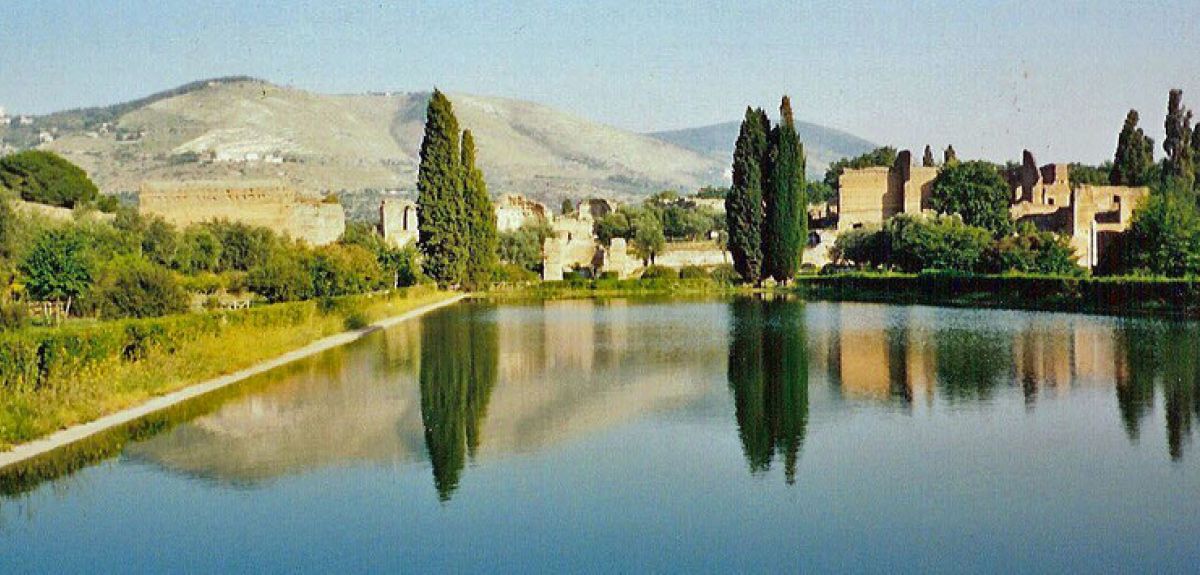
The first of Oxford University’s Slade Lectures for 2017 will be held tomorrow (18 January).
The Slade Lectures are annual lectures about art history. This year’s speaker is Caroline van Eck, who was appointed as Cambridge University’s first established professor of the history of art in October 2016.
Her public lectures will be held every Wednesday at 5pm in the Mathematical Institute on Oxford’s Radcliffe Observatory Quarter, between 18 January and 8 March.
'These lectures, with their starting point in artworks held here in Oxford in the Ashmolean Museum, promise to be intellectually enlivening as well as visually rich, and will be of interest to anyone who cares about how objects work their effects on the people who collect and view them,’ says Craig Clunas, Professor of the History of Art at the University of Oxford.
‘I am looking forward to these public and open lectures immensely, and look forward too to welcoming their audience to a highly stimulating series.'
The title of the lecture series will be ‘the material presence of absent antiquities: collecting excessive objects and the revival of the past’.
The Slade Lectures were founded in 1869 after a bequest from the art collector Felix Slade in 1869.
John Ruskin gave the first series of eight public lectures in 1870. In his inaugural lecture he announced that he was setting up the Ruskin School of Drawing, which is now the Ruskin School of Art.
For art history fans, here is Professor van Eck with a preview of this year's lectures:
'What happens when we consider the great changes that transformed the European art world around 1800 not, as is usual, from the perspective of the human actors or the institutions involved but from that of the objects, their presence, agency and materiality?
Starting from the outsize candelabra Piranesi made from Roman fragments excavated at Hadrian's Villa, two of which are now in the Ashmolean Museum, this year the Slade Lectures will trace the issues of authenticity, agency, and living presence these truly excessive objects raise, as well as the anthropological and psychological ramifications of the intense emotional investment by patrons, artists and collectors in Graeco-Roman objects.
Starting from the biographies of these candelabra and related artefacts, these Lectures will argue that a material turn took place in the decades around 1800 that affected both making and collecting art, as well as the origins of the major European museums.'
The full list of lectures is available here.
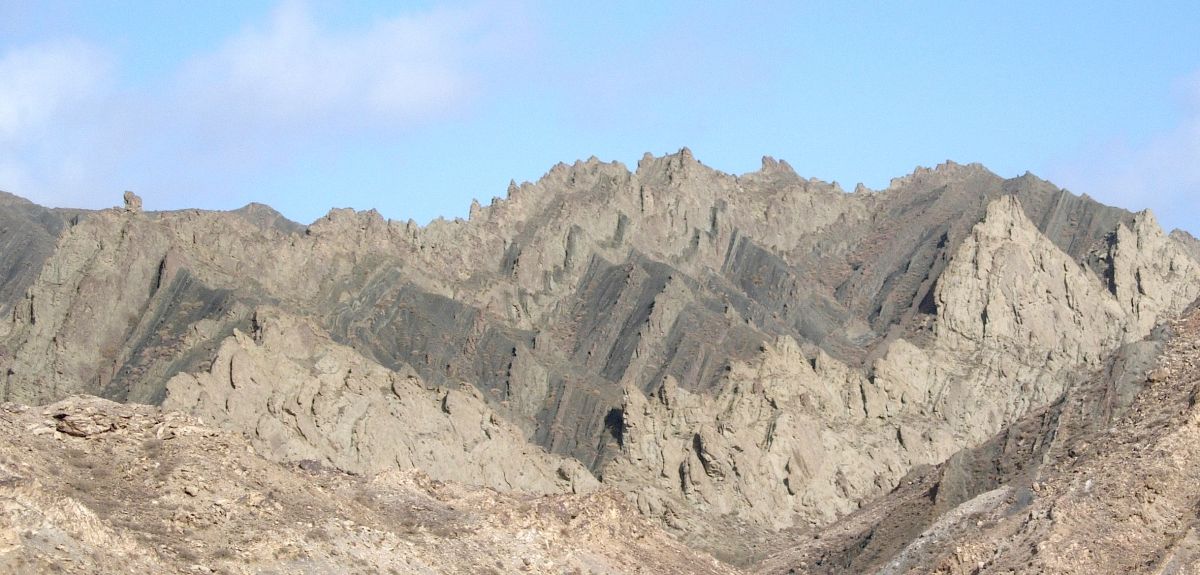
Geochemical and biological research offers academics a window into earth history, enabling them to piece together events that occurred before records began. Much of our understanding of past climate change is based on geology, in particular the study of sedimentary rocks deposited in the oceans.
The paper that first recognised and defined Oceanic Anoxic Events (OAEs), written by Oxford professor Hugh Jenkyns and an American colleague, is considered a seminal contribution to geological history, that led the way to numerous studies on the effects of oxygen starvation in the oceans.
The discovery of organic-rich sediments, often described as black shales, at numerous deep-sea drilling sites during the early 1970s, led to the wider acknowledgement of the oceanic impact of climate change. At certain intervals during the Jurassic era, huge bouts of volcanic activity triggered increased concentrations of atmospheric carbon dioxide. This then caused a knock-on greenhouse effect, raising the sea-surface temperature and reducing oxygen levels in large parts of the ocean.
At the same, oceans benefited from increased nutrient levels, and as a result marine algae and bacteria bloomed. As they died, these organisms were preserved in sediments that formed on the sea floor and over time changed into source rocks for oil. It is these phenomena that illustrate the causes and effects of OAEs.
New research, published in Nature Geoscience, has for the first time examined the impact of this type of sediment deposition in lakes. The study demonstrates that lake environments responded in a similar way to climate change, developing the same anoxic conditions as in the oceans.
Led by Earth Sciences post-graduate student Weimu Xu, the work offers insight into how environmental factors have affected lake formation throughout the ages. Weimu and the team studied sediments from one of the largest lakes in Earth history - double the size of England and three times the size of Lake Superior - the largest lake (in surface area) in the world today. This ancient lake formed rapidly in the Sichuan Basin, China, as a result of Toarcian (Early Jurassic) climate change, about 183 million years ago.
Weimu spoke with Science Blog about the study’s key findings and what they can tell us about climate change today.
What is the key finding that you would like people to take from this study?
The extreme effects of past climatic changes are not limited exclusively to oceans. By dating the lake sediments to the Early Jurassic (Toarcian) period, we were able to show that large lakes formed and were affected in the same way as oceans during an OAE.
As the climate warmed, the continents experienced increased rainfall, creating lake reservoirs, which essentially acted like mini-oceans. Lake organisms became more abundant, drawing-down massive amounts of carbon dioxide from the atmosphere, which was eventually deposited into sediments. Overtime, these sediments became source rocks for oil.
Lake environments represent their own unique challenges. Did you encounter any specifically?
The biggest challenge for us was establishing the age of the sediments found in the Sichaun Basin, and proving that they were of similar age to those that formed in the oceans during the Toarcian OAE. The wealth of organic matter found in marine environments makes it quite easy to date an event, by basing it on a fossil’s geological age. But lakes do not have such fossils, which makes it much harder to determine the age of the sediments found.
A study of this nature involves a massive amount of work. How did you manage such an extensive undertaking?
Fortunately I worked with a great team. This work was led by myself, co-designed by M. Ruhl, H.C. Jenkyns and S.P. Hesselbo and involved a total of 11 people. The project is a great example of collaborative research.
We used three distinct methodologies, which would be impossible for any one researcher to master. Colleagues from the University of Durham applied radio-isotopic dating to establish the age of the sediments and colleagues from the British Geological Survey studied the pollen, spores and algae preserved in the sediments. Finally, to give us even more detail to support the age of the sediments, together with colleagues from the University of Bristol and at Shell Global Solutions International B.V., we applied stable carbon-isotope to analyse the sediments, plant and algae remains. These varied techniques convincingly showed that the sediments found, had formed at the same time as the Toarcian OAE.
We were fortunate to be able to partner with experts in these three fields, and of course our industrial partner Shell.
How long did the research take to conduct?
The study lasted from the first sampling trip in November 2013 to completion of this manuscript in September 2016. We also had to factor in time to get permission to publish the findings, from the oil companies providing the data.
Are there any long-term impacts associated with your findings?
There are definite links between the climatic event identified in the Toarcian and present-day global warming. A better understanding of past climate systems could help predict environmental and ecological changes in a future greenhouse world. While the lake we studied existed in the Early Jurassic period, there are lakes today in African and British Columbia for example, that have been affected by global warming. They are becoming more and more anoxic and some are losing fishery stocks as a result. People fixate on warmth, but anoxia goes hand in hand with warmth.
There’s a certain irony in the fact that the conditions which created oil and gas deposits millions of years ago are being recreated much more rapidly by burning of these fossil fuels.
How would you like to see this work used in the future?
Our study directly links lake formation and sediment deposition to the Toarcian OAE. By studying other lake sediments that were around at that time, researchers could establish if they also link to this event. For a better understanding of major climatic change in other intervals of the Earth’s history, people can also look and see if there were other major lake reservoirs that acted similarly.
It would also be useful to understand the impact, not only of carbon deposition, but carbon burial, during times of major climatic change, and how that impacted coal formation. This is something I am very keen to focus on next.
The paper, Carbon sequestration in an expanded lake system during the Toarcian oceanic anoxic event, can be viewed here.
- ‹ previous
- 106 of 253
- next ›
 What Louise Thompson’s campaign tells us about the national maternity crisis
 Celebrating 25 Years of Clarendon
  Learning for peace: global governance education at Oxford
  What US intervention could mean for displaced Venezuelans
  Setting the agenda for the next century of quantum
 10 years on: The Oxford learning centre making an impact
 Mapping the Moon: the world’s first lunar atlas goes digital
  Oxford and The Brilliant Club: inspiring the next generation of scholars
 New course launched for the next generation of creative translators
 The art of translation – raising the profile of languages in schools