Features
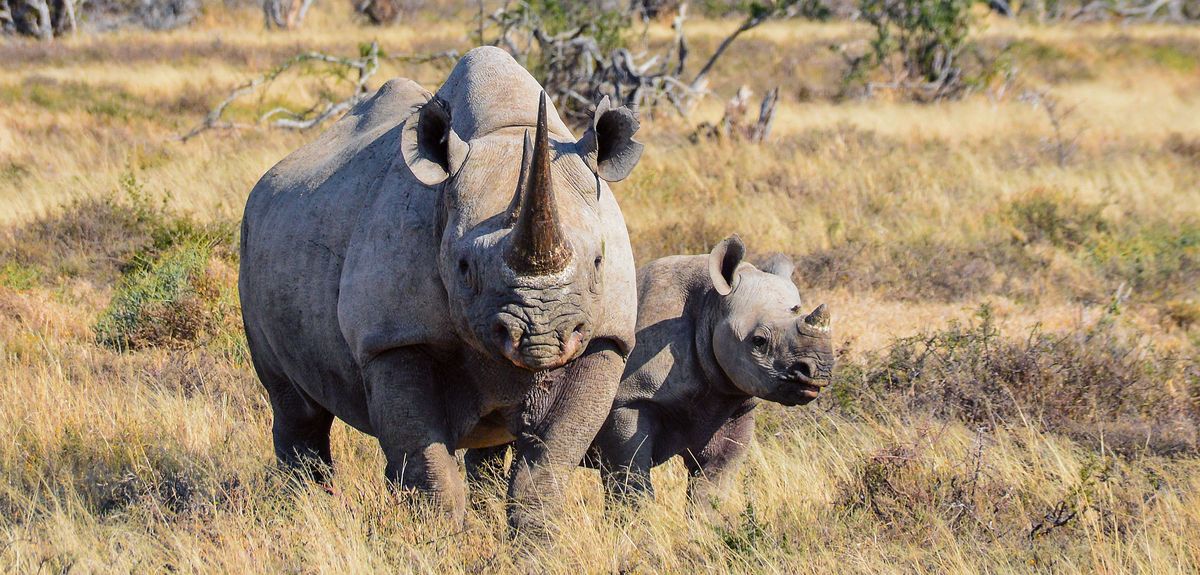
A new study involving researchers from Oxford's Wildlife Conservation Research Unit (WildCRU) has revealed that the hunting and trapping of wild animals – for meat, medicine, body parts, trophies or live pets – is driving an 'alarming' number of species to extinction and in the process posing a food security threat for millions of people across Asia, Africa and South America.
The study, led by Oregon State University and published in the journal Royal Society Open Science, used data collected by the International Union for the Conservation of Nature to identify more than 300 species of mammal under threat primarily because of overhunting. These include large animals such as the black rhinoceros, grey ox and Bactrian camel, as well as several species of bat and 126 species of primate, from the lowland gorilla and chimpanzee to a number of lemurs and monkeys.
Professor David Macdonald, Director of WildCRU, who worked on the study with research associate Guillaume Chapron, said: 'There are a plenty of bad things affecting wildlife around the world, and habitat loss and degradation are clearly at the forefront, but among the other things is the seemingly colossal impact of bushmeat hunting. You might rejoice at having some habitat remaining – say, a pristine forest – but if it is hunted out to become an empty larder, it is a pyrrhic victory.
'The number of hunters involved has gone up, and the penetration of road networks into the remotest places is such that there is no refuge left. So it becomes commercially possible to make a trade out of something that was once just a rabbit for the pot. In places like Cameroon, where I have worked, you see flotillas of taxis early in the morning going out to very remote areas and being loaded up with the bushmeat catch and taken back to towns.
'In WildCRU's fieldwork in Cameroon, we found that far from all the bushmeat was consumed for subsistence – much was sold in large cities, being eaten as a luxury by people reminiscing about a rural past. In the face of impending extinctions, that is an intolerable indulgence.'
Crucially, the study links wildlife conservation to human wellbeing through the lens of food security – people across much of the globe depend on wild meat for part of their diets. The study authors wrote: 'An estimated 89,000 metric tons of meat with a market value of about $200 million are harvested annually in the Brazilian Amazon, and exploitation rates in the Congo basin are estimated to be five times higher.' Loss of these mammals, say the authors, leads not only to an empty landscape and a ‘tragedy’ for conservation, but to an empty larder for the millions of people depending on wild meat for food.
Lead author Professor William Ripple of Oregon State University added: 'The illegal smuggling in wildlife and wildlife products is run by dangerous international networks and ranks among trafficking in arms, human beings and drugs in terms of profits.'
Do you have a box hidden deep in the attic or under the bed that holds your great-grandfather’s First World War medals? Or your grandma’s diaries from 1914-1918?
If so, a team at Oxford University wants you to bring them to a 'roadshow' in Oxford this Saturday (12 November). An Oxford podcast explains what happens at a roadshow.
At the Oxford at War 1914-1918 Roadshow, this kind of material will be scanned and made part of an online memorial which is shared worldwide to commemorate the centenary of the First World War.
Historians and digitisers from the University of Oxford and the International Society for First World War Studies will be on hand to talk to you about your material.
You don't need to have material to share to attend - there will be films, exhibitions, and talks throughout the day.
Digitisation saves precious memorabilia from being lost. Putting stories and images on the Internet makes them available to people world-wide; researchers, schools, family historians, cultural organisations, and others can explore them now and in the future.
Alun Edwards of Oxford University's IT Services, who runs the project, said: 'You've seen Antiques Roadshow - well, this is the same without the valuation. Our experts will talk to you about your stories and what you have brought in. They'll record the details, and then our digitisers will photograph your items so we can upload them to the website.
'Please just turn up on the day, there will be queues but also exhibitions and films to divert you. And if you would like to make an appointment please ring 01865 283686 or email [email protected].'
Dr Stuart D Lee of IT Services and the English Faculty at Oxford University said: 'The Oxford at War project has successfully unearthed hidden treasures held by members of the public that add further to our knowledge of the war, demonstrating how the new technologies can release such resources and engage the public in University research.
'We hope that the city will allow us to explore in depth the effect on one area of the country.'
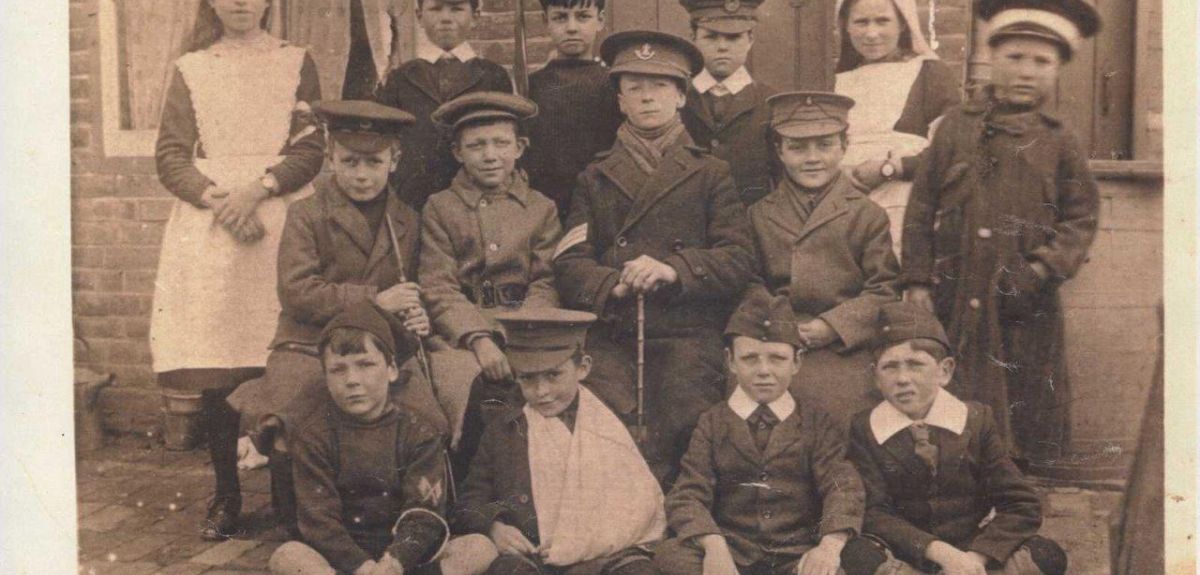
Submissions to the archive so far have led to some interesting new discoveries. They have even brought families together! Tony Godfrey submitted the photograph above to the archive a few years ago. He said: 'The sergeant in the middle is my father, Dan Godfrey. In the front row, far right, is his next door neighbour Son Ryman, and the two nurses are probably his two sisters Win and Maggie. Dad told me that if anyone misbehaved he would put them in prison!'
When the Oxford team published this photograph on the internet, they were contacted by some family members of Tony's - who he had no idea existed. They were put in contact with each other. This is something that has happened quite a few times for the project team, showing the power of sharing family history online.
Oxford University IT Services began this First World War family history initiative when it asked people across Britain to bring letters, photographs, and keepsakes from the war to be digitised for The Great War Archive in 2006. This pilot project was funded by Jisc, the UK educational technology innovator. Its success encouraged Europeana to form a partnership with the University of Oxford to roll out the initiative across the whole of Europe.
The Oxford at War 1914-1918 Roadshow is a free event, open to all on 12 November 2016 11am-4pm at IT Services, 13 Banbury Road, Oxford.

Oxford University Museums and experts from the Saïd Business School are teaming up for the third instalment of their highly successful Oxford Cultural Leaders programme, which will take place from 26 to 31 March 2017.
The programme has been developed as a response to the clear message from governments across the world that cultural organisations need to look beyond the state for their income, demonstrating their commercial acumen and ability to deliver successful new business models.
Oxford Cultural Leaders addresses the need for cultural organisations to reinvent themselves as businesses, albeit not-for-profit, with entrepreneurial ways of thinking and behaving, by developing a cadre of leaders who are able to skilfully and confidently tackle these challenges.
'Future leaders in the cultural sector will need to develop the confidence to think about their organisations as sustainable entities,' says Tracy Camilleri, Director of the Oxford Strategic Leadership Programme at the Saïd Business School. 'This will require new skills and approaches – some learned from different sectors and disciplines. The Oxford Cultural Leaders Programme in my view provides a powerful platform for the development of this shared future.'
'Having access to expertise from across the cultural and business sectors has enabled Oxford to develop a programme that is unique within the museum and cultural sectors internationally,' says Lucy Shaw, Director the Oxford Cultural Leaders programme. 'The first two programmes successfully brought together dynamic leaders in an environment which encourages experimentation and innovation.'
Anette Østerby, Head of Visual Arts at the Danish Arts Council, has previously attended the programme. She says: 'What surprised me most was the programme's ability to suspend the participants’ status issues and positioning and create a trusting, open, generous and sharing environment between us. It allowed us to work really well together, and this did generate some incredible moments of co-creation.'
The programme faculty comprises of cultural sector leaders and business school experts including the Directors of Oxford University’s Pitt Rivers Museum and Ashmolean Museum, the Executive Director of the Royal Shakespeare Company, and the Director General of the Imperial War Museum.
Participants will stay at Oxford’s Pembroke College. The deadline for applications is 5pm on 4 January 2017. More information about the programme and how to apply is available on the website.
In a guest blog, Kimberley Bryon-Dodd from the Nuffield Department of Clinical Medicine, highlights the work being done to combat growing malarial drug resistance.
Global efforts to try and treat and eradicate malaria are being hampered by increasing resistance of the disease-causing Plasmodium parasite to anti-malarial drugs.
A new study led by the University of Oxford has identified genetic markers linked to resistance to the anti-malarial drug piperaquine. This new information can be used as a tool to identify areas where resistance is emerging and where current treatment strategies are likely to fail.
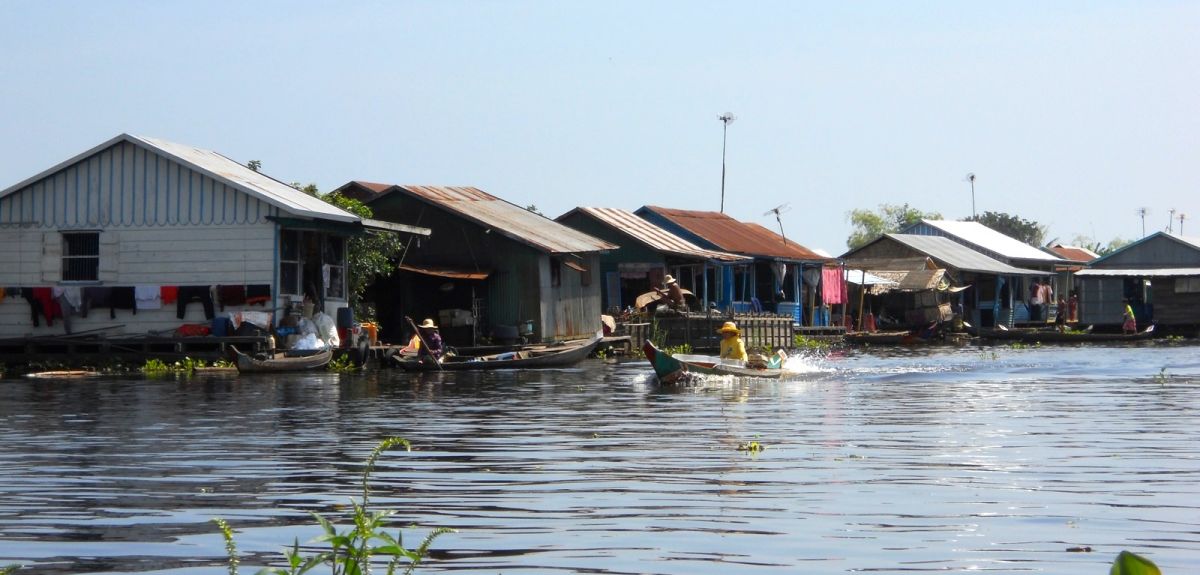
The international collaboration, including researchers jointly from the Wellcome Trust Centre for Human Genetics and the Wellcome Trust Sanger Institute, carried out a genome-wide association study on approximately 300 Plasmodium falciparum samples from Cambodia to study the genetic basis behind piperaquine resistance.
Piperaquine is used in combination with another anti-malarial drug, artemisinin, as a recommended frontline malaria treatment in many areas of the world. With parasites becoming increasingly resistant to artemisinin, increasing resistance to piperaquine as well could become a major public health problem.
Dr Roberto Amato, lead author of the study said: ‘Our findings provide a tool to monitor in a rapid and cost-effective way the spread of resistance, ultimately helping public health officials deploying the most effective therapies.’
By studying the genome of the parasites infecting patients who were not responding to treatment, the scientists identified two markers linked with piperaquine resistance. One way that anti-malarial drugs can work is by targeting the biological process that allows parasites to digest haemoglobin in the red blood cells; a family of proteins called plasmepsins plays a key role in this process. The scientists found that parasites with extra copies of the genes encoding two specific proteins of the plasmepsin family were more likely to be resistant to piperaquine. A second genetic marker linked with resistance was found to be a mutation on chromosome 13.
Professor Dominic Kwiatkowski, director of the Centre for Genomics and Global Health, and a lead author on the study, said: ‘These findings provide the tools needed to map how far this resistance has spread, looking for these molecular markers in parasites in Cambodia and neighbouring countries. This will allow national malaria control programmes to rapidly recommend alternative therapies where possible and where needed, enhancing treatment for patients, and helping towards the ultimate goal of eliminating malaria.’
The results of the study are published in the journal Lancet Infectious Diseases.
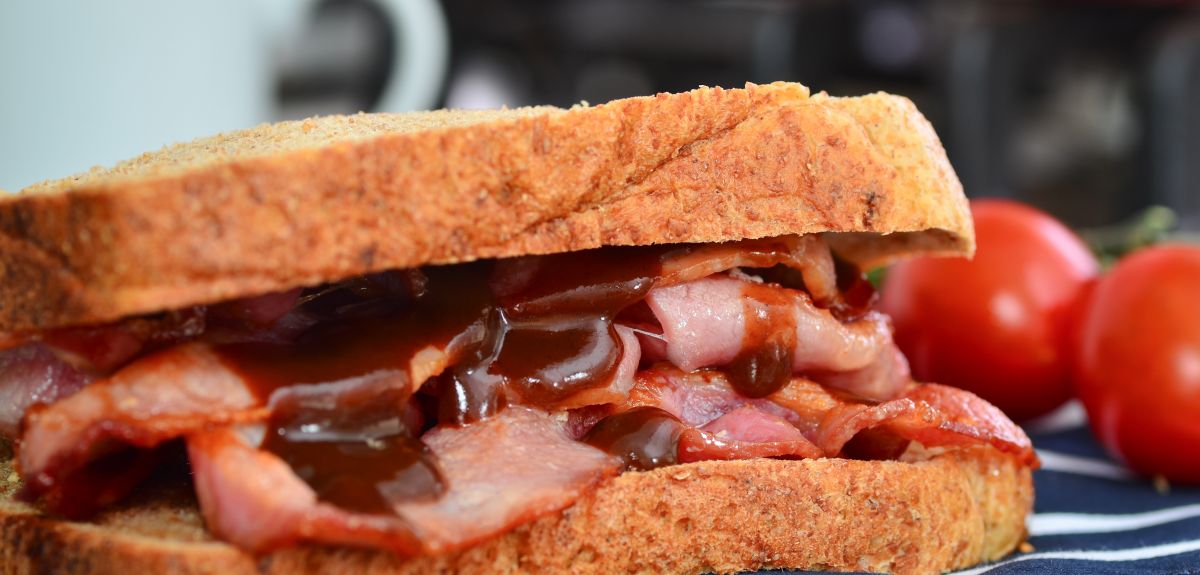
In the latest Oxford Sparks podcast, Oxford statistician Dr Jennifer Rogers explores the numbers behind recent alarming headlines linking processed meat with bowel cancer.
As podcast host Emily Elias notes, it was a bad day for meat eaters when the news broke, with The Sun opting for the headline 'Banger out of order – sausages and bacon top cancer list'.
Dr Rogers, Director of Statistical Consultancy at Oxford and a member of the Department of Statistics, says: 'You wouldn't believe how many maths teachers have said to me that bacon is banned in their house because of this 18% increase in bowel cancer. People just aren’t eating it anymore. I get so many people say to me, "Do I actually have to be worried?"'
The worries stemmed from a report released by the World Health Organization. Last year, bacon made its way on to a list that also includes arsenic, asbestos, alcohol and tobacco because scientists found a 'statistically significant' increased risk of getting bowel cancer.
Dr Rogers says: 'All "statistical significance" does is tell us whether or not something is a risk. It doesn’t really tell us anything about what that risk is – how big it is or how it affects us. There were lots of headlines saying that because bacon is on the same list as smoking that bacon and smoking were now just as risky as each other in causing cancer. And that is not true.'
Mass-produced factory bacon is made by injecting salty water and chemicals, including nitrates, into pork belly before it's cured.
Dr Rogers adds: 'If we look at lung cancer and smoking, for every 400 people we would expect four people to get lung cancer anyway, even without smoking. If you look at people who smoke 25 or more cigarettes every day, that goes up to 96 in every 400 people.
'Now compare that to what we get for bacon. Bowel cancer affects just over 6% of the population. So for every 400 people, you'd expect about 24 people to get bowel cancer anyway. Eating 50g of bacon every day increases this risk by 18%, which means if you were to take 400 people all who ate bacon every day, you would now expect 28 of those to get bowel cancer – an increase of four people in every 400, compared with 92 in 400 for smoking.
'So even though they both may cause cancer, to say they are both as risky as each other is probably pushing it a little too far.'
We should also note, says Dr Rogers, that people who eat lots of processed meat are perhaps less likely to live healthy lifestyles in general, which may contribute to the increased risk of bowel cancer. That's one of the problems with drawing conclusions from observational studies, as opposed to strictly controlled clinical trials, she adds.
While the WHO report did cause bacon sales to suffer a short-term hit, things seem to have recovered since the more measured reality around the initially startling headlines came to light.
Dr Rogers, who has her bacon sandwiches with red sauce, no butter and toasted bread, concludes: 'I think that sometimes numbers and percentages can be hard to get our heads around and it's easier just to say, "I'm not going to eat bacon."
'I was recently asked to comment on something else that had been added to the "gives you cancer" list – drinking really hot drinks. This time round, the newspapers were contacting statisticians before they wrote their headlines and articles because they'd learned a lesson from the bacon story.
'It turned out that you needed to be drinking really extreme temperatures of mate tea in South America – not the temperatures that we have our hot drinks at.
'It would have been really easy for the newspapers to say that drinking hot drinks gives you cancer – and that would have caused an uproar.'
- ‹ previous
- 113 of 252
- next ›
 Learning for peace: global governance education at Oxford
  What US intervention could mean for displaced Venezuelans
  Setting the agenda for the next century of quantum
 10 years on: The Oxford learning centre making an impact
 Mapping the Moon: the world’s first lunar atlas goes digital
  Oxford and The Brilliant Club: inspiring the next generation of scholars
 New course launched for the next generation of creative translators
 The art of translation – raising the profile of languages in schools
  Opening a window into the quantum world
 Tracking resistance: Mapping the spread of drug-resistant malaria