Features
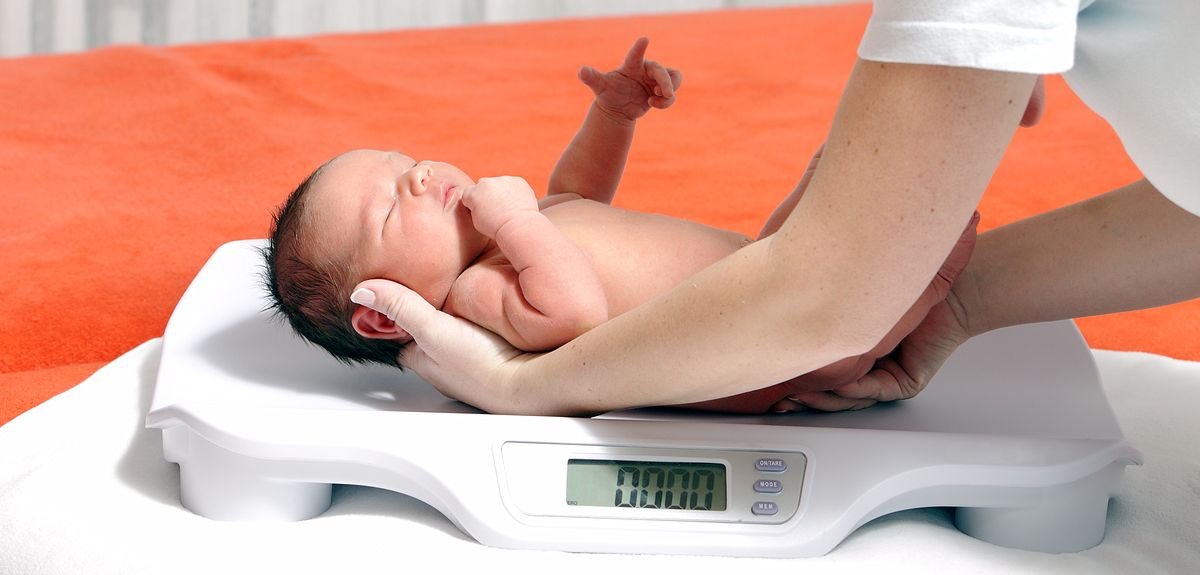
In a guest post for Science Blog, Dr Emma O'Brien, Public Engagement and Communications Officer in the Radcliffe Department of Medicine at Oxford, writes about a new study looking at how a baby's birthweight can be used to predict its future health.
Do you know how much you weighed when you were born? From that first weigh-in moments after birth, it's possible to predict your future adult health. And when it comes to disease risk in later life, it's best to be average – babies that are larger than average are at an increased risk of diabetes, while small babies are at a higher risk of both diabetes and heart disease. The reasons for this are complex, but researchers at the University of Oxford have perhaps found the biggest part of the puzzle. It's in your genes.
In a global study involving 160 researchers and 150,000 DNA samples, scientists have found that some of the variation between babies' birthweights can be traced back to DNA differences in 60 regions of the genome. For any given antenatal ward, genetic variations between babies account for about one in six of the variations in birthweight – that's about the same impact on growth as maternal smoking or obesity.
But these genetic differences don't just contribute to birth weight. There is significant overlap between the DNA variations that combine to influence growth in the womb and the pattern of genetic differences that conspire to increase the risk of diabetes, high blood pressure and heart disease in adult life. The team, led by Professor Mark McCarthy at Oxford's Wellcome Trust Centre for Human Genetics and Dr Rachel Freathy at the University of Exeter, showed that these genetic factors were acting through a series of shared processes, including those linked to metabolism, to influence growth in the womb and disease risk in adulthood.
Until now, the link between birthweight and disease risk was explained, at least in part, by the 'fetal origins hypothesis'. This theory suggests that the relationships between early growth and later disease result from the long-term effects of exposing an individual to too little or too much nutrition in the womb. These early challenges are thought to trigger a series of changes in the 'set-up' of the metabolic profile of the body, which increase disease risk in adulthood. However, this latest genetic study suggests that the link between birthweight and disease in adult life is triggered at conception.
Professor McCarthy says: 'These genetic findings provide vital clues to the processes that link growth in the womb and risk of diabetes and heart disease as an adult. Take, for instance, variations in genes that lead to reduced insulin levels in the body. Insulin is an important hormone controlling growth in early life, so low levels can hamper development in the womb. Years later, the very same genetic variations mean the body doesn't have enough insulin to deal with the sugar we eat, leading to diabetes. It's going to be really important that we delve into all these processes in the hunt for prevention and treatment strategies.'
The picture gets more complex when we consider the impact of the mother's genes on her baby's growth – after all, they share 50% of their DNA, and it's the mother's genes that dictate the gestational environment. Could a baby's risk of disease in adulthood actually be driven by the shared maternal genes exerting influence on conditions in the womb? 'It's a bit of both,' says Professor McCarthy. 'While both mother and baby's genes play a role in influencing birthweight and subsequent disease risk, it's the child's genes that have the biggest impact.'
Diabetes and heart disease are major public health challenges, and at the heart of this research is the desire to better understand the mechanisms underlying their development. This is basic research, but it's fundamental to developing improved strategies for the prevention and treatment of these conditions. Will this research impact clinical care? If the foetal origins hypothesis were the complete picture, then we'd expect improvements in antenatal care and reduction in cases of intrauterine deprivation to help alleviate the rising prevalence of diabetes and related conditions. But this latest genetic study indicates that, however desirable antenatal care improvements are in their own right for mother and baby, they may only have a modest impact on health in later life. We will need to find other ways to prevent the seemingly unstoppable rise in these conditions.
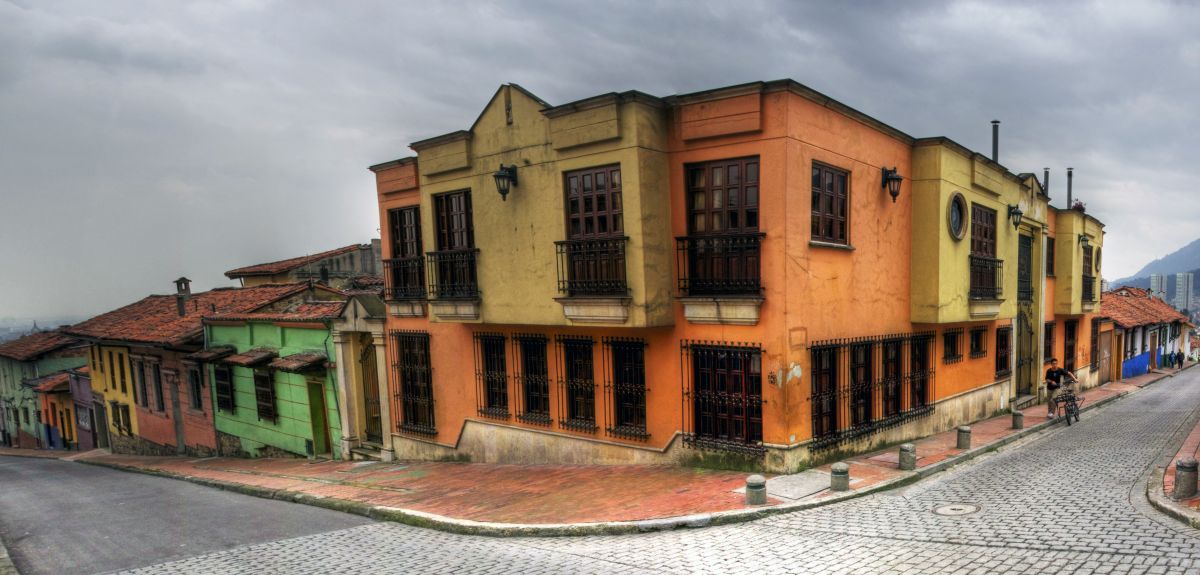
Colombia's government and the Revolutionary Armed Forces of Colombia (FARC) rebel group recently reached a peace agreement, after four years of formal negotiations.
But last week, the Colombian people voted narrowly to reject the deal. One of the reasons for this was that some wanted tougher sanctions against FARC.
FARC have now come out and said that they remain committed to peace. The government has declared that the bilateral ceasefire will hold at least until the end of this month.
Dr Annette Idler is Director of the Changing Character of War Programme and an expert on Colombia. She explains what we should expect to happen next:
"Shortly after the announcement of the results, both President Juan Manuel Santos and FARC leader Timochenko addressed the public. Santos emphasized that the cease-fire and end of hostilities against civilians that took effect August 29 will hold.
Reaffirming his commitment to achieving peace, he said he will convene all political parties the day after the plebiscite to consult them on the next steps. Timochenko likewise reiterated his commitment to peace, stating that this shall be achieved with words rather than with arms.
Nevertheless, the risks for destabilization are high. The FARC leadership is and most likely will remain in Havana for the time being. But mid-ranking FARC commanders are in Colombia. Many of them already had moved their troops to the regions of “pre-concentration” to get ready for the final demobilization process, which was supposed to take place in designated territories across the country.
FARC members in Colombia may now decide to opt for an early exit, and join groups such as the ELN, right-wing or criminal groups, as a potential renegotiation of the peace deal is likely to have a less beneficial outcome for them. These other violent non-state groups can take advantage of the general uncertainty in the country. Uncertainty can easily turn into frustration and anger, which may lead to new grievances and violence.
The symbolic signing of the peace deal just one week ago was not in vain. It was a gesture of reconciliation between the FARC and the government. A substantial part of the Colombian population demonstrated with their votes that they are ready to join this “Pact of Reconciliation,” as some voices suggest it may be re-labeled. It was just not enough to constitute a peace deal for all Colombians.
The next few weeks, months, and maybe even years, will be a hard test for Colombia’s commitment to peace. This campaign fell short of solidarity with those who have suffered most in this five-decades-long war. It has shown the disconnect between the elites in Bogotá and the country’s marginalized people, whose concerns and fears were little accounted for."
A longer article by Dr Idler on the subject can be found in the Washington Post.

From the 'Red List' of threatened species to reports of indigenous people suffering from the loss of their natural resources, we are constantly faced with upsetting news about conservation.
But while the issues facing the planet are serious and urgent, a new summit being organised by the University of Oxford is aiming to highlight the positive work being done in conservation: the new government initiatives, the success stories at local level, and the optimism we can feel about the future.
The Conservation Optimism Summit, to be held next year from 20-22 April, will bring together people from the worlds of conservation, government, industry, NGOs and academia to highlight ways in which we can celebrate successes and get behind a new, positive way of thinking about conservation.
The summit, which is a joint venture with the Zoological Society of London (ZSL), will culminate on Earth Day 2017 with an outreach event open to the wider public.
Professor EJ Milner-Gulland, Tasso Leventis Professor of Biodiversity in Oxford's Department of Zoology, and Director of Oxford's Interdisciplinary Centre for Conservation Science (ICCS), is one of the figures spearheading the event. She says: 'In broad terms, we are trying to effect a change in the way people think about conservation. There's lots of bad news out there, and it can give the impression that the field is all doom and gloom.
'But it's not like that, and what we need to do is change that mindset so that we can continue to attract talented young people into conservation, as well as engaging the public with important topics like biodiversity and ensuring we can influence policy makers to help address the most urgent problems facing the planet.'
Professor Milner-Gulland highlights initiatives such as #OceanOptimism, which was launched two years ago and is spreading the word about ocean conservation successes via social media.
She says: 'Nobody is underestimating the task that faces us in terms of conservation. The massive loss of global biodiversity – much of it caused by human activity – is very clearly expressed in things like the IUCN Red List and the Living Planet Index, and this has a huge knock-on effect on the livelihoods of people around the world.
'But we also have to realise that things are moving forward productively – from smaller successes at local level to things we can be proud of at government and international level, such as the establishment of marine protected areas.'
Jonathan Baillie, Conservation Programmes Director at ZSL, says: 'No matter how you dress it up, the human impact on the environment has been devastating. Not surprisingly, the conservation movement has traditionally had negative messaging focusing on the threats and overwhelming challenges. However, this is not the way to inspire change. We need to create a positive vision for the future, focus on solutions and inspire society to take action. We need to celebrate success, identify what is working and bring it to scale.'
The summit has already attracted a high-profile supporter in the form of chef, television personality and environmental campaigner Hugh Fearnley-Whittingstall, who says: 'I'm lucky enough to have the medium of television to discuss and investigate environmental issues that I think are important. One thing I've learned is how important it is to present positive solutions and to keep hope alive, as well as educating audiences about the problems facing the world.
'I've met so many people doing fantastic work to protect and restore our natural world. We should be sharing these inspiring stories far and wide, rather than always getting bogged down in doom and gloom. I’m therefore delighted to support the Conservation Optimism initiative and its partners in their mission to spread a new wave of positivity throughout the environmental community.'
The event will partner with the Global Earth Optimism Summit, coordinated by the Smithsonian Institute, and will touch on a number of themes: why we need to be optimistic; how we can celebrate successes; how we can learn from those successes (and from failures); and how we can scale up good ideas to help tackle the world’s major conservation challenges.
Professor Milner-Gulland adds: 'We're also trying to engage the arts in a way that doesn’t usually happen in conservation science. By thinking more creatively about optimism and conservation, we hope to be able to engage people with the subject in greater numbers.
'Our response to pressing conservation issues has thus far been half-hearted. We want to form a big, global movement to help change people's attitudes towards conservation.'
The first two days of the Conservation Optimism Summit will be held at Dulwich College, London, with the third hosted by the Zoological Society of London.
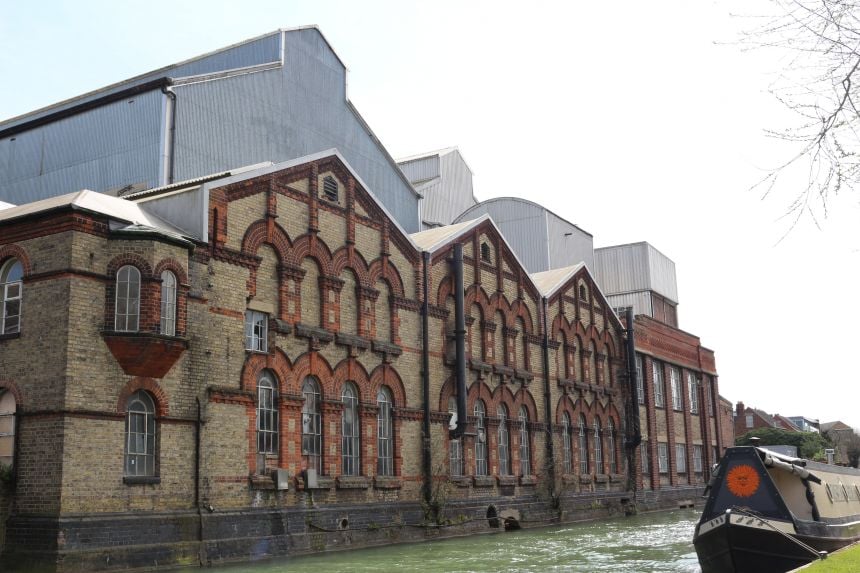
Is the Weston Library one of your favourite buildings? What about the Blavatnik School of Government?
If so, they need your help. The BBC has launched a public poll to find the nation’s favourite building out of those shortlisted for the RIBA Stirling Prize.
An unprecedented two Oxford University buildings have been shortlisted for this year’s prize, which will be announced on Thursday 6 October. You have tomorrow and Wednesday to make your mind up, because the BBC’s online poll will close at midnight on Wednesday 5 October.
The BBC has also produced stunning short films of both buildings for its Stirling Prize pages.
Although the world’s media is currently occupied with the US presidential debates, we are not going to make pitches on behalf of the Blavatnik or the Weston. Instead, Arts Blog has decided to let these two buildings speak for themselves.
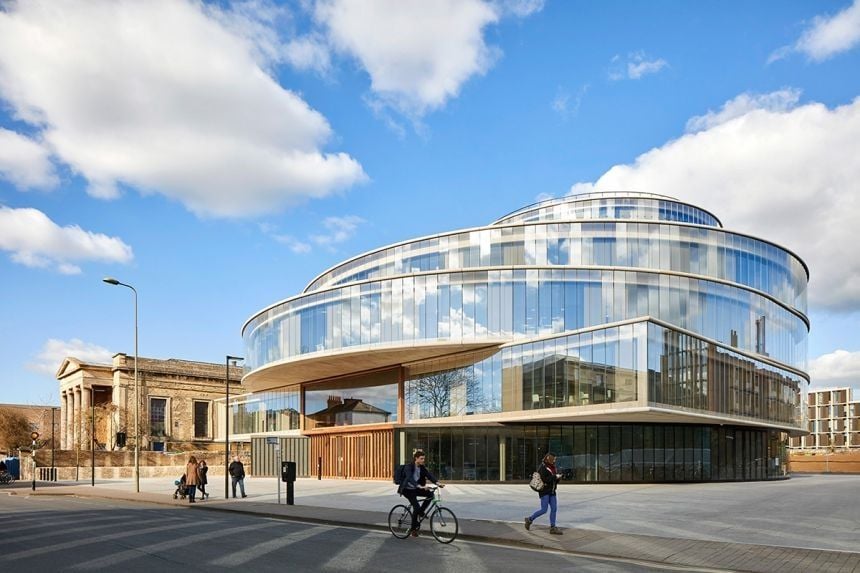 The Blavatnik School of Government
Hufton Crow
 James Brittain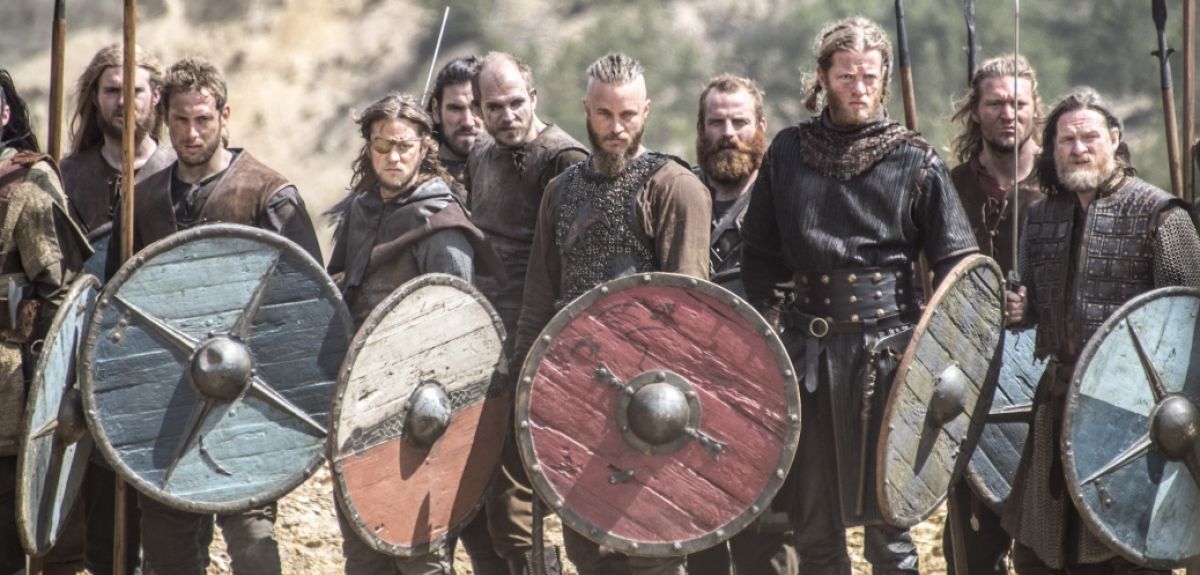
A new character in the popular TV series Vikings has been inspired by an Oxford University historian’s research.
Michael Hirst, creator of Vikings, read The Silk Roads by Dr Peter Frankopan, Director of the Oxford Centre for Byzantine Research at the University of Oxford. He was inspired by the book to create a new character called Astrid, who will appear in the fifth series of the drama which is watched by millions in the USA and Canada.
‘Talk about academic impact!’, says Dr Frankopan. ‘There is nothing more exciting as a historian to know that things you’ve written are being read far and wide – and completely thrilling when they have are brought in to mainstream media.’
In The Silk Roads: A New History of the World, Dr Frankopan showed the importance of the east and the role it had in shaping modern Europe. It was a bestselling book, praised for shifting the centre of world history to the east.
He says: ‘It is rather wonderful that Astrid, the new character who has been introduced in part thanks to Silk Roads, is going to show off some of the main themes of my book: the way the world is connected; the extent of cultural and commercial exchange across the spine of Asia; the sophistication of the east – and the role it had in shaping Europe.
‘What used to be called ‘The Dark Ages’ in the west were nothing of the sort elsewhere. I’m so excited Michael Hirst is going to incorporate this.’
‘I think it’s terrific that TV series like Vikings work so hard to be accurate,’ he says. ‘I’ve been contacted in the past by those involved in the series to ensure that lines in Arabic and Berber are correct, so I am not surprised that those behind the show are on top of the latest scholarship in the field.’
Mr Hirst, who created the TV series, said in an interview with Entertainment Weekly: ‘I’ve read this great book, called “The Silk Road,” which was showing that in the Dark Ages, it might have been the Dark Ages to the western culture, but to the east, there was trade, cultural exchange. The Vikings were on Silk Road. So a character like Astrid, who appears to be slightly more modern? She is more modern.’
Vikings is screened by the HISTORY channel and it was renewed for a fifth series in March.
The Silk Roads is published by Bloomsbury Publishing.
- ‹ previous
- 117 of 252
- next ›
 Setting the agenda for the next century of quantum
 10 years on: The Oxford learning centre making an impact
 Mapping the Moon: the world’s first lunar atlas goes digital
  Oxford and The Brilliant Club: inspiring the next generation of scholars
 New course launched for the next generation of creative translators
 The art of translation – raising the profile of languages in schools
  Opening a window into the quantum world
 Tracking resistance: Mapping the spread of drug-resistant malaria
 Cities for cycling: what is needed beyond good will and cycle paths?