Features

Dr Zeeshan Akhtar is a Royal College of Surgeons Research Fellow and Scientific Secretary of the COPE Consortium, which aims to advance and develop organ preservation technologies. Here, he writes about his research into how we could ensure more organs are suitable for transplant.
By the time your day is over 10 people in the UK will have been diagnosed with organ failure, a process by which one of their vital organs (used for sustaining life) fails. Their only hope for long term survival is to receive a lifesaving organ transplant. In the UK there are over 6900 people on the waiting list for an organ. Approximately one third of these patients will not receive a transplant. They will either die whilst on the waiting list, or become too unwell to undergo the transplant operation itself. For these patients the waiting list is the most unfair of death sentences.
In the UK there are over 6900 people on the waiting list for an organ.
Transplant not only saves lives but also improves the quality of life for patients. Consider those with kidney failure who are dependent on dialysis, an artificial 'filter' which cleans their blood of waste products. They often have to undergo dialysis 3-4 times a week for 4-5 hours at a time. Holding down jobs, going on holiday and the things many of us take for granted are simply not possible for them. Transplant offers freedom.
The chronic shortage of suitable organs for transplant has been a major challenge for the medical community in the last decade. This is predicted to worsen as the population ages and with chronic diseases such as diabetes on the increase. Health complications associated with obesity and smoking also mean more and more people will have kidney, liver, pancreas, heart and lung failure.
To begin to address this urgent need, doctors are now considering organs that previously would have not been deemed suitable for transplant, including organs from older donors who have had large strokes. The size of their stroke is substantial enough to stop their brain from functioning irreversibly, a process known as brain death. The organs from these older donors sometimes have poorer outcomes, but knowing how these organs will function both immediately after transplant and in the long term remains unknown.
My research focuses on kidney and liver transplantation, with an interest in understanding how organs become injured during the brain death process and determining what can be done to protect and preserve organ function. In addition to this, I aim to develop methods which will allow us to predict the outcomes of transplant using information from the donor, providing doctors with a more definitive risk analysis to help them to decide whether to transplant an organ or not.
We are aiming to develop a type of 'barcode' using these markers, which will in the future help us decide whether an organ should be transplanted or not.
My research has focused on the impact of brain death on the kidney and has indicated that organs from brain dead donors are significantly injured, even before they are removed from the donor for transplant. I have shown in the kidney that mitochondria, the 'powerhouse' of cells, responsible for energy production, are affected by brain death even after relatively short periods of time (up to 4 hours). Consequently cells can no longer produce sufficient energy through the usual means and rely on other, less efficient, pathways for energy production, such as energy production from pathways not involving mitochondria. The damaged mitochondria produce harmful waste products which further damage cells. We believe that the damaged mitochondria may be a significant reason why kidneys from such donors have poor outcomes. To rescue these organs I am investigating whether activating the cells own defence mechanisms to hypoxia can protect against mitochondrial injury in the brain dead donor.
I am also part of a team investigating whether we can rescue organs such as the kidney and liver once they are removed from the donor. These organs are typically placed on ice for transport and storage until they are implanted into the transplant recipient. We are investigating whether restoring a blood supply to the organ by connecting them to a machine which pumps blood through the organ at normal body temperature will protect it during transport and storage.
If we don't address the organ shortage today this will have an even greater impact in years to come.
We are also looking to establish whether we can develop a 'molecular profile' of organs for transplant to assess how damaged the organs are, and whether we can predict the outcomes of the transplant based on this. This will involve establishing what happens to cellular markers such as proteins, nutrients and waste products. We are aiming to develop a type of 'barcode' using these markers, which will in the future help us decide whether an organ should be transplanted or not.
My research focusses on major challenges in organ donation and transplantation. If we don't address the organ shortage today this will have an even greater impact in years to come. By developing these new insights, my research aims to increase the number of suitable organs for transplant. I believe that this research is a crucial step towards preventing deaths on the waiting list and lifting the death sentence for thousands of patients.
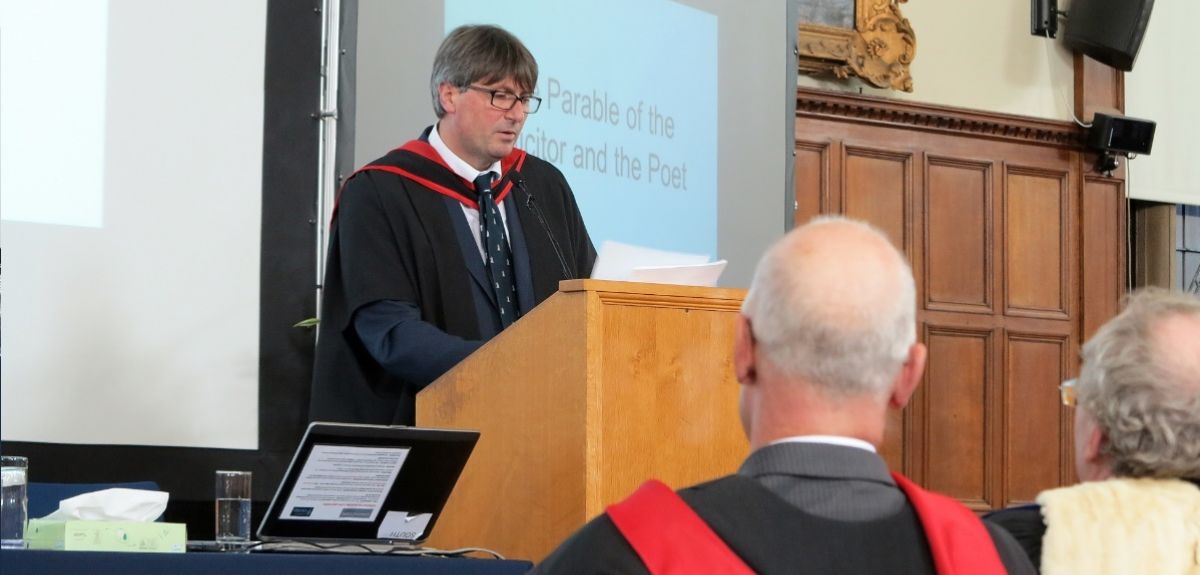
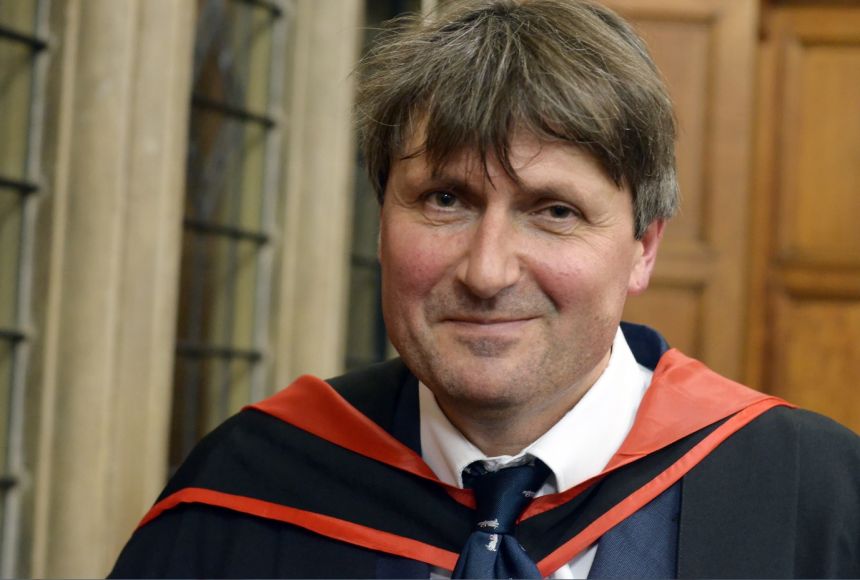
Simon Armitage gave his first lecture as Professor of Poetry to a packed audience at the Examination Schools yesterday evening (Tuesday 24 November).
A full audio recording of the lecture is now available.
Professor Armitage opened with an account of 'the parable of the solicitor and the poet', in which a poet pays a solicitor for legal advice. The solicitor then asked the poet to review some poetry he had written - and did not offer to pay the poet.
 By Marc West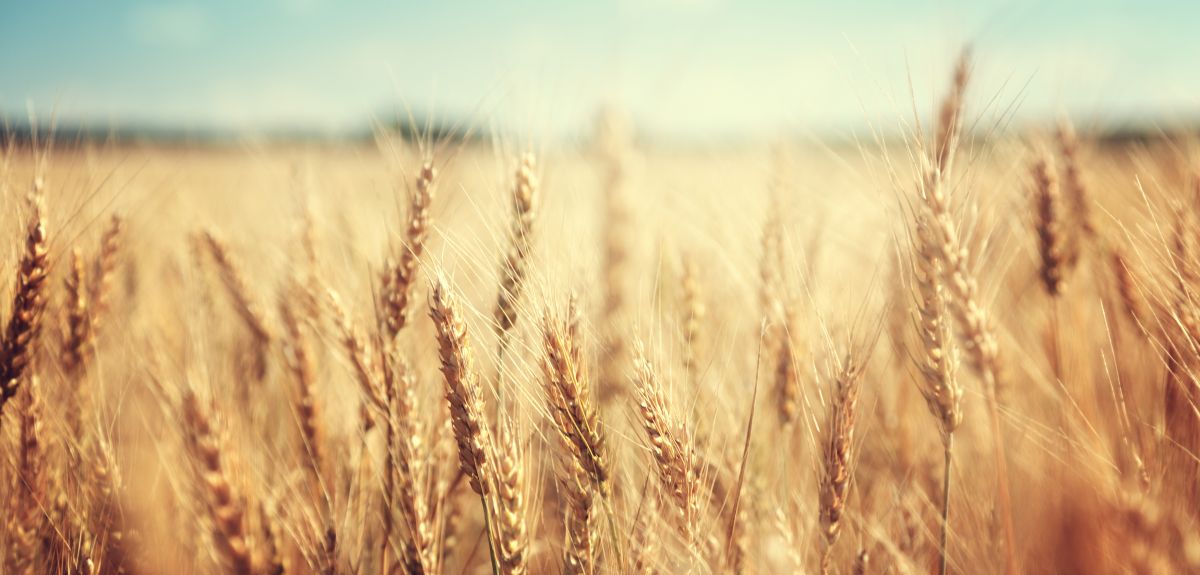
They provide the food we eat, the medicines we take, the fuel we use – and, of course, the oxygen we breathe. Plants have been indispensable to human beings for millennia, having a profound and often unexpected impact on our everyday lives.
In his new book, Dr Stephen Harris from the Department of Plant Sciences takes us on a journey through western civilisation, presenting the stories of 50 key plants – from cannabis, carrot and cotton to rice, rubber and rose.
Dr Harris, University Research Lecturer and Druce Curator of the Oxford University Herbaria, picked out three important species for Science Blog. His book, What Have Plants Ever Done for Us? Western Civilization in Fifty Plants, is out now.
Barley: A cereal first domesticated from a common grass in the Fertile Crescent. Barley was the staff of life, whether as bread or beer, for western civilisations for thousands of years. During this period, barley helped people understand chemistry and domesticate yeasts, enabling the transformation of low-value raw materials into high-value products. Furthermore, barley grains became important in the development of currency systems and the standardisation of units of measurement. Today, barley is important in quenching our thirst for alcohol (beer and spirits) and as an international commodity and animal feed.
Coffee: Originally from the mountains of southwest Ethiopia, coffee has become a global source of caffeine, the world's most widely used legal stimulant. Annually, we consume the equivalent of 100,000 tonnes of pure caffeine from botanical sources such as coffee, tea and chocolate. The first English coffee houses were established in the mid-1600s and became associated with the socio-political and intellectual revolutions of the 17th and 18th centuries. Today, most of the world's coffee beans are produced in the South America. One of the periods of Brazilian economic expansion in the 19th century became known as the coffee cycle, which generated vast economic wealth but contributed to the destruction of one of the world's biodiversity hotspots, the Atlantic forest.
Thale cress: A weed of disturbed habitats which is useless as food or medicine but has become a model for all aspects of experimental plant sciences research, ranging from population and evolutionary biology through physiology and biochemistry to cell and developmental biology. Thale cress is an excellent model since it has a tiny, completely sequenced genome. The plant’s small physical size makes it convenient for growing in vast numbers, while the short life cycle means many generations can be produced in a single year. It sets large quantities of seed and can be routinely transformed to create genetically modified, experimental plants. Importantly, data and genetic information are shared among research groups, while seed and DNA stocks are readily available through international resource centres.
The book is published by Bodleian Library Publishing and can be purchased from the Bodleian Shop.
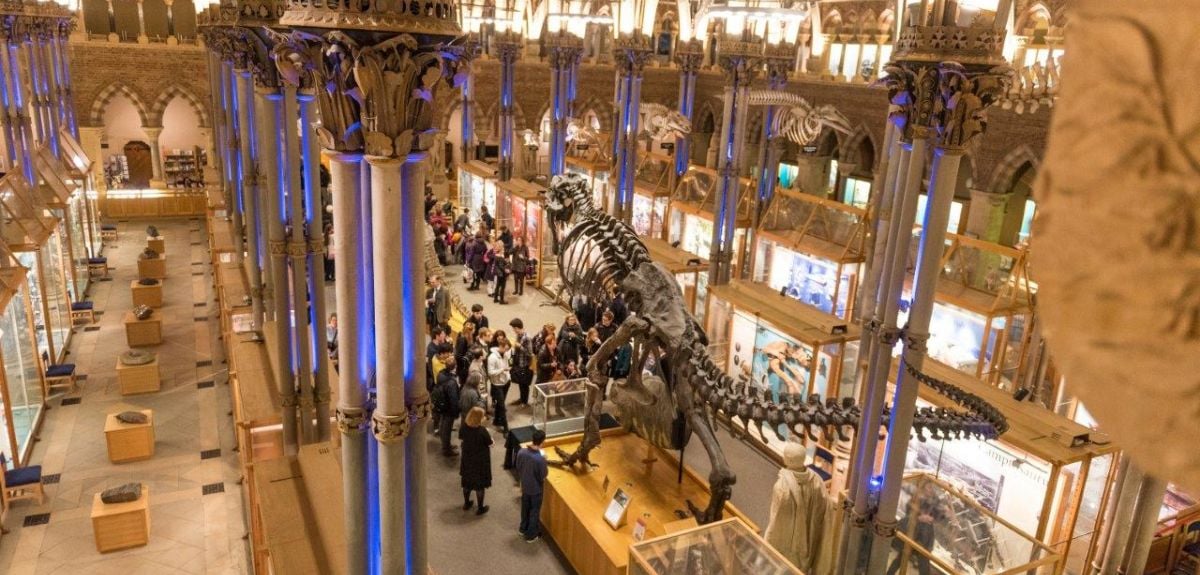
A day of events to discuss the significance of the dodo took place last Wednesday (18 November).
'The Oxford Dodo: Culture at the Crossroads' was organised by Oxford University’s Museum of Natural History and The Oxford Research Centre in the Humanities (TORCH). It formed part of the national festival of the humanities, Being Human.
It has been covered in more detail in a previous Arts Blog post.
On the day, the winners of a creative writing competition for schoolchildren were announced. More than 170 budding writers between the ages of 7 and 14 entered the contest, coming from 36 schools across the UK.
The competition was judged by children’s author Jasper Fforde, the Story Museum's Co-Director Kim Pickin, the University of Oxford's Knowledge Exchange Champion Kirsten Shepherd-Barr, the Museum of Natural History’s Scott Billings and Hannah Chinnery at Blackwell's.
The winners in the 7-10 age category were:
First place: Rhianna Gorman (age 10, Richard Durning's Endowed Primary School, Lancashire)
Second place: Joel Atkinson (age 9, Pencaitland Primary School, East Lothian)
Joint third place: Frances Watt (age 8, St Aloysius Primary School, Oxford) and Mimi Burrell (age 10, St Andrew's Church of England Primary School, Headington)
The winners in the 11-14 age category were:
First place: Hebe Robertson (age 11, Combe Primary School, Witney)
Second place: Evie Manton (age 11, Oxford Spires Academy)
Third place: Simi Tame (age 12, Perse Upper School Cambridge)
We are delighted to publish the winning entries below. Are you sitting comfortably?
The Last Dodo
By Hebe Robertson, 11, Combe Primary School in Oxfordshire
This is the story of my life, death and the bit afterwards.
The burning summer sun glared on my somewhat unattractive feathers. I was a good old Dodo, to my kind I was known as Dod, I lived on the tropical island of Mauritius. I still reminisce: the days of sunshine, the cool breeze and the gentle lapping of the waves on the white-sand beach. I remember the laughs we had, the parties and the many times I got a feather up my nose. Those were the days.
Then they came, in their indestructible, floating things, they came with sticks that shot death from their handles… They came, wave upon wave, brandishing their weapons. They hunted us down. One by one we were shot and killed. Cousin Frank, Auntie Melina- even my sister, Alice.
I hid in the jungle, shedding silent tears for my loved ones. Already pushing 30, I sat on my ruined nest. I sat and I waited. I, Dod was not going to be hunted like common game; I was going to be remembered as a hero: The Last Dodo.
It was a long night, that night. I, as quiet as a mouse, crept aboard their huge boat and found a box. I pecked my way in with my hemispherical beak and nestled inside. I sniffed.
It was full of my friend’s feathers! I sneezed like a foghorn! Believe it or not- feathers make me sneeze! My noise alerted one enormous man who strode through the open door, opened my box and pulled out his death-stick…
“STOP!” yelled another man, seeing what was happening. He came over to me, stroked my feet. He stared at me: a beaked, clawed, feathered stowaway. He smiled. “I’m a naturalist, don’t be afraid. I’m not going to hurt you,” he said to me. I was allowed to stay on the boat and then, eventually, we began the long journey home.
It took many days and nights. One day, I was woken with a jolt; a bell roared at me to wake up, to rise and shine, but I couldn’t. All the travelling was so unnatural for a dodo that, on arrival, I was scared stiff. After 3 toilsome weeks on a ship: England.
That was over 300 years ago. After that voyage, I lived with that naturalist for 20 years, until I was finally admitted into the glorious kingdom of Dodily, the Dodo God. My life sadly ends here, at the ripe old age of 50, but my legacy lives on.
The naturalist kept me in a glass case in his house and I was passed down through the generations until 1873. That year, the Natural History Museum was built. Exhibits poured in. After a while, the Museum was completely full but the staff there managed to make room for one more: me.
You are welcome to see my bones on show. When you see me, remember my story: The story of The Last Dodo.
Dodo Island
By Rhianna Gorman, Age 10, Richard Durning's Endowed Primary School in Lancashire
Emerging from the mist, I stalked around a tree, my feathers puffed out to protect me from the cold. Leisurely, I walked past a group of tall ferns. All was quiet.
Without warning, a noise I had never heard before gradually got louder. It sounded like the noise meant something, not just a call. The noise increased, I saw a group of giants, but not at all like me. They walked around on something called legs, (as I found out later) and had no feathers on their bodies.
Walking up to them, I could sense something wasn't right. We weren't safe. Then it struck me. I had seen creatures look like this before, thin and pale. They, the things, were hungry. For us, the dodo. Running as fast as I could, I caught a glimpse of an island that I had never seen before. As I reached the shore, I saw my friends staring at it too.
Dragging ourselves desperately, we half-flapped (I knew these wings would come in useful one day), half-swam across to the island. The 'things' were baffled. They couldn't understand where we were heading.
What I now know, which I didn't then, is that our magical island is invisible to the human eye. Over the years, our island drifted further away from the place where the humans live. A full group of us still thrive there now, although we have learnt to live in hiding.
Perhaps one day we will have the courage to leave our island, but whenever we consider it, we hear news of wars and conflicts from migrating birds. That puts us right off. I don't think humans will ever learn to be sensible, and stop killing animals off, like they nearly did to us.
Turns out, that humans think us dodos are dead. That they killed us off. Well, to be frank, they nearly did, they killed thousands of us. All those poor dodos that didn't see or notice the 'hungry' look, and approached rather than fled the humans.
And it's not just us dodos that have been saved by the magic of the island. It has been there to rescue the survivors of many other near extinctions. Today we share our island with great auks and passenger pigeons. We all know how lucky we are to be here and have learnt to be more careful.
I've heard that today's humans aren't so bad after all. They're sad we're no longer there with them. Thinking about it, I'm not sure they will kill many more things, some of them are actually trying to save threatened species.
That doesn't stop them killing other humans though! One day we will probably be discovered. Goodness knows what will happen. Who knows, they might actually help us. But that's unlikely....
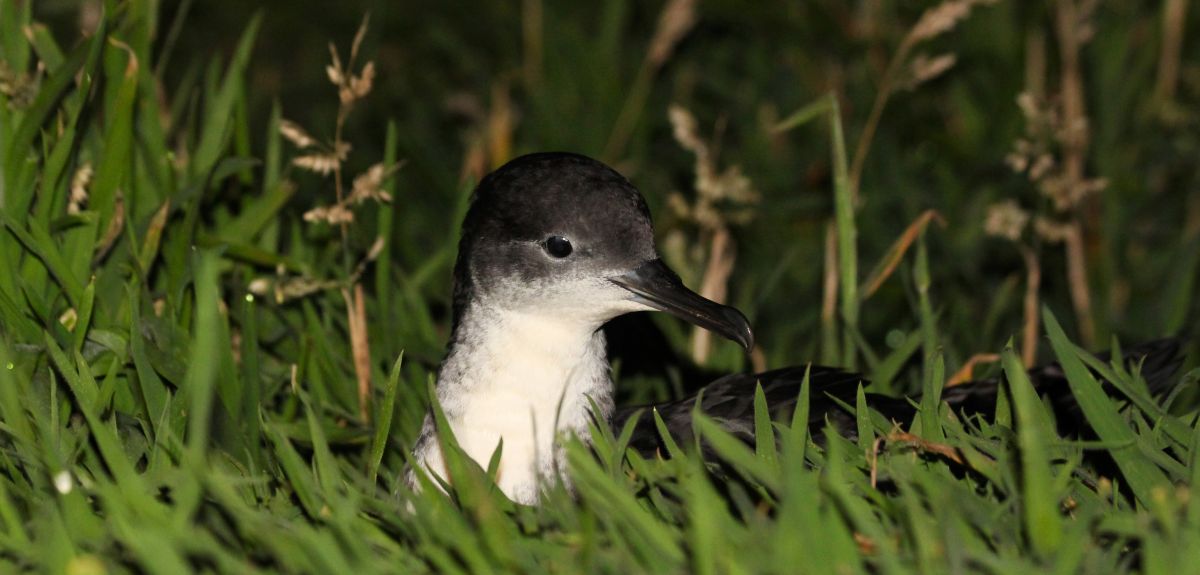
They are a common sight off the UK's west coast in summer, but we still have much to learn about the Manx shearwater, a remarkably long-lived Atlantic marine bird.
Ongoing research by Oxford scientists, however, is expanding what we know about the behaviour of the Manx shearwater (also known as Puffinus puffinus – not to be confused with the Atlantic puffin).
Fourth-year Zoology DPhil student Annette Fayet has just completed a piece of research looking at the relative foraging success of young and mature birds.
Annette, who works in the Oxford Navigation Group led by Professor Tim Guilford, said: 'Our project aimed to compare immature (non-breeding) and breeding seabirds, and to answer the question of whether there are any differences in how they forage at sea, including any segregation between them.
'We know very little in general about what immature seabirds do while they're at sea, so there is lots of scope for research and for learning more about their behaviour. The Manx shearwater is no exception to this – and, indeed, they are particularly interesting because they can live for more than 50 years and don't start breeding until they are around five years old.'
The study, published in the journal Animal Behaviour, found that there was substantial segregation between immature and breeding birds on their foraging trips. The young birds also put on less weight during their trips, suggesting they were less successful in finding food.
Annette said: 'We deployed miniature GPS trackers on immature and breeding birds on the large Manx shearwater colony of Skomer, off the Pembrokeshire coast.
'We tracked their foraging trips at sea, which lasted for up to 15 days, and used the GPS data to identify different behaviours at high resolution – for example, when they were flying at speed, foraging, or simply sitting on the water. We also weighed the birds before and after their trips to measure the mass gained during the trip.
'What we found was substantial spatial segregation between younger individuals and breeding birds, while the non-breeding younger birds also gained less mass per unit of time spent foraging, suggesting a lower foraging efficiency.'
The study was one of the first to track immature birds at sea – not an easy task – and the first to directly compare foraging distributions and foraging efficiency between immature and breeding seabirds.
Annette said: 'Our results suggest that immature Manx shearwaters are less efficient when it comes to foraging. They are also foraging in areas with lower productivity than breeders, which we found by looking at data obtained by satellites that estimate how good an area is in terms of resource availability.
'Perhaps they simply need a few years to learn how to forage effectively – we don't think the segregation is a result of aggressive competition by more experienced adult birds. Nor do we think size is an issue, like in other animals, as bigger adult birds are not more efficient than smaller ones.
'It may be that they're not good at finding productive areas, or that the gain of foraging in an area with fewer adults outweighs the cost of foraging in a less productive area.'
Annette added: 'Research like this is important because it addresses central questions in population dynamics, emphasising the role of learning and experience in the life-history tactics of long-lived species.
'It also has important applications for the conservation of these species by identifying important foraging areas, which can help inform future decisions on conservation. These young birds are the next generation of breeders, and we need to learn as much as we can if we want to protect them.'
- ‹ previous
- 138 of 252
- next ›
 Learning for peace: global governance education at Oxford
  What US intervention could mean for displaced Venezuelans
  Setting the agenda for the next century of quantum
 10 years on: The Oxford learning centre making an impact
 Mapping the Moon: the world’s first lunar atlas goes digital
  Oxford and The Brilliant Club: inspiring the next generation of scholars
 New course launched for the next generation of creative translators
 The art of translation – raising the profile of languages in schools
  Opening a window into the quantum world
 Tracking resistance: Mapping the spread of drug-resistant malaria