Features
By Dr Fiona Jones, Digital Editor Oxford Sparks
We’ve all heard of – and indeed been affected by – COVID-19, the disease caused by infection with the novel SARS-CoV-2 virus. We’ve also become familiar with a plethora of new terminology, with “social distancing”, “lockdown”, “flattening the curve” and “R number” regularly and effortlessly winding their way into our conversations. Something we might not be so familiar with, however, is the scientific process undertaken when we find ourselves faced with a new and unknown pathogen (whether that be a virus, bacterium or prion).
The latest Oxford Sparks animation, created with Professor of Applied Statistics Christl Donnelly, “Understanding COVID-19 transmission, informing control”, sheds some light on this process, likening the challenge to “piecing together a puzzle”.
Using knowledge acquired from previous outbreaks, statistical modellers combine data and equations to estimate the growth of the epidemic, in addition to other parameters, such as the ‘case fatality ratio’ – or proportion of cases who die of the disease. Such estimations are not straightforward, not least because of the huge diversity in pathogen characteristics – even amongst a single group, such as the coronaviruses.
For instance, the virus that caused Sudden Acute Respiratory Syndrome (SARS-CoV, identified in 2003) led to serious clinical disease in all cases of infection. In contrast, many infections with SARS-CoV-2 (the virus responsible for the current pandemic) are asymptomatic. Importantly, it appears that individuals can transmit the virus to others whilst asymptomatic (or in a pre-symptomatic stage), making it much harder to control. Furthermore, this makes it more challenging to estimate parameters such as the infection fatality ratio, as the number of asymptomatic cases – a tricky statistic to discern – must also be taken into account during analyses.
As shown in the animation, there are many important parameters that describe how infections progress within individuals and spread through a population; knowledge of each can help to inform policymakers’ decisions. Examples include the incubation period – used to determine how long periods of isolation should last – and R0, the basic reproduction number. This metric, which represents the average number of infections likely to arise owing to transmission from a single infected individual in a fully susceptible population, has been used to assess infection risk and inform policy throughout the current pandemic – as anyone who’s tuned into one of the UK government’s daily briefings will know.
Estimating these parameters is further complicated when scientists are faced with conflicting data, such as those from other countries. As discussed in the animation, “it’s crucial to understand if that’s due to other diseases, varying access to healthcare, or approaches to detection.”
Alongside hospital staff, carers, delivery drivers and many more, scientists have been on the front-line in the fight again coronavirus – not only searching for a vaccine and potential treatments, but analysing data, estimating parameters and running the models which allow us to make informed decisions on how best to control the pandemic.
The new Oxford Sparks animation, launched on 6th August 2020, was created with Prof. Christl Donnelly, Professor of Applied Statistics at the University of Oxford and Professor of Statistical Epidemiology at Imperial College London. She is Associate Director of the MRC Centre for Global Infectious Disease Analysis.
It was 5am in mid-March, and Lucie Cluver was awake. For once, it was not the children bouncing on the bed that had woken her. She could not sleep because of the pandemic. But it was not the crazy COVID dreams that have affected others. Lucie had woken early because she feared the pandemic was going to be a nightmare - for her and for millions of other parents around the world. The nursery school was closing at the end of the week, along with just about every other educational establishment on the planet, what on Earth were parents going to do?
It was 5am in mid-March, and Lucie Cluver was awake. For once, it was not the children bouncing on the bed...The nursery school was closing at the end of the week, along with just about every other educational establishment on the planet, what on Earth were parents going to do?
Happily, Lucie Cluver, who is Professor of Child and Family Social Work at Oxford’s Department of Social Policy and Intervention, decided to do something about it. That early morning start inspired what has gone on to be an incredible international campaign in the midst of the coronavirus pandemic. It has touched every corner of the world – and 58 million families have used the work that began at 5am that day in March.
What was keeping her awake was not just personal. From the evidence and her time as a social worker, Professor Cluver knew that every time schools close and movement is restricted, families have suffered. ‘Rates of abuse always rise’.
It is really hard for families already under stress, through illness, or poverty or mental health distress. But, suddenly, COVID-19 meant those challenges were going to be almost universal. Everyone is worried, stressed about money and at times just totally fed up with being restricted. Most shouting and hitting is not done by malicious parents, but by stressed, exhausted parents at the end of their tether.
It was very clear we were heading into a perfect storm
‘It was very clear we were heading into a perfect storm,’ she says.
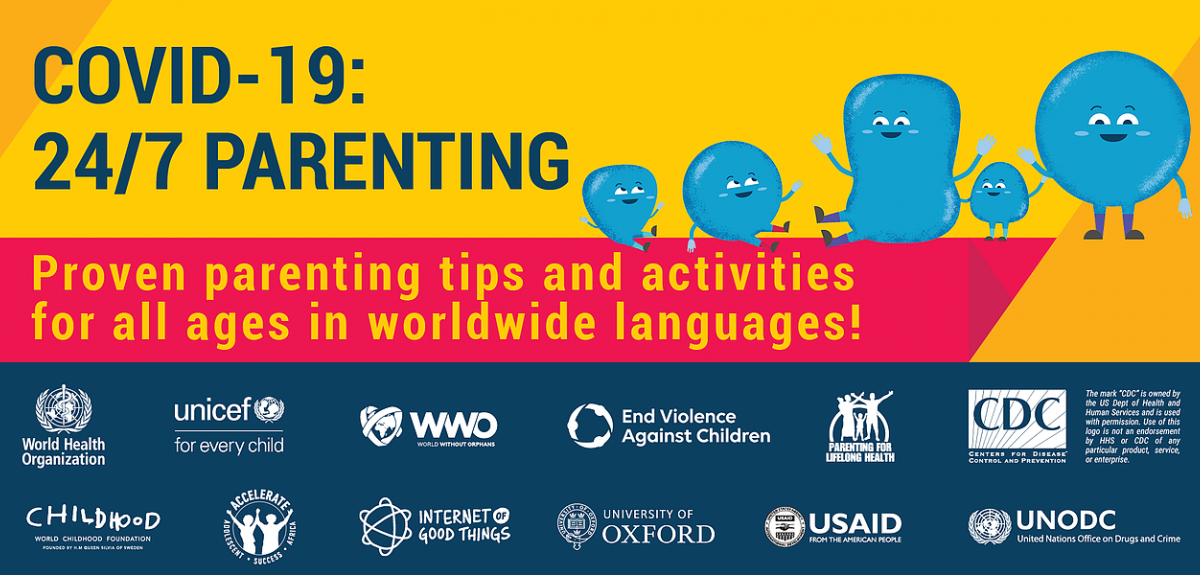
Professor Cluver started writing emails. That morning, she and her colleague, Dr Jamie Lachman, contacted the World Health Organisation, UNICEF, the Global Partnership to End Violence against Children, UNODC, USAID and the Centers for Disease Control.
They knew they needed to move fast - the need was urgent and demand would be immense. Together, they began creating simple, but effective, resources to support parents during lockdown. A decade of research into parenting and child care was about to come in very useful.
Normally, it would take about two years to get endorsement and collaboration from this range of international agencies. In recognition of the global crisis, though, colleagues came together and fast-tracked approval. This was made possible because of many randomised controlled studies which show that parenting programmes work to reduce parenting stress, depression, child behaviour problems and violence at home.
Thanks to the almost unprecedented level of global cooperation, the resources created by the Oxford team was reviewed, edited and approved in just a week by UN agencies, and then taken up by hundreds of other NGOs and international agencies. They included tips about how to maintain positive relationships with children through one-to-one time, ways to keep them safe and healthy during COVID-19 and to support positive child behaviour and manage difficult behaviours, and also to manage stress and anger during lockdown. Those resources were put on the WHO and the UNICEF websites and have been taken up, translated and adapted in 180 countries.
Thanks to the almost unprecedented level of global cooperation, the resources created by the Oxford team was reviewed, edited and approved in just a week by UN agencies...They included tips about how to maintain positive relationships with children...ways to keep them safe and healthy during COVID-19 and...to manage stress and anger during lockdown. Those resources were put on the WHO and the UNICEF websites and have been taken up...in 180 countries
UNICEF has called this time ‘a crisis of childcare’. Children around the world have been taken out of their routines and put at home, away from school, friends and extended family. Parents are struggling to work at home and look after children, or have lost their jobs, do not have the support of grandparents, teachers and care-givers.
‘Parents and caregivers of children are the hidden heroes of this pandemic,’ says Dr Lachman. ‘Research is showing just how stressful COVID-19 is for them. The need for parenting support is universal.’
The international collaboration, which began that day in March, has proved successful well beyond the nightmares.
‘We have been amazed, the response has been phenomenal,’ says Professor Cluver. ‘The creative ingenuity of everyone has been incredible.’
The project has shown an unprecedented global alliance to support parents. Twenty-five governments globally have used the resources as part of their national COVID response. ‘Part of this is because the materials were all made open-source and adaptable,’ explains Dr Lachman. ‘We encourage innovation and just ask everyone to keep the evidence intact.’

The parenting resources have been adapted for television and radio in Lao, parenting hotlines in Paraguay, and animated as cartoons in Kyrgyzstan. They have been broadcast through community loudspeakers to reach hundreds of thousands of people in rural villages across Africa and Asia. The advice has been adapted for use as scripts for social workers and front-line community volunteers in Eastern Europe and Central Africa, handed out with food parcels in Montenegro, South Africa, and the Philippines and they have inspired a phone-based parenting course in India, which has gone global.
Religious leaders have taken initiative, from churches in Sudan to Buddhist monks in Cambodia and inter-faith groups in Sri Lanka. A pastor in Malawi has been discussing each tip sheet on national radio to more than two million listeners each week.
They were explained on national TV news by a senior academic in Pakistan, handed out in printed booklets to 281,000 people in Sri Lanka, and shared with 19,000 North Macedonians through Facebook. There is even a parenting song, written by a Broadway musical director. Professor Cluver realised it had gone everywhere when she received her own advice through the door in Oxfordshire, courtesy of her local authority.
‘We were able to kick-start this effort, but we had no money to continue it,’ says Professor Cluver. ‘Oxford’s COVID-19 response fund was amazing, in providing early and swift funding. Then, other funders came forward, including the Lego and Oak Foundations, which both wanted to help. We’ve been lucky to get UKRI Global Challenges Research Fund/Newton Fund support for low and middle income countries, and this means we can really now focus on the next stage.’
This next stage involves making resources that can provide parents with direct and personalised support.
‘We now know that COVID is not going away anytime soon,’ says Dr Lachman. ‘Before it was like we were sewing the parachute while in freefall. But now we can be more strategic, so the resources can have more impact on the lives of millions of parents and their children.’
The team is launching a global free text message system with UNICEF that is responsive to parents’ individual needs with specific support for those with babies, young children and teenagers. It can be accessed through WhatsApp, Facebook Messenger or through text messages, if you have a basic handset. It will also include audio-visual versions, for those who have difficulty reading, as well as live recorded videos, with real parents demonstrating key tips. Seven countries have come forward to pilot the system, which will be up and running by September and available globally in October.
The team is also about to release an offline-first App, through which people can access COVID-19 parenting advice, even if they are far from WiFi and cannot afford data.
‘Parents need to know that they are stars,’ says Professor Cluver. ‘Even on those days when it feels like a complete disaster. But they’re not alone.’
Parenting resources in 104 languages: www.covid19parenting.com
WHO website (5 UN languages): https://who.canto.global/s/OMTT2?viewIndex=0
UNICEF website: https://www.unicef.org/coronavirus/covid-19-parenting-tips

By Professor Louise Hayward, Department of Education, University of Glasgow and Professor Jo-Anne Baird, Department of Education, University of Oxford
We are not living in normal times. In common with many countries around the world, Scotland has had to cancel their examinations and to rely on teacher judgement. The young people and their teachers who have worked so hard and who have achieved so much in such difficult circumstances are to be applauded. The pressure such sudden changes have put on examination boards also has to be recognised. They have had to generate, trial and test then implement a new system in a matter of months when normally such changes take many years.
Today young people across Scotland will receive their examination results. They are anxious because these results are high stakes. Future opportunities, for example access to particular university or college courses or to employment are limited and the examination results represent the way that Scotland chooses to open doors to these opportunities. It may not be much comfort to this year’s young people but for previous generations the stakes were even higher. Not performing well in examinations meant that doors closed. The education system in Scotland is now much more flexible and offers alternative routes such as the wide range of opportunities offered by Scotland’s colleges.
Every year in Scotland the examination results prove contentious. If the results improve, standards must be falling; if the results decline, the education system is failing. Rarely is either true
However, every year in Scotland the examination results prove contentious. If the results improve, standards must be falling; if the results decline, the education system is failing. Rarely is either true. However, any approach to assessment where the implications are so significant for individuals and their families should, and do, come under significant scrutiny. The nature of any system that seeks to ration opportunities will always lead to a situation where some are delighted and others disappointed. That happened last year and it will happen this year.
Teacher assessment has much to commend it - the teacher is able to gather evidence about more of the curriculum, knows the young person, is able to collect evidence over time rather than a single snapshot. Yet, particularly when the stakes are high, teacher assessment also faces challenges. Having teacher judgements be consistent, not only within a school, but across every school in the country is a major challenge for countries internationally. For the system to be fair, teacher judgements need to be consistent nationally.
The moderation of teachers’ professional judgements is part of a national quality assurance system to ensure parity. Without moderation, this year’s results might not only have been inconsistent, they might have been far too generous. This is what we know from research on teachers’ estimates. The consequences of that for this year’s young people could have been very damaging, if this had become known as the year that the results were inflated. There is research evidence to point to differences in teacher judgement that relate to gender, class and ability. It is crucial that due attention is paid to those to ensure that young people are treated fairly.
No method of assessment is perfect. External examinations suit some young people who thrive on the pressure - others find the pressure unbearable and struggle to cope. Have an off day on the exam day and your results can vary significantly.
No method of assessment is perfect. External examinations suit some young people who thrive on the pressure - others find the pressure unbearable and struggle to cope. Have an off day on the exam day and your results can vary significantly
Examinations are limited in what they can measure and commonly internationally lead to narrowing of the curriculum and limited approaches to learning and teaching. Significant amounts of time in 4th, 5th and 6th years are spent rehearsing for examinations and can become little more than past papers, prelims and endless tests leaving young people dissatisfied and disinterested. The Examinations become an end in themselves and learning only matters if it is in the examination.
Learning in the 21st century demands more than that. What matters for young people in future depends as much on their ability to collaborate, to be creative, to add value to society as it does on their ability to solve a quadratic equation. It is not a question of either/or. Both matter. Our qualifications system needs to change to respond to what matters for our future citizens. Teacher professional judgement will play a crucial role in that new system.
This year, as in previous years, some young people will not receive the results they so hoped for. Recognising that the system has had to change more quickly than might have been desired to respond to COVID-19, the SQA will offer a more open appeal process than has been the case in previous years. This is just. The Appeal process offers a space where evidence related to each case can be reconsidered and decisions reviewed. Where further evidence points to the need to change a grade, changes will be made. SQA should and has committed to do this.
This year, as in previous years, some young people will not receive the results they so hoped for. Recognising that the system has had to change more quickly than might have been desired to respond to COVID-19, the SQA will offer a more open appeal process than has been the case in previous years. This is just
However, as in previous years, even after Appeal some young people will remain disappointed. That is the nature of a system where future opportunities are competitive because they are limited in number. Public confidence in the qualification system is crucially important to this year’s pupils. As a nation, we owe it to our young people to value their efforts and their achievements and not to seek to ask more of this year's qualification system than we have asked of the systems in previous years. To do so would put at risk the credibility of the awards of the very young people we seek to support.
Professors Hayward and Baird are independent academics (Professors of Education) and do not speak on behalf of their institutions. They are members of a number of advisory groups, including SQA’s Qualifications Committee but are not employees and do not speak on behalf of SQA.
Infectious disease and clinical machine learning experts at the University of Oxford have developed an Artificial Intelligence test that can rapidly screen for COVID-19 in patients arriving in emergency departments, and a preprint paper has been published on its effectiveness.
The ‘CURIAL’ AI test assesses data routinely collected during the first hour in emergency departments, such as blood tests and vital signs, to determine the chance of a patient testing positive for Coronavirus.
Currently, testing for Covid-19 is by a molecular analysis of a nose and throat swab, called a Polymerase Chain Reaction (PCR). However, this typically has a turnaround time of 12-48 hours and requires specialist equipment and staff.
The new Oxford study has developed AI that gives a near real-time prediction of a patient’s Covid-19 status.
The team is led by Dr Andrew Soltan, an NIHR Academic Clinical Fellow at the John Radcliffe Hospital, joining with the ‘AI for Healthcare’ lab of Professor David Clifton within Oxford’s Institute of Biomedical Engineering, and Professor David Eyre of the Oxford Big Data Institute.
The study has been running since March and began by developing machine learning algorithms trained on data from confirmed cases and pre-pandemic controls to detect subtle differences. It was hoped these algorithms would allow the level of risk of having the illness to be determined.
The early clinical course of SARS-CoV-2 infection can be difficult to distinguish from other undifferentiated medical presentations to hospital
The preprint article explains: ‘The early clinical course of SARS-CoV-2 infection can be difficult to distinguish from other undifferentiated medical presentations to hospital, however viral specific real-time polymerase chain reaction (RT-PCR) testing has limited sensitivity and can take up to 48 hours for operational reasons.
‘In this study, we develop two early-detection models to identify COVID-19 using routinely collected data typically available within one hour (laboratory tests, blood gas and vital signs) during 115,394 emergency presentations and 72,310 admissions to hospital.’
Once trained, the algorithms had to be assessed for their accuracy, and the two early-detection models were put to the test in a real hospital setting. The results have now been published in the preprint.
Useful tool for the NHS
Researchers are working hard to rapidly trial the CURIAL AI as a clinically useful tool for the NHS.
Dr Soltan said that identifying Covid-19 early in a hospital admission is essential for maintaining infection control and delivering timely care to patients.
‘Until we have confirmation that patients are negative we must take additional precautions for patients with coronavirus symptoms, which are very common. The CURIAL AI is optimised to quickly give negative results with high confidence, safely excluding Covid-19 at the front door and maintaining flow through the hospital.
‘The blood tests patients receive on admission are usually available in one hour, and have a large number of data points that algorithms can use to distinguish Covid-19 from a wide variety of other illnesses. Because of the advanced electronic records systems at Oxford University Hospitals (OUH), we’ve been able to train our algorithms using rich clinical data from 115,000 visits to A&E.
The blood tests patients receive on admission are usually available in one hour, and have a large number of data points that algorithms can use
‘When we tested the CURIAL AI on data for all patients coming to OUH’s emergency departments in the last week of April and the first week of May, it correctly predicted patients’ Covid status more than 90% of the time.’
The AI test was validated by applying it to all patients presenting to A&E and admitted across the four OUH hospital sites between the 20 April and 6 May.
Results showed that the Emergency Department Model correctly predicted the COVID-19 status of patients 92.3% of the time, across the 3,326 patients coming to A&E in the two week test period, and the Admissions Model was correct 92.5% of the time for the 1,715 patients admitted.
Dr Soltan continues: ‘The next steps are to deploy our AI in to the clinical workflow and assess its role in practice.
‘A strength of our AI is that it fits within the existing clinical care pathway and works with existing lab equipment. This means scaling it up may be relatively fast and cheap.
‘I hope that our AI may help keep patients and staff safer while waiting for results of the swab test.’
David Clifton, Professor of Clinical Machine Learning at the Department of Engineering Science, added: ‘With many of our clinical colleagues working on the front lines to fight COVID-19, data scientists in Healthcare AI have a supporting role to play by constructing tools to help care for patients. The unique ecosystem at Oxford between hospitals and clinical AI teams gives us a great opportunity to contribute to the international effort against Coronavirus.
The unique ecosystem at Oxford between hospitals and clinical AI teams gives us a great opportunity to contribute to the international effort against Coronavirus
‘This project initiated by clinical collaborator Dr Andrew Soltan is a great example of what can be done, and at very great pace, to fast-track the development of technologies to help in the current pandemic – and to increase the resilience of the country’s healthcare system for any future events.’
It is hoped the development of these techniques will also inform clinical teams in the early stages of future pandemics, and expedite implementation of appropriate public health measures.
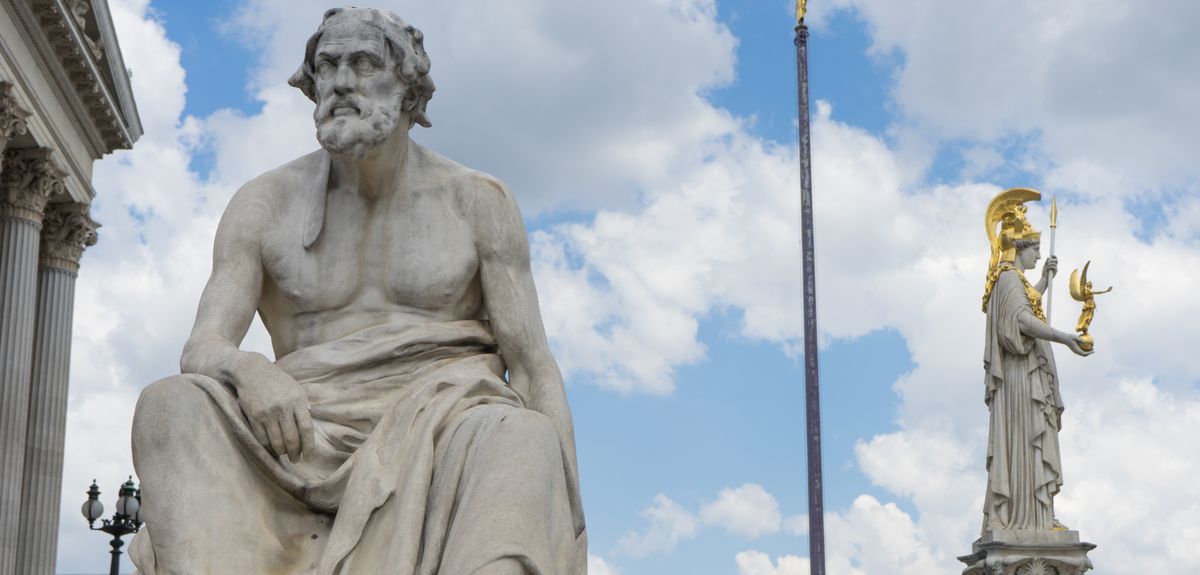
Professor Rosalind Thomas, Balliol College.
COVID-19 has prompted reflection on many previous pandemics, above all the outbreaks of plague in the 17th century and the Black Death in the 14th. I want to go still further back to the great plague of Athens in the fifth century B.C., which hit the Athenians shortly after they began the great Peloponnesian War against Sparta and her allies in 431 B.C.
The Athenian plague prompted the historian Thucydides to offer in his History a full medical and secular description, so that if it occurred again, people ‘would not fail to recognise it’, as he cautiously put it. Thucydides also offered a brilliant and searing analysis of the plague’s social and mental effects, a devastation of the social order which has been noted after other pandemics. As a survivor himself, he offered as his own observation that survivors acquired immunity, the first attested (written) observation of this phenomenon. This was an absolutely catastrophic plague with a massive death-toll; the precise disease is not clearly identifiable. Can we learn anything from his account?
The death rate was far higher, of course, than our current pandemic: of the 4,000 Athenian soldiers who sailed to northern Greece, 1,050 were lost in 40 days
The ‘Athenian plague’ was not only Athenian, though we have the account of its impact only for Athens. It also hit Egypt and much of the Persian King’s territory, according to Thucydides, and it came to Athens via the Piraeus, and to the northern Aegean. The death rate was far higher, of course, than our current pandemic: of the 4,000 Athenian soldiers who sailed to northern Greece, 1,050 were lost in 40 days.
Thucydides tells of the symptoms of high fever, inflammation, sneezing, retching and spasms, and unbearable thirst, with people throwing themselves into rain-tanks, others recovering but losing extremities and even their sight or memory. He describes the dying gathering around wells, and piles of the dead lying in the streets and even in the temples. Thucydides spoke from personal experience.
There are aspects of the Athenian plague which touch our own current experience, and others which Thucydides as a student of human nature meant future generations to ponder – and to look out for again. First, there was no cure: what worked for some failed for others, and the doctors could not help.
Thucydides refers somewhat acidly to the treatment by regimen (diet etc.) which was the new Hippocratic method of the time: it had no effect and doctors died even more frequently than their patients. Second, it was made worse by the crowded conditions in Athens and in ‘the most populous places’, as Thucydides carefully pointed out.
The leading statesman Pericles had persuaded the Athenians at the outbreak of war to evacuate the countryside to within the walls of Athens, and not venture out to fight the invading army; ironically, his determination on war with Sparta but not engaging on land made the plague more destructive. Moreover, it was entirely unexpected. Even Pericles, praised for wisdom and forethought, could not foresee it, and he urged on the Athenians their hard-line stance to protect the Athenian empire, at the very height of their confidence. The plague was no respecter of persons – rich and poor died. Pericles himself died. The hoplite soldiers (fairly well-off) died and infected others. Thucydides was careful to make clear, against Hippocratic medical theory, that this was infection and had little to do with one’s way of life, medical care, or humours; nor was it affected by religious remedies.
There are aspects of the Athenian plague which touch our own current experience...First, there was no cure: what worked for some failed for others, and the doctors could not help
Thucydides offered an entirely secular vision of the plague. Its cause was terrifyingly unknown: he would leave speculation as to its causes to others, ‘if causes can be found adequate for such an upheaval’. Its nature was ‘beyond logos’ (beyond description or understanding). Many Greeks, however, would have believed that it was the god Apollo who sent the plague as punishment, and by offering a full-scale scientific description of symptoms and the course of the disease, as in the new Hippocratic methods of objective observation, Thucydides was saying that it was amenable to human enquiry and observation, and the new science of medicine (he says there was no cure, but perhaps one might hope for one eventually). His emphasis was on this detailed description, and on the social and moral effects.
Thucydides offered an entirely secular vision of the plague. Its cause was terrifyingly unknown...‘if causes can be found adequate for such an upheaval’. Its nature was ‘beyond logos’ (beyond description or understanding).
For he stresses first that the most dangerous element was the despair or dejection (athumia) which hit whenever someone felt themselves sickening, weakening their power of resistance. He stresses that those who tried to nurse the sick fell ill themselves, while those left alone died of neglect.
Thucydides then traces the corrosion of the social order and moral values as people abandoned the proper formalities of burial. There was the onset of ‘anomia’, literally ‘lawlessness’ or unconcern for customs and tradition. This passage has had deep influence on later plague descriptions: ‘men dared to do what formally they had done in secret’, seeing the same disaster hitting all alike, ‘those of good fortune dying suddenly and those with nothing taking their possessions’.
Bodies and possessions were alike ephemeral and so men turned to enjoyment: ‘neither fear of the gods nor human law held people back’, no one feared eventual coming to justice, for they would probably not live to see it. And so in this darkest of passages, Thucydides re-calibrates contemporary debates about the nature of religious belief and the purpose of punishment to trace the beginnings of the decline of social order.
In this darkest of passages, Thucydides re-calibrates contemporary debates about the nature of religious belief and the purpose of punishment to trace the beginnings of the decline of social order
It should be stressed how remarkably original this analysis was at the time: no writer had tried to analyse the collapse of social norms in this way. It is such an uncompromising picture that some scholars have thought it must be a little exaggerated, but that denies the value of the astute eye-witness. We recall that this occurred at the height of Athenian prosperity and confidence: the era of the Acropolis temples and the intellectual ferment visible in Athenian tragedy, comedy, philosophy and the radical democracy. Not everything collapsed, though there was an immediate effect of acute demoralisation, while longer-term effects might be harder to calibrate - what Thucydides saw as a long-term malaise and loss of integrity.
The contrast with our own experience is stark. The Coronavirus has brought out a vast reservoir of individual sacrifice for others, mutual respect and responsibility for the greater good (some, no doubt, taking advantage also). But two points stand out. Even in Thucydides’ dark description, there was humanity: he does say that the doctors tried to tend the sick (only they died too – as now); he does say that friends and family tried to look after each other (only they died). Indeed in a ray of hope, he explains that people were best tended and cheered by those who had the plague and survived, for they ‘knew in advance’ and were unafraid, and indeed the survivors entertained the ‘empty hope’ that they would never again fall ill. So there were numerous self-sacrificing and pitying helpers and they were only brought low by the disease itself. He hints perhaps that at least if you know in advance, it might not be so unbearable next time.
There was no state response, no health system, no public health knowledge or policy: the Athenian democracy was sophisticated, but on the matter of the plague, this was a do-it-yourself...response
And finally, there was no state response, no health system, no public health knowledge or policy: the Athenian democracy was sophisticated, but on the matter of the plague, this was a do-it-yourself, entirely private response. As far as we know, the only public, official response on the part of the Athenians was to purify the sacred island of Delos and introduce the cult of the healing god Asclepius.
It was through close observation that Thucydides deduced the operation of what we call ‘acquired immunity’
It was through close observation that Thucydides deduced the operation of what we call ‘acquired immunity’, and he was surely offering a rival theory to the nascent science of medicine around Hippocrates.
The other lasting lesson from this historian who wished readers to interpret the future by means of an accurate knowledge of the past, was about human nature: the reactions of human beings in the face of catastrophe and inexplicable death, and the wider effects on social values, morality and the scaffolding of justice. He was careful to say later that war itself also had corrosive effects, but that was humanly contrived and in some respect avoidable; the plague was completely unexpected and a force of nature. So in the end he teaches us to expect profound changes on the level of individuals’ reactions and wider social values in the face of huge upheaval; and on the state level to expect the unexpected – and hope for good government when it hits. The Athenians continued the war anyway.
- ‹ previous
- 40 of 253
- next ›
 What Louise Thompson’s campaign tells us about the national maternity crisis
 Celebrating 25 Years of Clarendon
  Learning for peace: global governance education at Oxford
  What US intervention could mean for displaced Venezuelans
  Setting the agenda for the next century of quantum
 10 years on: The Oxford learning centre making an impact
 Mapping the Moon: the world’s first lunar atlas goes digital
  Oxford and The Brilliant Club: inspiring the next generation of scholars
 New course launched for the next generation of creative translators
 The art of translation – raising the profile of languages in schools