Features

On 15 June 2015, V404 Cygni (V404 Cyg), a binary system comprising a sun-like star orbiting a black hole, woke up. A huge outburst of energy across the electromagnetic spectrum ‘lit up’ the sky. The last such outburst was 1989.
Dr Kunal Mooley, a Hintze Research Fellow at the University’s Centre for Astrophysical Surveys works on cutting-edge research based on the discovery and detailed study of transients at radio and optical wavelengths using a wide range of telescope facilities such as the Jansky Very Large Array, the Arcminute Microkelvin Imager (AMI), the Palomar Transient Factory, and the Giant Meterwave Radio Telescope. His research has revealed new physics operating in powerful galaxies called "active galactic nuclei" and has also uncovered intriguing extragalactic explosive events such as supernovae and gamma-ray bursts illuminating the dynamic radio sky. Recently, he carried out an intensive observing campaign with the AMI telescope at Cambridge to monitor V404 Cyg. This work, carried out in close collaboration with Professor Robert Fender of the Oxford Astrophysics sub-department, has helped paint a stunning picture how black holes can launch relativistic jets.
V404 Cyg was known to astronomers in the 18th century as a variable star in the constellation of Cygnus. Until the late 20th century, astronomers considered it to be a nova, a binary star system consisting of a white dwarf and a sun-like star undergoing sporadic outbursts. V404 Cyg first came into spotlight in 1989, when it underwent an outburst, releasing enormous energy over a span of a few months, and especially at X-ray, optical and radio wavelengths.
Not long after the outburst, it was recognised as a new class of X-ray transient sources, called low mass X-ray binaries (LMXBs). This class of transients contain a black hole devouring matter from its companion star, which is usually a sun-like main-sequence star. Through the 1989 outburst of V404 Cyg, astronomers learned a great deal about the accretion and jet-launching mechanisms in Galactic black holes. Once V404 Cyg returned to a quiescent state in the following year, astronomers were able to make accurate measurements of the motion of the companion star and calculate the masses of the two stars of the LMXB. The compact star was found to be twelve times more massive than the Sun, confirming that V404 Cyg contains a black hole. The companion star was about half as massive as the Sun.
During the 1990s, astronomers also reviewed archive data on V404 Cyg from optical telescopes, re-discovering two previous outbursts, in 1938 and 1956. So it appears that V404 Cyg undergoes outbursts every two to three decades. This likely results from material from the companion star piling up in a disc surrounding the black hole until a saturation point is reached. At this point the material is fed to the black hole rapidly, giving rise to an outburst.
Thanks to the Very Long Baseline Interferometric (VLBI) measurements of James Miller-Jones and coworkers, carried out in 2009, the distance of V404 Cyg from the earth is now precisely known to be 2.39 kiloparsecs (7800 light years or around 45.8 quadrillion miles).
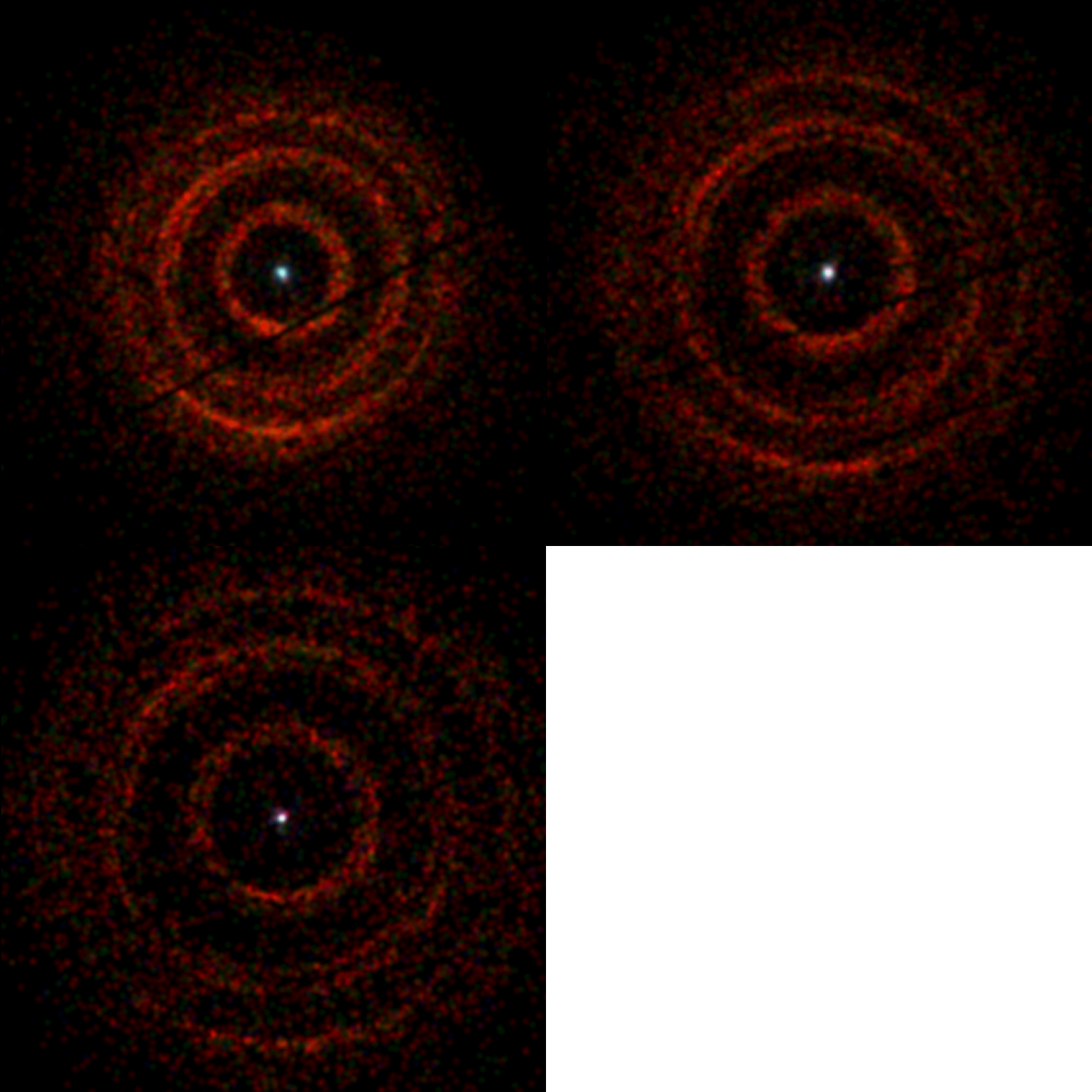 On 15 June 2015 at 7:30PM BST, the Swift space telescope detected a burst of X-ray emission from V404 Cyg and sent out a worldwide alert via the Gamma-ray Coordination Network (GCN).
The Arcminute Microkelvin Imager Large-Array (AMI-LA) telescope responded robotically to this trigger and obtained sensitive radio observations two hours after the trigger, once the source had risen in the sky.
This early radio observation, carried out at a frequency of 16 GHz, revealed a bright and already-declining radio flare. Early next morning we obtained another observation and found that V404 Cyg was still 200 times brighter than in quiescence. Following this initial detection, we launched an intense observing campaign with AMI-LA, and also triggered the eMERLIN array to get high resolution observations at 5 GHz. The radio observations carried out during the first few days of the outburst revealed several flares with increasing peak brightness and also characteristic oscillations in the intensity of radio emission on timescales as short as 1 hour. These oscillations are similar to those seen in previous LMXB outbursts, and are thought to be due to repeated ejection of matter from, and refilling of, the inner accretion disc.
The V404 Cyg outburst soon triggered a worldwide community of astronomers and amateur observers to perform coordinated observations across the electromagnetic spectrum, from the radio to gamma-ray wavelengths. During the outburst, V404 Cyg was exceptionally bright at optical wavelengths and, we could see it with a 14-inch telescope from the centre of Oxford! So I teamed up with Fraser Clarke, a Systems Engineer in the Astrophysics sub-department, to observe the source with the 14-inch Philip Wetton telescope on the roof of the Denys Wilkinson Building. We obtained measurements simultaneous with the AMI-LA observations to understand the correlation of flares at these two distinct wavelengths. Some flares appeared to be correlated, giving clues about the optical emission mechanism of the outburst. On some occasions, the emission at optical wavelengths arises from the base of a jet launched by the black hole, which expels the accreted matter in the form of a collimated outflow – an outflow in a specific direction. At these times, the radio emission arises from further down the jet, and the time lags between the flares seen at these two different wavelengths gives us the distance of the radio emitting region from the black hole, estimated to be a few thousand light seconds.
V404 Cyg was exceptionally bright at optical wavelengths and, we could see it with a 14-inch telescope from the centre of Oxford!
With the AMI-LA and the eMERLIN telescopes, we have the earliest and widest coverage of V404 Cyg's 2015 outburst at radio wavelengths, which lasted for 30 days. A large number of radio flares were seen, likely associated with relativistic ejections of the accreted matter.
VLBI observations during the outburst carried out by James Miller-Jones, a professor at the Curtin University in Perth, have indeed revealed blobs of plasma ejected by V404 Cyg and moving at speeds close to that of light. We would expect the direction of motion of the blobs to be aligned with the spin axis of the black hole, but we also have hints of blobs moving at two different angles from the VLBI observations. This could be attributed to the precession of the black hole spin, just like a spinning top precesses when set into motion. On 27th June, the biggest radio flare was seen in V404 Cyg, making it one of the brightest sources in the 16 GHz sky for a few hours. After this flare, V404 Cyg started its descent into quiescence.
With the outburst over, our research group at Oxford has turned its focus from radio observations and data processing, to compiling multiwavelength data, analysing and interpreting all the data together, and modelling the flares in order to extract the interesting physics of the V404 Cyg's outburst.
Erik Kuulkers, the project scientist for the INTEGRAL Gamma Ray observatory at the European Space Agency, aptly refers to the 2015 outburst of V404 Cyg as 'a once in a professional lifetime opportunity'. With the outburst over, our research group at Oxford has turned its focus from radio observations and data processing, to compiling multiwavelength data, analysing and interpreting all the data together, and modelling the flares in order to extract the interesting physics of the V404 Cyg's outburst. With the unique data set at hand, we aim at deriving the kinetic calorimetry - the energetics of the outburst, and, for the first time, directly compare the jets launched by black holes residing in own Galaxy with those launched by supermassive black holes residing at the hearts of powerful galaxies called active galactic nuclei (AGN).
About the Arcminute Microkelvin Imager Large-Array (AMI-LA) and the ALARRM observing mode
The AMI-LA is an array of eight 12-metre telescopes located at the Mullard Radio Astronomy Observatory (MRAO) in Cambridge. It observes between frequencies of 14 and 18 GHz. Since 2013, the AMI-LA Rapid Response Mode (ALARRM) has been running where the array is robotically overriden on the basis of Swift triggers. For a suitably positioned source in the sky the array can start observing the target within minutes, delivering a 2 hour observation centred at 16 GHz. This programme has been extremely successful and, to date, more than 150 events have been followed up robotically, delivering exciting science. The ALARRM mode initially began as part of the 4 Pi Sky project whose Principal Investigator is Robert Fender from the Astrophysics sub-department at the University of Oxford.
We probably all know someone who has dementia. By 2025, there will be 1 million people affected by it in the UK. Alzheimer’s disease is well known as the most common cause of dementia. But what about the third most common cause of dementia, Dementia with Lewy Bodies (DLB)?
Dementia with Lewy bodies
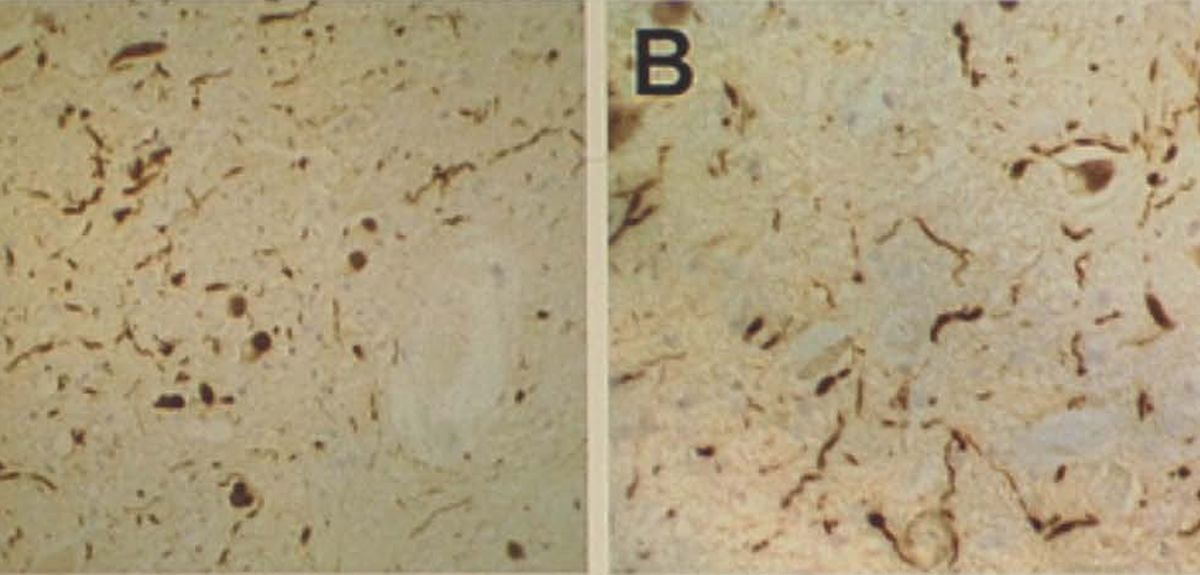
Frederic Henry Lewy, a prominent Jewish German-born American neurologist, first described the phenomenon that came to be known as 'Lewy bodies' in 1912. These 'bodies' are clumps of a sticky protein called alpha-synuclein that build up in nerve cells in the brain, causing damage and eventually death to these cells. Typically, they affect the cells that control thinking, memory and movement. In fact, Lewy bodies are the underlying cause of several progressive diseases affecting the brain and nervous system, including not only DLB but also Parkinson's disease.
We tend to get rid of this particular alpha-synuclein protein quite slowly, using a sophisticated 'clean-up crew' of enzymes. Studies of the brains of people who have died as a result of DLB have shown that one of these sets of enzymes is abnormally increased in the cells that contain the toxic protein clumps.
On the face of it, this may not seem to be a problem, but the system of waste-disposal enzymes is a complex one. They each have different roles and work together to regulate the level of alpha-synuclein. One set of enzymes is responsible for directly attacking the protein, whereas another – the one that is abnormally increased in DLB cases – counteracts this action. This set of enzymes works to either elongate or trim off a tag on alpha-synuclein. This tag is made up of molecules of a small protein called ubiquitin, and its regulation goes awry in patients with DLB.
Targeting the abnormally increased enzyme
Associate Professor George Tofaris, together with his research group in the Nuffield Department of Clinical Neurosciences, is working on the development of targeted biological therapies in neurodegenerative disorders. George explains that when it works, this tagging system is essentially 'a kiss of death for proteins, but a kiss of life for the cell because it gets rid of unwanted or toxic proteins'.
Alzheimer's Research UK has allocated £50,000 to George and his team to investigate how the enzymes in the ubiquitin system might be targeted, in order to improve the disposal of alpha-synuclein. So how will the team go about this ambitious project over the next two years?
The first step is to work with others on screening the hundreds of possible chemical compounds that may have an effect on such enzymes in the test tube. Researchers will identify the structures of the compounds and make computational improvements in order to refine the list of compounds that will be used in the next stage of the experiment.
Moving on the second stage, George and his team will test the compounds on human brain cells. Researchers can create cortical neurons and dopamine cells – the brain cells affected by Lewy bodies – from skin cells, by using genes that regulate gene expression. This stem-cell technique is invaluable in allowing scientists to go straight from the test tube to working directly on a real human brain cell. The team will treat these brain cells with compounds and see which one has the most success in destroying the clumps of alpha-synuclein that can be triggered in these cells.
Neurological research such as this is mirroring the work that has been going on in the field of cancer for some time: targeting specific enzymes that have been identified in the lab as having a critical role in disease.
Paving the way for a new drug
After identifying an effective compound, the next step would be to test it in animals to see how the drug might affect the whole system, and to find out whether it can get through the blood brain barrier, a semi-permeable membrane separating the blood from the cerebrospinal fluid.
The good news is that even if this work doesn’t eventually result in a drug in tablet form, scientists will at least be in possession of good tools that can be used to manipulate alpha-synuclein and better understand how it is targeted for destruction.
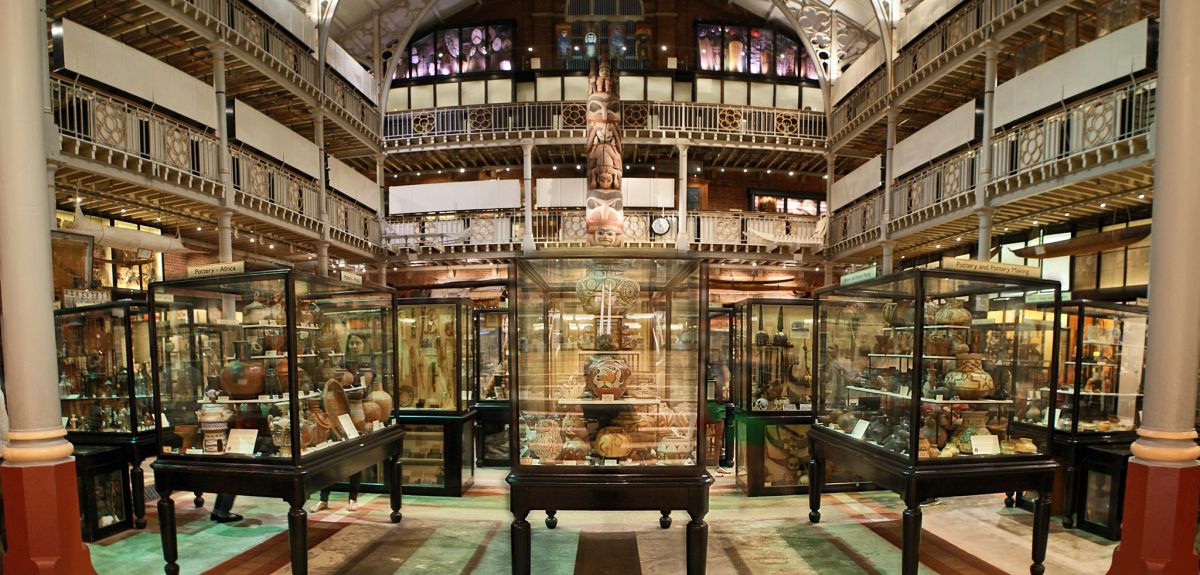
Two of Oxford's museums opened late on Friday 30 October for Halloween-themed events. The Pitt Rivers Museum held an event called 'Day of the Dead' as part of its AfterHours series.
The evening explored how different cultures respond to death, focusing on mourning, memorialisation and celebration. The Ashmolean Museum ran an event called 'DeadFriday', as part of its LiveFriday series. The museum opened from 7pm to 10.30pm for visitors to enjoy talks, music and performances related to ghosts and spirits.
There were bite-size talks by over 25 Oxford Humanities researchers organised by The Oxford Research Centre in the Humanities (TORCH) at both events, exploring different objects in the museum's collections, as well as music, workshops and other live performances.
Professor Elleke Boehmer, Acting Director of TORCH and Professor of World Literature, says: 'One of TORCH's core strategic aims is to encourage interdisciplinary collaboration through fostering creative research environments.
'Museums are fantastic places to communicate research, engage with a wide range of amazing objects and reach out to the wider public - we were delighted to be a part of the Ashmolean’s DEADFriday and the Pitt Rivers' Day of the Dead event.'
The LiveFriday and AfterHours series have been notable for bringing a younger audience to the museum, and for allowing academics in the University to engage directly with the public. Dr Alexandra Lumbers, Academic Director at Jesus College, has attended several LiveFriday events.
She says: 'Generally I am not a huge museum-goer as I often find them a bit static but with the Live Fridays, it really brings the museum to life and really helps a wide variety of visitors to appreciate its treasures and understand them better.
It's great to see all from young children right through to quite elderly guests mingling and enjoying the evening together
Dr Alexandra Lumbers
'I really like the diversity of those who attend – it's great to see all from young children right through to quite elderly guests mingling and enjoying the evening together.
'There’s a great buzz with all the music, dance, interactive activities and that brings out the best in the museum and those who attend – it brings all these wonderful artefacts and treasures back to life.'

The World Series is the biggest contest in baseball so a lot is at stake for the New York Mets and the Kansas City Royals as they face off this week.
The contest has also divided two leading American historians at Oxford and Cambridge, who have come up with an unusual bet on the outcome of the match.
Professor Jay Sexton, director of Oxford University's Rothermere American Institute (RAI), is a Kansas native and diehard support of the Kansas City Royals. Gary Gerstle, the Mellon Professor of US History at Cambridge University, loves the New York Mets.
They have agreed that if Kansas City Royals win, Professor Gerstle will wear a Royals hat when he speaks at the RAI this January for the launch of his new book. If the Mets win, Professor Sexton will reluctantly wear a Mets cap.
'I am certain that all subjects of the British Royal family are siding with Oxford's Rothermere American Institute in this bet. Go Royals!', says Professor Sexton.
'People outside of North America often balk at the name "World Series". The hope is that this bet increases interest in Britain in one of the world’s most storied sporting events.'
Things are looking good for Professor Sexton so far, with the Royals 2-0 up in the best-of-seven series. The third game takes place tonight.

Oxford University's Wytham Woods were visited by a "National Living Treasure" last weekend.
No, Dame Judy Dench did not visit (as far as we know, anyway) but the University welcome famous Japanese potter Isezaki Jun, who has the title of the fifth National Living Treasure of Bizen, a place in Japan famous for its pottery.
Mr Jun launched the Oxford Anagama Project in the Woods on Saturday (24 October), when he began the loading of the Brick Anagama - one of two kilns that have been built over the past few months.
The first firing of the kiln will take place towards the end of November. But pots have already been produced from the first firing of the Willow Anagama.
Mr Jun also visited Keble College and gave a lecture at the University of Oxford Museum of Natural History.
At the lecture he said: 'I hope Oxford Anagama will give birth to a new conception of pottery and ceramics.
'The National Living Treasure is the preserver of important intangible crafts, in this case pottery. It preserves an ancient tradition.'
He said the Oxford Anagama project represents “another stage in Anglo-Japanese collaboration” and gives artists from both countries the chance to “learn from each other in a major international collaboration”.
'Where better to do it than Oxford?', he added.
The Oxford Anagama Project is co-directed by Dr Robin Wilson of the Wytham Studio at Wytham Woods and the School of Anthropology, and Jim Keeling of Whichford Pottery.
- ‹ previous
- 141 of 252
- next ›
 Learning for peace: global governance education at Oxford
  What US intervention could mean for displaced Venezuelans
  Setting the agenda for the next century of quantum
 10 years on: The Oxford learning centre making an impact
 Mapping the Moon: the world’s first lunar atlas goes digital
  Oxford and The Brilliant Club: inspiring the next generation of scholars
 New course launched for the next generation of creative translators
 The art of translation – raising the profile of languages in schools
  Opening a window into the quantum world
 Tracking resistance: Mapping the spread of drug-resistant malaria