Features
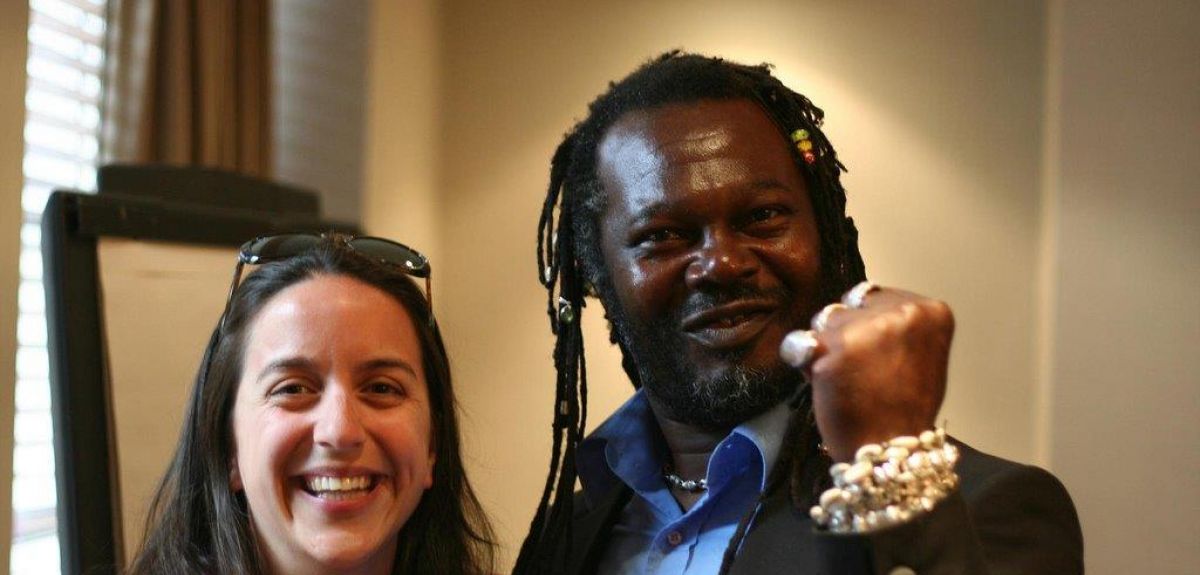
At Arts Blog, we love the BBC show Dragons' Den.
But we have never seen a historian, a classicist or a linguist going up before the panel of dragons.
And believe us, we have watched a lot of Dragons' Den.
But that could be about to change, as Oxford University has announced its own pitching competition to find the most innovative and entrepreneurial ideas from staff and students in the faculties of the Humanities Division.
Unfortunately, candidates for the Humanities Innovation Challenge will not be offered £200,000 by Peter Jones or Deborah Meaden.
But the winner will receive £1,000 to launch the idea and £5,000 of in-kind support to help it to grow.
Last year, the first Humanities Innovation Challenge was won by a startup company which is bringing the Mexican superfood pinole to the UK.
Azure, which was founded by Dr Alexandra Littaye, believes pinole will be popular with Latin Americans living in Europe, the rapidly growing gluten-free market, and the sports nutrition market.
Second place went to MSt Creative Writing student Josephine Niala, who is looking to develop an app which trains people in the skills necessary to attract funding for local projects aimed at tackling climate change.
Third place went to another app – Hippo – developed by Michael Plant, a doctoral student in the Humanities Division. The app aims to help users tackle anxiety and depression.
The competition is a collaboration between Oxford University Innovation (OUI) and The Oxford Research Centre in the Humanities (TORCH). Staff and students are invited to apply for the scheme by Monday 8 May.

A recent BBC comedy written by Simon Amstell imagined life in 2067 when society has become vegan and people flock to support groups to cope with their guilt about their meat-eating past.
The premise might sound far-fetched to many viewers, but there an Oxford University philosopher says there are serious ethical arguments for giving up meat.
In a guest post, Julian Savulescu, the Uehiro Professor of Practical Ethics at Oxford, says that cutting down on our consumption of meat and animal products is "one of the easiest things we can do to live more ethically".
Here, he gives five ethical arguments for giving up meat:
1. The environmental impact is huge
'Livestock farming has a vast environmental footprint. It contributes to land and water degradation, biodiversity loss, acid rain, coral reef degeneration and deforestation.
Nowhere is this impact more apparent than climate change – livestock farming contributes 18% of human produced greenhouse gas emissions worldwide. This is more than all emissions from ships, planes, trucks, cars and all other transport put together.
Climate change alone poses multiple risks to health and well-being through increased risk of extreme weather events – such as floods, droughts and heatwaves – and has been described as the greatest threat to human health in the 21st century.
Reducing consumption of animal products is essential if we are to meet global greenhouse gas emissions reduction targets – which are necessary to mitigate the worst effects of climate change.
2. It requires masses of grain, water and land
Meat production is highly inefficient – this is particularly true when it comes to red meat. To produce one kilogram of beef requires 25 kilograms of grain – to feed the animal – and roughly 15,000 litres of water. Pork is a little less intensive and chicken less still.
The scale of the problem can also be seen in land use: around 30% of the earth’s land surface is currently used for livestock farming. Since food, water and land are scarce in many parts of the world, this represents an inefficient use of resources.
3. It hurts the global poor
Feeding grain to livestock increases global demand and drives up grain prices, making it harder for the world’s poor to feed themselves. Grain could instead be used to feed people, and water used to irrigate crops.
If all grain were fed to humans instead of animals, we could feed an extra 3.5 billion people. In short, industrial livestock farming is not only inefficient but also not equitable.
4. It causes unnecessary animal suffering
If we accept, as many people do, that animals are sentient creatures whose needs and interests matter, then we should ensure these needs and interests are at least minimally met and that we do not cause them to suffer unnecessarily.
Industrial livestock farming falls well short of this minimal standard. Most meat, dairy and eggs are produced in ways that largely or completely ignore animal welfare – failing to provide sufficient space to move around, contact with other animals, and access to the outdoors.
In short, industrial farming causes animals to suffer without good justification.
5. It is making us ill
At the production level, industrial livestock farming relies heavily on antibiotic use to accelerate weight gain and control infection – in the US, 80% of all antibiotics are consumed by the livestock industry.
This contributes to the growing public health problem of antibiotic resistance. Already, more than 23,000 people are estimated to die every year in the US alone from resistant bacteria. As this figure continues to rise, it becomes hard to overstate the threat of this emerging crisis.
High meat consumption – especially of red and processed meat – typical of most rich industrialised countries is linked with poor health outcomes, including heart disease, stroke, diabetes and various cancers.
These diseases represent a major portion of the global disease burden so reducing consumption could offer substantial public health benefits.
Currently, the average meat intake for someone living in a high-income country is 200-250g a day, far higher than the 80-90g recommended by the United Nations. Switching to a more plant-based diet could save up to 8 million lives a year worldwide by 2050 and lead to healthcare related savings and avoided climate change damages of up to $1.5 trillion.'
This article takes extracts from a longer article by Professor Savulescu and Francis Vergunst of the University of Montreal, which was first published in The Conversation.
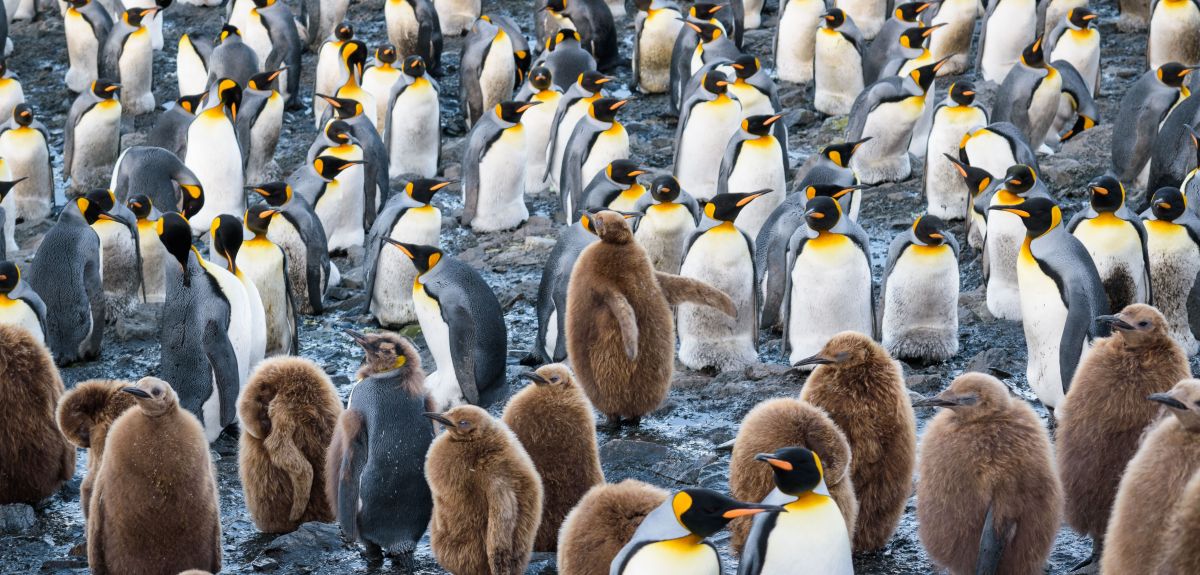
With one of the biggest fan-clubs in the animal kingdom, penguins are undeniably cute. From Pingu to Happy Feet and the countless wildlife documentaries centred around them, they continue to capture the public’s imagination. Despite their enduring popularity though, the knock-on effects of climate change and over-fishing have sent species numbers into decline.
To mark World Penguin Day, ScienceBlog talks to Tom Hart, penguinologist at Oxford University, about his team’s massively popular ‘citizen science’ platform, Penguin Watch. Now in its third year, Penguin Watch harnesses technology and people power to help protect this universally loved seabird. Tom discusses the evolution of the initiative and his plans to use automation to take the research to the next level.
What is Penguinology and what are your research goals?
Penguinology is a term that I came up with, that quickly went viral. I stand by it and love it, because it actually explains what I do. Penguinology at Oxford University operates on two levels; firstly, population genetics, which is the study of penguin movements and how they change over time. This is quite a technical work-stream, understanding colony populations and how they evolve.
A lot of penguin research studies focus on colonies in isolation, which is logistically pretty easy to do and useful if you want to study single elements in detail. We focus on big picture research, answering broad 21st century specific questions like ‘what is the human impact of fishing and climate change?’ Studying a single colony doesn’t answer that question. To gain that level of understanding you have to gather and use data on a huge scale, which is not so easy.
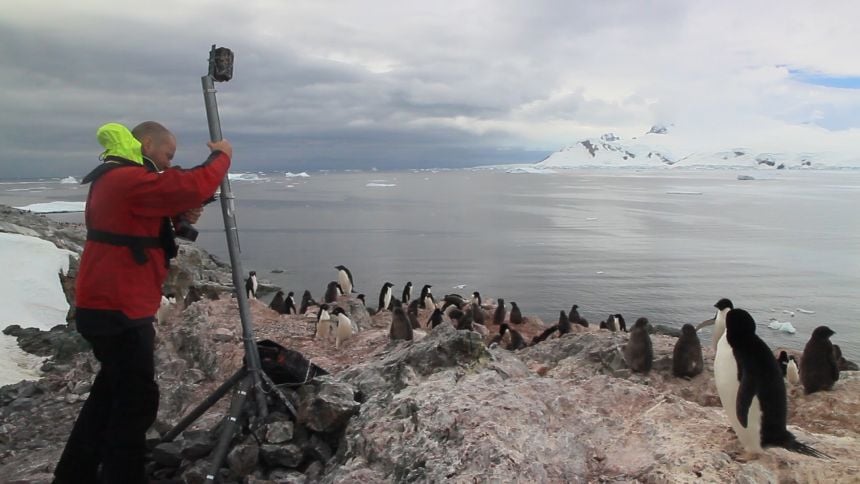 The Penguin Watch team setting up the cameras in Antarctica
Image credit: Tom Hart OU
The Penguin Watch team setting up the cameras in Antarctica
Image credit: Tom Hart OUWhat sets Penguin Watch apart from other ecology studies?
We use a series of time lapse cameras, set up across the Southern Hemisphere to capture data on penguin behaviours, breeding habits and timings. The cameras cover a wide geographical area, in some of the most remote places on Earth. They monitor continuously throughout the year, so collecting the data can be a challenge. The images gathered can tell us about the winter activity of penguins, and how they behave in their daily lives, breeding habits etc. Breeding is quite synchronous, so from the patterns observed we can understand and make predictions around these habits. For example, when they breed and lay eggs, when the chicks hatch and how many will survive per nest. We leave the camera for anything from one to five years, and then go and collect the cameras.
Penguin Watch itself is the ‘Citizen Science’ initiative that we set up to manage all the incoming data, from these photographs. If you imagine we have over 100 cameras taking a photo every hour throughout the whole year, which amounts to 8,000 photos per camera, you can see how it quickly builds up into a dataset that we couldn’t manage just the two of us. We tackle that by hosting the pictures online, and inviting members of the public, of all ages, to log on and count the penguins for us. By clicking the penguins in each photograph, they have identified them for us. In terms of raw data the programme allows us to capture a real breadth of detail. Everything from the number of penguins to the number of eggs laid and chicks hatched, and of course the date and time that the activity was observed, captured throughout the whole year.
VIEW THE VIDEO 'A PENGUINOLOGIST'S LIFE' HERE:
How has Penguin Watch evolved over time?
Over the years our approach to outreach has improved and increased - particularly with schools. We engage much more with children now than we used to. Fiona (Fiona Jones, Penguinologist and PHD student, working with Penguin Watch) does a lot of great work in this area.
Each image is shown to multiple participants, and we use the clustering algorithm data to work-out a consensus from there. This means that we can filter out any mistakes, and just benefit from the kids’ enthusiasm. We learnt quickly that even when participants were relatively young their input still added value.
Science and innovation go hand in hand in today’s society, what role does innovation play in your work?
Innovation is integral to our work. I think of innovation as not only being about how you use technology, but also coming up with new and creative ideas to solve existing, practical problems. Our camera technology is relatively simple and off the shelf, the equivalent of a point and shoot camera with a time lapse clock. Thanks to the internet and tech developments like the evolution of the smart phone, the Citizen Science model, involving public volunteers in research, has progressed a lot in the last ten years ago.
The platform has a really nice, dual benefit. From our point of view, we get our penguin data processed, and the general public also get to be a part of the research process. People enjoy being useful - and they are.
Do you have any plans to expand the programme further?
In the beginning, we were working with Professor Andrew Zisserman and Carlos Arteta, in the Department of Engineering, and the intention was always to automate the cameras. But it transpired that it was a lot of work. It was Andrew that first suggested that Penguin Watch should be a ‘Citizen Science’ project. Being at Oxford University, we were fortunate to have the best possible platform for a public engagement model already.
Looking at how much we are able to do with the images collected at this stage, the logical next step for us is to look again at introducing automation into our work. If you think about it, our cameras are already taking our place in the field, and are in fact better than us at the legwork. They already take hourly pictures without fail, all we need to do now is make them a bit smarter and more interactive.
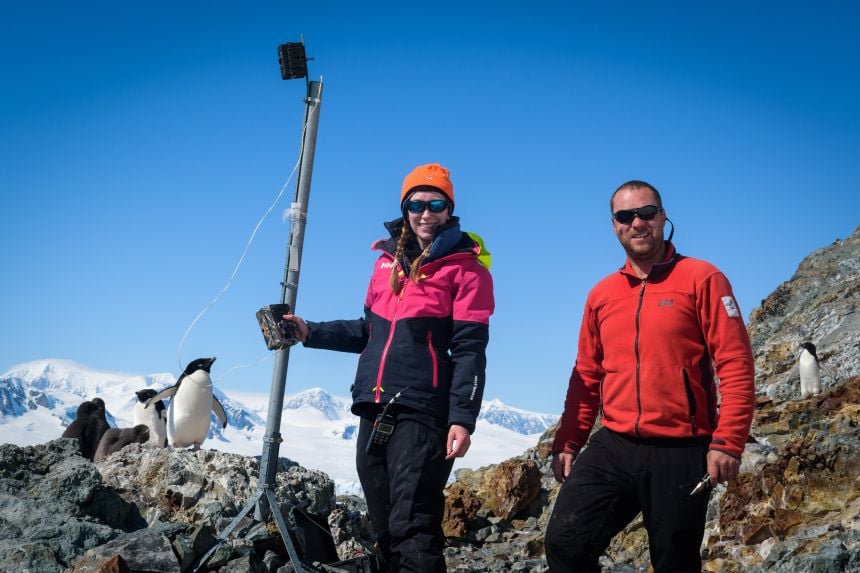 L-R Fiona Jones, Penguinologist and PHD student working with Penguin Watch and Tom Hart, Penguinologist and founder of the programme.
Image credit: Tom Hart OU
L-R Fiona Jones, Penguinologist and PHD student working with Penguin Watch and Tom Hart, Penguinologist and founder of the programme.
Image credit: Tom Hart OUHow do you plan to do this?
We are building our own camera tech, and using machine learning to programme them to operate independently - like a Mars rover . For example, if the lens were to become covered with snow, we would teach the camera to recognise the white covering, and to heat the lens, melting the snow away. Penguin behaviours are also quite synchronous, so if anything unusual happens within view, the camera will detect that something new is happening, and take more photos of it.
How do people respond to Penguin Watch?
The platform has a really nice, dual benefit. From our point of view, we get our data processed, and the general public also get to be a part of the research process. People enjoy being useful, and they are.
Did you always want to become a penguinologist?
The short answer is no. I wanted to make a difference and knew I wanted that difference to be in marine ecology. I came to the field via an interest in fisheries, which as a response to environmental pressures then turned into penguins.
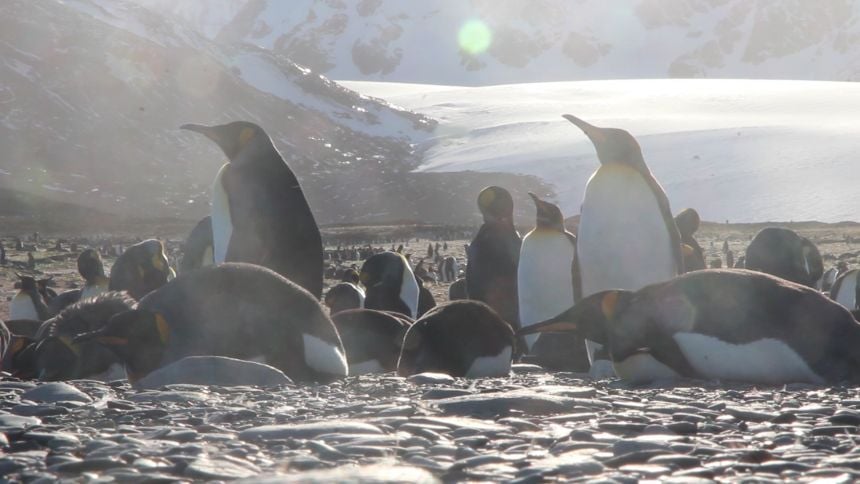 Penguins in Antarctica
Image credit: Tom Hart, OU
Penguins in Antarctica
Image credit: Tom Hart, OUWhat do you hope the impact of Penguin Watch will be long term?
That the camera network will take over the world! Lots of people use time lapse cameras now, and the technique is definitely catching on. But I would say that end to end, our approach is unique. At the moment it is just us and our collaborators that are using our system, but it is a nice and effective model to use anywhere, and to monitor seabirds in general.
What has your career highlight been to date?
In the field, it would have to be landing on the South Sandwich Islands or the Danger Islands for the first time. Being the first to discover a new colony to science is indescribable. But for our research in general, I am very proud, not just of the computer vision involved, but the introduction of automation into how we process data.
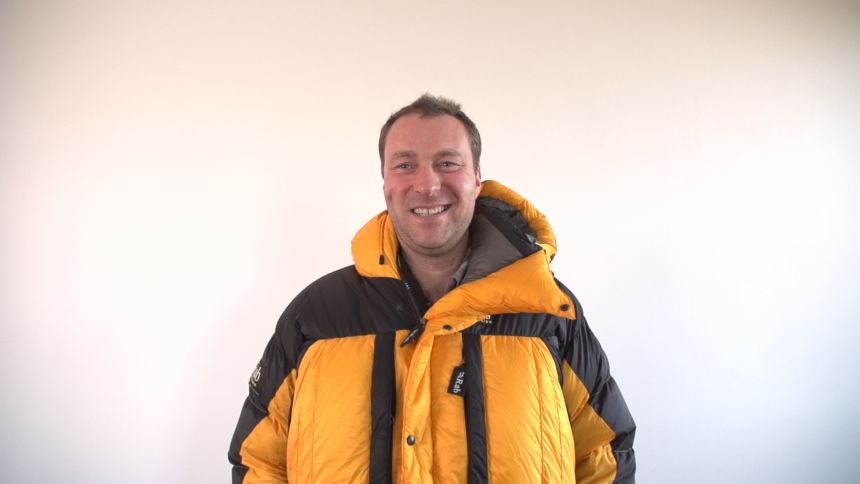 Tom Hart, Penguinologist and founder of the Penguin Watch initiative.
Image credit: Tom Wilkinson OU
Tom Hart, Penguinologist and founder of the Penguin Watch initiative.
Image credit: Tom Wilkinson OUWith initiatives like Ocean Optimism and the recent Conservation Optimism Summit, the general mood in the nature conversation seems to be more positive at the moment, would you agree?
I really like the idea behind this, but we have to be pragmatic. I think it’s great to have something positive amongst the doom and gloom. It is of course important to know which are declining but also which are stable and thriving. We can come up with good examples of species in specific regions that are bouncing back, where appropriate conservation action makes a difference and can reverse declines. For example in the case of the Blue Penguin in Australia. But overall it is a bit sad, in that 12 out of 18 species are declining. Being optimistic will not change that.
Is there anything that people can do on an everyday basis to support the protection of penguins?
Obviously we would love more people to get involved with us and take part in Penguin Watch, you can do it from the comfort of your own home so there is no massive obligation attached.
The easiest way to help is to stop buying krill based products. Penguins feed on krill and expanding krill fishing is having a big impact on their populations. Krill oil supplements, basically alternative Omega 3 vitamins, have become fashionable in wellbeing circles. They are much more popular in places like Australia and China, but you can pick them up in most UK supermarkets too. Please don’t.

There have been shocking reports of detention and extra-judicial killings of gay men by Chechnya’s security forces this month.
Dan Healey, Professor of Modern Russian History at Oxford University, studies the history of sexualities and gender in modernising Russia. In an interview, he explains the difficult plight faced by gay people in Chechnya and in Russia more widely.
‘I would say that the big difficulty for gay people or lesbians in a place like Chechnya is that you have to be straight on the outside and you ‘can only be gay or lesbian on the inside,’ he says.
‘In other words, there’s no tolerance of any kind of openness about same-sex love in the Chechnya Republic and much more widely in Russia.’
He says the allegations fit a pattern of behaviour from the Chechen government. ‘This is a fairly peculiar government,’ he says.
‘It’s in the process of trying to pacify a wartorn region that has endured two wars in the last 20 years to try and separate from Russia, and it uses violence against its own people in that pacification process.
‘So we shouldn’t be too surprised to see this kind of lashing out at a particular community.’
Prof Healey says that taboo around homosexuality in Chechnya means that gay people are also at risk from their own families.
‘Honour killings are a particular danger in this kind of society,’ he explains. ‘Most honour killings we know about are directed against women but here they would be meted out by other family members and that is because they would find it hard to stand up in their own communities having a visibly or known gay person in their family circle and family counts for a great deal in that society.
‘So there is a kind of vicious circle with no easy way out for LGBT people in a place like Chechnya.’
Prof Healey hopes the attention of the world’s media will put pressure on Russia to improve the position of gay people in Chechnya and Russia.
‘I think this attention is really necessary because Chechnya does not exist in a vacuum,’ he says. ‘It’s part of the Russian Federation which pretends to be a democracy which respects human rights and cares about the welfare of its citizens, and I think this kind of attention can prod the Russians to do the right thing and stop this kind of violence happening in a particular region of the country.’
He says that although male homosexuality is now legal in Russia, a law in 2013 which banned propaganda for LGBT lifestyles in Russia has been used to silence the voices of gay people.
‘The 2013 law has been used hundreds of times against Russian citizens across the Russian Federation to shut down gay websites and to silence people who speak out about injustices or abuses or the persecution of LGBT people.’
Professor Healey was interviewed on the BBC World News Channel on Friday 21 April.
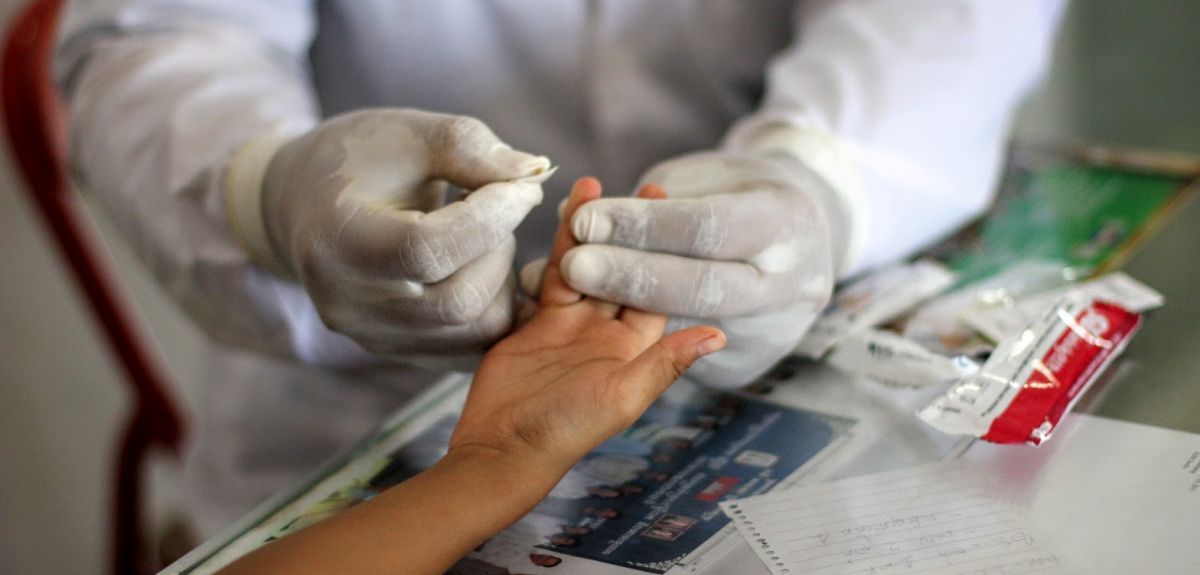
To mark World Malaria Day on 25th April, Prof Philippe Guérin, Director of the Infectious Diseases Data Observatory, based at the University of Oxford, explains the need to maintain our focus on the elimination of malaria.
World Malaria Day is an opportunity to take stock in the battle against a disease which still kills approximately half a million people each year, most of them children under the age of five in Africa. We have made great progress in recent years, with the global death rate cut by almost 30% between 2010 and 2015, yet malaria remains a complex public health challenge for which there is no simple—and no single—solution. Fighting this deadly disease is a truly collaborative effort that includes preventive measures on the ground, like distributing mosquito nets to limit infection, and scientific research in the laboratory to boost efforts to create new drugs or new vaccines.
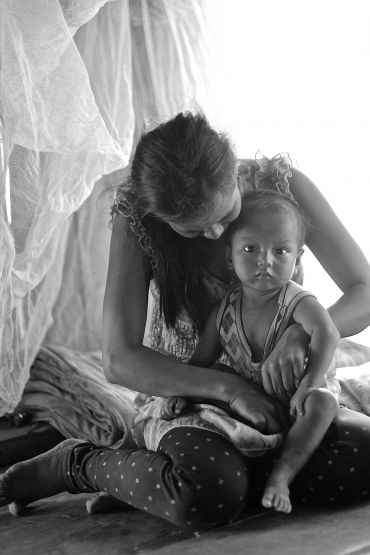 World Malaria Day
Image credit: Copyright Pearl Gan in association with Oxford Clinical Research Unit, Vietnam ; Eijkman Oxford Clinical Research Unit, Jakarta and The Wellcome Trust.
www.asiamalariaimages.com
Ending malaria for good – which is the theme of World Malaria Day this year – also means preserving the effectiveness of available tools. Artemisinin-based combination therapies (ACTs) are currently the primary treatment for the most lethal strain of malaria caused by the Plasmodium falciparum parasite. However, there is currently no replacement therapy to succeed ACTs, and emergence and/or spread of resistance is a major public health problem that could roll back the gains we have made.
In the last decade we have seen resistance to artemisinin and its partner drugs emerge and spread in pockets of Southeast Asia, including Cambodia, Thailand, Vietnam, Laos and Myanmar, and in South China. Should resistance emerge or spread further into India and Africa, it could have devastating consequences, particularly in Africa, where the majority of malaria cases are from P. falciparum. Assessing and predicting this risk is extremely difficult, but we cannot take the chance that it won't happen.
WWARN is working with more than 260 institutions around the world to produce evidence and tools to understand the drivers and spread of antimalarial resistance, and to protect the efficacy of current and future drug therapies. The organisation has pioneered a data-driven approach to collecting, curating and analysing the results of individual clinical trials around the world, allowing researchers to make stronger inferences about drug resistance and efficacy. The organisation’s 25 collaborative study groups are currently investigating key areas of malaria science, including the effect of malnutrition on treatment outcomes in young children, and the impact of malaria in pregnancy on pregnancy outcomes.
We are pleased with how far we have come in the fight against malaria, but there are many challenges ahead. Containing resistance and maintaining the efficacy of our current treatments requires a concerted effort from everyone involved in malaria research, policy-making and drug development, so that we can work together towards malaria elimination.
Prof Philippe Guérin is Professor of Epidemiology and Global Health at the University of Oxford and Director of the Infectious Diseases Data Observatory, a collection of data platforms encompassing the WorldWide Antimalarial Resistance Network, a scientifically independent multidisciplinary platform that generates evidence and tools to inform the malaria community on factors affecting the efficacy of antimalarial medicines.
- ‹ previous
- 98 of 252
- next ›
 What US intervention could mean for displaced Venezuelans
  Setting the agenda for the next century of quantum
 10 years on: The Oxford learning centre making an impact
 Mapping the Moon: the world’s first lunar atlas goes digital
  Oxford and The Brilliant Club: inspiring the next generation of scholars
 New course launched for the next generation of creative translators
 The art of translation – raising the profile of languages in schools
  Opening a window into the quantum world
 Tracking resistance: Mapping the spread of drug-resistant malaria