Features

As shopping surged over Christmas and now into the January sales, it has been one of the busiest times of the year online. Yes, Santa, the high street, and Amazon have all been doing overtime … and so, each year, does cybercrime. (You may, indeed, have caught the recent credit card hack over at Macy’s.)
So what can we do about cybercrime? To answer that, you need to understand it. Enter Dr Jonathan Lusthaus, Director of The Human Cybercriminal Project in the Department of Sociology, at the University of Oxford. Dr Lusthaus has spent the last seven years researching the hidden details of cybercrime. His book on the subject, Industry of Anonymity, is published by Harvard University Press. He’s also written on the subject for range of periodicals including The New York Times and The New Statesman, and been interviewed by the Financial Times’s Tech Tonic podcast and the a16z podcast..
In those years of research, he interviewed almost 250 people. These included law enforcement agents, security professionals and former cybercriminals. Speaking about the people he met, he remarked on how normal this new kind of criminal seems to be: ‘I was able to interview a number of former cybercriminals from a range of countries. There are a lot of interesting characters out there, but ultimately they are just people like the rest of us. Many of the former offenders I spoke to were intelligent and engaging.’
What drove him to find out so much about this world? Originally, he was planning to research religious violence, but found himself fascinated by cybercrime after a talk on the topic from the journalist Misha Glenny. With the subject becoming a growing obsession, he kept researching, doing his doctorate on the subject under the supervision of Federico Varese, a leading authority on organised crime.
A picture emerged of an industry that was strangely distant from traditional organised crime. Many cybercrime ventures seemed to function much like other online businesses, only they happened to be illegal. Out of several surprises that Dr Lusthaus uncovered, he recounts one of the most eye-opening as: ‘What surprised me most about the cybercrime world was how many of the offenders know each other in person. When I began this research almost a decade ago, I assumed this would be almost a purely virtual phenomenon. But the more I dug into it, the more I found cybercriminals who met online and then met up in person, or groups of people who knew each other in person already and then started to work together on an online scam. Sometimes this can be very much embedded in local communities and environments. This offline and local dimension is particularly fascinating and something that Federico Varese and I are continuing to investigate.’
Maybe it’s that knowing each other in person builds trust? Or perhaps it just makes it easier to organise if you’re not doing it all online? Indeed, in some cases, Dr Lusthaus found that some cybercriminals went so far as to invest in office space. They would even organise themselves along corporate hierarchies, with managers, specialist roles, and marketing teams. It turns out that in the cybercrime marketplace you still need someone to advertise your services.
If the way cybercrime can flourish seems oddly entrepreneurial to you, then you’re starting to identify one of what Dr Lusthaus sees as the key factors behind it. Some of the areas that tend to become cybercrime hubs are places with very strong technical education, but not enough jobs to support all the resulting talent. Lacking employment opportunities or legal avenues for start-up investment, some people turn to cybercrime as a quick way to use their skills to make ends meet.
But not all cybercrime hotspots are the same. There’s a lot of variation tied to the resources and skills available in each area, which then feed into local criminal specialities: ‘The former Soviet Union is one well-known hub for cybercrime. It is known for the most technical types of cybercrime, like malware production. Other key hubs include Romania, Nigeria and Brazil. These often become associated with different kinds of cybercrime. For example, some would say Romanian offenders are famous for "online auction fraud", which involves selling fictitious products online.
‘Nigerian fraudsters have entered so many people's lives through those (sometimes far-fetched) emails offering strangers part of some fortune if only they can provide a small amount of money to unlock it. This is known as "advance fee fraud". More recently, these offenders have evolved and now engage in other scams like impersonating CEOs and other company officers to authorise fraudulent transactions. Of course, we also can't forget about the West, which has a lot of cybercrime offenders engaged in the money side of cybercrime, "cashing out" virtual gains into physical or monetary ones.’
So, what can we do to combat cybercrime in these areas? Various experts, including Dr Lusthaus, have suggested it’s not a problem we can arrest away. Instead, it may be an issue we can invest away:
‘While we lack data and rigorous study on this, I suspect a number of future cybercrime offenders could be diverted into legitimate work. The UK's National Crime Agency is leading the way globally with cybercrime prevention programs. But the real need is to internationalise diversion programs beyond the West and target them to the hubs that produce the most effective cybercriminals, like Eastern Europe. This means creating more opportunities in places where very capable individuals are being pulled into cybercrime because there aren't enough good jobs to support them. The private sector can potentially play a huge role here.’
If you want to learn more about cybercrime, you can find the details of Dr Lusthaus’s book and various articles on the Harvard University Press site. But if there’s one key thing you should know about cybercrime, he thinks it should be this one: ‘Cybercrime is not as shadowy as people think. It's important not to view cybercriminals as exotic. Mystifying them makes it harder to develop solutions. I think approaching cybercrime in "human" terms is really important to addressing the problem in a more holistic way. It is not just a technical challenge.’
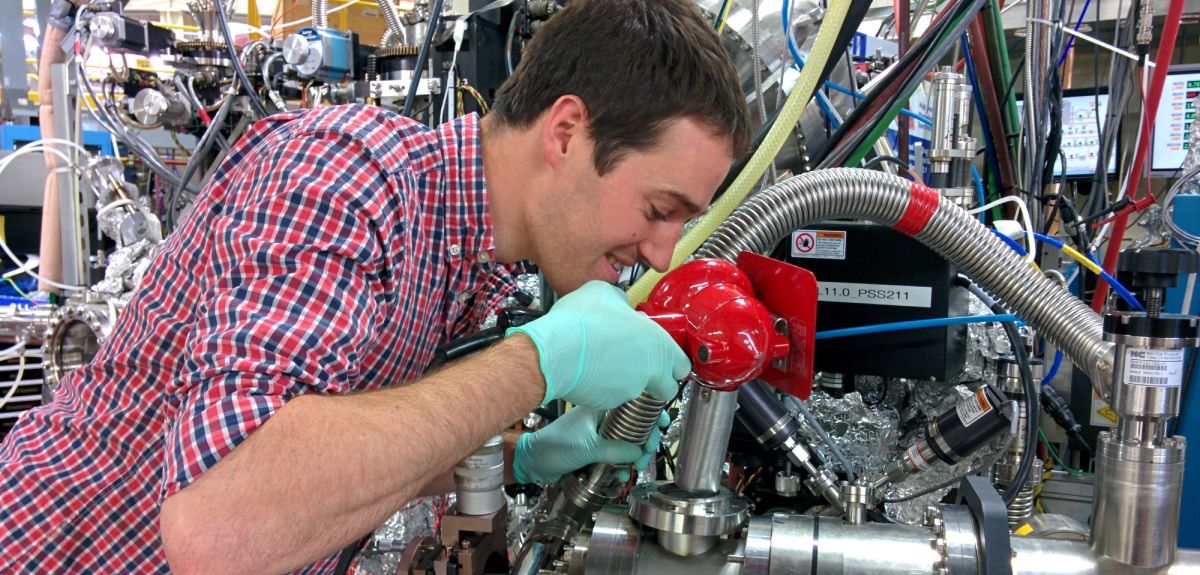
Associate Professor Robert Weatherup is a new arrival in the Department of Materials. Continuing our series of ‘amazing people at Oxford you should know about’ ScienceBlog talks to Rob about his research in ‘interfaces science’ and the advances he’s working on for batteries, electric vehicles and sustainable technology.
You specialise in ‘interface science’. For the uninitiated, like myself, what does that mean?
Interface science is hugely important, but at the same time, it’s difficult to understand. When two surfaces meet, it’s where a lot of interesting chemistry happens.
If you think about your material, you have the ‘bulk’ and the ‘surface/interface’. The ‘bulk’ is where we have most of the material, all the atoms in ordered rows. It’s fairly easy to predict how that will behave. When you have two materials interfacing, you have a lot of that bulk on either side. And that gets in the way of trying to measure them.
The problem comes at interfaces where the surface interacts with other things. And that’s where it gets trickier.
For example, my work on batteries. In a lithium ion battery, you have an electrode in contact with liquid electrolyte. The reaction you want to happen is for lithium ions to travel from one electrode to the other. But you also get side reactions, like electrolyte decomposing or your electrode dissolving. These side reactions are why batteries stop holding as much charge. Like you see after about a year of using your phone, the battery just doesn’t go as far as it used to.
We want to be able to measure down to really small levels, like nanometre or even angstrom sensitivity at these interfaces. That means developing special techniques to do that.
And what kind of impacts and innovations can we expect to see coming out of this area?
Look at electric vehicles. People want the same kind of performance from electric cars as with petrol. They want it to last at least 10 years, have similar performance, and comparable cost. Two of the big problems with batteries at the moment is that they’re expensive and their total lifetime isn’t long enough.
If we can take that really close look at what’s going wrong, using some of these new techniques, we can try to find solutions for some of those problems.
What have been some of the milestones of the career that’s brought you to Oxford?
At heart, I’m a problem-solver, that’s why I got into engineering. So solving the problem of longer-lasting batteries, even a bit at a time, is exciting.
I did my PhD and undergraduate degree at Cambridge, in Engineering. I stayed to do a research fellowship, then I went to Berkeley in California for two years on the Marie Curie Fellowship, which was my route into looking at batteries.
To begin with, I was working on electronic devices, but then started to look more at the materials, like graphene.
Over in Berkeley they have a synchrotron facility that allowed for some really high sensitive techniques to look at those materials. A synchrotron is a big donut-shaped building where they spin electrons close to the speed of light to produce x-rays. I’ve spent a lot of my career hanging around different synchrotron facilities.
Basically, you use x-rays to illuminate the material you’re looking at. Then you can see the photoelectrons coming off it, which tells you a lot about its surface chemistry.
Using thin materials, like the graphene I’d been working with, I found a way to use this to look at higher pressure materials. For example, like the liquids you might find in batteries.
After Berkeley I went back to Cambridge and then I moved on to Manchester. For my research there I started working with the diamond synchrotron in Harwell, near Oxford, and that’s part of why I’ve ended up here.
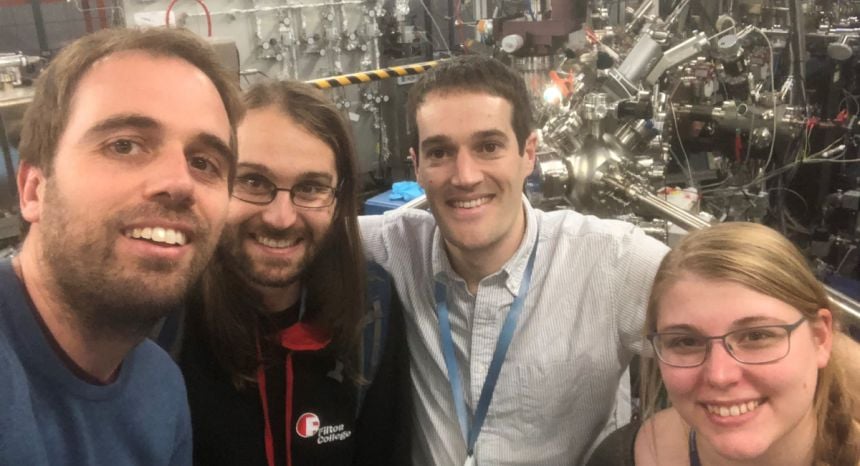 Rob and his team of colleagues at the Harwell Synchrotron
So, you did your undergrad and PhD at Cambridge, you’ve also worked in Berkeley and Manchester, and now you’re at Oxford. How have you found moving between those places?
The US system was very different. Partly because I was going from a university system to a national lab. It was a lot more open, both in discussing ideas and sharing equipment.
Though, on return to the UK, I’ve found universities have moved in the same direction. There’s been a successful push to open things up and make resources more widely available.
Coming from Cambridge, did you get any light-hearted grief from friends for coming to Oxford? And how have you found Oxford, generally?
I did. But I got my just desserts I think, because I did some of that joshing when I was at Cambridge. We had a few people who had come from Oxford, so I was winding them up about that. And then they took it upon themselves to remind me of this when I turned the other way.
A lot of things are superficially very similar between the two, of course. I have to adjust my language, sometimes I’ll find myself in the middle of tutorials talking about ‘supervisions’, so some little things take a while to get used to. But I’m getting there!
They’re both great places to do science, so there have been no major surprises and I’m settling in well.
One of your big projects is the ominously titled ‘What Lies Beneath’ with the Faraday Institution. Tell us about that?
That one has only really just started. The funding came through just before I came to Oxford and we’ve just had our first post-doc start with us about a week ago here. What’s nice is that Oxford has lots of battery research, equipment and colleagues (like Peter Bruce and Mauro Pasta) to lend expertise.
That project still involves a collaboration with Manchester and with the Diamond Light Source at Harwell, so we’re keeping strong links with that excellent facility and I have some students based down there.
And what’s the overall goal of that project?
We are trying to look at the interfaces in batteries, which are buried. That ‘bulk’ I mentioned earlier? That hides a lot of the reactions.
So we’re looking at both solid state batteries and liquid cells, working to understand those lifespan issues.
Solid state batteries are where you have solid electrolytes. Those aren’t really commercially available yet, but they have very high energy density and can also be safer as the electrolytes aren’t flammable. But when you have these two thick solids, it’s even harder to probe. So we’re looking at ways to thin down the electrodes, and also looking deeper and using ‘hard x-rays’.
This is the first time this is being done with working batteries. Previously, you’d pull the surfaces apart to get a better look, but the chemistry is changed by separating them.
So you can’t look at what’s happening while the battery’s charging or discharging.
And what might the impact be of this kind of research? How’s it going to change how we look at batteries and electric vehicles?
The blue sky part of the research is new techniques to get a closer look at the interfaces and chemistry.
Practically, we hope to understand why we’re getting degradation in higher capacity materials.
There are new materials that could provide better performance and be cheaper. But they may also be less stable and interact in new ways with the electrodes, so we really want to understand why that is.
And these are batteries that are close to market already, so it can have a real impact on the industry.
You grew up in Chelmsford, right? Would it be okay to say a little about your journey from there to Cambridge and then to here? What got you into engineering?
I was born in Chelmsford and went to the local grammar school. Chelmsford’s actually where Marconi founded his first radio factory. So a lot of the local industry was related to telecommunications.
What got me into engineering was a very passionate design and technology teacher, who had a keen interest in electronics. She was really good at running after school activities that were great for involving you and keeping your interest up. She was one of the most defining teachers I had, definitely. She encouraged me to get involved in a local engineering scheme as a hobby too, and to seriously pursue a path to a career in the field.
It probably helped having a dad who was a physicist and worked as an electronic engineer for a local company too.
Oxford has a rich history of work on batteries, with John B. Goodenough, who pioneered the Lithium Ion battery, recently being awarded a Nobel Prize. How does your work build upon that history?
Absolutely. We’re working with very similar materials. The cathode materials we’re still looking at, 30-odd years on, are still based on that structure, tweaked for higher capacity.
He had a huge impact on the commercially viable lithium ion battery and his work is still very pertinent to the real batteries we’re working on.
Many of his former students and colleagues are active at Oxford; there’s Bill David in Chemistry here, who I work with at Diamond, and Peter Bruce here in Materials as well.
Obviously, electric cars and thus lithium ion batteries are a hot button topic at the moment, any insights on what the future holds for them, based on your work?
Not just my work – look at government policy. We’re committed to all cars being zero emission by 2040. Electric vehicles look like the most promising solution. Which is why things like the Faraday Institution have been founded.
In terms of what we’re doing, we want to make these new higher capacity materials viable for the next generation of batteries, to make them more stable and offer longer lifetimes. We expect that in about 5 to 10 years that these new materials could be used in real world batteries.
For solid state batteries too, I can’t give an exact estimate, but it could be up to 20 years before we see them used in cars or phones. But we could see them used in smaller portable devices sooner!
Talking of timescale, what do you think we’re looking at for when electric cars might meet people’s expectations, compared to petrol?
You’re not going to wake up overnight and find that suddenly batteries have twice the capacity. But those kind of advancements are coming, and our work is helping get there.
Gradually those little steps will keep building up and they’ll become cheaper, they’ll last longer and that kind of thing.
The more unpredictable thing is if we’ll have a breakthrough where suddenly we find a new kind of material that will completely change the game.
Obviously, I can’t say when or even if that will happen, but it’s the kind of thing that can only happen if we do the research and better understand what’s going on with the materials.
What one thing about your research we haven’t covered yet that you think is important and interesting?
Beyond the batteries, we’re working on how we might be able to make other technologies to be more sustainable. For example, the synthesis of fuels and chemicals.
There’s an increasing interest in this idea of green chemistry. So, how do you capture waste products from industry or vehicles (like CO2) and turn them into something useful? Basically, how do we close the ‘carbon loop’?
This will be one of the few ways to make some technologies sustainable – but we’re not going to see batteries powering planes any time soon.
Where do you want your career at Oxford to take you? Where will this research take you?
Firstly, I’m hoping to build up the strength of my group to address some of these problems! Oxford’s full of like-minded people, so it’s a great environment to do that.
And I’m hoping some of the techniques we’re developing, will really give the validation that we’re doing important work.
And what would you say to people considering studying engineering, electronics or materials?
‘Do it!’ I think people should definitely consider it if they like problem-solving and understanding how the world works.
In terms of personal qualities, you need a lot of resilience and persistence. The nature of research is that things often go wrong and it’s easy to give up and call it a day, but often those are the times where, if you just keep going, you can make it work or learn why it wasn’t working. So many of the things we’ve understood in history aren’t from well-designed experiments that went well, but from when they didn’t go well. Just keep pushing on.
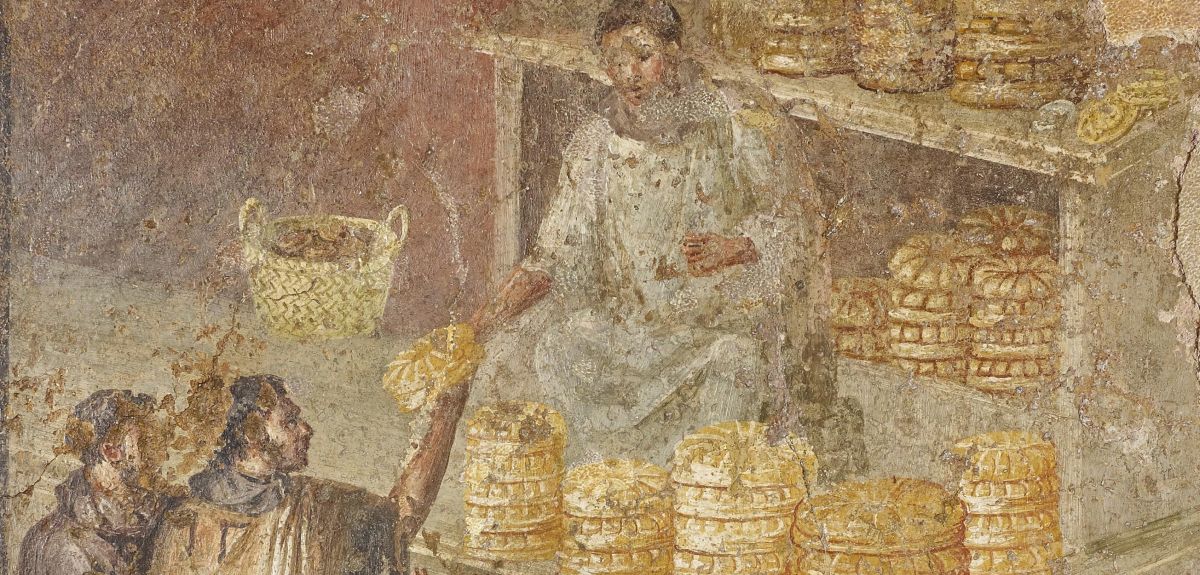
The Ashmolean's 2019 exhibition explored ancient Pompeii. The exhibition has closed, but conservators continue to uncover the hidden histories of 37 previously untouched objects.
After a fascinating morning in the Ashmolean’s conservation labs, I find myself wandering through the Last Supper in Pompeii exhibition. Viewing the many wonderful exhibits with a renewed wonder for the conservation work that’s gone into them, my eye is drawn to a statue of Apollo towards the end.
It’s a gorgeous bronze piece, but this time that’s not the principle reason for my interest. The label tells me that it was later adapted for use as a tray holder during meals. For a moment, I ponder what the famously capricious deity would make of having his statue modified in such a way.
But for the most part, I’m caught by how it found a second life at the banquet table.
This is perhaps the biggest thing I took away from my visit to the labs. The Ashmolean was given 37 items from the Pompeii Archaeological Park’s archive. None of these had been outside Pompeii or seen significant conservation work before. As such, this represents a unique collaboration. And each object, especially those which have seen lots of practical use, tells a story.

Conservation Manager Alexandra Baldwin was kind enough to talk me through the various techniques used to analyse and conserve these objects. This is how they fight back to keep items in the best state possible. It’s also how they tease out the details that help us map each object’s journey.
Spread out on the tables in the lab are various copper pots, bowls, jugs and other vessels. Alexandra tells me that finds like these are quite rare. Due to the intrinsic value of metal, such items wouldn’t be thrown away, but sold second hand, repaired, reused and eventually melted down and remade.
But it’s exactly this long and varied lifespan that makes these objects so interesting.
There are two places you tend to find metal objects like this. The first is sites of ritual deposition, like burials. The second is places that have been struck by sudden catastrophe.
It’s only in those sites of catastrophe like Pompeii and Herculaneum that we find items that were still in use. So each nugget of information uncovered about these objects – from dents to organic residue to location found – tells a bit more of a story.
Take, for example, one of the especially fine pieces they’ve restored for the exhibition: a copper bowl with an intricate ram’s head handle and delicate silver inlay. To my untrained eye, the handle carving especially is gorgeous. This ‘patera’ was likely used for ritual hand-washing.
Slowly and painstakingly, Alexandra clearing away the detritus of the years with the help of delicate surgeon’s tools and binocular microscope. Alexandra and colleague Stephanie Ward (Objects Conservator) told me that as the fine details emerged, it became clear this was one of the finest pieces they’d seen.
Which is actually a little odd, given all these objects were excavated from one of Pompeii’s backstreet taverns. Hardly the venue you’d expect to find a well-crafted piece like this.
Looking over the maps of Pompeii, Alexandra pointed out landmarks like main roads, temples and the amphitheatre. It’s just round the corner from this site of various state-sponsored games and gladiatorial matches that the tavern is located. With a spacious garden, even including a small vineyard, it seems like it would have been a very pleasant location to pass an afternoon eating with friends. Given most ordinary Pompeiians wouldn’t have had their own full kitchens, take-away and dining out would have been a pretty regular part of their diets. So, how did such a fine piece end up in a run-of-the-mill eatery?
Further analysis (including x-rays) revealed the dents and damage the bowl had sustained. You might expect a bowl from Pompeii to be a bit worse for wear, but these were marks from before the eruption of Vesuvius. Given this clue, it seemed that this piece had probably been previously owned by a noble household, then damaged and sold on. Eventually, it made its way to this downhill tavern to be used by a multitude of regular citizens.
When the objects arrived in Oxford in several bright blue packing crates, the conservation team thought it would be a relatively straightforward job. They certainly weren’t expecting the various surprises and discoveries that their analysis would reveal about the many ordinary lives these objects touched.
Perhaps the biggest surprise was a bowl which, due to its shape, would usually be assumed to be used for ceremonial hand-washing. But during the cleaning process, Conservator Miriam Orsini found strange shapes embodied in the bottom. They looked, perhaps, like insects. None of the conservation team were insect experts, but thankfully the University of Oxford museums are filled with a wide variety of experts.
An entomologist from the Natural History Museum was called in: they identified the remains as common fly larvae and rove beetles.

Insects like these wouldn’t have been interested as water; they’re attracted to protein. So the team could determine that this bowl would have been used for raw meat or fish. Perhaps a scrap bowl or a mixing bowl of some kind? Another example of something that likely served multiple uses over time, each of which unearths another piece of lives that – if not for Pompeii – we’d know very little about.
Walking around the exhibition after seeing the labs, this sense of exhibits as holding secret stories felt incredibly pronounced. A lot of them feel full of personality. There’s the branded murals and fish sauce bottles from one of Pompeii’s nouveau riche fish sauce (‘garum’) barons, clearly keen to show off his humble beginnings. Devotive offerings found in kitchen shrines (close to the hearth that was the centre of the home) also seem to whisper about ancient hopes and prayers.
Amidst the case that contains many of the newly conserved items, we can also see one jar left in the state in which it was excavated. It’s crusted with pumice that grows off the rim like a rocky fungus, and coated with a light blue sheen of volcanic-formed Lapili. It’s a stark contrast to the other pieces, delicately restored to their distinctive copper-tarnished surfaces.

A video nearby illustrates some of the work in the labs that I was privileged to have explained to me. We see, for example, how x-rays revealed the various repairs the vessels had undergone. Some had clearly been fixed up by skilled craftspeople with thin copper strips, riveted on. Others had crude repairs of melted lead poured over cracks. Again and again, these vessels were used and re-used, a constant part of the practical lives of Pompeiians.
So perhaps it’s appropriate that they’re being used here, again, as part of an exhibition that highlights the relationship between a people and their food.
And there’s still more analysis underway. Many of the objects still had traces of organic material (partly thanks to the copper they’re made out of, which kills bacteria). In another collaboration, the Oxford Archaeology and Chemistry departments are currently working together to find out what that can tell us.
Once the exhibition ends (after the last day tomorrow, 11 January), still more work will be done with x-ray and other techniques. It seems this partnership with the Parco Archeologico di Pompei, with funding for the conservation work supported by the Stockman Family Foundation and the Helen Roll Charity, has more secrets to uncover.
Coming up next for the conservation labs at the Ashmolean will be some work on their Ancient Near East collection. Among other techniques, this project will use hyperspectral imaging to uncover more about ancient objects from sites such as Ur and Nimrud. While it’s too early to say what will be discovered, they are hoping that such analysis could (for example) tell us more about the pigments and colours which would have decorated ivory and carved figures, and stone reliefs, bringing a bit of colour back into history…
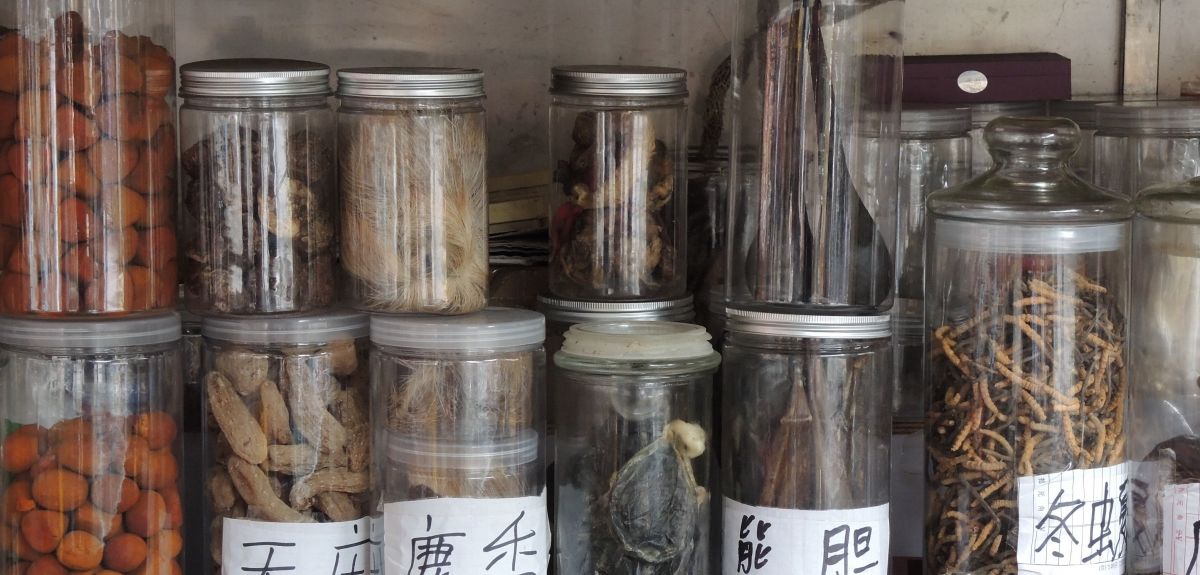
By Amy Hinsley
Promoted as a 21st century version of the ancient Silk Roads, China’s Belt & Road Initiative (BRI) aims to improve global connectivity and change the shape of international trade. The multi-billion-dollar project will link China with countries in Southeast and Central Asia, East Africa, Europe and beyond, building a network that will include almost two thirds of the world’s population.
From a conservation and sustainability perspective, the roads, railways and ports that form the land ‘belts’ and marine ‘roads’ of the BRI have received some attention but the aim to expand Traditional Chinese Medicine to the world has not. This may be a serious oversight, as products used in TCM are derived from plant, animal and fungal ingredients, many of which are wild-sourced. This means that rapidly growing markets could put pressure on species harvested legally to supply them, and may even lead to an increase in illegal trade to supply informal markets. However, it also brings opportunities for well-managed sustainable trade, which can bring significant benefits to people in poor, rural communities with few other livelihood options.
In our new paper in Nature Sustainability, we evaluate the potential risks and opportunities of Traditional Chinese Medicine expansion via the BRI with a focus on developing strategies for well-managed, sustainable wildlife trade chains. We outline four steps to achieve this and highlight the importance of Chinese leadership in this process, which aligns with the country’s goals of a green BRI. Countries including Nepal, Portugal, Poland and Zimbabwe have shown interest in working with China on developing these medicinal markets, and this diversity of countries will mean that risks and opportunities will vary greatly. The first step is therefore to work with cross-sector stakeholders in different countries to understand how Traditional Chinese Medicine markets will grow, and how this might affect supply of products made from wild species. This evidence base should then be used to develop targeted sustainability strategies, and identify priority species for which illegal and unsustainable trade may become a threat. Finally, species that can be sustainably sourced should be identified, with a focus on species and areas that present an opportunity for both conservation and poverty alleviation.
As the BRI enters its seventh year China is reaching out to more countries to cooperate on the marketing, registration and promotion of Traditional Chinese Medicine products. There is now a critical short-term window for the identification of potential risks and opportunities, to ensure that sustainability is built into these markets from the start.
BEHIND THE RESEARCH
 Chinese traditional medicine trade
Whilst our conservation experience working on wildlife trade issues allowed us to consider in detail the potential risks that might arise from better connectivity and increased demand for TCM products, it was clear that to create meaningful impact we must get buy-in from relevant stakeholders. We secured an opportunistic meeting with representatives of the Chinese Association of TCM (CATCM) in Beijing, who work with the TCM industry, including on BRI expansion. Following discussions with CATCM we established that there was interest in developing more sustainable TCM supply-chains in BRI countries. However, we also established that the situation was going to be highly complex, with both supply and demand of TCM products likely to vary greatly between different countries and regions.
We invited authors from different disciplines and sectors to help develop a strategy for sustainability that could account for the complexity of BRI TCM markets. Our final author team includes academics and practitioners working on wildlife trade, livelihoods, and sustainable supply-chains for medicinal plants, as well as a policy-maker in China with experience of working on TCM and conservation. This collaboration resulted in a paper that lays out a realistic, four-step strategy for understanding the risks of BRI TCM and turning them into opportunities for sustainability. As the BRI enters its seventh year China is reaching out to more countries to cooperate on the marketing, registration and promotion of TCM products. There is now a critical short-term window for the identification of potential risks and opportunities, to ensure that sustainability is built into these markets from the start.
The paper is available in both English and Chinese language versions.

The concert in May 2019 saw Gaz and his band perform a bespoke set with the 42-piece ‘Hot Fruit Orchestra’, made up of students, professors and alumni of the Oxford University Faculty of Music. The Hot Fruit Orchestra was a ‘scratch orchestra’ – none of the musicians had played together before.
The response from the players and the audience was equally as enthusiastic. Professor Gascia Ouzounian, who performed at the concert, said: "This was an extraordinary opportunity for students and staff from the Faculty of Music to play alongside Gaz Coombes, one of the world’s finest singer-songwriters, in the Sheldonian, an historic building, with gorgeous orchestral arrangements by composer Luke Lewis.
DPhil student and performer Patrick Brennan said: "I really enjoyed the fusion that took place in the Sheldonian that evening - the chance to play my violin at an orchestral desk, but accompanied by guitars, drums, synthesisers, and of course Gaz Coombes’ sensational vocals."
The venue was provided for free as part of the Sheldonian Theatre Curators' 350th Anniversary Community Engagement Scheme - a way of allowing the community and different groups of people to access the historic building.
Track listing for ‘Sheldonian Live EP’:
1) The Girl Who Fell To Earth (Sheldonian Live)
2) The Oaks (Sheldonian Live)
3) Walk The Walk (Sheldonian Live)
4) Slow Motion Life (Sheldonian Live)
- ‹ previous
- 49 of 252
- next ›
 Learning for peace: global governance education at Oxford
  What US intervention could mean for displaced Venezuelans
  Setting the agenda for the next century of quantum
 10 years on: The Oxford learning centre making an impact
 Mapping the Moon: the world’s first lunar atlas goes digital
  Oxford and The Brilliant Club: inspiring the next generation of scholars
 New course launched for the next generation of creative translators
 The art of translation – raising the profile of languages in schools
  Opening a window into the quantum world
 Tracking resistance: Mapping the spread of drug-resistant malaria