Features
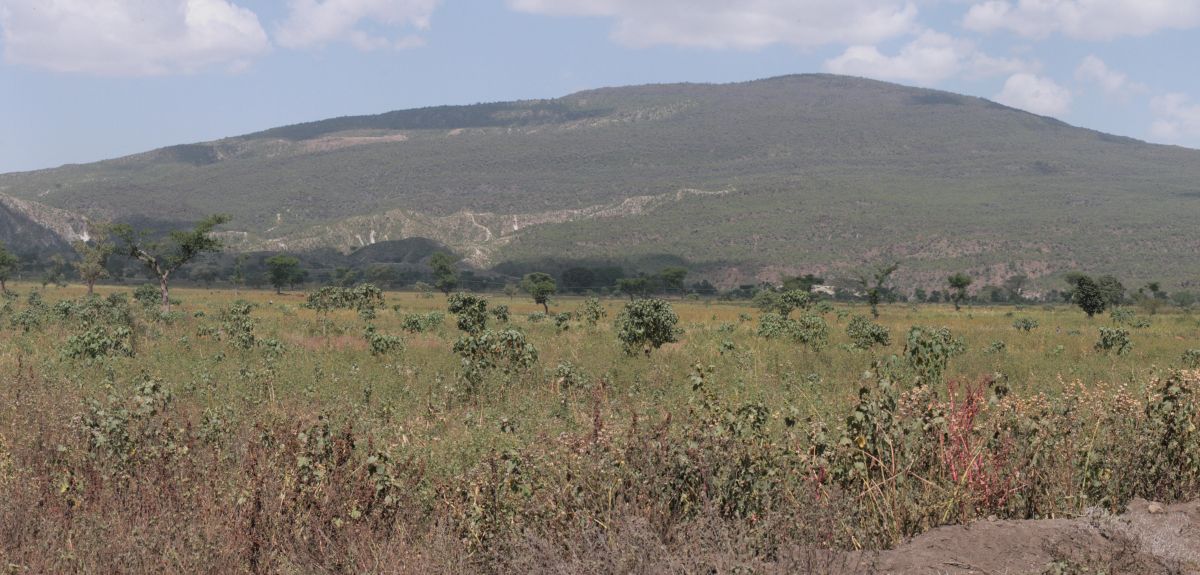
In a guest post for Science Blog, Professor David Pyle of Oxford's Department of Earth Sciences discusses a new paper looking at ancient volcanic activity in the Ethiopian Rift Valley.
The great Rift Valley that runs through Ethiopia has played a pivotal role in human evolution. It is both the location of the earliest fossils of anatomically modern humans and, later, become an important route for human migrations 'out of Africa'.
Today, it is home to more than ten million people, a major hub for tourists, and the location of important transport links. The main Ethiopian Rift Valley is also one of the largest fields of volcanoes on Earth – although this status may not be obvious from the remnants of the sprawling tumbledown hills that break through the dusty flats of the rift valley floor. Here, Africa has been slowly pulling apart for millions of years. As the continent pulls apart, the crust extends and thins, promoting the rise of magma from the depths of the Earth's mantle. None of these volcanoes is thought to have erupted since the early 19th century, and several are now the focus of development of geothermal energy potential.
In a new paper published in the journal Nature Communications, Will Hutchison, an Oxford DPhil student, and a team of collaborators from the UK, Ethiopia and the USA, shed a little more light on the violently explosive past of several of these rift volcanoes. Using a combination of field work (to reconstruct the deep history of the volcanoes) and isotopic age dating techniques, the researchers find that at least four of the volcanoes of the main Ethiopian Rift Valley suffered colossal eruptions between about 320,000 and 170,000 years ago. These were very significant eruptions – perhaps of the scale of the eruption of Krakatoa in Indonesia in 1883. They would have buried the rift floor in volcanic ejecta, disrupting water sources and habitats across wide areas, with the collapsed remnants of the volcanic edifices forming great 'calderas', or craters, in the rift floor.
This pulse in volcanism coincides with the arrival of Homo sapiens in the region around 200,000 years ago and raises the question of to what extent these changes in the landscape and environments occupied by our earliest human ancestors might have influenced human evolution and migration. The recognition that explosive volcanism in the rift occurs in bursts also poses some interesting geological questions, and future inter-disciplinary research is needed to understand the scale of eruptions at other large volcanoes of the rift, their causes, and their wider consequences.
As the US presidential election campaign reaches it final few weeks, the potential impact of overseas voters on key battleground states has been highlighted by a new report from the Rothermere American Institute (RAI) at the University of Oxford.
America’s Overseas Voters: 2016’s Forgotten Constituency? considers the states in which overseas voters stand to have the biggest impact. It identifies that winning a majority of overseas voters – often amounting to just a few thousand votes – could be enough for the candidates to snatch certain swing states.
The Trump campaign has suffered significant setbacks over the last two weeks, and the resulting decline in domestic support could mean that overseas voters provide the extra push needed for Hillary Clinton to secure Iowa, Arizona and Georgia.
But – as the recent Brexit vote and UK general election have shown – pollsters’ predictions can be significantly wrong. If Trump’s real support-base in Ohio, Nevada and North Carolina is close to where it appeared to be earlier in October, then Trump could take these states if he is able to command a sufficiently large majority of overseas voters.
Dr Halbert Jones, Director of the Rothermere American Institute at the University of Oxford, and co author of the report said: “Our analysis shows that, based on recent polls, Trump might need a majority of just 5,600 among Ohio’s overseas voters to win the state, and a majority of just 7,100 among overseas voters to win Nevada.
“But if the national vote swings further behind Clinton, the overseas vote could mean she takes the presidency with a rout rather than a slim victory – helping the Democrats to snatch prizes like Georgia, Iowa and Arizona.”
The report examines the characteristics of the overseas voting population, drawing on data on absentee ballot requestsfrom the state of North Carolina. This analysis concludes that while Americans casting their votes from abroad are a diverse group, in at least one key swing state they are, as a group, disproportionately Democratic, urban, and white. The ways in which the profile of the overseas population differs from that of the electorate at large has potentially significant implications in a very close election.
It also analyses a recent US Government study suggesting that more than 2.6 million potential US voters live overseas, though this may well be a significant underestimation. US Government data highlights key populations of overseas US voters in Canada (661,000), Britain (306,000), France (159,000) and Israel (133,000), with other populations of more than 100,000 in Japan and Australia.
The population of potential US voters in Mexico is contested – with a US Government study suggesting just 65,000, while the 2010 Mexican census suggests a figure closer to 200,000. However sources agree that there is a huge number of US-born children living in Mexico - this means that the country is set to play an increasingly important role in US elections in the future.
Dr Patrick Andelic, Research Associate at the RAI, and co author of the report, said: “Canada, Britain, France and Israel all play a substantial role in US elections now. While current polling places Clinton in a commanding lead, the volatile nature of the race so far means that anything can still happen - and if Britain’s recent general election and Brexit result have shown us anything, it’s that one shouldn’t call a winner until the votes have all been counted. Overseas voters proved crucial to George W Bush’s victory in 2000, and they may make a critical difference in 2016. Political parties ignore this hidden constituency at their peril.”
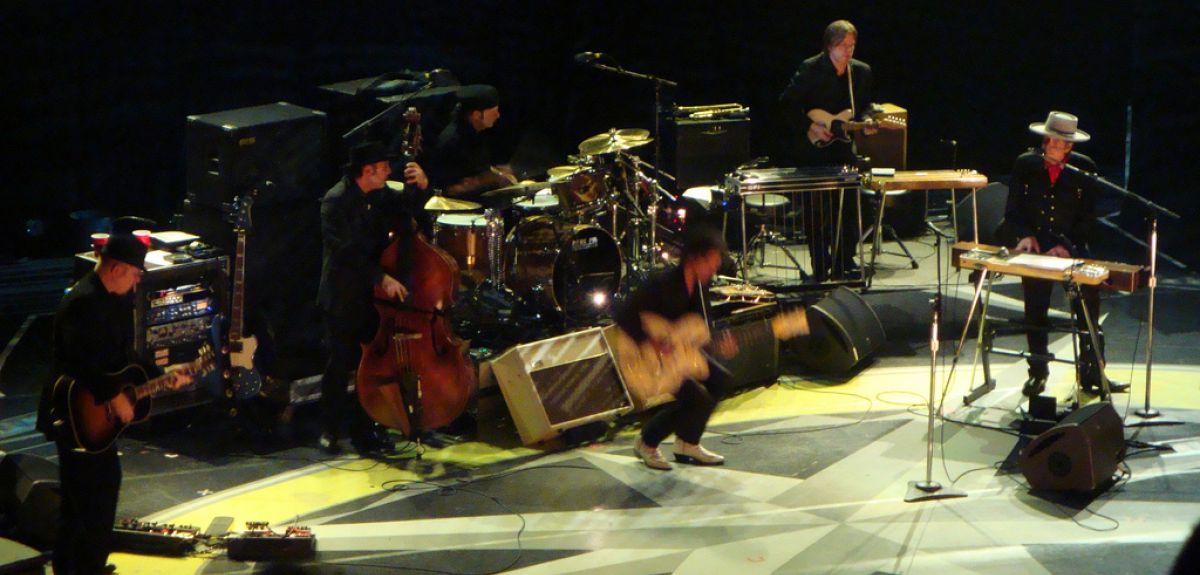
Bob Dylan was announced as the winner of the Nobel Prize for Literature yesterday.
Many pundits hailed this as a vindication for Christopher Ricks, a former Professor of Poetry at the University, who has studied Bob Dylan’s lyrics for many years.
In The Times, Anne Treneman said that he “has laid the groundwork for a better understanding of Dylan’s literary significance”.
Some people reacted to the news by questioning whether a ‘singer’ should be eligible for the Nobel Prize for Literature. But Professor Seamus Perry, Chair of the English Faculty at Oxford University, disagrees.
‘Dylan winning the Nobel was always the thing that you thought should happen in a reasonable world but still seemed quite unimaginable in this one,’ he says.
‘He is, more than any other, the poet of our times, as Tennyson was of his, representative and yet wholly individual, humane, angry, funny, and tender by turn; really, wholly himself, one of the greats."
The announcement was a surprise because the bookmakers’ favourite to win had been Kenyan writer Ngugi wa Thiong’o. His writing was the subject of the MPhil thesis of Professor Elleke Boehmer, who is now Director of The Oxford Research Centre in the Humanities (TORCH).
‘Ngugi is an undisputed giant of the African novel and African theatre, who has always seen literature as a powerful weapon in the struggle for greater justice and freedom,’ she says.
‘His ideas on how we 'decolonize' minds and cultures and use books as weapons of struggle, have proved hugely influential, not least today, with the ongoing discussion of decolonizing the curriculum in the US, UK and South Africa.’
But Professor Boehmer agrees that Dylan is a worthy winner – and not just because she saw him in concert in Amsterdam last year!
‘Though it would have been special for Ngugi to win, at this time of Black Lives Matter, I'm really thrilled about this gong for Bob,’ she says.
‘He created the anthems, the love songs, and the anti-love songs that defined the post-1968 generation and still resonate today. He is the subtlest rhyme artist -- captures unspoken meanings in the modulations of his rhyme.’

This post, by Jennie Dusheck, originally appeared on Stanford University School of Medicine's Scope blog. The research involved Professor Mark McCarthy of Oxford University's Radcliffe Department of Medicine and Wellcome Trust Centre for Human Genetics.
In research published in Science, a Stanford-led international team used a new analytic technique to map recent evolution. The technique relies exclusively on the DNA sequences of modern humans, yet it can reveal rapid changes in the prevalence of different gene variants over the last 2,000 to 3,000 years.
The team was motivated to understand how natural selection works in humans and was able to draw on the genomes of 3,195 Britons stored in a database of 10,000 UK genomes, said the paper's senior author, Stanford geneticist and biologist Jonathan Pritchard, PhD. The lead author was Yair Field, PhD, a postdoctoral scholar in Pritchard's lab.
Previous approaches lacked the resolution to look at periods of time less than 10,000 to 20,000 years, Pritchard said. But their approach could recognise very recent and very strong selection, he said. 'Our work shows that selection has continued until very recently, probably within the past 500 years or so,' said Pritchard.
Tracking changes in the population-wide frequencies of different versions, or alleles, of a gene allows researchers to watch microevolution in action. They found several cases of rapid evolution, including the gene that regulates whether we make the enzyme lactase, which allows us to digest milk sugars, which is one of the best-understood examples of this small-scale evolutionary change.
Infants make lots of lactase so that they can digest milk. Most mammals turn off the lactase gene after weaning. Once lactase is turned off in adults, if they drink milk, they get a stomach ache and diarrhoea. But in some human populations, up to 80% of people carry a mutation that allows them to continue making lactase and drink milk as adults. Populations with a high prevalence of the lactase-persistence gene are more likely to raise animals that produce milk, such as cows and goats.
Since dairy farming is only a few thousand years old, it was no surprise that the lactase-persistence gene has become more prevalent, evolving rapidly and recently among the Britons, the study found.
Most traits, however, are influenced not by one or two genes but by hundreds that are scattered across our 23 pairs of chromosomes. For example, nearly 700 genes are known to influence height in humans. And northern Europeans are known to possess more height-promoting alleles than southern Europeans.
The current study concluded that in the last 2,000 to 3,000 years, natural selection has caused an increase in the prevalence of 551 gene alleles associated with being taller among the Britons in the sample.
What selective forces might cause the changes is still unknown. For natural selection to occur, individuals with the selected traits would have to consistently have more children over the 2,000-year period of the study.
I asked Pritchard how he knows that the changes in allele frequency are due to natural selection rather than chance. He said that although the genome is constantly changing, the new technique allows researchers to pick out alleles whose frequency is changing faster than that of other alleles.
'If most of the genome is not under strong selection, it's all kind of drifting along at the same rate. The amount of drift is the same,' he said. 'So if you see something different – like a change in frequency that's ten times or 100 times than what you'd expect from drift – then it's much more likely that what you're seeing is due to natural selection.'
Period dramas such as Downton Abbey are enjoyed by millions of TV viewers. But a new exhibition in Oxford shows this craze for historically-inspired drama is nothing new.
In Regency-era Britain (1780-1840), there was a surge in history and historical events being presented on stage. Many productions for the theatre and opera took inspiration from history, such as the travels of Captain Cook and the Napoleonic Wars.
This trend will be explored in Staging History, the Bodleian Libraries’ winter exhibition which will open tomorrow (14 October). It has been curated by academic experts in English and Music from Oxford University and King's College London. It is based on research into the history of theatre, in particular on the long running project The London Stage 1800-1900, headed by Oxford's Professor of Opera Studies Michael Burden.
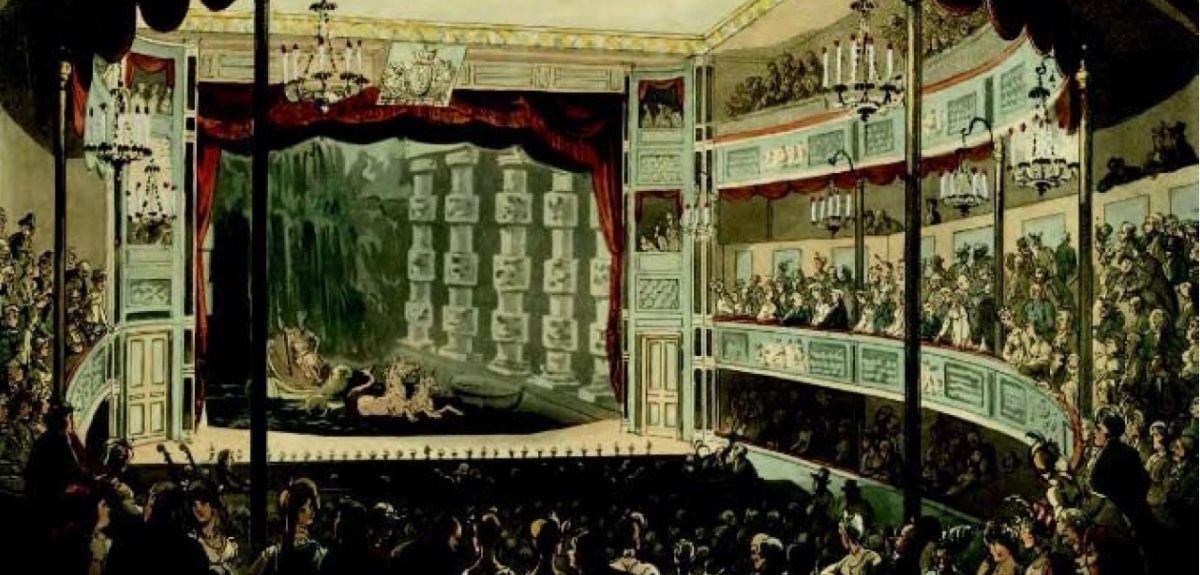
The exhibition also examines how pioneering set design and historically appropriate costumes and props brought history to life on the stage. The quest for accurate re-enactment of real-life events pushed the bounds of theatrical spectacle: a water tank with model floating ships was deployed at Sadler’s Wells for the staging of the Siege of Gibraltar, and another production on the same theme used live cannons which set fire to the vessels in each performance.
Rare materials held by the Bodleian Libraries and other national institutions are featured, including intricately detailed set designs and maquettes, theatrical documents (such as tickets, playbills and playtexts) as well as theatrical portraiture, paintings and illustrations (such as those showing famous London stages like Convent Garden, Drury Lane and Sadler’s Wells Theatre).
Michael Burden, Oxford’s Professor of Opera Studies at the University of Oxford, one of the curators, said: ‘In the late eighteenth and early nineteenth centuries, audiences consumed dramas on historical topics with unprecedented enthusiasm. Even in an age of expanding print culture, theatres played an important role as dramatic newsreels for the masses, disseminating information and representing events of national interest.
‘In this exhibition, we present a number of evocative theatrical works that cast light on how history was told and retold on the stage through words, music and spectacle. We also explore how Regency theatre shaped popular interpretation of historical events.’
Some of the exhibition's highlights include:
- A beautiful set maquette for the pantomime Omai, or a trip around the world designed by Philip James de Loutherbourg, an artist who revolutionized English stage design with his naturalistic scenic effects
- An illustration of Sadler’s Wells ‘Aquatic Theatre’ production of The Siege of Gibraltar in which a large tank on the stage was filled with water from the nearby New River, producing one of the grandest theatrical spectacles of the time
- A three-dimensional set design for a play about legendary Swiss marksman William Tell. It shows a sublime Alpine landscape rendered in watercolour by the Grieve family, who were among London’s best-known scene painters
- An oil painting of a production of Shakespeare’s Henry VIII showing its attempt to clothe characters in historically appropriate costume
- Early maps of Captain Cook’s travels across the Pacific, which inspired many theatre productions at the turn of the nineteenth century
- The musical score from Pizarro, a 1799 play about the conquest of Peru led by Spanish conquistador Francisco Pizarro
Alongside the exhibition, there will be a series of events, the first of which is a print workshop for families this Saturday. Children can create their own playbill using the Bodleian’s printing press.
The exhibition will be held in the Weston Library, which was recently shortlisted for the RIBA Stirling Prize for best UK building in 2016. It will run until 8 January 2017.
- ‹ previous
- 116 of 252
- next ›
 What US intervention could mean for displaced Venezuelans
  Setting the agenda for the next century of quantum
 10 years on: The Oxford learning centre making an impact
 Mapping the Moon: the world’s first lunar atlas goes digital
  Oxford and The Brilliant Club: inspiring the next generation of scholars
 New course launched for the next generation of creative translators
 The art of translation – raising the profile of languages in schools
  Opening a window into the quantum world
 Tracking resistance: Mapping the spread of drug-resistant malaria