Features
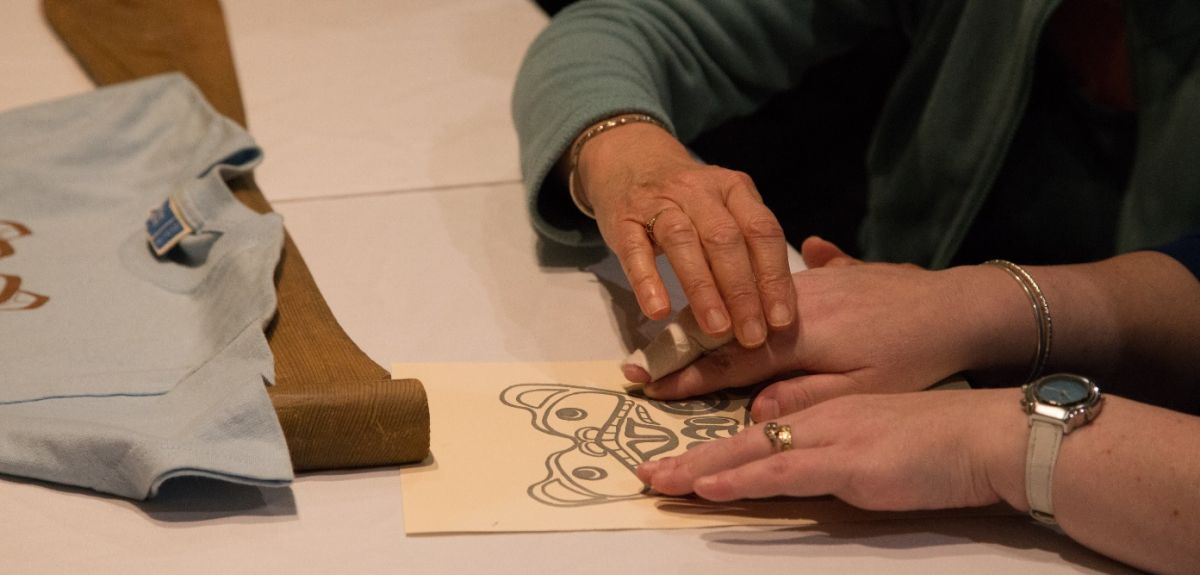
A new joint project between the Oxford e-Research Centre and Oxford University Museums will develop multisensory tools to help enable blind or partially sighted people (BPSP) to engage in a more accessible and meaningful way with the collections in Oxford University's museums.
The project, which began in September 2016, is working with local BPSP communities to help develop the tools.
With about two million people registered blind or partially sighted in the UK, this project could greatly improve the museum experience for a lot of people.
‘I get really frustrated when I go to a museum and there’s no way to experience it,’ says Mrs Pamphilon, who runs a social group for visually impaired people in Oxfordshire. ‘Having things you can touch and feel just opens up a new world.’
To tackle this issue, museums internationally are experimenting with solutions to improve BPSP access to 2D and fragile 3D art (for example a recent exhibition in Spain's Prado Museum which invited blind and partially sighted people to touch specially-created copies of works by masters such as El Greco and Francisco Goya).
The 18 month collaboration, funded by the University's IT Innovation Fund (now IT Innovation Challenges), aims to further develop the touch tile approach, using techniques such as 3D printing to improve the touch elements of the tile, and using cheap and simple technology such as Raspberry Pi to deliver pre-recorded audio descriptions.
This should decrease the cost to museums of giving BPSP an experience more akin to that of the majority of museum visitors, and therefore increase availability and accessibility for BPS visitors.
The aim is to allow BPSP visitors to engage with both 2D and 3D artworks intuitively, dipping in and out and being able to select the part of the audio description they are interested in (rather than being restricted to a fixed linear recording).
Susan Griffiths, Community Engagement Officer at Oxford University Museums, says, "Our aim is to create a tool that can allow blind and partially sighted people to independently engage with some of the world famous visual arts held by the Oxford University Museums, in particular the Ashmolean.’
Strand one of the project, led by the Museums with support from Dr Torø Graven (Department of Experimental Psychology), will focus on understanding the tactile sensations that can be used to assist BPSP to experience the tiles (e.g. line fineness, texture of lines and surfaces, shape of features such as curves and angles, use of colour for partially sighted people), what kind of audio description should accompany the tiles and how it should be activated. The team will research existing approaches being taken by other museums, arts organisations, companies and BPS groups, with whom the Museums already have strong links.
The R&D strand, to be led by Iain Emsley, Research Associate at the e-Research Centre, will determine how best to develop cheap and efficient methods of creating touch tiles that can provide the tactile sensations identified in strand one. It will also develop practical and replicable approaches to integrating audio delivery into the touch tiles.
Thirdly, the project team will select works of art from the Ashmolean's Western Art collection to prototype and user-test the technology. Learnings from this will be used to fine tune the user experience and gain a deeper understanding of the impact of this technology on the BPSP experience of visual art. At the end of the prototyping phase an installation of the touch tiles in the Ashmolean Museum will allow testing and evaluation with BPSP visitors in a real-world environment.

A pan-European team of researchers involving the University of Oxford has developed a new technique to provide cellular 'blueprints' that could help scientists interpret the results of X-ray fluorescence (XRF) mapping.
XRF imaging is used for a wide range of elemental analyses and has a number of medicine-based potential applications, including tracking and understanding diseases such as Alzheimer's, and the evaluation of heavy metal poisoning.
One barrier facing this technology has been the lack of cellular blueprints with which to compare the maps arising from XRF imaging. Now, researchers have been able to seal non-biological elements inside carbon nanotubes – tiny tubes 50 thousand times thinner than a human hair – to create 'nanobottles' that can be directed to individual cells to help create these blueprints.
The results of the study are published in the journal Nature Communications.
Dr Chris Serpell, a lecturer in Chemistry at the University of Kent who worked on the project while carrying out a research fellowship in Professor Ben Davis's group at Oxford, said: 'What's amazing about these findings is that the non-biological elements are toxic or gaseous, but they’re securely sealed within the nanobottles by just a single layer of carbon atoms. We're really pleased that this paper can showcase the biological potential of carbon nanotubes.'
Dr Serpell says that by using the contents of these nanobottles – such as barium, lead or gaseous krypton – as 'contrast agents', XRF imaging could become a much more widespread technique, providing insights into behaviours of proteins that use metals, and the role they have in health.
He added: 'Carbon nanotubes were once touted as a panacea to almost every technological problem, but in recent years people have become much more cynical about their utility. These results show that there are unique applications which are only possible using nanotubes – they are now moving towards realistic applications.
'Although it is at a very early stage in the pipeline, this technology can be expected to yield new insights into disease states and the effects of heavy metal poisoning, which can in turn lead to new healthcare technologies. A similar approach could also be used to deliver radioactive elements specifically to tumours for therapy, or to enhance other imaging modes such as MRI.'
Professor Davis, from Oxford's Department of Chemistry, said: 'This work was part of a training network across Europe known as RADDEL that was launched based on an earlier discovery that radioactive iodide could be packed into sealed tubes to be used in living animals.
'This new research has expanded on that finding, creating a spectacular system that encapsulates much more difficult elements and images these in cells using the rarely used technique of XRF. We have been able to use this method to see how the tubes find their way into different compartments in individual cells, controlled largely by how we chemically "decorate" those tubes.
'It's a striking example of something that would be tough to do by any other construct – to take a gas and "bottle" it before steering the bottle to one compartment in a cell so that you can use the gas for imaging.'
The study was a collaboration involving researchers from the universities of Oxford and Kent, Diamond Light Source, and Universitat Autònoma de Barcelona.
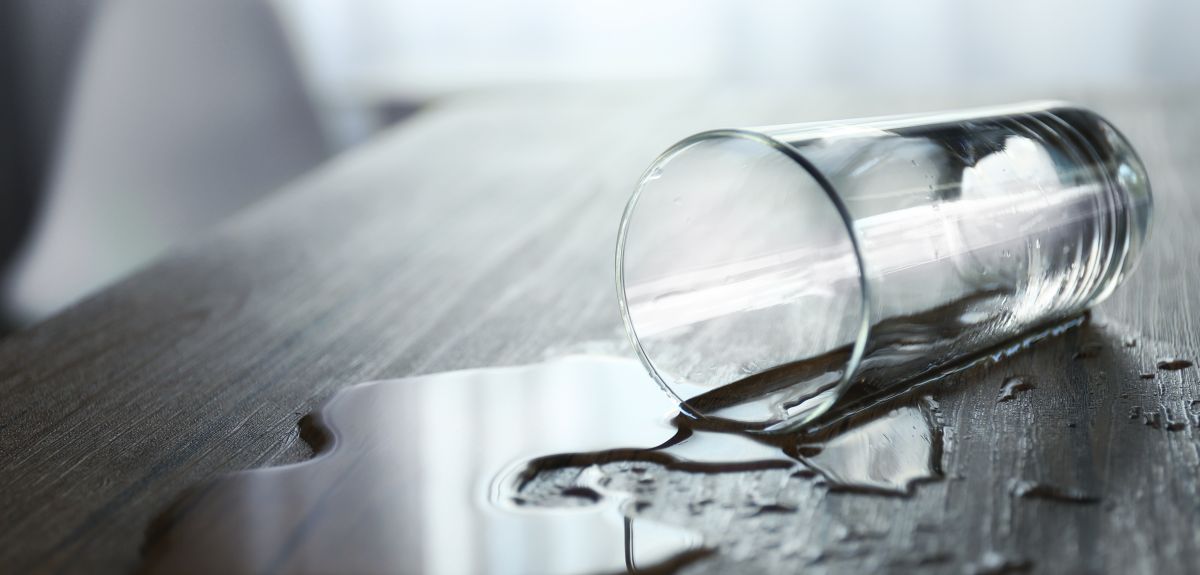
Have you ever noticed that liquid stays inside a straw when it’s held horizontally? Or that the same thing doesn't happen when you turn a glass on its side?
A team of researchers including Professor Dirk Aarts from Oxford University's Department of Chemistry has been investigating this phenomenon – one that's 'surprisingly difficult' to explain from a scientific point of view.
Professor Aarts worked with colleagues Carlos Rascón from Universidad Carlos III de Madrid in Spain and Andrew Parry from Imperial College London for the study, which is published in the journal PNAS. Professor Aarts said: 'We considered the following seemingly simple question: why does the liquid spill out when I hold a glass – say, of beer – horizontally, but stays in a straw when I do the same thing?
'This question is actually surprisingly difficult, especially when considering non-circular cross-sections of the capillaries, or tubes.
'For a liquid trapped between two parallel walls, and for a liquid trapped in a circular capillary like a straw, the answer is one that we would intuitively expect: the liquid wants to flow out because of gravity, but is trapped due to the surface tension.'
The 'capillary action' described here is the ability of a liquid to flow in narrow spaces, often in opposition to external forces such as gravity. For example, if you zoom in on the surface of water in a glass, you’ll see that it curves upwards by a couple of millimetres at the wall. This curve is known as the meniscus.
Professor Aarts said: 'The competition between gravity and surface tension leads us to the capillary length, which sets the height to which a meniscus will climb at a wall. Indeed, if the separation between the two walls is less than roughly the capillary length, or if a circular capillary has a diameter less than roughly the capillary length, the liquids will stay put. If not, the liquids will flow out.
'However, if you change the cross-sectional shape of the capillary – for example, making it a triangle – the situation may change completely, and for certain geometries the liquid may spill out at any length scale, well below the capillary length.
'We figured out how to calculate this behaviour for general cross-sectional shapes, although the actual numerical calculations, carried out by Carlos Rascón, took almost seven years to complete. One of the reasons for this was that the spilling out may occur via different pathways, and the crossovers between those pathways were hard to understand.'
The researchers were able to solve the problem by reducing it down to an equivalent two-dimensional problem, which is numerically more accessible. The paper shows how 'emptying diagrams' can be created by calculating the energy of the problem in 2D. As soon as the energy became smaller than zero, no 3D solution for the meniscus exists, and the liquid empties.
Professor Aarts added: 'The surprising result here is that a capillary may empty even at lengths much smaller than the capillary length. This has implications for any technologies where liquids are used or are present on small scales, such as microfluidics, biomedical diagnostics, oil recovery, inkjet printing and so on.'
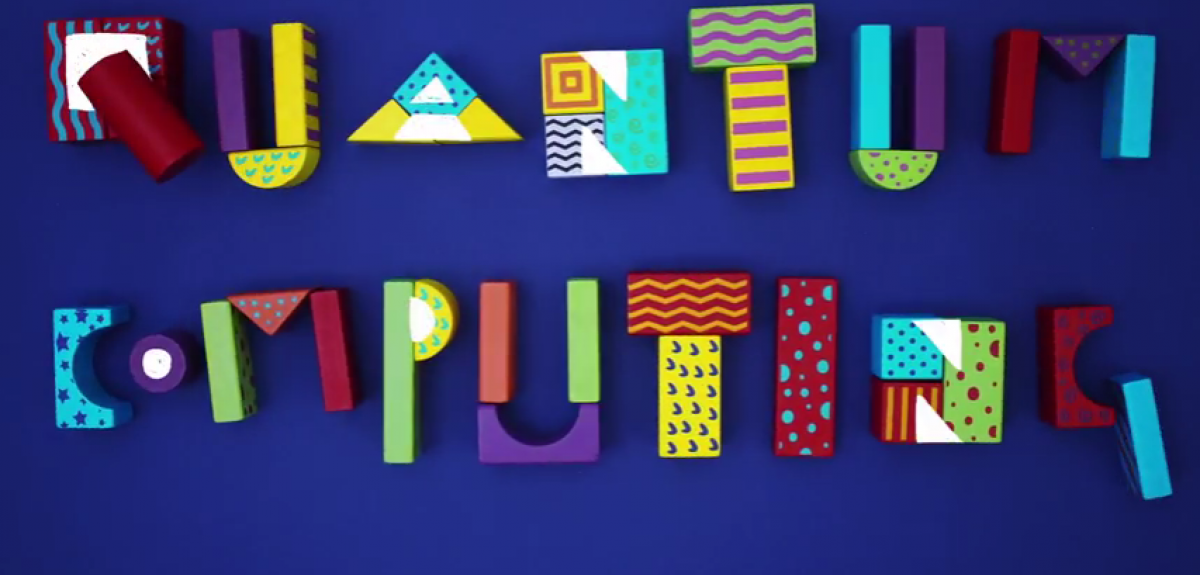
What does the future hold for computing? Experts at the Networked Quantum Information Technologies Hub (NQIT), based at Oxford University, believe our next great technological leap lies in the development of quantum computing.
Quantum computers could solve problems it takes a conventional computer longer than the lifetime of the universe to solve. This could bring new possibilities, such as advanced drug development, superior military intelligence, greater opportunities for space exploration and enhanced encryption security.
Quantum computers also present real risks, but scientists are already working on new forms of encryption that even a quantum computer couldn't crack. Experience tells us that we should think about the applications and implications of quantum computing long before they become reality as we strive to ensure a safe future in the exciting new age of quantum computing.
A new animation, produced for NQIT by Scriberia, looks at how quantum computing could change our lives.

A new podcast about women who have played an important but neglected role in Oxford’s history has been launched.
The podcast series, called ‘Women in Oxford’s History’ (WiOH), has been developed by two doctoral students at Oxford University and funded by the University’s AHRC-TORCH Graduate Fund.
Olivia Robinson of the History Faculty and Alison Moulds of the English Faculty have made six podcasts, which can be downloaded here for free.
In a guest post for Arts Blog, the presenters explain the idea behind the podcasts and what they hope it achieves:
"The history of Oxford is often told through the experiences of eminent men drawn from the aristocracy, the Church and academia, while the stories of ordinary women’s contributions to the city and the University remain neglected. The blue plaque scheme exists to recognise the lives of eminent people connected to the city, but less than a quarter of Oxford’s plaques commemorate women. The WiOH podcast project aims to redress this balance by highlighting the role women have played in Oxford’s history. We hope to inspire others to investigate women’s impact on their own communities and cities.
The project consists of six podcasts on women whose contributions to either ‘town or gown’ life have been overlooked. These showcase individuals whose lives are not widely known and whose names may be unfamiliar to many. These are not the Margaret Thatchers and Ada Lovelaces of the world, but are nonetheless women who have made important contributions to the city and university over the centuries, and who we feel deserve wider recognition.
The podcasts have been designed to appeal to a broad audience and people of all ages and backgrounds. We hope that they will attract interest beyond the University, from local schools and community groups and from international visitors. They might be listened to by a Year 11 student on her way to school, a young professional who listens to podcasts while running, or a retired American tourist planning to explore the city.
Our contributors are postgraduate students at Oxford University in the fields of Anthropology, Creative Writing, Economic, Social and Local History. They have been busy producing narrative accounts of individual women whom they’ve chosen for their connection to, and impact on, Oxford. In several cases, the advanced search facility at the Online Dictionary of National Biography was used to identify suitable women to research in more depth, and the subjects include women with interests in social work, race relations, women’s education and museum collections.
The research produced by our contributors has then been adapted into scripts suitable for audio recordings and the podcasts also feature relaxed interviews with our contributors to find out more about their research. Each podcast lasts less than 15 minutes and is available to download via the University’s podcast series on iTunes. A website accompanies the series on which we’ve shared the podcast scripts along with extra research resources and links."
- ‹ previous
- 115 of 253
- next ›
 Celebrating 25 Years of Clarendon
  Learning for peace: global governance education at Oxford
  What US intervention could mean for displaced Venezuelans
  Setting the agenda for the next century of quantum
 10 years on: The Oxford learning centre making an impact
 Mapping the Moon: the world’s first lunar atlas goes digital
  Oxford and The Brilliant Club: inspiring the next generation of scholars
 New course launched for the next generation of creative translators
 The art of translation – raising the profile of languages in schools
  Opening a window into the quantum world