Features

To mark the European Day of Languages, The Queen’s Translation Exchange (QTE) – run by The Queen’s College – has launched the sixth Anthea Bell Translation Prize for Young Translators.
Designed to promote language learning in schools and arrest the decline in the study of modern languages, the prize is inspired by the work of the translator Anthea Bell who helped open up the world of Asterix the Gaul to millions of children in the UK.
 Students taking part in The Queen’s Translation Exchange © Edmund Blok
One teacher has told us that running the Anthea Bell has enabled the school to run an A level language class for the first time in two years.
Dr Charlotte Ryland, The Queen’s Translation Exchange Founding Director
The prize is free to enter and currently runs in six languages: French (into Welsh and English), Spanish, German, Italian, Mandarin and Russian. It also offers a range of texts to translate including poetry, fiction and non-fiction, and has become increasingly popular. Last year 22,000 learners from 412 schools took part, while more than three in four teachers involved in the prize said it had helped raise the profile of languages in their schools.
Although the prize is being launched this month, it won’t officially open to entrants until February. ‘This is because it isn’t a one-off event. We want teachers to integrate the Anthea Bell into their teaching throughout the year,’ says Dr Ryland.
To enable this, QTE provides more than 100 teaching packs that teachers can request when they register for the prize. Packs provide lesson plans based on authentic texts and include a range of resources such as teacher notes, worksheets, glossaries, videos and extension activities. Care has been taken to link resources to the curriculum while preparing students to enter the prize when they will be expected to complete tasks in the classroom, without teacher support.
 Dr Charlotte Ryland, QTE Founding Director © John Cairns
Entries are then judged for their accuracy and creativity by Oxford University languages students and professional literary translators. This is initially done geographically, with area winners selected for each level and language and put forward for the national awards. All winners, runners up and commendees receive a certificate and their names are published on the Queen’s College Website. UK winners also receive a book prize.
It is impossible to underestimate the value of languages when it comes to positively influencing our view of contrasting cultures.
Dr Charlotte Ryland
It's not just that the prize makes language learning more engaging for their students of all ages that attracts teachers to the Anthea Bell – although it does. They also recognise that it develops their students’ problem solving and critical thinking skills. More importantly, it has offered many of them a huge uplift in self-confidence and self-belief and a sense of opportunities they had never considered within their reach. For some young participants, it is the first time they have talked about the possibility of going to university.
Dr Ryland takes it a step further. She believes that encouraging more people to study languages – at whatever level – fosters cultural inclusion and diversity. ‘It is impossible to underestimate the value of languages when it comes to positively influencing our view of contrasting cultures,’ she says. ‘Young people who immerse themselves in languages are better placed to appreciate the cultural diversity around them and its value to wider society.’

Oxford University physicists are simulating the strange, probabilistic world of quantum mechanics, opening the door to new innovations for superconductors, materials science, and quantum technologies.
It turns out that when you chill atoms to near absolute zero and suspend them in magnetic fields, the usual rules of matter no longer apply. Instead, the bizarre logic of quantum mechanics - where particles behave like waves and probabilities replace certainties- rule the day. But here at Oxford, researchers are not merely observing these strange phenomena, but engineering and controlling it with pioneering precision.
The ability to trap atoms and separate them into two distinct layers using radio frequencies is something Oxford specialises in. It has taken years of development in our group to reach this point, but it is now yielding extraordinary new insights.
Erik Rydow, DPhil student (Department of Physics)
‘It’s a bit like building a wind tunnel for quantum physics,’ explains Erik Rydow, DPhil student in Oxford’s Ultracold Quantum Matter Lab. ‘You can simulate how an aircraft wing behaves on a computer, but to really understand it, you need a controlled experiment. We’ve built the quantum equivalent of that wind tunnel.’
Quantum systems can be notoriously hard to simulate because they don’t behave like the physical systems we experience day to day. In the classical world, if the starting conditions of a system are precisely the same each time, then the final result will be the same. But in quantum mechanics, particles can exist in more than one state at once. This means that simulating a quantum system in general does not give you a definite outcome: instead, it gives you a spread of probabilities for the different things that may happen.
‘You can think of it like rolling a dice,’ adds Erik. ‘In the classical world, if the starting conditions are exactly the same each time, then the dice will land in the same place. But in the quantum world, even if the starting state is exactly the same between rolls, the dice can land on different sides. This means you can’t say for certain what outcome will happen; you can only give a probability.’
 The researchers use lasers and radiofrequency signals to trap and cool atoms. Credit: Caroline Wood.
This capability rests on decades of innovations to trap and cool atoms. Using finely-tuned lasers and magnetic fields, a gas of rubidium atoms is chilled to near absolute zero; cold enough that tens of thousands of atoms all occupy the same quantum state. At such a low temperature, the behaviour of the atoms is determined by their quantum wavelike nature, and the different outcomes for identical particles can reveal the probabilities predicted by quantum mechanics. This creates an extraordinary laboratory for probing quantum effects that, until recently, were purely theoretical.
A hallmark of Oxford’s expertise is precision control. By manipulating atoms with radio frequencies, the team can separate them into ultrathin layers only a few microns apart with an exactness that is challenging to achieve with more standard protocols that use lasers. Uniquely to Oxford’s apparatus, these atoms can be precisely engineered into not just a single layer, but two. This enables researchers to capture extraordinary quantum ‘tunnelling’ effects, where atoms can be present in both layers at once, or flickering between them in ways that defy classical physics.
‘The ability to trap atoms and separate them into two distinct layers using radio frequencies is something Oxford specialises in,’ adds Erik. ‘It has taken years of development in our group to reach this point, but it is now yielding extraordinary new insights.’
 Left: Erik Rydow working on the Ultracold Quantum Matter group’s experiment. Right: Vacuum system and cold atom source in the Ultracold Quantum Matter group’s experiment. At the center of the round aperture, atoms of rubidium gas are cooled and pushed into the experiment using laser light. Credit for both images: Caroline Wood.
Creating new phases of matter
As well as exploring exotic physics, understanding these quantum effects could help unlock a pivotal goal: next-generation superconducting materials that enable frictionless flow of electrons at higher temperatures.
Layered quantum systems are at the heart of many next-generation materials, from superconductors to quantum devices. By recreating and tuning such systems from the ground up, physicists are testing longstanding theories and exploring new phases of matter with unprecedented control.
Dr Shinichi Sunami (Department of Physics)
In a recent study published in Nature Communications, the Oxford team were able to map out, for the first time, how their double-layer system changes under different conditions - a kind of ‘phase diagram’ for this new quantum material. What they saw was striking: when the two layers were brought close enough, quantum tunnelling between them helped the particles flow without friction, even at higher temperatures than expected for a single layer.
Normally, tiny whirlpools (known as vortices) would appear and disrupt this frictionless flow. However, the tunnelling between the layers effectively suppressed those disturbances, preserving the smooth, resistance-free movement.
‘While actual tunnelling of particles is not very frequent, the consequences are dramatic: it binds the layers into a single state with shared coherence, enabling frictionless flow across both layers. It effectively becomes a new phase of matter,’ says Dr Shinichi Sunami, a postdoctoral researcher of the group who supervised the project. Oxford’s state-of-the-art quantum simulator apparatus enables researchers to precisely control the separation and therefore quantum tunnelling rate between the layers, allowing them to investigate precisely how these phenomena invoke new properties.
 Two layers of ultracold gas in the group's experiment. Credit: Ultracold Quantum Matter group.
A platform for discovery
Here at Oxford, this is just the beginning. The same apparatus that allows researchers to validate theories can also explore uncharted territory: How do quantum systems evolve when cooled suddenly? How do entirely new phases of matter emerge in real time?
‘These are questions theory alone struggles to answer,’ says Erik. ‘But with our simulators, we can perform the experiment and watch events at the quantum level unfold. I feel extraordinarily lucky to be working on this for my DPhil research. There are so many other interesting phenomena we can explore with this unique apparatus.’

On World Mosquito Day, Dr Lucy Harrison, postdoctoral researcher at Oxford’s Infectious Diseases Data Observatory (IDDO) at the Centre for Tropical Medicine and Global Health, reflects on the global impact of the mosquito and her research into malaria drug resistance.
A small insect, a global impact
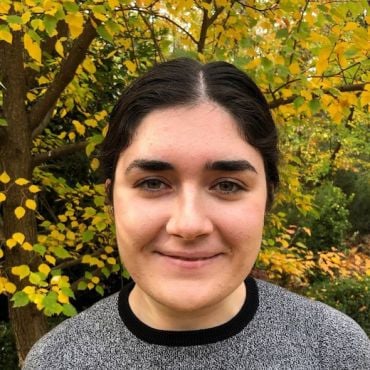 Dr Lucy Harrison.
Credit: James Harrison.
Dr Lucy Harrison.
Credit: James Harrison.Every year on 20 August, World Mosquito Day marks the extraordinary role of one tiny insect in shaping human health. Mosquitoes are responsible for transmitting some of the world’s most devastating diseases, including malaria, dengue, Zika, and yellow fever.
Malaria alone causes more than 260 million cases and nearly 600,000 deaths annually. Around 95% of this burden is borne by people in Sub-Saharan Africa. Despite investments of over USD 4 billion in malaria control efforts in 2023, global funding still falls short of what is needed to meet the World Health Organization's Global Technical Strategy.
The relationship between humans and malaria is ancient. Evidence suggests the disease afflicted populations from the time of the Egyptians and may even have been described by Hippocrates.
From discovery to mathematics
World Mosquito Day commemorates the discovery by Sir Ronald Ross, on 20 August 1897, that female Anopheles mosquitoes transmit malaria. Ross also pioneered the first mathematical model of vector-borne disease, showing how infected mosquitoes create infected people and vice versa.
His insights laid the foundation for malaria control strategies: if mosquito numbers are reduced, the opportunities for transmission fall. George Macdonald later refined this work, introducing the concept of the ‘reproduction number’ or 'R number' — a measure familiar today from its use during the COVID-19 pandemic.
Fighting back
Mosquito-borne diseases can be tackled by controlling mosquito populations, reducing human exposure, and treating infections. Approaches include removing stagnant water, spraying insecticides, releasing genetically modified mosquitoes that reduce reproduction, using repellents and bed nets, and deploying effective medicines.
Several key malaria drugs come from natural sources. Quinine, derived from the bark of the cinchona tree, was used for centuries and even gave rise to tonic water. More recently, artemisinin, discovered in 1972 from sweet wormwood (Artemisia annua), revolutionised malaria treatment. Its discovery earned Chinese pharmacologist, Tu Youyou, the Nobel Prize in Physiology or Medicine in 2015.
But widespread drug use also fuels drug resistance. Artemisinin-resistant parasites were first documented in 2008, and are linked to specific mutations in the parasite’s genes. To preserve treatment effectiveness, the WHO now recommends combining artemisinin with a partner drug to slow the evolution of resistance.
Mapping resistance
At Oxford, my work focuses on mapping the spread of genetic mutations in malaria parasites across Sub-Saharan Africa. These mutations are linked to resistance against frontline drugs such as artemisinin.
With the power of modelling, my maps use the data that is available to predict what proportion of malaria parasites may have mutations linked to drug resistance in locations where we don’t have any data.
In many regions where malaria transmission is most intense, there is little or no genetic data. Running clinical trials to test drug effectiveness is costly and resource-intensive. To overcome this, we use geospatial models that can predict the likely distribution of resistance even in areas without data.
These models combine available genetic data with information on the distance and time between data collections, and environmental conditions such as malaria prevalence. By doing so, we can predict the prevalence of resistant parasites in areas where we don’t have any data.
The maps produced at the University of Oxford will be made freely available through the Infectious Diseases Data Observatory’s Artemisinin Molecular Surveyor. The Surveyor is a living systematic review which can be used by researchers and policy-makers to visualise the current state of global drug resistance in the malaria parasite.
 A screenshot of the Infectious Disease Data Observatory’s Artemisinin Molecular Surveyor, which visualises published genetic data of the malaria parasite.
This World Mosquito Day reminds us that mosquitoes remain one of humanity’s most persistent threats. At Oxford, researchers are combining field data, genetics, and advanced modelling to provide the evidence needed to guide global health decisions, helping to ensure that life-saving drugs remain effective for the communities that need them most.

The Community Impact Lab links the research talent of Oxford University graduates with local community organisations tackling environmental, economic and social inequality across Oxfordshire. Impact Lab fellows outline what it's like to be involved
The Community Impact Lab is one of four programmes set up by Oxford SDG Impact Lab to harness the skills and knowledge of the University's graduate students to advance the UN sustainable development goals. 'We recognised a gap in graduate students' experience,’ says Alex Betts, Co-founder of SDG Impact Lab and Pro Vice-Chancellor for External Engagement, Sport and Community at Oxford University. ‘They get an amazing academic education when they come to Oxford. We wanted to complement this by offering them the opportunity to use their talents to make a difference to society and the planet.'
Some of this year’s 14 Community Impact Lab Fellows outline how they feel they have made a difference to the communities and organisations they have supported – and to themselves.

Breaking down barriers
Sana Shah is completing a DPhil in History at Somerville College and has been part of the Impact Lab team supporting Oxfordshire Football Association. Her task has been to understand how football can promote better health, equality and community cohesion across the county.
‘I chose this project because I felt it echoed my own research as an historian and my love of stories. It was about bringing people together and really listening to them – particularly to voices often left out of formal consultation.’
Sana teamed up with her research partner Ciao Anchi, a member of Wolfson College who is taking an MPhil in Global and Area Studies. They conducted in-person interviews and community engagement sessions with people from diverse backgrounds across Oxfordshire.
‘We also attended local matches, training sessions, and community events, where we spoke informally with parents, players, coaches, and volunteers. We reached upwards of 50-60 individuals.’
They found a massive enthusiasm for the beautiful game but also financial and cultural barriers to taking part, from the cost of kit to the pub culture among some adult teams.
Sana wants the FA to do ‘more listening’ to players and the people running local football groups, when it comes to allocating resources. She also suggests that Oxford colleges could get more involved in community football – perhaps sponsoring local teams. ‘Working on this project has completely changed how I see football – I now understand it not just as a sport, but as a community lifeline for many people.’

Promoting social justice
Arden Jaeger is pursuing an MSt in History of Art and Visual Culture and is a member of Wadham College. As a Community Impact Fellow, he has been working with the Tap Social Movement, which offers employment and training to people with convictions via the brewery, bakery, café and tap bars it runs across Oxfordshire.
‘I came to Oxford with the attitude that I would say yes to opportunities that came my way. I wanted to find a more measurable way of making a social impact.’
Arden particularly appreciates the interdisciplinary nature of being a member of the impact Lab. ‘It felt slightly strange at first. I was surrounded by scientists and social scientists tackling big problems while I was looking at pictures of whales.
‘But I have been able to demonstrate that the visual arts can have a huge impact, for example as a means of communicating the complexity or urgency of an issue.’
Tap Social has worked with around 60 prisoners or prison leavers and nearly a third of its staff have prison experience. Arden’s task has been to find out what impact secure employment has on people with convictions, their families and their friends. He also needed to consider how the Tap Social Movement could be scaled for broader social impact.
With his research partner, Diya Ramful – a DPhil Environmental Research student, also at Wadham College – Arden reached out to local arts organisations and criminal justice charities working with marginalised groups as well as Tap Social staff and customers. ‘There is huge support for Tap Social’s mission. Among staff with prison experience, a secure job is more than an income. It affects their housing, social connections and their mental health.
‘This project showed me just how interlinked problems of social justice can be. Tap Social is a positive case study that should be used to inspire other employers.’

Supporting local growers
Ali Elhassan and Clara Cecil already had an interest in sustainable food systems when they opted to work on a project with OxFarm2Fork, which links the county’s institutions, including 18 Oxford colleges, with 20 local agroecological food producers.
Clara, an MSc student in Sustainability, Enterprise and the Environment and a member of Mansfield College, has worked with a small start-up looking at funding and technology investment in regenerative farming. Developing measurement frameworks was very theoretical and I wanted to be more involved at a community level,’ she says.
Ali is an experienced civil and environmental engineer and is taking an MSc in Water Science, Policy and Management and is a member of Hertford College. Before joining the Impact Lab he carried out his own research into food waste in Oxford and wanted to do more. ‘The OxFarm2Fork project has been a good counterbalance to my academic work, although I found it hard fitting it all in at first.’
The pair agree that it was fun too. ‘We didn’t know each other before but have become good friends,’ Ali says.
OxFarm2Fork was set up by Good Food Oxfordshire which hopes to use Ali and Clara’s findings to help extend the Farm2Fork collaboration to other institutions.
Clara and Ali visited four local farms, identified more than 80 plant and insect species and tested the nutrient content of more than 20 different crops.
‘Some crops definitely have a much higher nutrient density than supermarket equivalent,’ Ali says. ‘But it is not a consistent picture and ideally we need to find a more detailed means of measuring nutrient content.’
 Clara and Ali also interviewed farmers and students and chefs in participating Oxford colleges. They think there is more mileage to be had from partnerships with Oxford colleges such as piloting contracted growing around particular crops – possibly more unusual crops that cannot be sourced elsewhere.
They certainly feel that the inspirational growers they met have the commitment and work ethic to rise to the challenge. ‘The farmers were awesome,’ Clara says.
The Community Impact Lab is supported by the University of Oxford’s ESRC Impact Acceleration Account.

Dr Zakiyya Adam, Research Associate at the Transport Studies Unit within the University of Oxford’s School of Geography and the Environment, outlines recommendations for the implementation of cycling-promoting initiatives in mid-sized European cities.
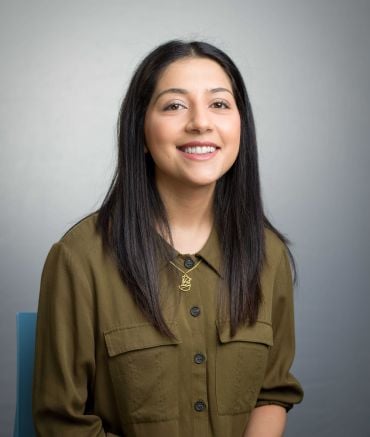 Dr Zakiyya Adam, Research Associate, Transport Studies Unit
 When a city provides only cycle lanes, this comes with the implicit belief that individuals can attain a bike without any financial aid, are confident in their cycling proficiency, and that they have a secure location at which to store their bike.
This is not the case for many, especially those from lower socioeconomic backgrounds.
Truly inclusive policy should strive to remove barriers to cycling - both objective and perceived - for all segments of society.
Likewise, cycling provisions should not only focus on individuals; cargo bikes make it possible for businesses to swap out their car or van trips and for children to be transported around as passengers. To encourage this use, the larger profile and heavier frame of e-cargo bikes needs to be accounted for when designing cycle infrastructure.
Whilst it is admirable that many cities aspire to be cycle-friendly and encourage people to shift from car travel to bikes, good will and cycle lanes alone will not instigate behaviour change.
Research as part of the SPECIFIC project, led by the Transport Studies Unit (TSU), and conducted in collaboration with academics in Austria, the Netherlands, Poland and Switzerland, has sought to understand what exactly is needed to see this ambition be realised in mid-sized European cities.
Truly inclusive policy should strive to remove barriers to cycling - both objective and perceived - for all segments of society.
A thorough analysis of cycling-promoting initiatives was conducted in Bristol by TSU researchers as well as in Graz (AT), Maastricht (NL), Poznań (PL) and Bellinzona (CH) by the other teams.
In 2008, Bristol was the first city in the UK to gain Cycling City status, which secured significant investment for cycling schemes. Since then, Bristol has continued its commitment to increase the number of cyclists through the creation of dedicated cycle lanes, better cycling facilities, and more cycle training. Despite the hilly terrain, Bristol has a strong cycling culture and good infrastructure.
In each of the five cities, the researchers interviewed a comprehensive array of individuals from across local government, consultancy, advocacy groups and academia who were directly involved in such schemes, and also engaged with publicly available literature.
Policy briefs were produced for each of the five cities, highlighting the key factors that enabled or hindered pro-cycling initiatives and outlining learnings for governance and planning.
Common threads emerged across the five mid-sized cities spanning the UK, Switzerland, Austria, the Netherlands and Poland, with the following five recommendations for encouraging participation and long-term behaviour change.
1. Safe, Continuous, and Inclusive Infrastructure
If we want more people to cycle, we need to build for the bikes - and riders - we have now and want in the future.
Cycle lanes should be physically separated from other road users where possible.
Gaps, fragmentation, or poorly integrated cycle lanes are major deterrents to cycling due to safety concerns, especially for families and new riders. And all cycling infrastructure – including, for example, bollards and chicanes, and cycle parking - should be designed to be inclusive, ensuring accessibility for cargo bikes and e-bikes that are heavier and larger than conventional bikes.
If we want more people to cycle, we need to build for the bikes - and riders - we have now and want in the future.
2. ‘Cycling Support’ Beyond Paths
Cycle paths alone are not enough. Supporting infrastructure - such as secure parking, maintenance facilities, and cycle training - is essential.
Cycle paths alone are not enough. Supporting infrastructure - such as secure parking, maintenance facilities, and cycle training - is essential.
On-street cycle hangars are particularly important for people living in apartments or without access to home storage. And secure parking near mobility hubs and workplaces often determines whether people choose to ride – the risk of your bike not being there at the end of the day is not one many can afford to take.
Only by addressing the full range of rider needs does cycling become a viable and attractive option for all.
3. Community Engagement Early and Often
Public participation, especially in planning and prioritising investments, is essential. Cities that actively consult residents on infrastructure tend to see higher uptake and less resistance.
Public participation, especially in planning and prioritising investments, is essential. Cities that actively consult residents on infrastructure tend to see higher uptake and less resistance.
In Bristol, for example, cycle hangars that enable six bikes to be parked in the space of one car were heavily subscribed to at just the planning stage, and faced little public resistance as the locations were proposed and voted on by Bristolians. Citizen-led initiatives also help foster lasting behavioural change.
People back what they help to build.
4. Address Cultural and Behavioural Barriers
Campaigns, community rides, gamified apps, and ambassador programmes can play a key role in shifting perceptions and normalising cycling.
Even with adequate cycling infrastructure, social norms and personal habits can discourage people from making the switch.
Perceived safety risks, discomfort in bad weather, status quo bias, and deeply embedded car-centric mindsets all hinder uptake.
Campaigns, community rides, gamified apps, and ambassador programmes can play a key role in shifting perceptions and normalising cycling. In Bellinzona, for example, the Bellidea and Bikecoin mobile apps reward users with points redeemable for vouchers or discounts, reinforcing cycling as a socially approved and economically rewarding practice.
Changing streets is important but changing minds is essential.
5. Build Long-Term Capacity
In the UK, the spending review in June 2025 saw cuts to the level of funding for Active Travel England, who many local authorities are reliant on for delivering cycle schemes. Volunteer-led efforts are valuable, but they are not sustainable without institutional backing.
Projects must be properly resourced, with long-term investment in training, evaluation, and leadership.
In the UK, the spending review in June 2025 saw cuts to the level of funding for Active Travel England, who many local authorities are reliant on for delivering cycle schemes. Volunteer-led efforts are valuable, but they are not sustainable without institutional backing.
Cities also need robust monitoring and feedback systems in order to adapt and scale successful schemes. Only with long-term investment can promising initiatives become permanent solutions.
-
International best practice offers a clear roadmap for action: invest in connected infrastructure, provide inclusive cycling support, embed public engagement in planning, focus on encouraging behavioural change, and commit to long-term investment and leadership.
And it is important that we get this right, as cycling initiatives have the potential to not just change how we move, but transform how we feel and live.
- ‹ previous
- 3 of 253
- next ›
 25-year Oxford study finds the effects of conflict last for generations
 What Louise Thompson’s campaign tells us about the national maternity crisis
 Celebrating 25 Years of Clarendon
  Learning for peace: global governance education at Oxford
  What US intervention could mean for displaced Venezuelans
  Setting the agenda for the next century of quantum
 10 years on: The Oxford learning centre making an impact
 Mapping the Moon: the world’s first lunar atlas goes digital
  Oxford and The Brilliant Club: inspiring the next generation of scholars
 New course launched for the next generation of creative translators