Features

Professor Deborah Gill from the Radcliffe Department of Medicine and Dr Luke Jostins-Dean from the Kennedy Institute at the University of Oxford recently swapped lab coats for legislation at the House of Commons for a week in Westminster. The week is part of a unique pairing scheme run by the Royal Society – the UK’s national academy of science, with support from the Government Science & Engineering (GSE) profession.
During her visit, Deborah, who is a Professor of Gene Medicine, and Co-Director of the Gene Medicine Research Group, shadowed Tony Whitney, senior policy advisor for Public Engagement with Science for the Department of Business, Innovation and Strategy. Dr Jostins-Dean shadowed local MP for Oxford East, Annaliese Dodds.
As well as attending seminars and panel discussions about how evidence is used in policy making, the two researchers also attended a mock Select Committee.
The visit provided the Oxford academics with a behind the scenes insight into how policy is formed and how their research can be used to make evidence-based decisions. It was also to give the politicians the opportunity to investigate the science behind their decisions and improve their access to scientific evidence.
Professor Gill said: 'Science is a shared endeavour in society and communicating with the public is crucial to agreeing future research directions. In my research, using gene technologies, responsible public engagement builds trust and transparency. The Royal Society pairing scheme is a fantastic opportunity see this in action.'
Speaking of his pairing, Dr Jostins-Dean said: 'In my research I work directly with patients' genetic and healthcare data, and my work is heavily influenced by government policy around data sharing, treatment decisions and confidentiality. I am excited to learn from Anneliese how new laws are made, and how we as scientists can provide evidence to help parliamentarians make and scrutinise government policy.'
'I'm very grateful to the Royal Society for pairing me with a scientist, for a second year. It has been really interesting to spend time with Dr Jostins-Dean, in order both for him to find out more about how parliament works but also for me to find out more about his life as a scientist! It is very important that we build more links between science and politics, and I think the Royal Society scheme is an excellent way of doing that. I am looking forward to getting some hands-on experience of Dr Jostins-Dean's work when I do the reciprocal visit with him back in Oxford,' added Anneliese Dodds.
The MP for East Oxford will find out about Dr Jostins-Dean research, which focuses on identifying genes that increase our risk of developing inflammatory bowel disease (IBD), and on coming up with new mathematical and experimental ways to understand how these genes impact the human immune system.
Tony Whitney will get hands on experience of Professor Gill’s work, which includes developing gene therapy for lung conditions such as cystic fibrosis, in a reciprocal visit next year. Researchers at the University of Oxford’s Radcliffe Department of Medicine also hope to learn more about engaging the public with their work during his visit.
The Royal Society’s pairing scheme, which started in 2001, aims to build bridges between parliamentarians, civil servants and some of the best scientists in the UK.
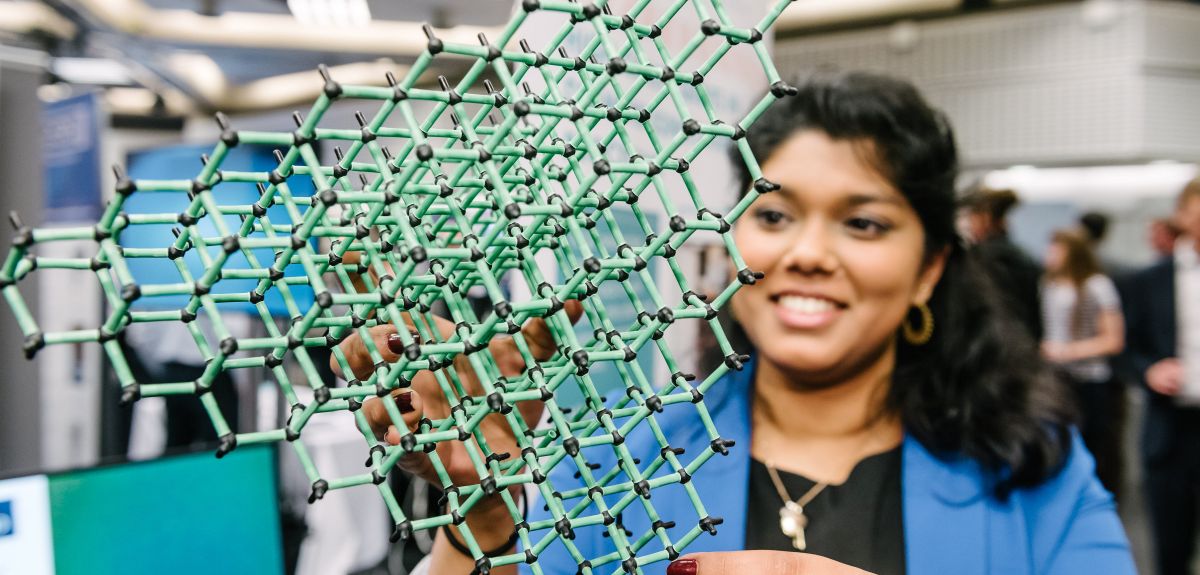
By Julia Flynn, NQIT Communications Manager
Earlier this month the Engineering and Physical Sciences Research Council’s (EPSRC) UK National Quantum Technology Hubs successfully delivered the third annual Quantum Technologies Showcase, demonstrating the technological progress emerging from the national research programme.
There were over 80 exhibits, together with briefing sessions that asked ‘Are you ready for quantum?’ For the exhibitors it was a chance to discuss their work and highlight the achievements in quantum technologies in what has been a coordinated national effort. The 700 plus visitors could see the advance of quantum technologies and the potential to benefit their businesses and organisations, as well as for society as a whole.
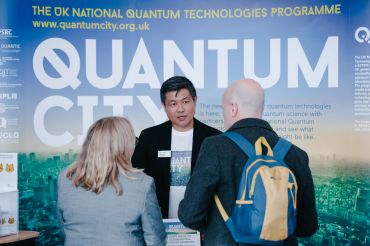 Quantum Technologies Showcase
The Showcase was divided into zones, from transport to defence and healthcare and many more. The Networked Quantum Information Technologies Hub (NQIT), led by the University of Oxford, had nine exhibits showcasing the multiple approaches to building quantum machines based on high performance qubit systems, and emerging quantum information processing technologies. They also had a busy Hub stand that explained the whole work of NQIT, inbuilding the essential systems for the Q20-20 quantum computer demonstrator and creating a world-leading quantum computing economy in the UK.
Participants were able to see demonstrations, showing the enormous engineering progress being made to build the complex systems and components for scalable quantum computers based on different architectures including ion traps and superconducting circuits.
One of NQIT’s stands ‘Create your own qubit in diamond’ demonstrated how its researchers are developing methods to write qubits into diamond using ultrashort laser pulses. Visitors were excited to be able to remotely connect to the laser writing lab in Oxford and control the set up to write their own quibits, creating a single Nitrogen Vacancy in a synthetic high quality diamond.
While many of the exhibits looked at the advances in research, hardware and engineering that are core to building a scalable quantum computer, NQIT spin out applications and companies were also present, such as the random number generator, a patented application from NQIT’s photonics work stream. Oxford Quantum Circuits, one of the three NQIT spinout companies, had a prototype quantum computer at the Showcase, giving visitors the opportunity to perform some quantum logic, based on superconducting quantum hardware.
As well as the buzz and interest in the many exhibits visitors also heard more about the UK Government’s pledge of a further £235 million to support the development and commercialisation of quantum technologies, including up to £70 million from the Industrial Strategy Challenge Fund, and £35 million to support a new national quantum computing centre. This investment is in addition to the government’s £80million extension of the Quantum Technology Hubs and takes overall funding for the second phase of the UK’s world-leading National Quantum Technology Programme to £315 million.
Phase I of the UK Quantum Technology Programme has been a pioneering programme that has transferred scientific leadership into innovation and technological leadership. Phase 2 will build on that work to make the UK the ‘go-to’ economy, creating opportunities for industry and the development of new skills geared toward exploiting these new quantum technologies.
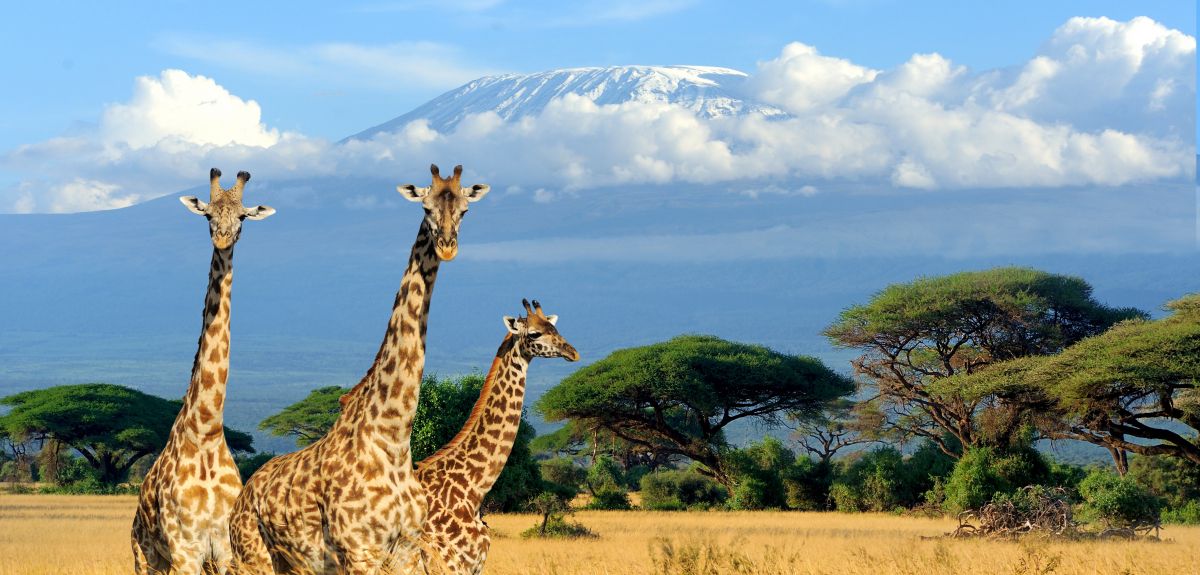
Human factors are responsible for a number of key environmental and species declines today, but has it always been the case?
Oxford University researchers have published a comment piece in the journal Science asking this very question in relation to dwindling megaherbivore populations on the African continent (species of mammals that weigh more than 1000kg, such as Elephants, Giraffes and large Hippos).
In the article, Dr René Bobe a Research Associate at Oxford’s School of Anthropology & Museum Ethnography, and Dr Susana Carvalho, Associate Professor in Palaeoanthropology and a Fellow of St Hugh's College, offer a perspective on a paper featured in the same issue which suggests that human ancestors have played no role in the demise of these animals.
However, in their perspective the two challenge this perception and suggest that addressing the question of when humans or our ancestors begin to play a role in driving the largest mammals to extinction is key to determining any fault, whether direct or indirect.
Dr Bobe explains: ‘The article by Faith et al. detects the beginning of megaherbivore decline by 4.5 million years ago, at a time when our evolutionary ancestors were unlikely to have played a role. However, our perspective indicates that there are important gaps in our knowledge of early human ecology, and that species like Homo erectus may have played an indirect role in changing the landscape and triggering extinctions.’
Dr Carvalho adds: ‘There are other factors to consider in what was undoubtedly a complex process: What was the role of fires in changing the landscapes of human ancestors and the animals that lived with them? Did predation patterns change during times of drought to have a major effect herbivore species that reproduce slowly and have a long life span? When did humans begin to hunt very large species?’
In conclusion, the piece finds that the role that humans and our ancestors may have played in driving the largest African mammals to extinction remains an open question.
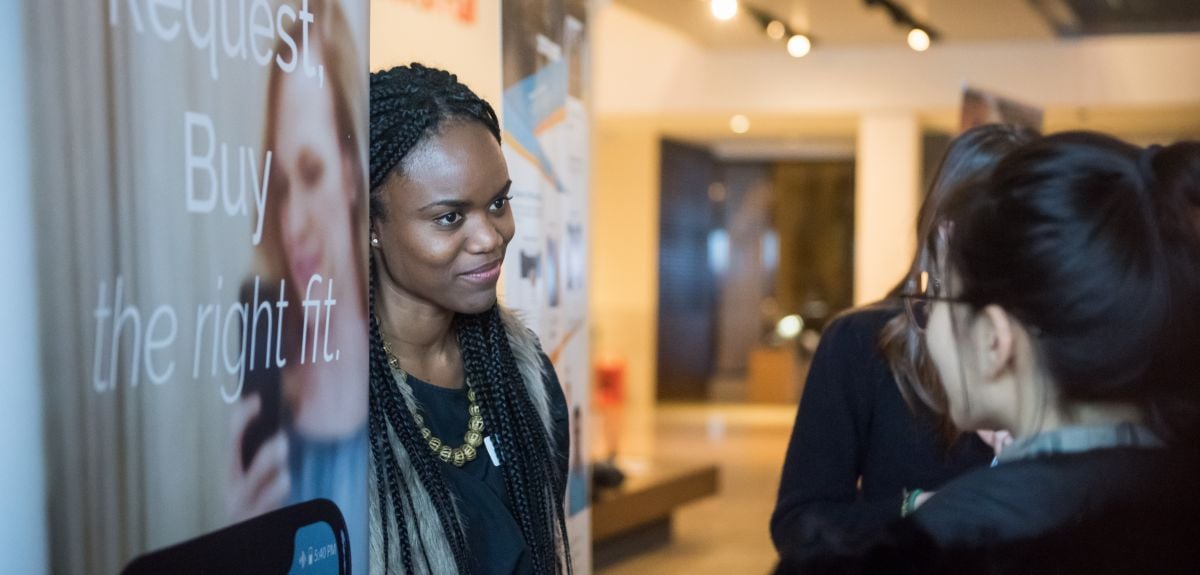
By Leah Thompson
You would think that by the time you have done four events like this, that you would be cool, calm and collected, and ready for anything. But of course, being entrepreneurial means that you are constantly tinkering and trying to improve the format . . . meaning that nothing is ever quite the same. This event was no different. . . you spend half the time worrying that no one will show up, and the other half of the time worrying that everyone will show up!
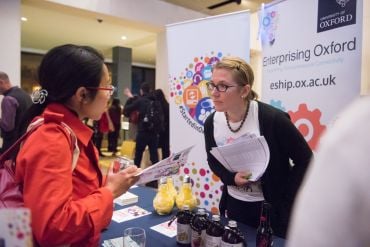 Demo Night 2018
Credit: John Cairns
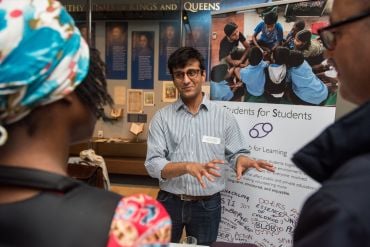 Demo Night 2018
By John Cairns
Each attendee was given 1000 #StartedinOxford dollars to "invest" in the startup they liked the most. It was a great way to encourage the attendees to find out as much as they could about each venture. After a welcoming introduction by Pro-Vice Chancellor (Research) at the University of Oxford, Professor Patrick Grant, the attendees were left to explore the hall, and to meet as many exhibitors as possible in the short time. The ventures focused on everything from food, health, accessibility and shopping, to better cultural exchanges, data collection and creativity – using a massive range of innovative solutions. In addition, there was a whole host of entrepreneurship support including The Careers Service, Begbroke Science Park, the Bioescalator, MPLS Enterprise and the Oxford Foundry, as well as external organisations such as the Oxford Hub, Oxfordshire LEP and Oxford Brookes Enterprise.
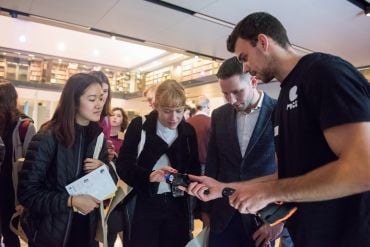 Demo Night 2018
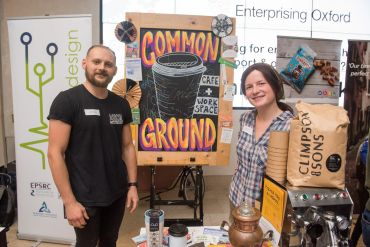 Demo Night winners Common Ground
Credit: John Cairns
What made this evening so much fun was the relaxed atmosphere, and the ability of the attendees to speak directly with the startups. Each person could directly ask questions, and interact with the teams, making it very personable and enjoyable.
A huge thank you to all the startups, our sponsors, the fabulous volunteers, and of course everyone who came and made the event a success!
Leah Thompson (pictured at the top of the blog) is a Project Officer in the Knowledge Exchange and Impact Team, in Research Services. She leads on Enterprising Oxford, a University of Oxford programme to connect and support entrepreneurship in the University and wider Oxford area.
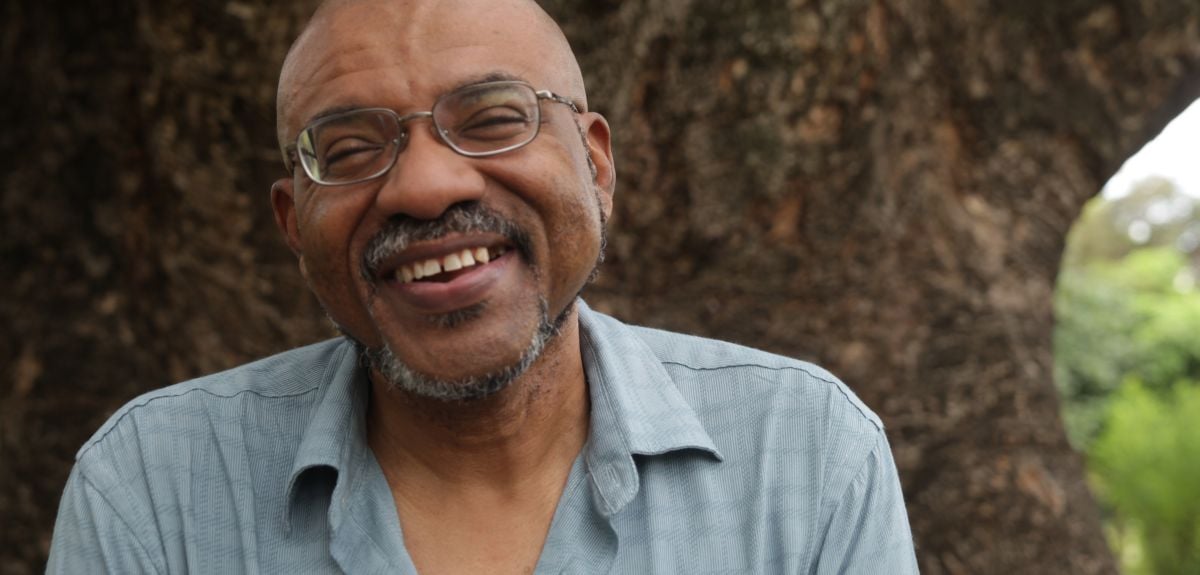
Kwame Dawes, a leading voice in African and Caribbean poetry, has been appointed Visiting Professor at TORCH (The Oxford Research Centre in the Humanities).
Dawes is Chancellor’s Professor of English at the University of Nebraska-Lincoln, the Glenna Luschei Editor of the literary magazine Prairie Schooner, and a chancellor of the Academy of American Poets.
His many honours include the Forward Poetry Prize for Best First Collection, a Guggenheim Fellowship for Poetry, the Musgrave Silver Medal for contribution to the Arts in Jamaica, the Poets & Writers Barnes and Noble Writers for Writers Award, and a Pushcart Prize. In 2009 he won an Emmy Award for Live, Love, Hope, a multimedia performance poetry and music piece that explores the lives of people living with HIV AIDS in Jamaica.
His works of poetry, fiction, plays, and criticism include City of Bones: A Testament (2017), Duppy Conqueror: New and Selected Poems (2013); Bivouac (2010); She’s Gone (2007); A Far Cry from Plymouth Rock: A Personal Narrative (2006); and Bob Marley: Lyrical Genius (2003). He is co-founder and programming director of the biannual Calabash International Literary Festival in Jamaica, and founding director of the African Poetry Book Fund, which advances the development and publication of the poetic arts of Africa.
During his residency in Oxford in November 2018, Professor Dawes will launch an interactive exhibition that tells the story of the first five years of the African Poetry Book Fund, showing all that the fund has accomplished in its promotion and advancement of African poetry worldwide. The exhibit has been curated by Professor Lorna Dawes of the University of Nebraska-Lincoln and features the work of award-winning artist Walter Kitundi.
Professor Dawes will meet with students, scholars, teachers, and members of the local community in Oxford to talk about African and Caribbean poetry and literary criticism, university and school curricula, and ways to encourage, support, and promote marginalised voices in poetry. He said: ‘I look forward to the chance to have fruitful conversations about what I believe are exciting times for poetry, especially poetry from Africa. Technology, advanced communication and the challenges of a global worldview present us with challenges and great opportunities. My hope is to bring a holistic view to the discussion of the poetry of Africa.’
Elleke Boehmer, Professor of World Literature in English at the University of Oxford, who is hosting Professor Dawes, said: ‘TORCH is delighted to host Kwame Dawes on our Humanities and Identities programme. Professor Dawes is a true global intellectual with wide-ranging interests in the world literatures of the Caribbean, African America, and sub-Saharan Africa. He is currently involved in a history-making project to digitise African poetry past and present and bring this rich archive to global attention in ways that will traverse linguistic and cultural borders and draw in transnational communities of readers.’
Dr Katherine Collins, Leverhulme Early Career Fellow at the Department of Education at Oxford, who is co-hosting the residency with Professor Boehmer, said: ‘Professor Dawes is often called “the busiest man in literature” and we are thrilled he is going to be with us this month. His creativity across a range of different forms, and his ability to communicate his messages to an astonishing breadth of audiences, will make a significant contribution to ongoing discussions between scholars, teachers, and community activists on important issues of representation.’
TORCH Director Professor Philip Bullock said: ‘Kwame Dawes brings a unique perspective to bear on TORCH's Humanities and Identities programme, and reminds us of the crucial role played by art and creativity in the cultivation of a responsive moral imagination.’
The TORCH Humanities and Identities Programme is funded by the Andrew W. Mellon Foundation.
- ‹ previous
- 62 of 252
- next ›
 10 years on: The Oxford learning centre making an impact
 Mapping the Moon: the world’s first lunar atlas goes digital
  Oxford and The Brilliant Club: inspiring the next generation of scholars
 New course launched for the next generation of creative translators
 The art of translation – raising the profile of languages in schools
  Opening a window into the quantum world
 Tracking resistance: Mapping the spread of drug-resistant malaria
 Cities for cycling: what is needed beyond good will and cycle paths?
 How do we measure success in the fight to save nature?