Features

What can history teach us about tackling pandemics? How can they shape our response to climate change? These questions are being explored in a new series of live, virtual events from the Humanities Cultural Programme.
While physical events are not be possible in Oxford this term, the ‘Big Tent! Live Events!’ series will bring together Oxford academics, leading figures in the arts and even pop stars like Jamelia. They will discuss the biggest questions of our day through the lens of research.
Events will be streamed live at 5pm every Thursday, and the recording will be made available online shortly afterwards.
Dr Victoria McGuinness, Head of Cultural Programming, said: "Although it is disappointing not to be able to bring people together for these events, moving to digital actually lets us reach bigger and more global audiences than would otherwise be possible."
Thousands of people from around the world took part in the first events, and we invite everyone to tune in, listen and type out your thoughts and questions for our speakers every week from 5pm.”
Some of the events so far have been very relevant for our present circumstances. Last month, Professor Sally Shuttleworth (English Faculty) and Professor Erica Charters (History Faculty) explored the treatment of health and disease in the past, particularly in the 18th and 19th centuries when invalids were actively encouraged to travel.
Earlier this month, Professor Abigail Williams explained her research into the history of reading aloud and performance at home in the 18th century. Back then, drawing rooms regularly hosted book groups, tea parties, amateur dramatics and singing. In discussion with Giles Lewin, she gave her thoughts on the revival of domestic entertainment while we have been in lockdown.
Last month, Emma Smith, Professor of Shakespeare Studies, marked the Bard’s birthday in a discussion with Erica Whyman OBE, Deputy Artistic Director of the Royal Shakespeare Company.
Shakespeare, it turned out, did some of his writing while in quarantine to avoid the plague.
In the first event to be held, anthropologists Dr Elizabeth Ewart and JC Niala discussed human relationship to cities, and JC Niala’s doctoral research into 'guerrilla gardeners' who operate in cities such as London and Oxford.
Future events will include a discussion of the world after Covid-19 on 18 June. This will be a conversation between Professor Ngaire Woods (Dean of the Blavatnik School of Government) and Professor Peter Frankopan (History Faculty), who will bring together complementary expertise in present day governance and lessons from history.
On 7 May, Professor Philip Bullock (Modern and Medieval Languages) and Dr Leah Broad (Music Faculty) celebrated the 180th anniversary of the birth of Tchaikovsky with a discussion of how the Russian composer became such a revered figure.
The full list of past and upcoming events can be found here:
https://torch.ox.ac.uk/article/launch-big-tent-big-ideas
The Humanities Cultural Programme is part of the Stephen A. Schwarzman Centre for the Humanities. It will benefit from state-of-the-art facilities including a 500-seat auditorium, when the building the opens, which is schedule for the academic year 2024/25.
By Dr Kate Orkin
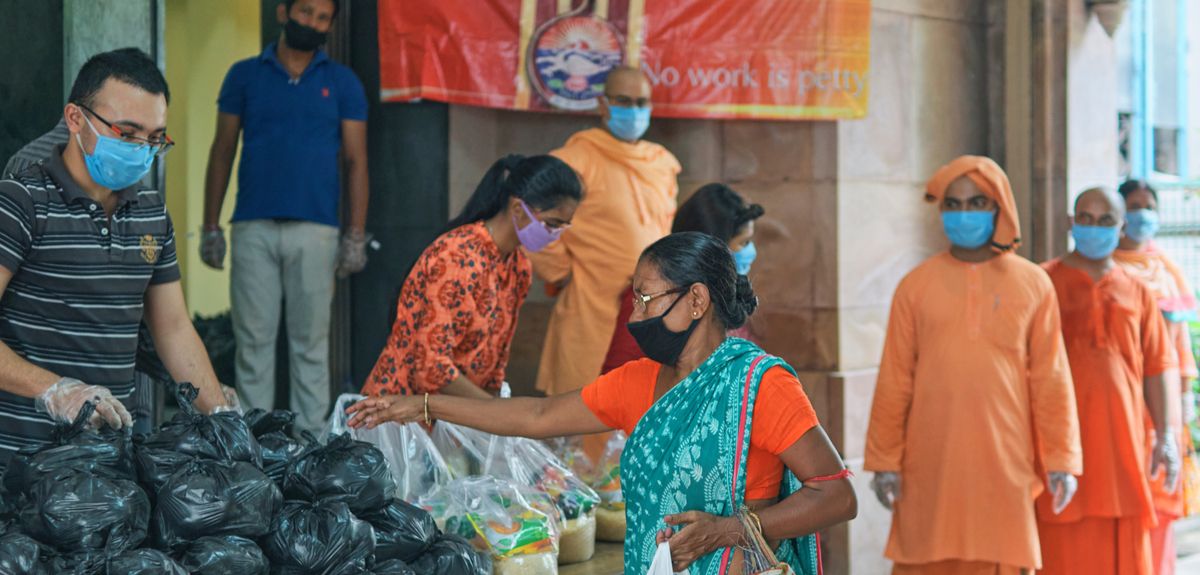
COVID-19 and the related government-led lockdowns have resulted in widespread economic shock and job loss, in the UK and around the world. Governments, including in low and middle-income countries, have responded with economic interventions to cushion the shock. The most widely-used government tool has been cash transfer programmes: the World Bank finds 234 measures involving expanding cash transfer programmes worldwide, as well as 100 food or voucher schemes.
In the past, some governments have been concerned that transfers would increase dependency on the state and, in particular, that cash transfers would not be used well because it is hard to monitor how people spend them. Many governments used instead to provide food aid or subsidise basic food items.
So why have governments shifted to using cash in low and middle-income countries?
Why have governments shifted to using cash in low and middle-income countries?
In most situations, there is strong evidence that money, not food, is the most efficient and effective way to distribute emergency aid and social programmes. This particular question, on how poor people use cash transfers, is one of the most studied in development economics.
The finance ministry in Mexico did one of the first conditional cash schemes in 1997. To evaluate the programme, they ran a randomised trial. They could not roll out the programme all at once, so they randomly selected some communities to receive it first and compared them to those who did not. This is a similar process to how drugs are tested, but with a social programme. Since then, many countries' governments in low and middle income countries have implemented similar studies.
In most situations, there is strong evidence that money, not food, is the most efficient and effective way to distribute emergency aid and social programmes.
Poor people spend cash grants well. The bulk of transfers are spent on food anyway. For example, a review of 165 studies by the Overseas Development Institute found that recipients of cash grants have better dietary diversity and are less likely to face food insecurity. A World Bank review found grants improve growth and cognitive development in small children. Cash also has the added benefit of giving people autonomy to spend on what they need most. It also stops distortions arising in local markets, where bringing in free food can lead to price decreases that hurt local producers.
Poor people spend cash grants well
Emergency, fast cash is a smart investment in long-term poverty alleviation
Numerous studies, from China and India to Ethiopia and Malawi show that economic shocks have severe long-term consequences. Poor households often take short-term decisions that leave them in deeper long-term poverty. The decision most feared is that households reduce children’s nutritional intake.
Setting aside moral arguments, malnourished children have lower schooling attainment and lower earnings throughout their lives. A World Bank review found grants improve growth and cognitive development and later outcomes in small children. It is harder to find a smarter investment.
When households face economic shocks, women may enter into transactional sexual relationships: during the outbreak in West Africa, a study by anti-poverty organisation BRAC found young women had older partners, higher rates of pregnancy and did not return to school. Both responses to poverty could be mitigated by cash transfers.
But studies also show that, when facing a short deep shock, desperate households often sell productive assets such as cows, vehicles or phones or dip into meagre savings which they usually use to search for work. Losing the means of earning can lead to many additional years of poverty. Temporary cash grants can help. Studies in Bangladesh and Malawi found recipients of grants are less likely to sell assets when they face shocks.
There are anecdotes of welfare queens: people spending their welfare money poorly. But the anecdotes just do not bear out the reality
In low and middle income country settings, cash transfers also mostly do not affect whether, or how much, people work. In some studies they increase job search because they give people money for transport costs and airtime. For example, one South African study found youngsters in households with a pension recipient are more likely to find jobs.
There are anecdotes of welfare queens: people spending their welfare money poorly. But the anecdotes just do not bear out the reality in large samples of people. There is really no good evidence of waste. A review of 19 studies by the World Bank found cash grant recipients did not increase spending on alcohol or cigarettes. In some countries, which only give the grants to parents, there have been arguments that the grants are incentives for women to have children. But there is little rigorous evidence of this. For example, trials in Nicaragua and Malawi found that women in households are less likely to fall pregnant; a trial in Mexico found no effects.
An increase in cash grants may also help stimulate the economy. In a trial in Kenya, the NGO GiveDirectly evaluated an intervention which gave the poorest people, in some randomly selected villages, large lump-sum cash transfers. They found that people living near to villages, where the poorest received cash transfers, also had higher food consumption, partly because recipients spent money in their businesses. There were no meaningful inflationary effects.
Most striking of all, the study estimates a ‘fiscal multiplier’ of 2.6 for this area of Kenya, implying that every $1 invested in fiscal stimulus will grow the local economy by $2.60. That is even larger than in such multipliers the US during a recession. These were much, much bigger transfers than most governments in poor countries give out, equivalent to about $1,800, if spent in the US. So we do not know if the same effects occur from smaller transfers, but in principle the mechanism might work in the same way.
Cash is also usually cheaper to distribute than food. It can often be transferred to bank accounts or mobile money accounts. It does not go off
Cash is also usually cheaper to distribute than food. It can often be transferred to bank accounts or mobile money accounts. It does not go off, and governments don’t have to worry about having the wrong type of cash in the wrong place. There are worries that cash might be more fungible and possible to divert, but there is also evidence on how to prevent ‘leakage’, in particular by paying directly to beneficiaries, requiring biometric identity verification and being very clear about who is getting what benefits on what schedule. It is obviously difficult to set these systems up from scratch, but many countries have them in place already. And cash is much better for social distancing than food parcel queues, if it can be sent to bank accounts.
There can be cases where food aid makes more sense, for example if there is disruption to the food supply chain or if prices go up rapidly. Sometimes beneficiaries say they prefer food. But in general, it is fair to say that a cash system can work better than a food system.
South Africa is an interesting recent example. They had an emergency food parcel system before the crisis and it got completely overwhelmed. They just could not scale up fast enough to reach everyone who needed it. The authorities eventually admitted that the food parcel system was not working, so instead they increased the amount of their pension and child grant, where people were signed up already. They have also added a new cash grant for the unemployed.
Dr Orkin is a labour economist at the Blavatnik School of Government, University of Oxford

Robert Burton was a scholar at the University of Oxford 400 years ago. He drew on the collections of the Bodleian Library and Christ Church, where he was himself Librarian, to seek to understand the human condition, in its full emotional range.
But his declared subject was 'melancholy'. The Anatomy of Melancholy, first published in 1621, is an extraordinary and enormous attempt to grapple with the causes, symptoms, and treatments of that universal human experience.
Four hundred years later, when clinical depression is stated to be the leading cause of global disability, and there are many challenges to our mental health, a new radio series for BBC Radio 4 is asking: how far have we come? And is there anything we can learn from Burton’s Anatomy of Melancholy to help us today?
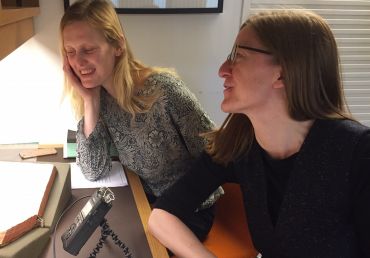 Amy Liptrot and Kathryn Murphy at the Bodleian Library
With Burton as a guide, the series hears from leading experts in mental health research today, and from those who manage their struggles with sadness and depression in a variety of ways - including the gardener and broadcaster, Monty Don, pioneering cell biologist and author of Malignant Sadness: the anatomy of depression, Lewis Wolpert, and a young survivor from the Manchester Arena attack.
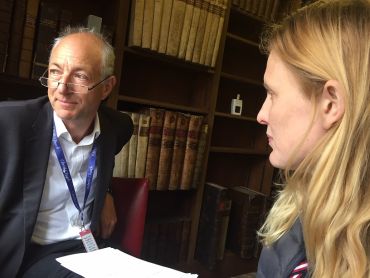 John Geddes and Amy Liptrot at Christ Church
Each episode takes on a different theme from Burton's Anatomy, covering causes such as: genetics ('an hereditary cause'), inflammation ('inflammations of the head'), inequality ('poverty and want'), trauma ('terrors in the night') and possible 'cures' such as nature, 'merry company', ‘divine music’, sleep, friends, exercise.
 Bust of Robert Burton at Christ Church Cathedral
‘We've explored the part of melancholy in the human condition, how it can be alleviated and lived with - and the unique voice of Burton has been a brilliant guide though it all.’
The series shines a light on common experiences and connections over time and the ways in which science is catching up with the intuitions and understanding from 400 years ago and beyond.
Robert Burton talks about his own struggles with melancholy and reveals a personal vulnerability when he says: 'I write of melancholy, by being busy to avoid melancholy.' The series explores the potential of writing and reading to give purpose, better understand one's experiences and connect with others. Perhaps there has never been a better moment to pause and reflect on melancholy: ways to understand it, alleviate it and accept it.
The actor Simon Russell Beale narrates sections of Robert Burton’s text throughout the series.
Professor John Geddes is series consultant for The New Anatomy of Melancholy.
Dr Kathryn Murphy’s book Robert Burton: A Vital Melancholy will be published in 2021.
The Bodleian Library is curating an exhibition based around The Anatomy of Melancholy, due to open in the autumn, 2021.
The 10-part series The New Anatomy of Melancholy begins on BBC Radio 4, Monday 11 May 2020 at 1.45pm.
Listen here: https://www.bbc.co.uk/programmes/m000j1jq

Research at Oxford has shown music brings people together and makes them feel better - and social distancing has provided overwhelming support for such academic music theories.
To celebrate music of the lockdown, Oxford’s music faculty is today inviting entries for a unique competition focusing on safe collaboration, networking and virtual collectivity
To celebrate music of the lockdown, Oxford’s music faculty is today inviting entries for a unique competition focusing on safe collaboration, networking and virtual collectivity. At the same time, Oxford music students are giving an online performance tonight [24 April] for the YoungDementia UK charity.
The EMPRES Award 2020 invites creative, collaborative responses to the global challenge, of making music and art during the Covid-19 pandemic. Entries can come from any member of the University of Oxford and their creative associates. This could include filmmakers, writers, visual artists, composers and musicians.
Meanwhile, Oxford musicians became involved with the Oxfordshire-based charity as part of the Turtle Song project. The aims is to reach out to people with dementia and engage with them socially and creatively. Music is proven to be of great physical and emotional benefit to people living with dementia.
The work was cut short by the lockdown. But the whole group, include those living with dementia, came together by Zoom last Friday and hope to ‘meet’ regularly during this difficult time. According Turtle Song project director Carolyn von Stumm: ‘The joy at the group being reunited as we all sang and danced in our living rooms was palpable. A wonderfully, uplifting, positive story with a very human perspective.’
Oxford music students are giving an online performance tonight [24 April] for the YoungDementia UK charity
Will Prior, an Oxford music student who has been involved with the project, says: ‘Volunteering...has been eye opening and inspirational in equal parts....it is a great shame that we were not able to meet as a group in person for the (final performance) we have found a way, through the wonder of Zoom, to connect with each other...Although the social dynamic is vastly altered...there’s something rather special about seeing a group of people...dancing round their living rooms without a care in the world whilst belting out...songs that you wrote together.’
The EMPRES competition is also aimed at engaging people with music during these challenging times. The Music faculty’s electronic music studio manager and EMPRES artistic director, Daniel Hulme, comments: 'We are living through times inconceivable just a few months ago, that will no doubt resonate for many years to come. This is both an extraordinary crisis, and potentially an extraordinary stimulus to do something remarkable.'
This is both an extraordinary crisis, and potentially an extraordinary stimulus to do something remarkable
The deadline for submissions is Monday 15 June. There are two broad categories:
- Experimental Electronic Music and
- Sound Art.
Submissions in both categories are welcomed from collaborations with other artists, researchers and disciplines. There will be prizes in both categories and online publication – with a live performance of selected works later in the year. A key requirement is that the works are deliverable within the current UK guidelines around social distancing – and could include a digital experience or a web-based installation. And they must be no longer than eight minutes.
Submissions for the EMPRES, Electronic Music Research, competition should be sent via WeTransfer (or another web transfer service) in a single ZIP file to [email protected].
Turtle Song has run 28 projects throughout the UK over the last 11 years, involving 800 participants, 150 music students and 10 universities and music colleges. You can see their performances at https://www.turtlekeyarts.org.uk/turtle-song.
By Charvy Narain
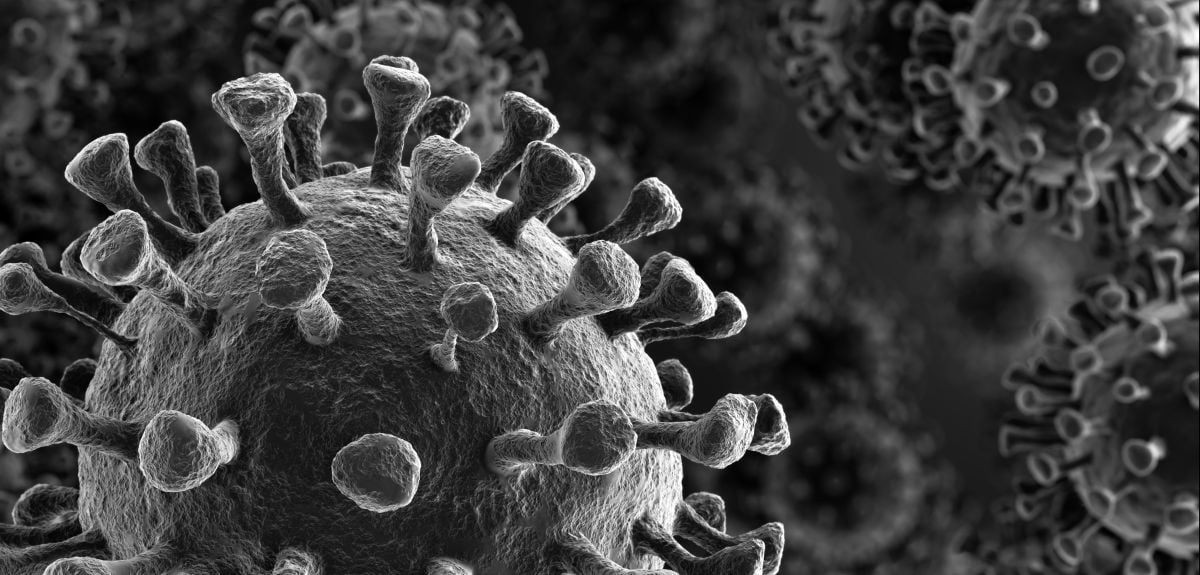
Much has changed since the beginning of the year, when University of Oxford researchers first started coming together to fight the novel coronavirus outbreak. But what has remained consistent is that the University of Oxford remains at the forefront of global efforts to combat the SARS-CoV-2 virus and mitigate its many effects: medical students have been stepping up, researchers with clinical skills are returning to front-line clinical roles, and others are offering up equipment and materials, as well as their laboratory skills to help the NHS respond to the crisis.
The University is also working directly with Oxford University Hospitals NHS Foundation Trust to reduce clinical research activity, and instead prioritising research on COVID-19.
Immunity as the key
One such researcher is Professor Tao Dong, a Professor of Immunology at the University, as well as the Oxford Director of the Chinese Academy of Medical Sciences Oxford Institute (COI). The Institute, a collaboration between the University of Oxford and the Chinese Academy of Medical Sciences, has turned out to be particularly well-placed to respond to the coronavirus crisis: its main aim is to deliver innovative ways of managing cancer as well as infectious diseases, and it has close links to clinicians as well as researchers in China.
Professor Dong says: ‘We started prioritising research on COVID-19 back in January 2020. In March, the COI has already provided funding to seven separate research projects unpicking the immunobiology of the SARS-CoV-2 virus, helping Oxford-affiliated researchers to get research started at record speed.’
Professor Dong’s own research group is currently testing samples taken from COVID-19 positive patients in hospital, taken at different time points in their illness. She says: ‘Some people with a COVID-19 infection are able to fight it off successfully, while others get really ill. We are analysing immune markers in patients to see if we can identify markers that predict how a patient is going to respond, and also to identify targets for drugs to make things better.’
Professor Dong does think that understanding the immune response to COVID-19 is going to be key to defeating it. She says: The immune response to this novel coronavirus is quite unusual. Some of the immune responses it appears to be triggering may actually be making things worse, and if we can predict who is going to respond this way, or even better, find ways to change it, we might be able to help patients.’
Vaccine
The immune system is also the focus of the Oxford Vaccine Group and the Jenner Institute, who are veterans when it comes to combating epidemics: in 2014, the Oxford team helped develop a vaccine for the Ebola epidemic in West Africa. The team are about to start trials in healthy young volunteers in the Thames Valley region, to test the new ChAdOx1 nCoV-19 vaccine.
The new vaccine is already in production but not ready yet. Dr Sandy Douglas, who is leading on the vaccine manufacturing scale-up project, says: ‘The scale of this epidemic poses a huge challenge for vaccine manufacturing. We need to follow rigorous safety standards and that takes time. By starting work on large-scale manufacturing immediately, we hope to accelerate the availability of a high quality, safe vaccine.’
Technology to the rescue
Large-scale usage would also be the key to the success of a mobile contact tracing app, developed by researchers at the Big Data Institute, Nuffield Department of Medicine, that could potentially help slow COVID-19 infection rates, and support countries to emerge from lockdowns safely. But civil liberty issues and ethics were also central to this proposal: researchers from the Wellcome Centre for Ethics and Humanities at Oxford University co-authored this study, and point out that both ethical oversight and public and user engagement would be essential to the app’s potential success.
The idea of an app is one of many emerging at break-neck speed as researchers focus their combined efforts to combat COVID-19.
Looking to the future
Some researchers are looking at what happens to COVID-19 patients over the longer term: Dr Betty Raman says: ‘We know from the previous SARS epidemic that coronavirus infections can have long-term effects on lung function, exercise capacity and quality of life. Tracking the long term effects of SARS-COV-2 may therefore be important and could highlight the need for ongoing medical surveillance and follow-up.’
Recent studies suggest that COVID-19 can affect other organs besides the lungs. So together with Professor Stefan Neubauer, Dr Raman is leading the C-MORE study, which assesses the effects of COVID-19 on multiple vital organs including the lungs, heart, brain, liver and kidneys (as assessed by magnetic resonance imaging) for up to twelve months. The study will also explore the impact of COVID-19 on functional capacity and quality of life for people who are affected by the illness.
Professor Neubauer said: ‘This research will be important to understand the long-term impact of SARS-COV-2 infection on a holistic level. The results will be important to assess the long-term consequences for healthcare resource planning and to guide development of new therapies.’
These researchers are also collaborating with others at Oxford, including Professors Clare McKay and Peter Jezzard at the Wellcome Centre for Integrative Neuroscience, to assess the impact of SAR-COV-2 on neurological and mental health, along with infectious diseases experts (such as Professor Brian Angus) and others.
Mental health
Researchers at the Departments of Experimental Psychology and Psychiatry are looking at the longer term, and have launched a study to track young people’s and children’s mental health through the COVID-19 crisis. The study came together in record time. Dr Polly Waite, who is co-leading the study, said: ‘Schools closed in the UK on Friday 20th March, we had the idea for the study on Sunday 22nd March, and we had the survey out on following Monday, on 30th March.’
Dr Waite is a working clinical psychologist, and her research is usually focussed on managing anxiety in young people known to have anxiety disorders. “But the closure of schools and nearly all families having to stay at home is quite unprecedented, and we know that many young people already struggle with general anxiety, depression and OCD,” says Dr Waite. So the survey aims to identify what factors might protect children and young people from worsening mental health, what particular stress points there might be, and how this might vary according to factors specific to the child and family.
Professor Cathy Cresswell, the study’s other co-leader, says, “We hope to have more than 10,000 parents and carers across the UK complete the new online survey. Their responses will help us really understand how families are coping and what support could make all the difference to children, young people and their families at this time.”
The research team hope to track families over the next twelve months, including when children might return to school. “That may bring a whole new set of challenges for a family, but children are generally quite resilient,” says Dr Waite. “But again, what we want to do is try and track why and how some children have an easier time readjusting compared to others.”
Parents resource
In collaboration with the World Health Organization and UNICEF, the University of Oxford has also launched a parenting resource for self-isolating families.
One Oxford
During this challenging time, some of the world’s brightest minds are coming together, working in unprecedented ways to deliver world class research with global benefits and to make an impact on the frontline of this crisis. Oxford is made of its people, and these achievements are a result of contributions on all levels as we continue to face this global challenge, together.
Find out more about the University of Oxford’s coronavirus research.
- ‹ previous
- 43 of 252
- next ›
 Setting the agenda for the next century of quantum
 10 years on: The Oxford learning centre making an impact
 Mapping the Moon: the world’s first lunar atlas goes digital
  Oxford and The Brilliant Club: inspiring the next generation of scholars
 New course launched for the next generation of creative translators
 The art of translation – raising the profile of languages in schools
  Opening a window into the quantum world
 Tracking resistance: Mapping the spread of drug-resistant malaria
 Cities for cycling: what is needed beyond good will and cycle paths?