Features

This year’s winner of the Premier League Fantasy Football competition and Oxford Mathematician, Joshua Bull, talks to Oxford Science blog about strategy and how maths can help us understand the infinite complexity of the world – from football to cancer.
 Joshua Bull
I’ve had a team for a few years. We have a family league, called The Bullfight, because of our name.
Did you apply mathematics to your fantasy football team?
I had some strategies that I was trying to follow, but I don’t know if they’re mathematically the right strategies. I’ve since done some analysis, and although I didn’t use maths to get to these conclusions, I’m asking myself if I can use maths to show whether they’re the right conclusions or not? Can I improve on my strategy?
Was your instinct underpinned by mathematical knowledge?
There’s a lot of strategic thinking in the game which mathematicians tend to be quite strong at; the planning ahead with a view to maximising points - not just this week but for the next few weeks. Magnus Carlsen, who’s the world chess champion, was top of the fantasy league at one point this season. He finished within the top 10. People at the time were saying – this is someone who’s famous for thinking strategically, and then when I started doing well they said ‘Hang on, there’s an Oxford mathematician also doing well’, so they tried to make those links. There’s a lot in strategic thinking in it.
The talk that I’m giving on Tuesday 8 September is linking my day to day work to this win, where I try to use maths to try to tackle complex problems. The way that we do that is to break the complex problems down into smaller, simpler examples. By making those simplifications, you try to understand how one, specific thing might impact that big system. You can apply the exact same logic to fantasy football. So, you’ve got all of this data out there and you want to know how making your team choice is going to impact on your points. That’s the kind of thing that you can quite happily model mathematically. These are the things I was thinking about, even if I wasn’t writing down equations.
Are people writing algorithms for fantasy football teams?
Some people certainly do. There’s a lot of teams where people will train a neural network on the data of previous seasons and try to predict the best team. Some of those are more successful than others. But it’s not the case that it’s a game that a computer is better at than a person.
All the teams play once and then you can make transfers. You can only make one or two changes per week. If you want to make any more than that it starts costing you points – you have to pay a forfeit. So, there’s a real optimisation problem where there are players you might want to bring in, but it’s not necessarily easy to say ‘I want them in my team, so I’ll get them in my team.’
Everybody knows at the start of the year which players are going to get most points, but as a result they’re priced accordingly. So, you have the question, do I have a few very expensive people but have to make compromises for the rest of my team? Or do I have less of those expensive players and have a more balanced team? In itself – that’s a classic maths problem.
How much time did you spend on the league?
Not a massive amount. I did get into a routine – particularly as I started to do well – checking in with a very active online community. I’d spend probably 10-15 minutes a night checking what I’d missed, and then trying to take all of that information in and make the decision about what transfer to make over the course of the end of one week and start of the next.
Do you think there’s anything that transfers to the real world that might be helpful?
The skills that I was using, they’re not directly relevant for managers, but I think that maths itself is very relevant for football managers. We’re starting to see much more focus being put on looking mathematically at how you can improve your football team. The things that footballers traditionally think are important for scoring more goals and winning games are not necessarily the things that are statistically more important. For example – when should you take a shot as a footballer to give you the highest probability of scoring, from certain positions on the field? The best option statistically speaking isn’t necessarily the one that gets the crowd excited! It’s the same in fantasy football as well. You can use maths to show you an improved strategy to improve your odds, but you still need to take those risky shots that might pay off.
Could you tell me about your own research – what do you look at?
At the highest level, what I’m looking at is how we can improve cancer research using maths. So that’s a very broad interest. I focus on the locations of immune cells within tumours. It correlates to the patient prognosis and has all sorts of effects on treatments – particularly immunotherapies. I collaborate with groups in the Nuffield Department of Medicine and in clinical research as well – it’s very much a two-way street.
What got you interested in this area of research?
It’s a very long story, but ultimately, when I was doing my Masters, I actually got a brain tumour – it was benign and it was OK in the end but it was on my pituitary gland. So, I basically had no working memory for a few months and I had to drop out of my Masters – this was at Durham. They very kindly said: ‘if you get your memory back, come back next year and go again.’ I saw a course on mathematical biology including tumour modelling. I’d never heard of that before but thought I’d give it a go. I ended up applying here at Oxford for the PhD.
You recovered and your memory came back?
It did indeed. I didn’t notice anything at the time but everyone around me was saying – ‘Josh, you really need to go and talk to a doctor, you can’t remember anything.’ I would have conversations with my friends and say ‘What day is it today?’ and a few moments later I’d ask again. People thought I was joking at first and then realised I wasn’t and it was serious. Luckily there was a drug treatment that was able to shrink that particular tumour. From my point of view, it was like a miracle cure – within a few months I was back to normal. It was absolutely amazing. It really got me interested in applying maths to the real world. I never thought that people were doing it in biology, in cancer research. It does feel really good to do things which one day might have an impact on patients. I don’t think we’re there yet, but I think in 10-20 years’ time it will be much more routine that cancer treatment will be personalised based on mathematical predictions. I believe that’s the direction we’re moving in.
Are you committed to this area of research now?
One of the wonderful things about maths is that you can apply similar techniques to all sorts of different fields. I definitely want to keep working in cancer research, but, for example, the techniques I use can be applied to other problems like looking at immune cells in Covid. So, from a biological point of view it’s a completely different problem, but we can apply the same types of mathematics and hopefully understand a completely different system. I love that idea that, with maths, your main focus can be on tumours, but that you can basically do anything else. The world of biology is so big, there are so many things to look at. If you can describe something mathematically, you can understand it better with mathematical models. It’s true for cancer, it’s true for fantasy football.
Watch Joshua Bull deliver his talk ‘Can maths tell us how to win at Fantasy Football?’.

What if your boss was an algorithm? Imagine a world in which artificial intelligence hasn’t come for your job – but that of your manager: whether it’s hiring new staff, managing a large workforce, or even selecting workers for redundancies, big data and sophisticated algorithms are increasingly taking over traditional management tasks. This is not a dystopian vision of the future. According to Professor Jeremias Adams-Prassl, algorithmic management is quickly becoming established in workplaces around the world.
We aren’t necessarily defenceless or impotent in the face of machines – and might even want to (cautiously) embrace this revolution.
Should we be worried? Last month’s A-level fiasco has shown the potential risks of blindly entrusting life-changing decisions to automation. And yet, the Oxford law professor suggests, we aren’t necessarily defenceless or impotent in the face of machines – and might even want to (cautiously) embrace this revolution. To work out how we should go about regulating AI at work, he has been awarded a prestigious €1.5 million grant by the European Research Council.
This will require a serious rethink of existing structures. Over the course of the next five years, Professor Adams-Prassl’s project will bring together an interdisciplinary team of computer scientists, lawyers, and sociologists to understand what happens when key decisions are no longer taken by your boss, but an inscrutable algorithm.
Employers today can access a wide range of data about their workforce, from phone, email, and calendar logs to daily movements around the office – and your fitbit. Even the infamous 19th century management theorist Frederick Taylor could not have dreamt of this degree of monitoring. This trove of information is then processed by a series of algorithms, often relying on machine learning (or ‘artificial intelligence’) to sift data for patterns: what characteristics do current star performers have in common? And which applicants most closely match these profiles?
What we’re seeing now is a step change: algorithms have long been deployed to manage workers in the gig economy, in warehouses, and similar settings. Today, they’re coming to workplaces across the spectrum, from hospitals and law firms to banks and even universities.
‘Management automation has been with us for a while’, notes the professor. ‘But what we’re seeing now is a step change: algorithms have long been deployed to manage workers in the gig economy, in warehouses, and similar settings. Today, they’re coming to workplaces across the spectrum, from hospitals and law firms to banks and even universities.’ The Covid-19 pandemic has provided a further boost, with traditional managers struggling to look after their teams. As a result, the algorithmic boss is not just watching us at work: it has come to our living rooms.
That’s not necessarily a bad thing: algorithms have successfully been deployed to catch out insider trading, or help staff plan their careers and find redeployment opportunities in large organisations. At the same time, Professor Adams-Prassl cautions, we have to be careful about the unintended (yet often entirely predictable) negative side effects of entrusting key decisions to machine learning. Video-interviewing software has repeatedly been demonstrated to discriminate against applicants based on their skin tone, rather than skills. And that sophisticated hiring algorithm may well spot the fact that a key pattern amongst your current crop of senior engineers is that they’re all men – and thus ‘learn’ to discard the CVs of promising female applicants. Simply excluding gender, race, or other characteristics won’t cure the problem of algorithmic discrimination, either: there are plenty of other datapoints, from shopping habits to post codes, from which the same information can be inferred. Amidst a burgeoning literature exploring algorithmic fairness and transparency, however, the workplace seems to have received scant attention.
Understanding the technology is key to solving this conundrum: what information is collected, and how is it processed?
Existing legal frameworks, designed for the workplace of the last century, struggle to keep pace: they threaten to stifle innovation – or leave workers unprotected. The GDPR prevents some of the worst instances of people management (no automated sacking by email, as is the case in the US) – but it’s nowhere near fine-grained enough a tool. Understanding the technology is key to solving this conundrum: what information is collected, and how is it processed?
‘There’s nothing inherently bad about the use of big data and AI at work: beware any Luddite phantasies’, the professor insists. But employers should tread carefully: ‘Yes, automating recruitment processes might save significant amounts of time, and if set up properly, could actively encourage hiring the best and most diverse candidates – but you also have to watch out: machine learning algorithms, by their very nature, tend to punish outliers.’
Backed by the recently awarded European Research Council (ERC) grant, his team will come up with a series of toolkits to regulate algorithmic management. The primary goal is to take account of all stakeholders, not least by promoting the importance of social dialogue in reshaping tomorrow’s workplace: the successful introduction of algorithmic management requires cooperation in working out how best to adapt software to individual circumstances, whether in deciding what data should be captured, or which parameters should be prioritised in the recruitment process.
It’s not simply a question of legal regulation: we need to look at the roles of software developers, managers, and workers. There’s little point in introducing ‘AI for AI’s sake’, investing in sophisticated software without a clear use case. Workers will understandably concerned, and seek to resist: from ripping out desk activity monitors to investing in clever FitBit cradles which simulate your workout of choice.
‘There’s no such thing as the future of work’, concludes Professor Adams-Prassl. ‘When faced with the temptation of technological predeterminism, always remember to keep a strong sense of agency: there’s nothing inherent in tech development – it’s our choices today that will ensure that tomorrow’s workplace is innovative, fair, and transparent.’
Jeremias Adams-Prassl is Professor of Law in the University of Oxford, and a Fellow of Magdalen College. He tweets about algorithms, innovation, and the future of work @JeremiasPrassl.

The theory of thermodynamics, commonly associated with the steam engines of the 19th century, is a universal set of laws that governs everything from black holes to the evolution of life. But with modern technologies miniaturising circuits to the atomic scale, thermodynamics has to be put to the test in a completely new realm. In this realm, quantum rather than classical laws apply. In the same way that thermodynamics was key to building classical steam engines, the emergence of quantum circuits is forcing us to reimagine this theory in the quantum case.
In the same way that thermodynamics was key to building classical steam engines, the emergence of quantum circuits is forcing us to reimagine this theory in the quantum case.
Quantum thermodynamics is a rapidly advancing field of physics, but its theoretical development is far ahead of experimental implementations. Rapid breakthroughs in the fabrication and measurement of devices at the nanoscale are now presenting us with the opportunity to explore this new physics in the laboratory.
Whilst experiments are now within reach, they remain extremely challenging due to the sophistication of the devices needed to replicate the operation of a heat engine, and due to the high-level control and measurement sensitivity that are required. Dr Ares’ group will fabricate devices at nanometre scales, merely a dozen atoms across, and hold them at temperatures far colder than even deepest outer space.
These nanoscale engines will give access to previously inaccessible tests of quantum thermodynamics.
These nanoscale engines will give access to previously inaccessible tests of quantum thermodynamics and they will be a platform to study the efficiency and power of quantum engines, paving the way for quantum nanomachines. Dr Ares’ will build engines in which the “steam” is one or two electrons, and the piston is a tiny semiconductor wire in the form of a carbon nanotube. She expects that exploring this new territory will have as great a fundamental impact on how we think of machines as previous studies in the classical regime have had.
This research could also uncover unique behaviours that open the way for new technologies such as new on-chip refrigeration and sensing techniques or innovative means of harvesting and storing energy.
The main question that Dr Natalia Ares’ recently awarded European Research Council (ERC project) seeks to answer is: what is the efficiency of an engine in which fluctuations are important and quantum effects might arise? The implications of answering this question are far ranging and could for example inform the study of biomotors or the design of efficient on-chip nanomachines. This research could also uncover unique behaviours that open the way for new technologies such as new on-chip refrigeration and sensing techniques or innovative means of harvesting and storing energy. By harnessing fluctuations, the requirements to preserve quantum behaviour might become less demanding.
Dr Ares’ findings will have applications in both classical and quantum computing. In the same way that Joule’s experiment demonstrated that motion and heat were mutually interchangeable, Dr Ares aims to link the motion of a carbon nanotube with the heat and work produced by single electrons. She is excited to exploit devices with unique capabilities to discover the singularities of quantum thermodynamics.

For the last six months, in every country, on every continent, politicians, policymakers and scientists have been convulsed by trying to locate and then do the ‘right thing’ in the face of COVID-19 – and very often, apparently, they have been failing.
For the first time, in a very long time, philosophical considerations have become the stuff of political debate and everyday conversation. Is it right to deprive people of their liberty or not; to dictate personal behaviour or not; to close borders or not; to protect life or the health service or the economy, or not?
For the first time, in a very long time, philosophical considerations have become the stuff of political debate and everyday conversation....The world seems stymied by ethical considerations: is there a right thing and, if so, what is it?
The world seems stymied by ethical considerations: is there a right thing and, if so, what is it? These are not everyday questions, for most people and many politicians in particular stand accused of having done the wrong thing, taken the wrong decisions. But the Oxford Professor of Medical Ethics, (Dr) Dominic Wilkinson, is someone for whom these are everyday questions and he does not rush to judgement. He says, ‘Philosophy can help inform what we ought to do, given what we know.’
The trouble is, Professor Wilkinson says, the ‘facts’ appear to have changed in terms of our understanding of COVID-19 as time has progressed. What we know now, compared with what we knew even three months ago, is vastly different. And, says Professor Wilkinson, ‘You couldn’t make decisions based on what you didn’t know. You can only make decisions [and be judged] on what it was reasonable to do at a particular point in time....You can look back in two, five or ten years and see how things turned out. But even if a decision turns out badly – that doesn’t make it the wrong decision to have made at the time.’
‘Consequentialism’, as it is known in philosophy, commends considering what will follow (the consequences) when you make a decision. You consider what will (or may) happen if you take certain actions. And because of the imperfections of our understanding, Professor Wilkinson says, ‘Sometimes you have to make a decision in good faith.’
Clearly, from the multiplicity of approaches around the world to the pandemic, different governments and policymakers have come to different conclusions – both about the ‘right thing’ to do and the right thing to consider when making those decisions. Most, if not all, will have sought to preserve life. But whose life? A COVID-sufferer’s, a cancer patient’s, a person who loses their job? And mixed in with the question have been other considerations: should we prioritise saving the NHS and flattening the curve over individual liberty – and would this, anyway, achieve the over-arching aim of preserving life?
One canard which has dropped into the debate has been the notion that politicians are merely ‘following the science’. Although beloved by policymakers, Professor Wilkinson insists that science cannot make policy decisions, ‘In some limited instances, it may be ethically obvious what conclusion should follow from ‘following the science’. But with a novel virus, this is not the case....’
One canard which has dropped into the debate has been the notion that politicians are merely ‘following the science’. Although beloved by policymakers, Professor Wilkinson insists that science cannot make policy decisions, ‘In some limited instances, it may be ethically obvious what conclusion should follow from ‘following the science’. But with a novel virus, this is not the case....’
He adds, ‘Decisions involve values....There may be an obvious ethical answer to a straightforward question. But when you’re making an ethical and political decision, all sorts of different values are at stake – how to protect the well-being of people with COVID or of the unemployed or someone with cancer.
‘Science cannot tell us what values we should put weight on. These are ethical decisions – not scientific ones...What is more, science is messy and complicated and very often says different things and science will evolve over time.’
So how do we make sense of countries’ attempts to tackle the pandemic? Is anyone doing the right thing? According to Professor Wilkinson, ‘There isn’t a single right answer, it depends how you weigh up your choices. You need to distinguish between a number of things.’
Does this mean, then, that all decisions are equally valid...? No, says Professor Wilkinson, ‘Context matters...Philosophers, justifiably reject the idea of ethical relativism. It might be difficult to work out the reasonable, right approach but there are definitely wrong choices
Does this mean, then, that all decisions are equally valid – another philosophical standpoint: ‘relativism’? No, says Professor Wilkinson, ‘Context matters, what might be the right thing in the UK or the US may not be the right thing somewhere else. But that doesn’t mean it is just a matter of opinion. Philosophers, justifiably reject the idea of ethical relativism. It might be difficult to work out the reasonable, right approach but there are definitely wrong choices.’
For example, Professor Wilkinson, who is also a qualified doctor, says that ‘recommending non-evidenced based’ interventions such as chloroquine, or bleach could be seen as ‘morally wrong’ choices. But he says, ‘We will all make mistakes. There are some things, however, which are not just a matter of someone’s opinion.’
At some point in the future, when the pandemic and the policy decisions are reviewed and blame is apportioned, it may be possible to look back and say that some decisions were made in good faith, given the knowledge at the time, even though they cost lives – meanwhile, others will look wrong.
Consistency, says Professor Wilkinson, is key to ethical decision-making. Where governments and politicians have failed to show consistency, it becomes difficult to justify decisions. But does that mean, henceforth, that the entire purpose of society should be given to preserving life – our national income should be entirely directed towards curing cancer?
At some point in the future, when...blame is apportioned, it may be possible to look back and say that some decisions were made in good faith, given the knowledge at the time, even though they cost lives – meanwhile, others will look wrong
‘No,’ says Professor Wilkinson. ‘We knew COVID was different from influenza [and needed to be approached differently]. But this is a novel epidemic rather than an endemic condition (such as malaria or TB) and so it is justified to treat it in a different way to the way we treat other healthcare threats.’
Key to the treatment of COVID-19, he says, was the fact that many people were going to be unwell at the same time, whereas cancer is a long-standing threat that is not going to go away. But, with fears of a second wave coming, Professor Wilkinson says, policymakers will soon have a different set of decisions, since it ‘may not be possible’ politically to take the same actions again in the face of a renewed virus. With concerns mounting about the impact on the economy and the reluctance of many younger people to be contained, the priority, he says, must be to ‘save lives’. But the mere number of lives saved is not the only thing that matters. ‘You need to consider the length of life and how the lives of the population are diminished [by intervention measures].’
These are hard questions for anyone, politicians included. It is not just a question of ‘following the science’, ‘this is about making an ethical decision about what might happen. And ethical decisions can be wrong’. There has been little time or opportunity for reflection, but says Professor Wilkinson, ‘Politicians have to balance a range of priorities, think seriously about how to act.’
Whether modern politicians are equipped for such considerations, is not something on which a good philosopher will venture an opinion. But trust is essential, Professor Wilkinson says, ‘Issues of credibility arise when there is inconsistency. We demand of our politicians a high standard.’
Whether modern politicians are equipped for such considerations, is not something on which a good philosopher will venture an opinion. But trust is essential, Professor Wilkinson says, ‘Issues of credibility arise when there is inconsistency. We demand of our politicians a high standard
Since the beginning of the crisis there have been frequent comparisons with wartime embattlement. From a philosophical point of view, it raises similar questions, ‘You have to balance costs and face ethical questions in much the same way...There are lots of parallels with the profound and difficult questions that countries face when they are at war.’
When all this is over, will there be the new world, the new normal of which so much is heard? As a doctor, Professor Wilkinson, believes there could be, ‘Many people who have faced serious illness reflect on their priorities...it helps to put their life into perspective.’
But, he says, ‘The trickiest time is still ahead. We could be facing something worse than the first wave and we will need to take decisions on things such as who gets the vaccine first...there are many more ethical decisions than just the lockdown. We don’t know yet what people will tolerate – what they will do.’
The blame game has a long way to run – particular for those whose decisions do not stand up to scrutiny.
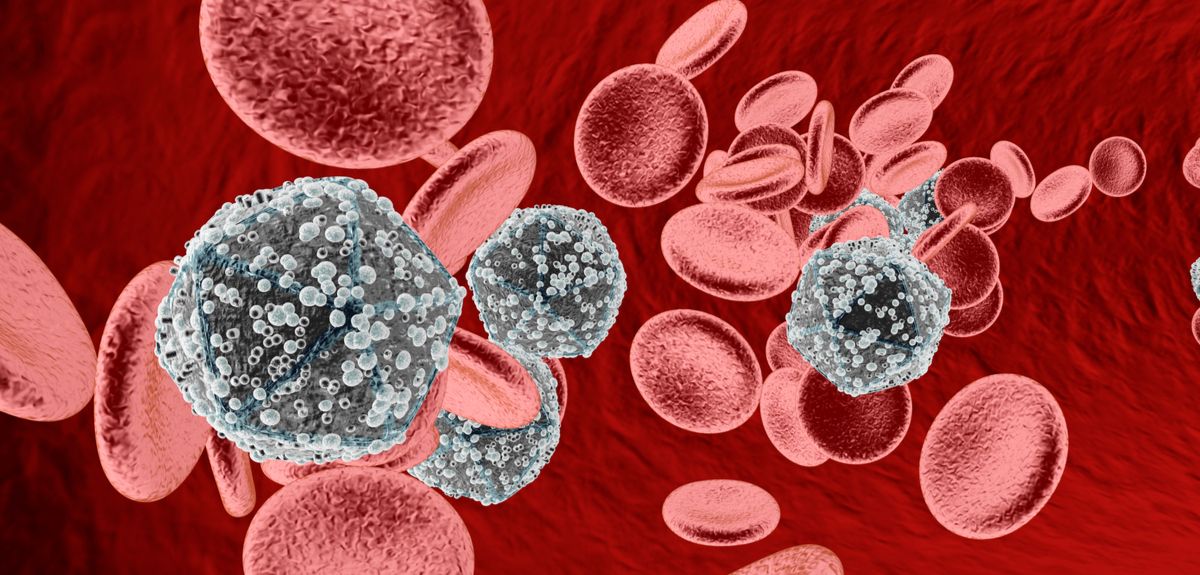
The UNAIDS estimates that 38 million people currently live with human immunodeficiency virus (HIV) infection. Combination antiretroviral treatment has had great success in saving lives but is also associated with numerous medical and public health challenges. Vaccination remains the best and most cost-effective option for controlling HIV infection across the world. Professor Tomáš Hanke jointly from the University of Oxford, UK, and Kumamoto University, Japan, designs vaccines and coordinates clinical programmes testing the most advanced vaccine candidates developed by his team in the UK, Europe, USA and Africa.
Ending AIDS with vaccination
Human immunodeficiency virus (HIV) type 1 represents 95% of all HIV infections worldwide and is responsible for the global HIV pandemic. If untreated, HIV-infected patients develop acquired immunodeficiency syndrome – better known as AIDS – that manifests as a progressive failure of their immune system. As a result, patients eventually succumb to opportunistic infections. Combination antiretroviral treatment (cART) has transformed the lives of people living with HIV, and dramatically decreased AIDS-related mortality and onward transmission of HIV.
Unfortunately, the provision of cART to everybody who needs it faces many obstacles particularly in low- and middle-income countries. The cost, complexity of the treatment, necessity of regular monitoring of patients, threat of drug resistance, side effects, social stigma and the use of cART to prevent HIV infections (or pre-exposure prophylaxis), which further stretches the cART supply, make cART a suboptimal therapeutic and an unlikely stand-alone tool to end the HIV epidemic. Therefore, an effective vaccine for both prevention and cure of HIV is urgently needed.
Professor Tomáš Hanke and his team at the Jenner Institute at the University of Oxford, UK, together with their collaborators at the Joint Research Center for Human Retrovirus Infection, Kumamoto University, Japan, are studying T cell responses to HIV to inform vaccine development. In addition, Professor Hanke oversees Experimental Medicine trials of his leading T-cell vaccine candidates in healthy and HIV-positive people at several global sites and collaborates with prestigious universities and organisations such as the International AIDS Vaccine Initiative, IrsiCaixa AIDS Research Institute-HIVACAT in Spain, Imperial College London, the Kenya AIDS Vaccine Initiative-Institute for Clinical Research and National Institute of Allergy and Infectious Diseases. He also co-ordinates the ‘Globally Relevant AIDS Vaccine Europe-Africa Trials Partnership’ consortium, acronymed GREAT, which builds research capacity and tests vaccine candidates in Eastern and Southern Africa, and is one of the principal investigators of the European AIDS Vaccine Initiative 2020.
Rational iterative development
Most of today’s HIV vaccine research focuses on antibody-mediated immunity, which neutralises cell-free viruses and typically involves exposing people to the outer HIV spike. However, to achieve HIV control, antibodies may need to be complemented by T-cell responses, the focus of Professor Hanke’s research. There is no doubt that T cells contribute in an important way to anti-HIV immunity, whereby CD8 T cells known as ‘killer cells’ directly kill virus-infected cells, the virus factories, and CD4 T cells or ‘helper cells’ assist and co-ordinate antibody and T-cell induction. ‘The trick is to induce not just any, but protective killer T cells that can slow or stop HIV,’ explains Professor Hanke.
The first clinically tested vaccine that Professor Hanke and his colleagues developed was called HIVA. It was derived from an African clade A strain of HIV and was tested in over a dozen clinical trials. Following the field’s full appreciation of the HIV’s enormous ability to change, Professor Hanke improved his approach by focusing vaccine-elicited T cells on the functionally conserved regions of HIV, which are common to most HIV strains and essential for virus survival. If successful, such a vaccine could be deployed universally in all global regions.
The prototype conserved immunogen was called HIVconsv (to emphasise conserved in addition to consensus sequences) and assembled highly conserved HIV regions into a chimeric protein alternating the global major HIV strains. This vaccine showed encouraging results in initial small clinical trials and informed the design of the second-generation conserved vaccines called HIVconsvX. Notable HIVconsvX improvements include the use of bioinformatics to redefine conserved regions and increase the vaccine match to the global HIV variants by using a so-called ‘mosaic’ design. The HIVconsvX vaccines entered clinical evaluation in 2019 with further trials in the pipeline.
The importance of vaccine vectors
The quality of vaccine-elicited T-cell responses is strongly influenced by the way HIV immunogens are introduced into the body. The utmost priority is safety and Professor Hanke and his colleagues test all potential vaccine vectors intended for human use in mice and macaques first. The three most promising modalities that progressed in combination to human studies were 1) plasmid DNA, 2) engineered adenovirus of chimpanzee origin, the parent of which causes a common cold-like disease in monkeys, and 3) a poxvirus modified vaccinia virus Ankara (MVA), an attenuated smallpox vaccine used safely in many people during the smallpox eradication campaign. None of these three vaccines is replication-competent and can grow in the vaccinees’ body or spread to the environment; they are safe.
The HIVA vaccine was delivered by a combination of DNA and MVA and induced only weak T-cell responses mainly because of the inefficient DNA prime. Induction of T cells by the HIVconsv vaccines was greatly improved by the addition of the chimpanzee adenovirus. However, the adenovirus-MVA combination without DNA was as good as all the three vectors together and was therefore chosen for further studies.
HIVconsv vaccination-induced strong T cells that recognised multiple sites on the HIV. Vaccine-elicited T cells in HIV-negative volunteers in Nairobi, Kenya, were capable of a broad cross-clade inhibition of HIV under laboratory conditions. The HIVconsv vaccines were also tested in ‘kick-and-kill’ studies in early treated HIV-positive individuals. During infection, HIV integrates into the host chromosome, stops expressing its proteins (‘falls asleep’) and becomes invisible to the immune system, but regularly reactivates. This means that to eliminate HIV from the body, all sleeping HIV first needs to be awakened, or ‘kicked’ before it can be killed by the vaccine-induced killer T cells.
In a small pilot ‘kick-and-kick’ study in Barcelona, Spain, the HIVconsv vaccines together with an HIV-reactivating drug provided a signal of sustained suppression of HIV replication after stopping cART. Although a marginal result, it was very encouraging and warranted further testing of the ‘kick-and-kill’ strategy with these vaccines as an HIV cure.
Understanding the consequences of HIV variability
A successful vaccine needs to elicit killer T cells capable of reaching HIV-infected cells and killing them to stop virus growth. To be safe and effective, the killer T-cell assault must be sufficiently specific and efficiently target vulnerable parts of the HIV from the very first exposure to the virus. However, HIV is extremely variable and this makes it very good at avoiding the T-cell attack and escaping. There is lots of supporting evidence that people’s genetic makeup, the sites on HIV that killer T cells target and HIV escape are the major determinants of how well individuals fight HIV and scientists need to understand these processes in great detail.
Some T-cell responses are better at protecting than others. In the past, attempts to understand which parts of HIV should be targeted for protection often looked at responses to the whole virus and/or full-length virus proteins as units. This blurred the analysis because within each protein there are both stable and variable regions and these are not equally protective. Professor Hanke’s strategy exploits the stable and therefore vulnerable parts on HIV proteins.
This idea was supported by studies of Professor Hanke’s colleagues at Kumamoto and Tokyo Universities. HIV-infected patients, who never received any cART, controlled HIV better and were healthier (had more CD4 cells in the blood) if they targeted the same regions as used in the vaccine. This is an important observation endorsing this vaccine approach.
The quest for improvement
Although Professor Hanke’s strategy is rational and, so far, supported by good experimental results, many challenges remain on the road to an effective T-cell vaccine.
To be efficient, T-cell responses must, upon HIV exposure/reactivation, rapidly reach the sites of HIV growth within the patient’s body, kill infected cells and produce anti-HIV chemicals, be in sufficient numbers, and recognise multiple vulnerable regions at the same time to make escape difficult. It is plausible that if any one aspect of these T-cell properties is suboptimal, the vaccine may fail.
Professor Hanke and his colleagues study T-cell responses induced by HIV infection and vaccination in order to further refine the vaccine immunogens and their vector delivery. Novel and sometimes small but significant step-by-step improvements are tested in pre-clinical investigations and human trials. ‘Iterative improvements are best informed by human data, the only species that ultimately matters,’ says Professor Hanke.
Finally, new-born babies, children and adolescents, some of whom have acquired HIV perinatally, that is, via mother-to-child transmission, or babies who are exposed to HIV through mother’s milk, remain somewhat unique populations because of their young and, if treated soon after birth, relatively preserved immune system. To date, there have been several hundred HIV vaccine trials in humans, but only a very few tested candidate HIV vaccines in these age groups. Yet, childhood vaccines are the biggest success of vaccinology. Professor Hanke and his colleagues tested the HIVA vaccine in African neonates as the first step towards preventing mother-to-child transmission through breastfeeding and are planning to revisit these age groups using the conserved mosaic vaccines.
- ‹ previous
- 38 of 252
- next ›
 Setting the agenda for the next century of quantum
 10 years on: The Oxford learning centre making an impact
 Mapping the Moon: the world’s first lunar atlas goes digital
  Oxford and The Brilliant Club: inspiring the next generation of scholars
 New course launched for the next generation of creative translators
 The art of translation – raising the profile of languages in schools
  Opening a window into the quantum world
 Tracking resistance: Mapping the spread of drug-resistant malaria
 Cities for cycling: what is needed beyond good will and cycle paths?