Features
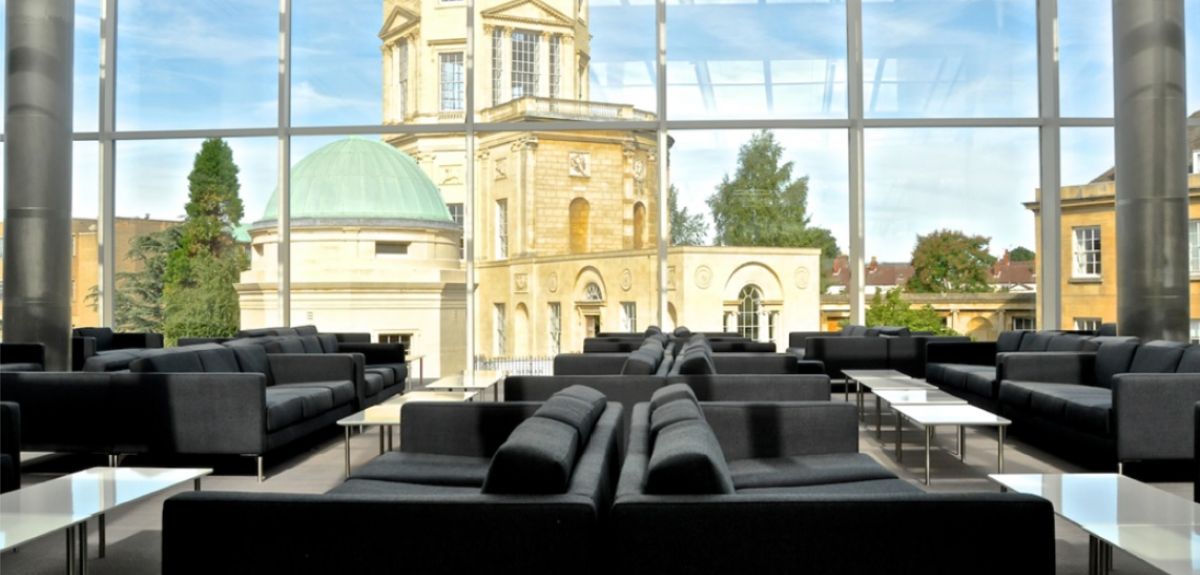
For one weekend only, visitors will be encouraged to draw on the windows and tables of the Mathematical Institute building.
This is one of the highlights of the free drop-in workshops aimed at families which will be held on the Radcliffe Observatory Quarter (ROQ) site from noon until 4pm on Saturday 25 and Sunday 26 October.
The event will introduce people to the Alchemical Tree, a sculpture by Simon Periton which will be installed on the Radcliffe Observatory Quarter (ROQ) site in 2015.
The concepts underpinning the Alchemical Tree will be explained at the drop-in workshops, which will take place in the Mathematical Institute.
At the workshops, artist Nabil Ali will demonstrate how to make natural paint colours and then teach others to mix and use their own alchemical colours.
Local artist Vicky Vergou will lead a tour of the ROQ then invite people to draw on windows and tables in the common room of the Mathematical Institute.
Simon Periton said: 'These exciting workshops will offer the participants an insight into some of the creative processes and mysteries enjoyed by artists for centuries and will help create a greater awareness of and engagement with my commission for the Radcliffe Observatory Quarter.'
The Alchemical Tree is a silver sculpture with a golden crown around its trunk. It will be complemented by smaller works placed across the site which relate to the central tree.
Mr Periton explained: 'The tree symbolises the process of growth and transformation experienced by students as they develop their ideas through focused study at the University; the crown represents the successful attainment of a higher state, a realisation of perfection.'
The workshops are organised by Modus Operandi in association with The Big Draw and Family Arts Festival. The activities are aimed at everyone from the age of six.
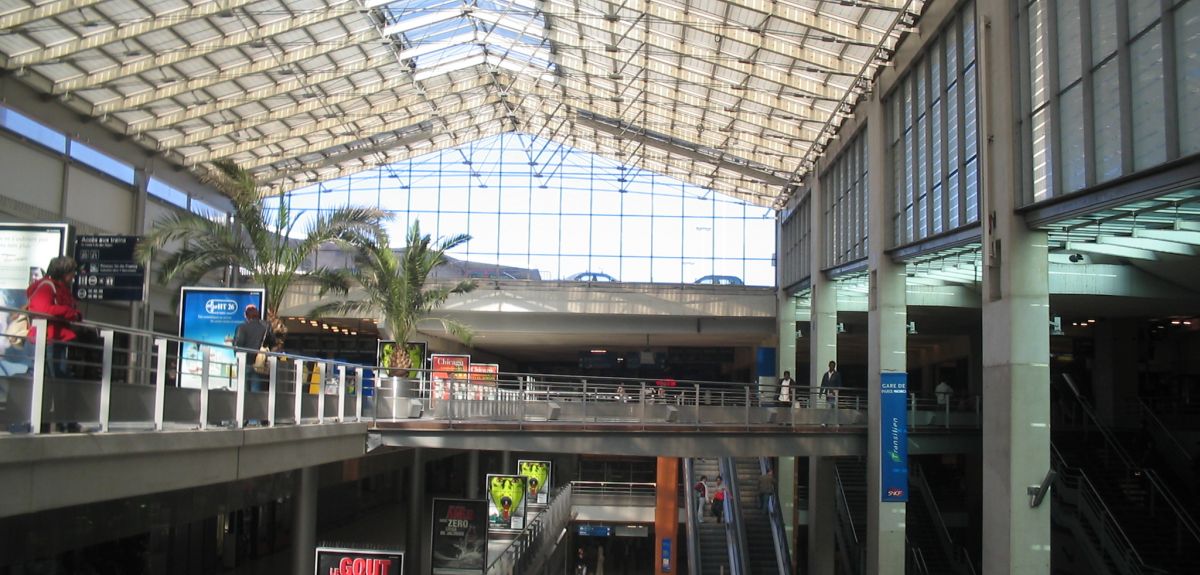
In the last week the boss of John Lewis apologised for commenting at a dinner that in France, 'nothing works and worse, nobody cares about it'. The French embassy in London was quick to dispute Andy Street's remarks. But as Georges Pilard of Oxford University's Voltaire Foundation explains in a guest post, 'French-bashing' is something of a tradition in France dating at least as far back as Voltaire.
'Far from being the preserve of the Anglo-Saxon media, French-bashing is also very commonly self-inflicted. Indeed, 'le French-bashing' is so widespread that the word has now entered the French lexicon alongside 'le jogging' and 'le camping'.
For some, it has become a full-time occupation: France’s alleged decadence has become the bread and butter of many 'déclinistes', those journalists and economists who have carved careers out of preaching doom and gloom for their own country, while others never miss an opportunity to remind their fellow citizens of their country’s unfinest hours, most notably its colonial past and its collaborationist government during the Vichy years.
However, it is worth noting that this type of national self-flagellation is not a recent phenomenon: ironically, one of its most eloquent erstwhile practitioners also happens to be one of the most famous and revered of all the residents of Le Panthéon, Voltaire himself.
One would be hard-pressed to find a more scathing piece of French-bashing than Le Discours aux Welches, a text first published in 1764 in a best-selling collection entitled Contes de Guillaume Vadé. The Discours is a systematic demolition of any claim to ‘grandeur’ that the French people – 'les Welches' – may have entertained throughout their history: the French, Voltaire informs his readers, are a mongrel nation, the product of multiple invasions never successfully repelled, their language is barbaric, vulgar and inadequate, they are arrogant, frivolous and backwards, they lack entrepreneurial spirit and they fear change, progress and innovation.
Most of the basic ingredients of modern French-bashing can be found in this piece, which, unsurprisingly, was not very favourably received in France. So much so that Voltaire felt compelled rapidly to append a Supplément to his Discours aux Welches, where, in an attempt to tone things down and avoid alienating his friends and allies, he offered, by way of conclusion, a broad taxonomy of the French nation as follows: 'on [doit] donner le nom de Francs aux pillards, le nom de Welches aux pillés et aux sots, et celui de Français à tous les gens aimables'. ('We must call the pillagers by the name of Franks, the pillaged and the foolish by the name of Welches, and all worthy people by the name of French').
Voltaire’s rage against France was fuelled partly by a feeling of frustrated patriotism (in the Discours he mentions the recent loss of French trading posts in India to the English – which dealt a blow to his investments in the Compagnie des Indes) and also by his homesickness for Paris, where he was persona non grata due to the antipathy of Louis XV.
It would be grossly unfair and simplistic to portray him as an out-and-out Francophobe, but his tortured ambivalence towards France at the time is strangely reminiscent of the kind of conflicted relationship that so many of his fellow countrymen appear to have with their homeland today.'
A longer version of this article was originally published on the Voltaire Foundation’s blog.
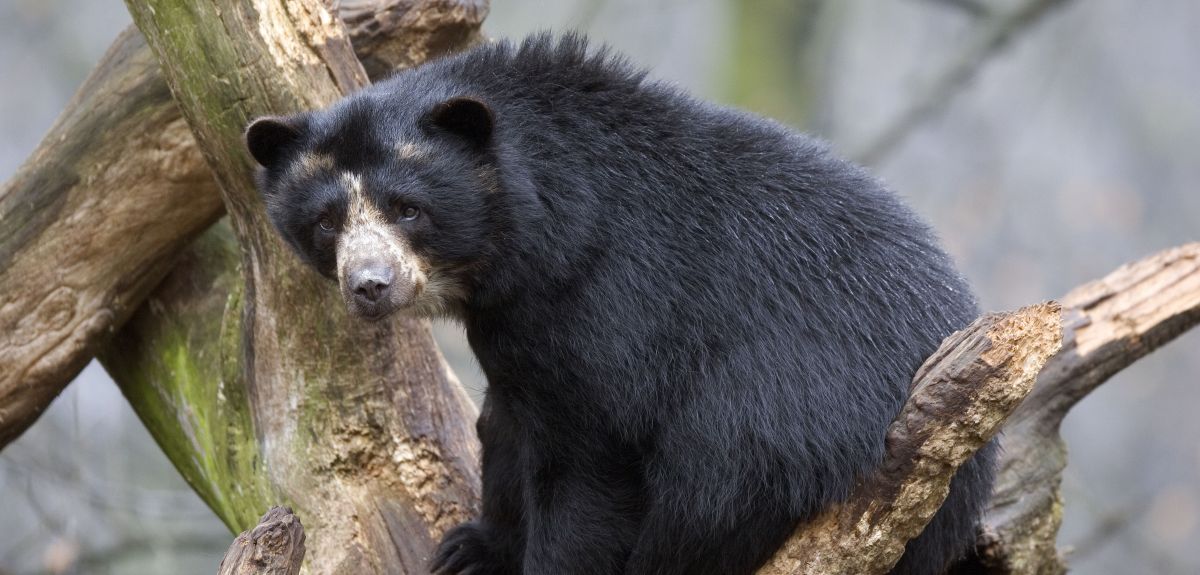
Shrinking habitat, crop and livestock raids, and the temptations of human garbage are all factors that can lead to human-bear conflict according to the first global study of the problem.
Researchers from Oxford University's Wildlife Conservation Research Unit (WildCRU) surveyed six bear species across 54 countries with the help of 104 experts from around the world. The resulting report is published in the journal Conservation Letters.
The team defined human-bear conflict as any situation where wild bears use (undesirably) or damage human property; where wild bears harm people; or where people perceive bears to be a direct threat to their property or safety.
'Human-bear conflicts cause annoyance, financial losses, injuries, and even death to people. In poorer parts of the world, conflicts with bears can affect local economies. In return, retaliation against bears may threaten the future of small, isolated populations,' explains report author Dr Ozgun Emre Can of Oxford University's WildCRU. 'According to the United Nations, by 2050, 87% of world's population will be living in the developing world. This means that many people will find themselves near populations of bears, making conflicts increasingly likely. The problem will only become worse if it is ignored today.'
But, the research shows, the problem is a complex one as bears and the human communities they interact with are very different around the world. For the black and brown (grizzly) bears in North America the major driver of conflict with humans is the availability of human food waste in bins combined with the sporadic failure of natural food sources. For brown bears in Asia, Asiatic black bears, Andean bears and sloth bears habitat loss due to human encroachment is the primary source of conflict. Meanwhile, Europe's brown bears are most likely to clash with humans over raids on livestock or beehives.
'Our study shows that the problem is worsening in terms of severity of conflicts and their impact on bear conservation on all four continents inhabited by bears,' Emre tells me. 'In Asia and South America, conflicts cause hardship for people, affect the rural economy, and hinder the acceptance of conservation initiatives.'
With species where the real or perceived risk of bears attacking humans is higher, as with sloth bears, it can be much more difficult for communities to tolerate their ursine neighbours. But even where attacks on humans are rare, as with Andean bears, the threat to people's livelihoods – in the case of Andean bears raids on livestock – can lower the tolerance of bear populations.
'If coexistence of humans and bears cannot be established in areas of recovering populations in Europe, it is evident that much effort will be needed to achieve effective conservation in less developed areas of the world,' comments Emre. 'In areas where conflict is a threat to the viability of bears, there is a need for international conservation groups and institutions to promote and aid in conflict management.'
What is needed are 'holistic' solutions to conflict, the report argues, that work for humans and involve local people as well as working for the bears. One example of this kind of solution comes from Rize, a province in northern Turkey: traditionally local people had placed beehives in cracks in cliff faces or on shelves on rock walls to discourage bear raiding. Researchers designed a new kind of safer, low-tech bear-proof platform supported on poles to keep hives out of reach. This approach could now be trialled elsewhere in Turkey. The researchers say that such conflict management approaches are also relevant to human conflict with other animals such as tigers and lions.
Emre hopes that we can all learn to live in harmony with these charismatic creatures: 'I find it interesting that the bear is probably the most popular toy for children all around the world. Therefore the species can be promoted as a global flagship species to reach people from different cultures but it seems somehow we have forgotten our best childhood friend. Why did it happen?'

It is not every day a picture of British actress Gemma Arterton appears on Oxford University’s Arts Blog. But today she is here with good reason – she is the star of a new film based on Gustave Flaubert’s iconic novel Madame Bovary.
In fact, the film is based on Gemma Bovery, a graphic novel by Posy Simmonds, published in 1999, which was in turn inspired by Flaubert’s book. This chain of events shows just how great Flaubert’s impact has been, according to Dr Stephen Goddard, a lecturer in French at St Catherine’s College and the Faculty of Medieval and Modern Languages.
'It is remarkable that in the film Gemma Bovery we are looking at a cinema adaptation of a graphic novel adaptation of Flaubert’s novel, which shows just how influential Flaubert’s work is,’ he says. ‘I hope the film will inspire more people to read Madame Bovary because it is a very rich book.'
Dr Goddard has not yet seen the film but, having read Posy Simmonds’ graphic novel, he thinks it could be very interesting. 'The graphic novel did not simply update Flaubert's plot but it twisted the story,' he says.
'In many ways the graphic novel is a typically French-style production because the French love their bandes dessinées but it is also a very subtle consideration of how the British view French life – the glorious food, the cottage in the Norman countryside and so on. I suspect the film is going to take full advantage of that British myth of the idyllic life in France.'
Although the film is set in a different time and place to Flaubert’s novel, the character played by Gemma Arterton has clear similarities to Flaubert’s heroine Emma Bovary. Dr Goddard says: ‘Emma believes herself to be trapped in a marriage with a man who she soon perceives as being a very dull, workaday husband and she wants to escape to live the kind of life that she knows she can live because she’s read about it in books.
'Her problem essentially is that she is a would-be romantic heroine in a realist novel and the ending that she undergoes is very much a realist ending not a romantic one.'
This clash between the real and the ideal is even seen in Emma's death in Madame Bovary. Dr Goddard says: 'Emma commits suicide by swallowing arsenic and she believes the effect will be that she will simply go to sleep in a rather picturesque way and everything will end.
'Unfortunately for her she's in a novel written by the son of a doctor who knows exactly what happens to the human body when it swallows arsenic and he doesn’t spare any details.'
Dr Goddard believes the character of Emma/Gemma helps to explain the enduring popularity of the book. He says: 'The central thing about tragic heroes or heroines is that they are always flawed and Emma’s flaws are not hidden. Emma is petty and yet in many respects Flaubert writes her so that we can have respect for her.
'She may fit in with this bourgeois background but she has dreams and ambitions. One possible message of the book is that these dreams may be unrealisable but that at least she dares to dream.'
Dr Goddard was recently interviewed about the film and Madame Bovary on BBC Radio 4’s Woman’s Hour.
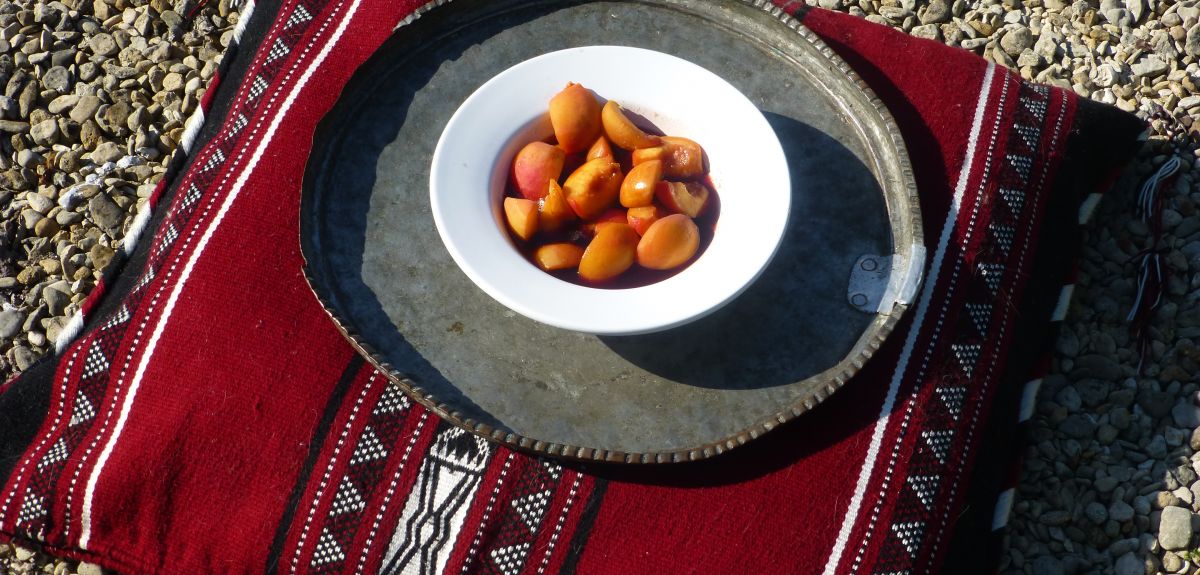
A project is holding a series of events to bring Roman food to the community.
The Food For Thought project, funded by the Communicating Ancient Greece and Rome (CAGR) in Oxford University’s Faculty of Classics which receives funding from the Arts and Humanities Research Council, explores the relationship between food, memory and identity.
In June 2014 the project organised a free Roman lunch held at Horatio's Garden, part of the Duke of Cornwall’s Spinal Unit at Salisbury District Hospital. The lunch included authentic Roman food, such as bread made from spelt, a type of wheat which was eaten widely in ancient times.
'It was very successful. More than 75 people came, including patients, their friends and parents,' said Dr Zena Kamash, who leads the project. 'We had posters about food in Roman Britain, and actual food remains for people to see: eggshells, seeds, and fishbones which have been preserved by burning or in waterlogged areas for thousands of years.'
More recently, year 8 and GCSE students at Cheney School attended a workshop held by Food For Thought and the East Oxford Community Classics Centre (EOCCC). The students handled and identified pieces of Roman pottery, including shards of a mortarium, a type of vessel lined with pieces of quartz to create a rough surface for grinding, like a modern mortar and pestle.
'We had a discussion about which foods were imported by the Romans. People are often surprised by the fact that the Romans introduced something as familiar as apples to Britain,' said Dr Kamash.
More workshops are due to take place this autumn, including a session as part of the Festival of Ancient Tales at the EOCCC, on 3rd October.
Finally, the project will work with the Corinium Museum in Cirencester on an exhibition taking place next summer, featuring artefacts loaned from the British Museum and a reconstructed Roman triclinium, or dining room.
'We'll aim to provide some context for the artefacts,' said Dr Kamash. 'We want to shed light on what was expensive or luxurious for the Romans as well as what was commonly eaten.
'We'll also include some information about what they didn't have at all: for instance, although we think of peppers and tomatoes as a major part of the Mediterranean diet, they come from South America originally and were completely unknown to the Romans.'
According to the researchers, it's important for us to understand food culture because the everyday practices of preparing, eating and sharing food are so important to the way communities work.
'A lot of us have very strong food memories from an early age,’ said Dr Kamash, ‘We often ask people working with us on the project what their favourite foods are, and what their earliest memories of food might be.
'It's something people often like to talk about, especially when you have a group of people from a variety of backgrounds, who may cook and eat very different things at home. We hope that by participating in our workshops, people will gain some new ways of thinking about the role of food and cooking in bringing their communities together.'
A Roman menu might involve…
• Eggs, olives, fruit and bread
• Roast lamb with coriander
• Peaches cooked with honey, cumin and a drop of fish sauce
• Spelt and honey cakes
- ‹ previous
- 162 of 253
- next ›
 25-year Oxford study finds the effects of conflict last for generations
 What Louise Thompson’s campaign tells us about the national maternity crisis
 Celebrating 25 Years of Clarendon
  Learning for peace: global governance education at Oxford
  What US intervention could mean for displaced Venezuelans
  Setting the agenda for the next century of quantum
 10 years on: The Oxford learning centre making an impact
 Mapping the Moon: the world’s first lunar atlas goes digital
  Oxford and The Brilliant Club: inspiring the next generation of scholars
 New course launched for the next generation of creative translators