Features

The story of the “unknown army” of ordinary people in South Asia working for the Allies in the Second World War has been told by an Oxford University historian.
Yasmin Khan, associate professor of history at Oxford University, who is based at the Department for Continuing Education, has written 'The Raj at War: A People's History of India's Second World War', which has been published by Penguin Random House.
'There were millions of South Asians working towards the imperial war effort and we never hear about them,’ says Professor Khan.
'What do we know about the thousands of women who mined coal for wartime in Bihar and central India, working right up until childbirth?
'Or the gangs of plantation labourers from southern India who travelled up into the mountains of the northeast to hack out roads towards Myanmar and China? Or the lascars (merchant seamen) such a Mubarak Ali, remembered simply as "a baker" who died in the Atlantic when the SS City of Benares was torpedoed?
She adds: 'It wasn't glamorous work: "coolies" loading and unloading cargo at imperial ports or clearing land for aerodromes did not share the prestige of fighter-pilots. But their work could be very dangerous.
'Thousands of Asian labourers died building treacherous roads, including the Ledo Road between China and India, working with basic pickaxes and falling prey to malaria and other tropical diseases.'
Why have their stories not been told? One reason Professor Khan identifies is that Indian workers did not write diaries or memoirs, yet there are hundreds accounts by British officers stationed in South Asia.
This is not just a matter of literacy - workers would probably have been less interested in the war and just looking to make a living.
The writing of post-independence nationalist myths after the partition of 1947 and the carving up of new countries also distracted from the role of workers in the war.
'In the rush to write new histories of nation states after 1947, much of the history of the 1940s was locked out from official memory,’ says Professor Khan.
'Tales of the freedom struggle took precedence. And in Britain and the US, the emphasis was placed on remembering military contributions to major battles, not on the everyday lives of anonymous workers.'
The book is published in the USA under the different title, India at War, and published by Oxford University Press.

In his theory of general relativity Einstein predicted that the gravity of large objects should alter the path of light travelling towards us.
This results in a phenomenon known as ‘gravitational lensing’ in which the faint light from distant galaxies is ‘bent’ around intervening massive galaxies, creating a ring or arc of luminous features around the closer object.
Such ‘gravitational lenses’ are very rare – with only around 500 discovered so far – but have many applications that are important for astronomers and cosmologists, including providing a window on the distant, and so early, Universe and allowing elusive dark matter in massive lensing galaxies to be weighed.
The Zooniverse citizen science project Space Warps recently reported that its online volunteers have helped to discover 29 new gravitational lenses, and 30 other possible lenses from the Canada France Hawaii Telescope Legacy Survey.
Not only are these important discoveries in their own right but they also prove just how good citizen scientists are at hunting down unusual objects.
The results from Space Warps, which is jointly led by researchers at Oxford, SLAC in the US and Kavli IPMU in Japan, are to be published in two papers in MNRAS.
‘This survey has already been searched by automated lens-finding algorithms (or "robots"), and these potential lenses weren't captured, so it just goes to show what an army of sharp-eyed human volunteers can do!’ Aprajita Verma of Oxford University’s Department of Physics, one of the leaders of the Space Warps project, told me.
But, as Aprajita explains, Space Warps has built on the approach pioneered by the Zooniverse and its family of research projects to get volunteers even more involved.
‘Citizen scientists helped us design the project and after potential lenses were identified a number of them (including moderators Elisabeth Baeten, Julianne Wilcox, Christine Macmillan and Claude Cornen) modelled these candidates to see if they were plausible.’
‘It felt great to part of the team and to be involved in so many ways. I felt even more responsible for the project and even protective of it,’ reveals Elisabeth Baeten. ‘And as a moderator you are responsible for the new citizen scientists. You want to help and guide them on the one hand and on the other hand you don't want to dampen their enthusiasm because for them everything is new and strange.’
‘Space Warps is the first Zooniverse project where citizen scientists were involved from the very beginning and were included in the science team right up to being co-authors on the papers. It doesn't get much better than that!’, Elisabeth added.
All development for the project, including writing the scientific papers, took place on the public GitHub platform, allowing the volunteers to be involved at every stage.
‘Citizen scientists and web developers are co-authors on the papers alongside the project scientists, it’s this combined effort that’s made our study possible,’ Phil Marshall, Space Warps co-lead from SLAC (US) comments.
In the research papers the authors detail a new way of interpreting the classifications of the citizen scientists and, with the help of the Oxford e-Research Centre, a similar technique will be adopted by future Zooniverse projects.
But what about the future of cosmic lens hunting?
‘Space Warps can continue to provide a means for efficient lens finding,’ Anupreeta More, Space Warps co-lead from IPMU Japan, tells me. ‘As we enter an era of wide and sensitive imaging surveys that will contain thousands of lenses we need to look at millions of galaxy images to find them and that’s something we’ve proved citizen scientists are absolutely brilliant at!’

Over the past five years, researchers from Oxford University have been working on a collaborative project called ORCHID to develop new ways for humans and computers to work together.
This week, the team from Oxford joined their academic collaborators from the University of Southampton and University of Nottingham at the Royal Academy of Engineering yesterday to showcase their work. We spoke to Dr Steven Reece, a Senior Research Fellow at the University’s Pattern Analysis and Machine Learning Research Group, to find out how the Oxford team has been using its research to help disaster response teams.
OxSciBlog: ORCHID attempts to integrate humans — and all of their foibles — with computers, so that they can work together as so-called human-agent collectives. Why is it important?
Steven Reece: Ninety percent of all recorded data that exists in the world has been generated in the past two years. This data is vast and mostly unstructured, made up of all kinds of text documents, photographs and videos. The problem is that humans and computers look at this data very differently. Humans are very good at understanding unstructured data — they can interpret the meaning of text and understand events depicted in a photograph better than any software, for example — but they can’t work through that much of it. Computers, on the other hand, are better than humans at processing and spotting patterns in vast amounts of data very quickly. Human-agent collectives (HACs) take the best of both worlds, creating flexible teams of computers and humans to interpret large, unstructured data sets.
OSB: How do these HACs work?
SR: Traditionally, humans tell computers what to do; HACs turn that relationship on its head and allow computers to take control occasionally and request information from humans. Of course, humans and computers have their foibles: they can be unreliable, malicious, selfish and, in the case of humans, they can even get bored. But it was the goal of ORCHID to figure out how to mitigate these foibles: how to incentivise humans to contribute to the HAC, track performance, maintain the best teams and record the sources of information and decisions that are made.
OSB: Can you describe the kind real-world problems you’ve been applying that thinking to?
SR: As just one example, crisis responders need to know the extent of a natural disaster, what aid is required and where they need to get to as quickly as possible. This is what’s known as 'situation awareness'. With the proliferation of mass media, a lot of data is now generated from the disaster zone via photographs, tweets, news reports and the like. With the addition of first responder reports and satellite images of the disaster area, there is a vast amount of relevant unstructured data available for situation awareness. A crisis response team will be overwhelmed by this data deluge — perhaps made even worse by reports written in languages they don’t understand. But the data is also hard to interpret by computers alone, as it’s difficult to find meaningful patterns in such a large amount of unstructured data, let alone understand the complex human problems that described within it.
OSB: How can you use HACs to help?
SR: Firstly, we can farm out satellite images and text to the 'crowd'. People want to help and they will happily use their skills to interpret a small number of text samples or satellite images. Computers can then build a model connecting features in the data to the interpretations supplied by the crowd. The computer can then use this model to trawl through the rest of the data and 'interpret' what it sees using these features. The computer decides what data to farm out to the crowd and who should be recruited from the crowd based on their reliability; The individuals in the crowd can decide if they want to take part and what tasks they are prepared to do. The computer aggregates the crowd responses intelligently and, in so doing, determines their individual reliabilities automatically. So we can use combinations of humans and computers to successfully aggregate and interpret vast amounts of unstructured data. This is just one example of where HACs can be used in disaster response — another is the coordination of a vast fleet of UAVs visually mapping aid requirements across the disaster area.
OSB: Have you been able to try any of these ideas in the real world?
SR: We’ve implemented the first approach I just explained, actually. It’s in a system called ‘CrowdScanner’, and we used it for real immediately after the first major Nepal earthquake in April of this year. We used the crowd to locate settlements from satellite images, identified settlements that were not mapped on open sources such as OpenStreetMap, and our Search and Rescue partners deployed teams to reconnoiter these settlements.
OSB: Was it successful? Did you run into any pitfalls when marrying up computers and humans?
SR: First of all, the good news! It is not difficult to find a competent crowd to help out in a disaster situation. We are, however, finding it really difficult to build systems that are relevant to the disaster response community — mainly because we are trying to guess what their critical information requirements might be.
We were able to respond to the Nepal crisis because we just happened to have a working platform that we could adapt to the Nepal situation along with a satellite data source, and Rescue Global, who we were working with, were able to marry this data with their requirements of water filter placement and life detector placement. We were able to respond in a timely manner as a result.
In general, though, we’re in the dark as to the generic problems faced by the crisis response community and specifically where we can help. Although we’ve attended field exercises with various disaster response organisations we need to sit down with them. That way, we’ll be able to abstract information about where they work and their requirements to the level where we can start designing generic situation awareness algorithms to help them.
OSB: So what’s next for the disaster response work?
SR: Imagine a service where people could post their resources, such as the availability of an aircraft or their plan to visit a location in the disaster area. This resource could be married with a crisis response team who want to use it to achieve their own goals, and machine learning can be used to link the responders’ requirements to the people with the resources using crowd interpretations of the resource providers’ offers. Another idea is that we could try to determine the probability of life in a collapsed building after an earthquake, to help responders prioritise their search. Crowdsourced interpretations of drone or satellite footage could be used to identify salient features and machine learning can then determine the probability of life.
There are many ways machine learning can be used in disaster response. The key now is to sit down with crisis responders and develop relevant data processing algorithms that will actually save lives.
Image by hxdbzxy/Shutterstock

Celebrations are beginning for the 200th anniversary of the birth of computer visionary Ada Lovelace in December.
In an article published in 1843, Ada Lovelace imagined a future in which programmable machines would be essential to the progress of science, and might even be used to create art and music.
Many of her letters are stored in the Bodleian Library and now being heard for the first time on BBC Radio 4, voiced by Oscar-nominated actress Sally Hawkins. The first episode of the two-part series is out now.
The Bodleian Library is running a display from 13 October to 18 December which will allow visitors to see Ada's exercise books, childhood letters, correspondence with Charles Babbage, a newly found daguerreotype, and a new archive discovery showing computational thinking in action – Lovelace, Babbage, magic squares and networks.
A symposium held at the Mathematical Institute, led by the Department of Computer Science and supported by TORCH | The Oxford Research Centre in the Humanities will present her life and work and contemporary thinking on computing and artificial intelligence, on 9 and 10 December.
Ada, Countess of Lovelace (1815–1852), is best known for a remarkable article about Charles Babbage’s unbuilt computer, the Analytical Engine. This presented the first documented computer program, to calculate the Bernoulli numbers, and explained the ideas underlying Babbage’s machine – and every one of the billions of computers and computer programs in use today.
Going beyond Babbage's ideas of computers as manipulating numbers, Lovelace also wrote about their creative possibilities and limits: her contribution was highlighted in one of Alan Turing’s most famous papers 'Can a machine think?' Lovelace had wide scientific and intellectual interests and studied with scientist Mary Somerville, and with Augustus De Morgan, a leading mathematician and pioneer in logic and algebra.
Oxford's celebration is led by the Bodleian Libraries and the University of Oxford’s Department of Computer Science, working with colleagues in the Mathematics Institute, Oxford e-Research Centre, Balliol College, Somerville College, the Department of English and TORCH | The Oxford Research Centre in the Humanities.
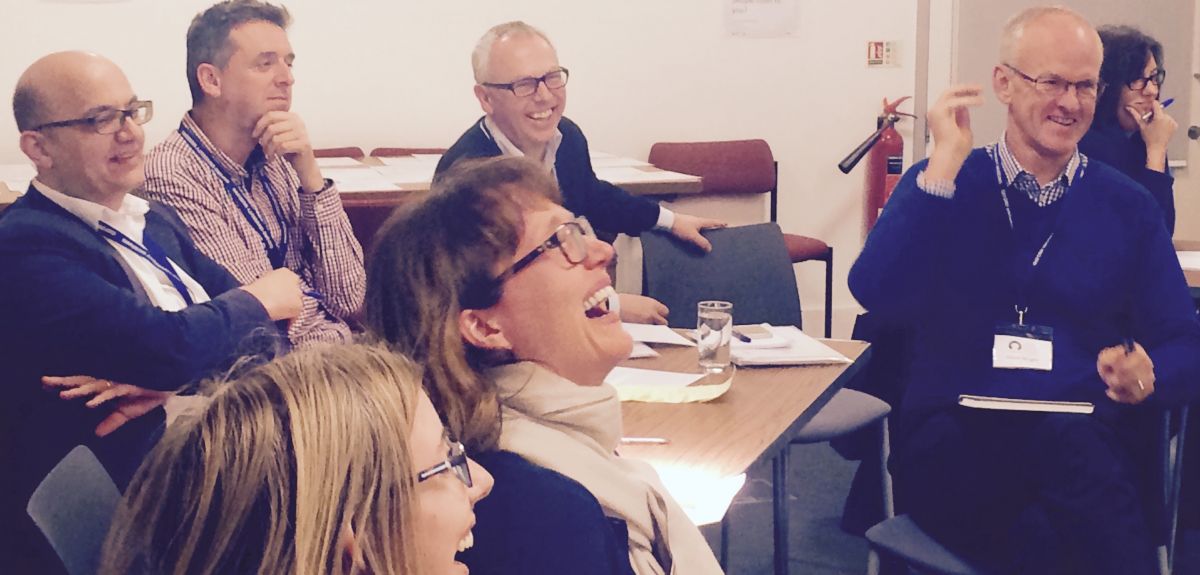
A programme run by Oxford University Museums in partnership with experts from the Said Business School aims to teach cultural organisations to be more entrepreneurial.
The Oxford Cultural Leaders programme was held for the first time in March 2015, bringing together a group of leaders to experiment and take risks with new business models and to explore new ways of working and creating organisational cultures that encourage new ideas. The next programme will take place in April 2016.
The programme makes use of the University's expertise in museums and in business studies and is led by experts including Pegram Harrison and Keith Ruddle of the Said Business School and Diane Lees, director general of the Imperial War Museum.
Lucy Shaw, director of Oxford Cultural Leaders, said: 'The programme was created in response to the clear message from governments across the globe that cultural organisations need to look beyond the state for their income, demonstrating their commercial acumen and ability to deliver successfully new business models.
'Oxford Cultural Leaders addresses the need for cultural organisations to reinvent themselves as businesses, albeit not-for-profit, with entrepreneurial ways of thinking and behaving, by developing a cadre of leaders who are able to skilfully and confidently tackle these challenges.'
Tracey Camilleri, director of the Oxford Strategic Leadership Programme at the Saïd Business School, said: 'Future leaders in the cultural sector will need to develop the confidence to think about their organisations as sustainable entities.
'This will require new skills and approaches – some learned from different sectors and disciplines. The Oxford Cultural Leaders Programme in my view provides a powerful platform for the development of this shared future.'
Rachel Hudson, director of marketing, communications and development at the Shakespeare Birthday Trust, attended Oxford Cultural Leaders last year. She said: 'Some of the sessions on the programme had a trick or a technique you could take back and instantly use, which has been great and immediately useful.
'But the sum of the sessions coming together to explore adaptive leadership has had the most impact on me. The programme has made me feel more considered about my career, my professional practice and my leadership style.'
Participants will stay at Trinity College, Oxford.
- ‹ previous
- 145 of 253
- next ›
 25-year Oxford study finds the effects of conflict last for generations
 What Louise Thompson’s campaign tells us about the national maternity crisis
 Celebrating 25 Years of Clarendon
  Learning for peace: global governance education at Oxford
  What US intervention could mean for displaced Venezuelans
  Setting the agenda for the next century of quantum
 10 years on: The Oxford learning centre making an impact
 Mapping the Moon: the world’s first lunar atlas goes digital
  Oxford and The Brilliant Club: inspiring the next generation of scholars
 New course launched for the next generation of creative translators