Features
Most of us will be at least vaguely aware that our planet's coral reefs are in jeopardy. But why are they in danger, and what can we do about these threats?
A new report by the United Nations Environment Programme (UNEP) has set out to provide a health check for a particular type of underwater ecosystem known as mesophotic coral reefs. Mesophotic reefs are found deeper in tropical and subtropical waters than the shallower reefs we may be more familiar with. And, according to the report, these ecosystems may be able to act as 'lifeboats' for threatened species living in shallower reefs.
Two DPhil students in Oxford's Department of Zoology, Jack Laverick and Dominic Andradi-Brown, co-authored a chapter of the report examining the threats facing mesophotic reefs. They spoke to Science Blog about the diving expeditions that allowed them to identify the dangers posed to these fragile ecosystems – large, underwater structures composed of the hard, calcium carbonate 'skeletons' of coral, a marine invertebrate.
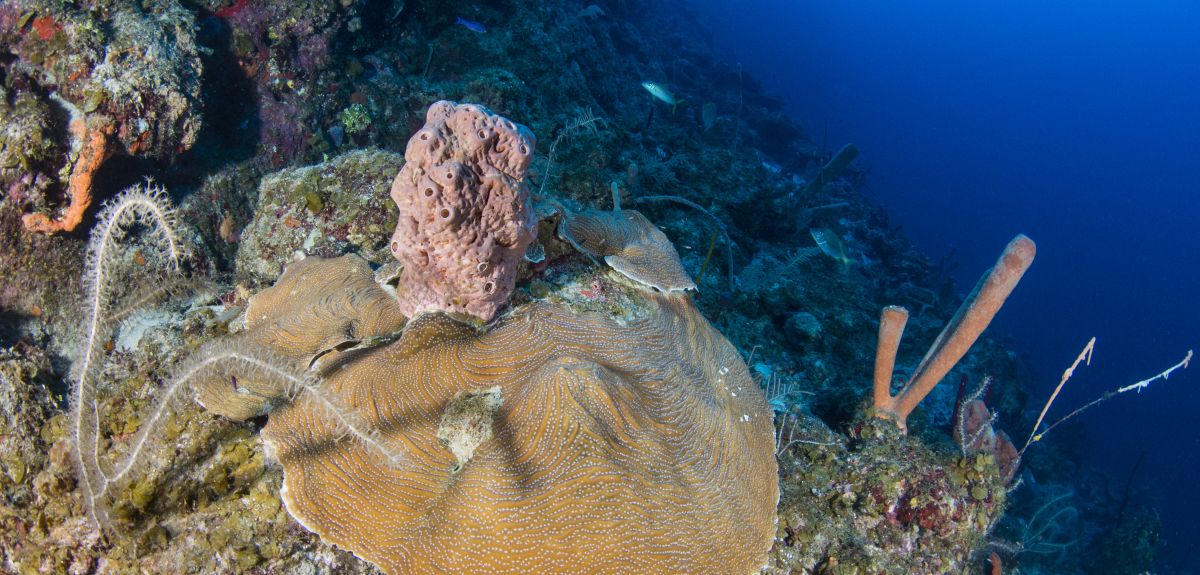
Dominic, who also sat on the steering group for the report, explained: 'Our research on mesophotic coral ecosystems took us to Honduras and Indonesia. At first glance the mesophotic reefs look similar to shallow reefs – we see many similar species and groups, including corals, sponges and algae. However, when you look a little more closely you see that many of these species and groups have taken on slightly different forms. For example, corals tend to be flatter, while sea fans tend to be larger.
'During the course of our research we spotted many species of fish at depth that are threatened in shallower waters. In September 2015 in Honduras we observed Caribbean reef sharks at depths of 60m, whereas these sharks are near-absent from shallow reefs because of historically high levels of shark fishing.'
Jack said: 'Mesophotic coral ecosystems are quite different to the shallow reefs many people are aware of. We say these reefs are found in the "twilight zone", as light fades exponentially with increasing depth. Amazingly, despite it being barely light enough for us to see when we visit the deepest extents of these coral reefs, hard corals are still able to photosynthesise.
'To get around the lack of light energy, hard corals become increasingly flat and fragile, capturing the most light energy possible for the smallest amount of growth. These discs can stack in a shingle-like pattern, casting a very different scene to what is commonly seen near the surface.
'Our work is scheduled extremely tightly when we visit these ecosystems, leaving little time to enjoy being on the reefs. Despite this, working in the twilight zone has us convinced that mesophotic coral ecosystems require their own protection – as a potential store of shallow reef species, for the services they provide, and for their own haunting beauty.'
In his foreword to the report, outgoing UNEP Executive Director Achim Steiner (who will be taking up a post at Oxford University's Oxford Martin School) points out that almost a fifth of coral reefs have disappeared thanks to human activity, with a further 35% expected to be lost in the next 40 years – unless we act now.
He adds: 'Coral reefs provide both tangible and intangible benefits to the lives of millions of people. From providing food and income to protecting our coasts from damaging storms, coral reefs make an incalculable contribution to coastal communities, as well as to the organisms that depend on them.'
But while mesophotic coral reefs may provide a lifeline for some of the shallow-reef organisms threatened by human activity, they also face threats of their own.
Dominic explained: 'One example of a major threat that we're studying here in Oxford is invasive lionfish in the Caribbean. Lionfish were introduced to the Caribbean from the Indian and Pacific Oceans and have rapidly spread across the region. During our research we've observed them deeper than 100m, where they feed on native reef fish, causing knock-on effects throughout mesophotic ecosystems.
'Current control measures are focused on culling, with divers removing individual lionfish from the reef. However, this is normally limited to depths shallower than 30m, which is the normal limit for scuba divers. Our work highlights the importance of considering the role of deeper reefs in management plans for lionfish control.'
Both Jack and Dominic emphasise the importance of the report – and of acting on it.
Jack said: 'This report is a major step forward in highlighting the existence of these deep reefs, which many people have never heard about. As we find ourselves in the midst of the third global coral-bleaching event – when warmer water temperatures result in coral losing their algae – it is important that people are made aware that these extensive reefs exist; reefs that could help stave off a global disaster by storing species for future regeneration of shallow ecosystems. We might have a lifeline for coral reefs globally, and we must not waste this resource.'
Dominic added: 'Mesophotic reefs are little explored, yet this report highlights that they may have a crucial role to play in helping maintain healthy coral reefs in the face of current and future reef threats. But despite the added protection they have from being deeper, this doesn't mean they are immune to damage.'
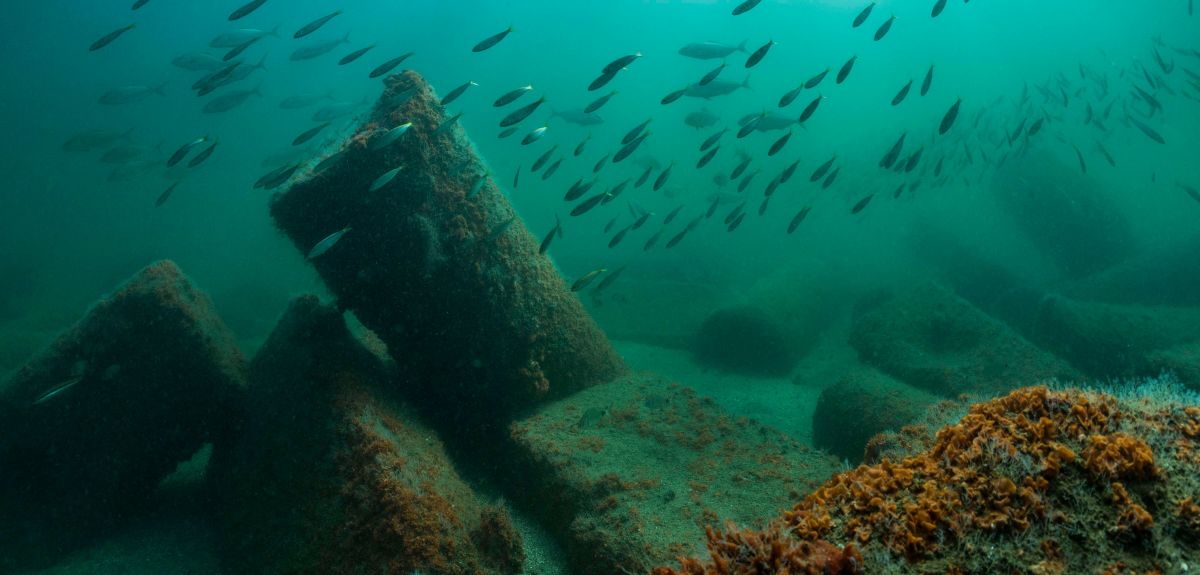
These spectacular images show divers recovering treasures from two ancient Egyptian cities.
The artefacts from Thonis-Heracleion and Canopus had been submerged at the mouth of the River Nile for over a thousand years.
Researchers from the University of Oxford's Centre for Maritime Archaeology (OCMA) and senior staff from the School of Archaeology and Faculty of Classics have conducted much of the detailed scholarly and scientific research that underpins interpretations of life in the cities.
The OCMA supports Franck Goddio and his team, the European Institute for Underwater Archaeology, which is responsible for excavating spectacular finds off the coast of Egypt near Alexandria and their interpretation.
Dr Robinson said: 'The significance and scale of the material from these sites is enormous and the condition of the objects is largely pristine. Monumental statues, fine metal-ware and gold jewellery reveal how Greece and Egypt traded and generally interacted in the late first millennium BC.
'Because ritual objects and refuse were placed into the waters of the harbour, they have been protected from the typical patterns of recycling and reuse that operate on land. Only now are we able to see the catastrophic destruction of areas of the site that largely led to its abandonment.'
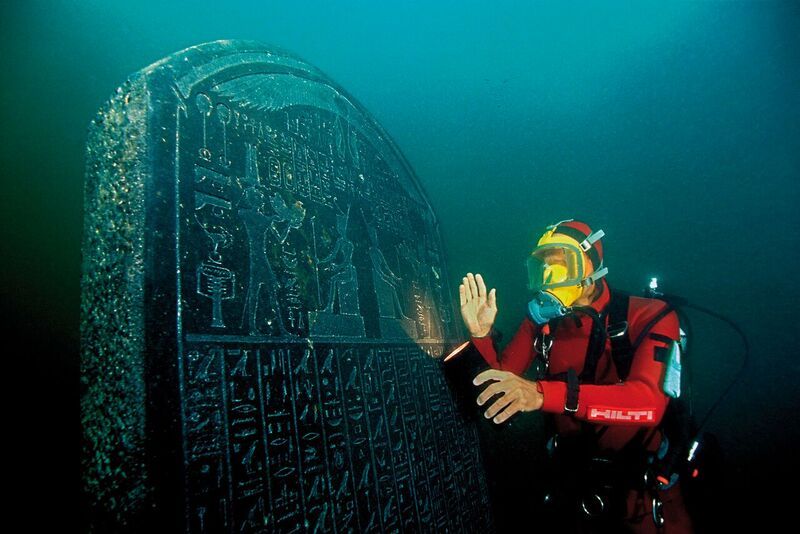 The objects were found at the mouth of the River Nile
Recovered statuettes and votive objects, metalware, and jewellery show the city was also a major religious centre where cross-cultural exchange and religion flourished, particularly the worship of the Egyptian god of the afterlife, Osiris.
The archaeological discoveries are the subject of a new six-month exhibition, ‘The BP exhibition – Sunken cities: Egypt’s lost worlds’, which opened this month at the British Museum in London.
 Just one of the striking objects recovered from the dive
From fragrances and food flavourings to the building blocks of pharmaceutical drugs, fine chemicals – complex chemicals produced in small quantities to a high degree of purity – play a major role in our daily lives.
But producing these chemicals can come at a cost, both in monetary terms and the large amount of waste generated.
A new technology called HydRegen is being developed by Professor Kylie Vincent and her team in the Department of Chemistry at the University of Oxford that promises to make the production of fine chemicals 'cheaper, faster, safer and cleaner'.
The project was recently awarded an Innovate UK/EPSRC grant worth £2.9 million and was the overall winner of the Royal Society of Chemistry's Emerging Technology competition in 2013.
Dr Holly Reeve, co-investigator and manager of the HydRegen project – which takes its name from the use of hydrogen to regenerate a key molecule involved in the process – told Science Blog about this award-winning technology.
In a nutshell, what is HydRegen?
'The HydRegen technology has the potential to make the production of fine chemicals such as pharmaceuticals, flavours and fragrances cheaper, faster, cleaner and safer. Chemists increasingly turn to nature to find clever ways of making complex chemicals using enzymes isolated from the cells of bacteria and other organisms. The HydRegen technology offers a completely new way of harnessing the incredible selectivity of these enzymes and will allow enzyme pathways to be implemented into existing chemical synthesis strategies much more easily.'
What are some of the problems with manufacturing fine chemicals at present?
'Many of the traditional methods for making fine chemicals suffer from a lack of selectivity and generate large quantities of waste. These problems mean that expensive purification strategies are usually required to obtain the desired chemical with the level of purity required by the fine chemicals industries.
'One method for increasing the selectivity and decreasing the waste associated with a chemical processes is using a catalyst which not only speeds up a reaction but, if designed correctly, allows generation of only the desired product. In industry, metal catalysts are often used; however, these metals tend to be very expensive, highly toxic and are in finite supply. Tuning the selectivity of these metal catalysts is still a considerable challenge for this area of research.
'Fine chemicals companies are starting to rely on biological catalysts (enzymes), which can be extracted from cells grown in the laboratory and which catalyse reactions with near-perfect selectivity. Enzymes catalyse these reactions under mild, and therefore less energy intensive, conditions.
'However, complicated strategies are required to allow enzymes to function outside of cells because they often require an additional biological "helper" molecule to be able to work. At present, carbon-intensive methods are required to sustain enzyme catalysis by recycling the expensive helper molecule.'
How does the HydRegen technology aim to solve these problems?
'HydRegen uses hydrogen gas to regenerate the helper molecule required for biocatalysis. The technology allows enzymes to be handled in a similar way to the metal catalysts which are currently used for hydrogen addition reactions (hydrogenations). The overall reactions are 100% atom efficient, meaning that there is almost no waste produced.
'We can carry out these reactions in pure water and therefore avoid using harsh solvents. We also use the enzymes immobilised on carbon supports, which means they can be easily removed from solution and re-used, both increasing product purity and decreasing costs associated with enzyme production.'
What types of chemicals are you focusing on?
'We are focusing developments of the HydRegen technology towards the fine chemicals industries (pharmaceuticals, flavours and fragrances) as these industries benefit most from an increase in selectivity and highly pure products.
'In particular, the HydRegen technology facilitates the addition of dihydrogen to a molecule to generate a "reduced" product. These kinds of reactions are essential to the production of the active ingredients in pharmaceuticals. We have also demonstrated other reaction classes of interest to the flavour and fragrance industries.
'Overall, this technology will play a part in making the fine chemicals industry more environmentally and economically sustainable.'
What are the next steps for HydRegen?
'The technology has been demonstrated for a range of key reaction steps, but only on a very small scale (<1 mL).
'We have now been awarded £2.9 million from EPSRC via the Innovate UK Industrial Biotechnology Catalyst scheme. This funding is for a five-year research project to tackle the academic challenges associated with scaling up production of the enzymes we utilise; to demonstrate the technology for scale-up of an industrially relevant reaction; to investigate methods for implementing the technology in industry-standard reactors; and to evaluate how the technology performs in comparison to existing chemical and biochemical synthesis routes. The planned work should bridge the so-called "valley of death" which often stops early-stage technologies making it to market.'

The opening dramatic performance of a festival to celebrate Russian composer Igor Stravinsky was met with a standing ovation last weekend.
Standing in the wings of London's packed Royal Festival Hall was series consultant Jonathan Cross, who is Professor of Musicology at Oxford University.
Four years earlier, he had been approached by the Philharmonia Orchestra with the idea of a Stravinsky series.
Professor Cross was an obvious choice for the role of series consultant – he wrote a highly-regarded book on the composer in 1998 and was in the final stages of writing a biography of Stravinsky which was published last year by Reaktion.
He says his role in the festival, called Stravinsky: Myths & Rituals, was a refreshing change from his usual academic pursuits.
'As a scholar, it was great fun to have a direct engagement with the professional musical world,' he says.
'Working alongside the Philharmonia and their principal conductor Esa-Pekka Salonen has been a huge privilege. It's rare one has the opportunity to influence concert programming in this kind of way.
'The Philharmonia Orchestra was also keen to surround its concerts with all kinds of other materials, so I found myself advising them on films and other digital materials for their interactive website. I also oversaw and contributed the bulk of the 80-page programme book. I am now leading study days and giving talks before their concerts.'
Professor Cross is particularly excited by the challenge of encouraging audiences to listen to some of Stravinsky’s lesser-known works.
'Although he is such a well-known name, actually only a handful of his works are ever played – even I have not heard all of them live before,' he says.
'It is still challenging to audiences to hear these pieces they are not familiar with, so I’ve had to think of ways to get an audience to take a risk and give them a go. I hope that in some way they are changed by what they encounter.'
One of Professor Cross' aims for the festival is to help people to put Stravinsky into context.
'I want people not just to hear Stravinsky's pieces as abstract music, but to think of the composer whose life was affected by two World Wars, Revolution, emigration and tragedy, and how that context left its mark on his music, and how his music in turn left its mark on the 20th Century,' he says.
The research that went into Professor Cross' biography of Stravinsky has informed the planning of the festival. Critics praised the book for offering a fresh perspective of Stravinsky in a number of ways.
'The idea of loss and lament in his music is a key and under-explored issue,' says Professor Cross.
'A lot of his music seems playful and fun on the surface, but I hear a sense of distance and exile running deep through his music. Though he spent most of his life living elsewhere, he always seems quietly to be lamenting the loss of his native Russia. It's a key theme.
'My book also attempts to place the composer in Art Deco Paris, where he worked for twenty years. I believe it shaped his music, and in turn contributed to that environment.'
There are still tickets available for all remaining performances in May, June and September, and all the concerts are being broadcast on BBC Radio 3. In the meantime, Professor Cross encourages music students at school or university, or indeed any interested members of the public, to explore a dedicated interactive website on Stravinsky set up specially for the festival.
Oxford University's Museum of Natural History has been named 'best of the best' of all UK museums at the Museums + Heritage Awards for Excellence 2016.
This was the top category in the awards which are likened to the 'Oscars of the heritage sector'.
The Museum also won best 'project on a limited budget' for its Dodo Roadshow, which saw the Museum’s dodo specimen travel from Land's End to John O'Groats in just eight days, touring 24 museums and galleries on the way.
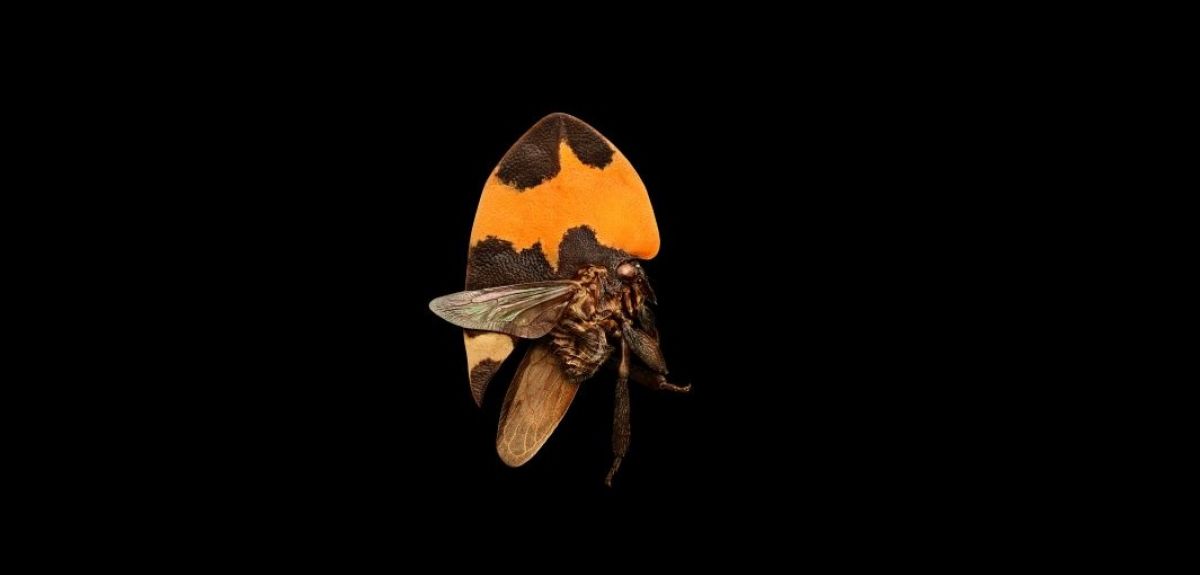
The Museum shows no sign of resting on its laurels. Next Friday it will open its latest exhibition, Microsculpture: The Insect Portraiture of Levon Bliss.
It features tiny insect specimens from the Museum's collections, which have been photographed by photographer Levon Bliss and transformed into large-format, illuminated installations.
The exhibition opens on 27 May and, in the meantime, readers can browse its interactive website.
The Bodleian Libraries also scooped the best marketing award for their campaign around the acquisition of their 12 millionth printed book, Percy Bysshe Shelley's 'Poetical Essay'.
- ‹ previous
- 126 of 253
- next ›
 25-year Oxford study finds the effects of conflict last for generations
 What Louise Thompson’s campaign tells us about the national maternity crisis
 Celebrating 25 Years of Clarendon
  Learning for peace: global governance education at Oxford
  What US intervention could mean for displaced Venezuelans
  Setting the agenda for the next century of quantum
 10 years on: The Oxford learning centre making an impact
 Mapping the Moon: the world’s first lunar atlas goes digital
  Oxford and The Brilliant Club: inspiring the next generation of scholars
 New course launched for the next generation of creative translators