Features

What people do not say can be as interesting as what they do, says Dr Ridhi Kashyap. Along with Connor Gilroy of the University of Washington, the Oxford demographer has been studying the disclosure of information on Facebook linked to sexuality in the United States.
Their study, published last month, reveals some possibly predictable findings such as: older social media users are less likely to disclose the gender in which they are interested, than younger users. But more unexpected findings have also come out of the data, say the authors, such as that women in their 20s and early 30s are twice as likely as older women to identify as bisexual, and women are more likely to identify as bisexual or homosexual than men.
A very interesting aspect of the aggregated and anonymised data is that it reveals what Facebook users were prepared to say about themselves in terms of their sexual identity. They chose to make this information public – or not
According to Dr Kashyap, a very interesting aspect of the aggregated and anonymised data is that it reveals what Facebook users were prepared to say about themselves in terms of their sexual identity. They chose to make this information public – or not. It makes a fascinating study, she says - as these differences in who discloses, or not, displays interesting variations by age, gender and relationship status and reveals for whom sexual identity is likely to be salient.
Such data offers a novel opportunity for demographers and sociologists, as they provide a window into the lives of respondents about what people will offer up about themselves when they are not being officially surveyed.
You can see how people signal themselves...[our study] encompassed 200 million Facebook users, 28% (56.3 million) of whom revealed sexuality-related information
Dr Ridhi Kashyap
‘You can see how people signal themselves,’ says Dr Kashyap. ‘They were not doing this in the context of a survey or a data collection exercise such as a census, but for themselves and their social networks and communities.
‘The data generated when we use social media platforms provide a different but complementary perspective to one offered by more classic social science approaches, which rely on asking and getting a response.’
She continues, ‘This, of course, also raises important and new types of ethical issues for researchers to consider, and requires us to be careful and considerate in how we use the data. In our study, we used only aggregated counts – so no individuals can be identified. It encompassed 200 million Facebook users, 28% (56.3 million) of whom revealed sexuality-related information and describe patterns that we observe.’
Mr Gilroy says interesting patterns were revealed, ‘There are large generational differences, as younger social media users share their sexualities much more than older users. Younger users, and especially younger women, are also more likely to be interested in the same gender, or both men and women. For older users, marital status often substitutes for their sexual identity, whereas single people are more likely to disclose their sexuality.’
Younger users, and especially younger women, are also more likely to be interested in the same gender, or both men and women. For older users, marital status often substitutes for sexual identity, whereas single people are more likely to disclose their sexuality
Connor Gilroy
But, just as there are generational differences in disclosure and non-disclosure, there are gender differences.
‘Women are more likely to say they are bisexual than men,’ says Mr Gilroy. ‘Men are more likely to say explicitly that they are heterosexual – and not in a relationship.’
He wonders if the relative absence of heterosexual women, compared to heterosexual men, suggests women do not disclose for fear of being harassed online and appearing ‘available’.
But, he says, it was notable that there still appears to be some stigma around male homosexuality, given that more women than men disclosed same-sex and, more notably, bisexual interests. In the past, he says, the expectation was that people would be heterosexual and, even today, this comes with privilege for men, ‘Anxiety over male homosexuality is much greater [than female homosexuality]...but in the online world, women are concerned about attracting unwanted attention and worried about online safety [which can constrain disclosure].’
Younger generations are more likely to see their sexuality as an important aspect of their identity, which could explain why more are prepared to disclose
Non-disclosure is a fascinating area, say Mr Gilroy and Dr Kashyap but, they add, their study suggests sexuality has become for younger generations a ‘core demographic trait’ alongside ethnicity, gender and race.
‘Younger generations are more likely,’ says Dr Kashyap, to see their sexuality as ‘an important aspect of their identity’, which could explain why more are prepared to disclose.
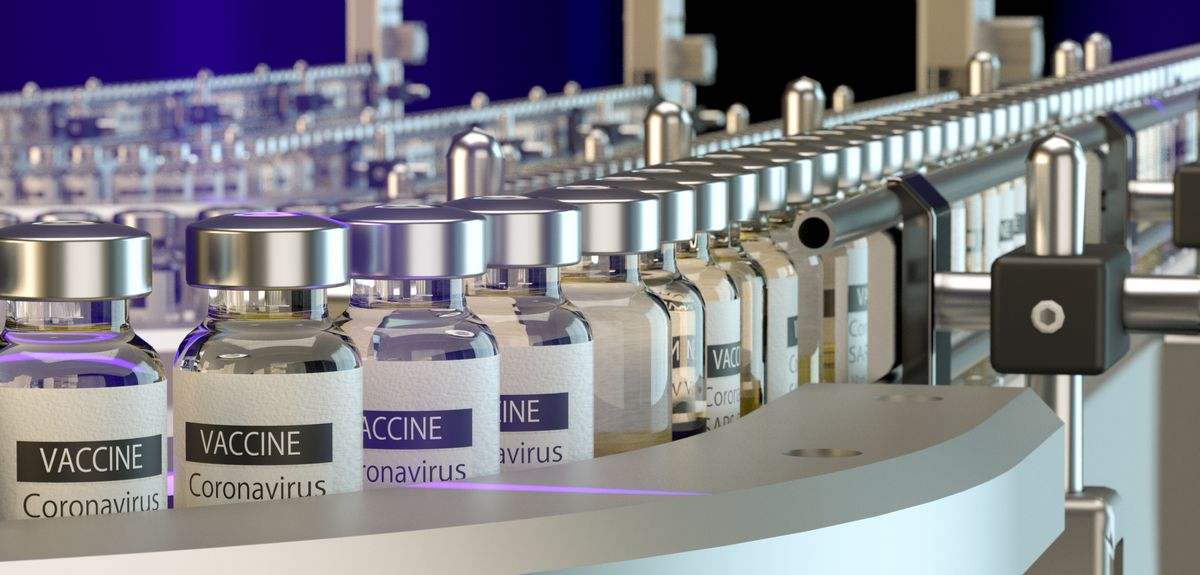
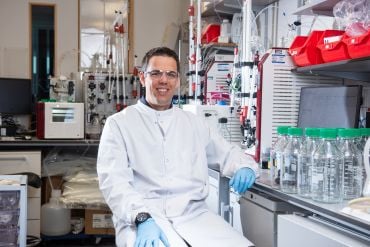 Photo | Prof. Sandy Douglas in his lab
By Dr Sandy Douglas
In April 2020, as the University was planning the first clinical trials for the COVID-19 vaccine, some began to wonder how to supply the vaccine to the world - if it worked. A rather worried colleague said to me, ‘But vaccine manufacturing is not really what we do, is it?’.
They were right in some ways: the University of Oxford is not a vaccine manufacturing company. A small group of University scientists had, however, been working on the problem for quite some time.
My team in the Jenner Institute had started research on manufacturing a few years earlier, to solve challenges around making an adenovirus-based rabies vaccine. The method we developed was designed to be very simple (so it could be done by many manufacturing facilities) and so it would work for other adenovirus-based vaccines (and might be useful for a new disease). Unfortunately, it had a major limitation: even if it were scaled-up massively, this method would not make enough vaccine to tackle a pandemic.
So, in early February 2020, it was a matter of concern that, although Oxford had the capacity to develop a COVID-19 vaccine, and clinical trials might take only a few months, manufacturing ‘at pandemic scale’ would take much longer. The technology simply was not in place.
In February 2020...although Oxford had the capacity to develop a COVID-19 vaccine...manufacturing ‘at pandemic scale’ would take much longer. The technology simply was not in place
A well-timed discovery provided a critical advance. At the start of the pandemic, a new team member, Dr Carina Joe, was the only researcher at the University working full-time on large-scale production of adenovirus vectored vaccines. In January 2020, she had found a way of creating up to 10 times more vaccine from a modified manufacturing process. She did this at a tiny scale: just 30 mL of cells (two tablespoons).
If the vaccine were going to be available quickly, this needed to be repeated on a scale at least 5,000 times greater, and before it was even known if the vaccine worked. Without ‘proof-of-concept’, that it could be made at such scale, it was unlikely any major funder or pharmaceutical company would support the vaccine programme.
We turned to the contacts book of Professor Catherine Green, Head of Clinical BioManufacturing Facility (where the first doses of the vaccine were being made for clinical trials), and started getting in touch with the handful of biotech companies in the UK and nearby who might be able to help.
The response was incredible. By late February, there was a plan for Carina’s ‘two tablespoons’ process to be tested on a large-scale ‘practice run’ at Pall Biotech’s lab in Portsmouth. Work which would normally have taken years was compressed into a few months and, if successful, would show that the vaccine could be created at ‘pandemic scale’.
A well-timed discovery provided a critical advance...a new team member, Dr Carina Joe...found a way of creating up to 10 times more vaccine from a modified manufacturing process....at a tiny scale: just 30 mL of cells (two tablespoons).
At that point, the vaccine team had not produced a single dose of clinical-grade COVID-19 vaccine. So it seemed preposterous to discuss, even in private with colleagues, if the process could produce one billion doses. Some early calculations looked encouraging, but no single manufacturing site would be able to deliver the scale needed and we were worried that governments might choose to vaccinate their populations first - meaning that low- and middle-income countries (LMICs) would be at the back of the queue.
It was clear multiple sites were needed; a model known as ‘distributed manufacturing’. And they needed to be in multiple countries, including LMICs. This approach had never been set up at this speed or scale for a brand-new vaccine, but by mid-March 2020, five manufacturers were ready to start ‘technology transfer’ work.
By late February, there was a plan for Carina’s ‘two tablespoons’ process to be tested on a large-scale ‘practice run’ ...Work which would normally have taken years was compressed into a few months
While three – Oxford Biomedica, Cobra Biologics, and Halix – would initially work on a plan to supply the UK, the others were one of the biggest LMIC biological manufacturing contractors, and the biggest LMIC vaccine manufacturer.
Soon, other companies came on board to supply equipment and materials. Jenner project manager, Dr Adam Ritchie, worked hard to ensure this group was shaped into a co-operative consortium: all sharing information, effort, and a vision of delivering a vaccine for the world as safely and quickly as possible.
On the 30 March 2020, the UK government’s newly-formed Vaccines Taskforce was in touch. Two weeks later, and before Phase I clinical trial had started, we were discussing a £65 million proposal to fund the consortium to supply tens of millions of vaccine doses to the UK. This was accepted quickly, so February’s pipe dream had become April’s reality.
In March 2020, the newly-formed Vaccines Taskforce was in touch. Two weeks later, we were discussing a £65 million proposal to fund the consortium to supply tens of millions of vaccine doses to the UK...February’s pipe dream had become April’s reality
It is well known that AstraZeneca committed to sell the product on a not-for-profit basis during the pandemic, and in perpetuity in low- and middle-income countries. It is less well known that AZ also started manufacturing, ahead of clinical trial results and including at sites in LMICs. This was at least as important as the price. An inexpensive vaccine is of no use if it is not available.
AZ has continued with both the UK-oriented manufacturing consortium and our LMIC partners, including the Serum Institute of India. Together, these have provided a large proportion of the billion doses made to date. And they have gone far beyond this, transferring our process to produce the vaccine to more than 25 partners across at least 15 countries, including additional sites in LMICs.
The effort to manufacture this vaccine has been extraordinary...It has not yet been fully appreciated how radically different...from the public perception of ‘big pharma’.
Big challenges remain, but the effort to manufacture this vaccine has been extraordinary in so many ways. It has not yet been fully appreciated how radically different it has been from the public perception of ‘big pharma’
Going ‘all out’ for maximum volume of supply from multiple sites has been a huge task, even for a company of AZ’s size, and I remain to this day delighted with the professionalism and zeal with which I see their team approaching this task.
Big challenges remain, but the effort to manufacture this vaccine has been extraordinary in so many ways. It has not yet been fully appreciated how radically different it has been from the public perception of ‘big pharma’.
Dr Sandy Douglas is a research group leader in Oxford’s Jenner Institute, who and has led the University’s contribution to the manufacturing scale-up the COVID-19 vaccine.
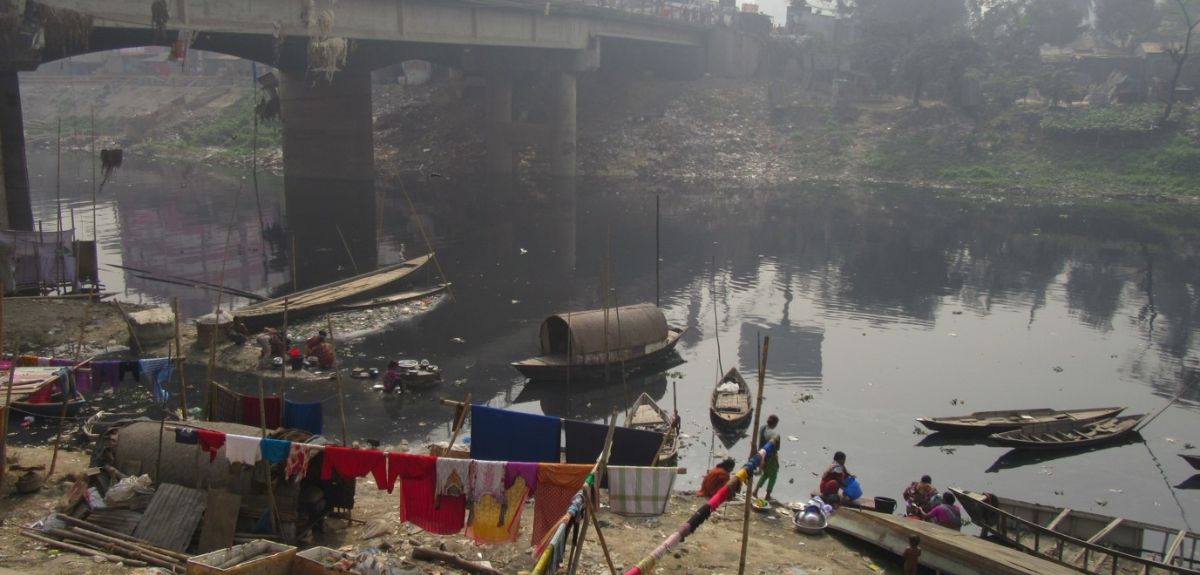
Urgent action is needed to protect global water security from the impacts of climate and climate change, according to a report today from Oxford’s REACH programme.
Emphasising the need for research and planning, while highlighting the unequal and complex impact of climate on water security, the report makes three key recommendations:
- More accurate and granular analysis of climate risks is needed to increase relevance of climate information.
- Metrics for monitoring climate resilience in water systems are critical to track progress and inform investments for water security.
- New institutional models that improve water security are critical for climate resilience.
Dr Katrina Charles, REACH co-director, says, ‘Climate change will increasingly affect water availability and quality, with devastating consequences for the most vulnerable. Improving water security is critical to build resilience to the changing climate.’
Climate change will increasingly affect water availability and quality, with devastating consequences for the most vulnerable. Improving water security is critical to build resilience to the changing climate
Dr Katrina Charles
According to the full report, ‘Improving water security is essential to achieve environmental protection, economic growth, poverty reduction, and improvements in public health. Water security is often presented as a technical challenge, but the decisions that define it are deeply political.
‘REACH recognises that the risks to people affected by poverty are often neither identified nor addressed. Improving water security requires managing complex and competing water-related risks in order to deliver sustainable and equitable outcomes for all.’
Working in Bangladesh, Kenya and Ethiopia, the REACH programme is led by the University of Oxford and funded by UK Aid Direct from the UK Foreign, Commonwealth & Development Office (FCDO). This report is based on six years of research developed in collaboration with research teams in these countries. UNICEF at the global, regional and country levels is a key partner supporting uptake of the research, in collaboration with national governments and their relevant ministries.
The report maintains, ‘Seasonal changes and extreme weather events have negative consequences for lives and livelihoods where water security is poor. Where populations are affected by extreme poverty and climate resilience is lacking, these impacts can be devastating.'
Seasonal changes and extreme weather events have negative consequences for lives and livelihoods where water security is poor
REACH report
According to the report, the programme’s research shows the unequal and, sometimes hidden, impact of climate change – which, the team says, can be counter-intuitive. The differing impacts across REACH’s country specific locations underpin the team’s call for further research and planning for climate and climate change.
The water insecurity of the urban poor is highlighted, with cities facing ongoing risks from pollution and urbanisation as well as increasing demand. Better management and planning is essential.
Meanwhile, the report reveals the devastating impact of climate on the lives of women, children and older people in rural settings. It calls for better analysis and communication of information – to help build better capacity, planning and resilience for potential changes in water quantity and quality.
Dr Charles maintains, ‘To build the adaptive capacity of water systems to cope with changes in climate, climate information needs to be available to water managers at the appropriate spatial and temporal scale....More investment is needed to provide the tools that water managers need to make informed decisions to increase climate resilience, such as accurate projections at local scales and seasonal forecasting based on understanding of local climate drivers.’
 By
By COVID-19 represents an unprecedented blow to cultural life; social distancing just is not compatible with full-scale live performance. Theatres, concert halls, festivals, galleries and museums have been silent. And despite a welcome government rescue package, an upcoming generation of actors, artists, comedians, dancers, designers, singers and writers often had to seek alternative forms of employment.
In the early days of the pandemic, during the first lockdown, the actress Fiona Shaw spoke of ‘culture as everything, a way of travelling, even at home’. She was speaking to mark the launch of the Boundless Creativity project, which has provided real-time intelligence and comprehensive data on the impact of the coronavirus across the UK’s arts, cultural and creative sectors.
Yet, leading figures from public and private organisations, large and small, up and down the country, say that culture has fought back and kept us going. Life in lockdown proved distinctly unsettling, like living in a science fiction movie not knowing the ending.
Life in lockdown proved distinctly unsettling, like living in a science fiction movie not knowing the ending....But it has been to culture people turned...Despite their closed doors, organisations adapted and innovated...just when we needed them most
But it has been to culture that people turned, to process what was happening and to express their emotional responses. Despite their closed doors, organisations adapted and innovated, whether to educate and entertain or to comfort and console, just when we needed them most.
Their ability to do so derived in part from the fact we have at our disposal more advanced technology than ever before. The digital world was already moving very fast before the crisis, forcing us to look at the economy of tomorrow, into which citizens will have to move. If no one knows exactly what the ‘new normal’, after Covid will look like, the UK’s cultural and creative industries are providing some tantalising glimpses, especially in the realm of augmented and mixed reality.
In the words of the Classicist, Professor Mary Beard, ‘We will look back to these dark and cloudy times as the moment when we really did harness technology to open up the best of what arts and culture have to offer on a wider and grander scale.’
The evidence we have gathered shows a marked increase in digital cultural consumption during lockdown, despite problems of unequal broadband access and digital literacy. And public research spending choices should reflect the innovative capacity of creative industries.
If no one knows what the ‘new normal’, after Covid will look like, the UK’s cultural and creative industries are providing tantalising glimpses...And public research spending choices should reflect the innovative capacity of creative industries
Twice as many under-45s have engaged in cultural activities online, compared with the over-45s. And digital technologies have turned consumers into producers via platforms such as Instagram and YouTube. But, across the entire age range, casual and marginal users have been converted into more intensive users of technology in search of satisfying digital cultural experiences.
Watching filmed performances, looking at art online, attending Zoom readings of plays, or adopting a pop star’s avatar in a video game; there has been a striking diversification of what is on offer.
Two-thirds of Britons now think it is possible to have a meaningful cultural experience online. Not all forms of cultural product have translated, however. Digital is not a substitute for live performance.
Artists have sometimes chafed at its constraints. Content needs to be adapted, or entirely rethought, for digital platforms, and online experiences work best when they have intimacy and authenticity. Yet, many of those to whom we spoke expect virtual reality and reality itself to evolve alongside each other, with performance to live audiences integrated with streaming to global ones. This hybrid future is likely to be a distinctive marker of the UK’s remarkably adaptable cultural sector.
The extraordinary demand we have witnessed in the past year for cultural products, services and experiences points to the potential for post-Covid recovery to be powered by the creative industries.
The extraordinary demand we have witnessed in the past year for cultural products, services and experiences points to the potential for post-Covid recovery to be powered by the creative industries.
Biomedical science is tackling the primary physical effects of the virus, the arts, cultural and creative sectors can help tackle its secondary social and economic effects.
The key recommendation of our report, is that in the forthcoming autumn spending review an equivalent effort be made in the domain of R&D for creative technology as is made for other digital spheres. Where creative meets ‘tech’ is the place where great cultural and material value will be derived in the next 20 years.
There is a compelling and consequential research agenda in exploring how to reach new global audiences digitally, how to broaden digital access for producers and consumers, how to overcome entry barriers to the digital market faced by freelancers and smaller creative organisations, and how to bring the benefits of cultural access and participation where they are most needed, including for those struggling with the pandemic’s effects on mental health.
Lives, as well as livelihoods, would be transformed by a major new cross-sectoral and collaborative drive for ‘science for creativity’: university researchers in the arts and humanities joining forces with the latest digital and data science, in partnership with a powerhouse of the UK’s economy.
Biomedical science is tackling the primary physical effects of the virus, the arts, cultural and creative sectors can help tackle its secondary social and economic effects
There is precedent for this, with UK Research and Innovation’s Creative Clusters and Audience of the Future programmes transforming university interactions with their cultural hinterlands and the bringing cutting-edge immersive technology into museums, theatre, animation and gaming. These programmes provide a springboard for something even more ambitious.
The pandemic has brought into sharp focus the true value of one of the UK’s crown jewels, its creative industries. If tough spending choices on R&D are around the corner, we would do well to keep that in mind.
Andrew Thompson is chair of global and imperial history at the University of Oxford and co-chair, with Oriel College Provost, Lord Neil Mendoza, of Boundless Creativity.
Boundless Creativity is sponsored by the Arts and Humanities Research Council and the Department for Culture, Media and Sport.
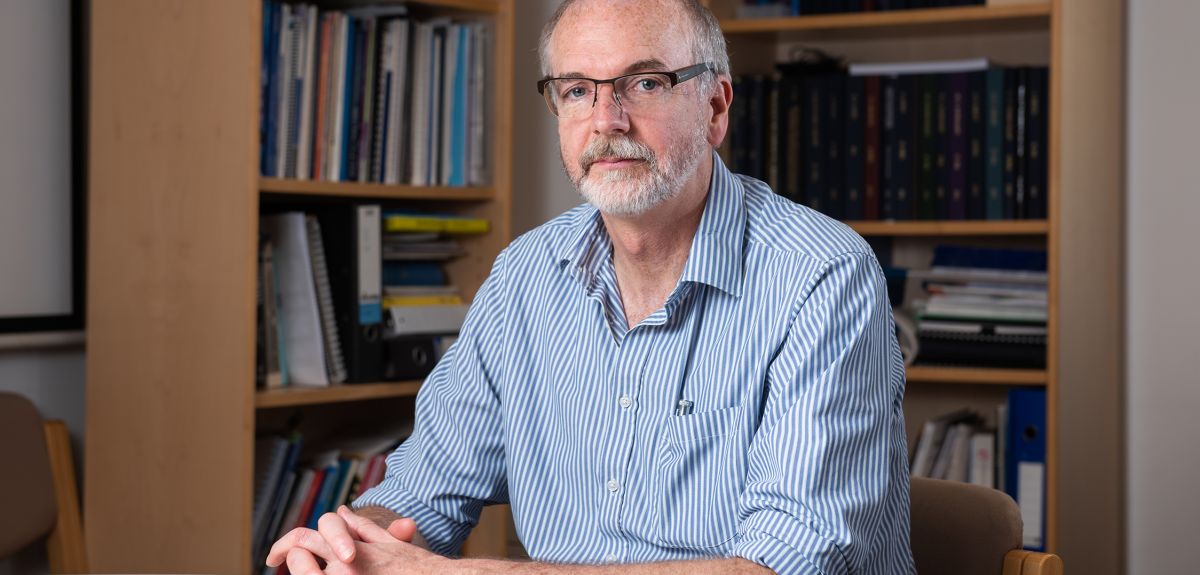
Professor Sir Andrew Pollard, Director of the Oxford Vaccine Group and Professor of Paediatric Infection and Immunity, takes a moment to reflect on one billion doses of the Oxford coronavirus vaccine released worldwide.
With falling Covid-19 cases all across the UK, the wild positivity in the media, and yesterday’s announcement from AstraZeneca that they have passed 1 billion doses manufactured of our Oxford vaccine, you could be forgiven this week for thinking that it is all over - but it isn’t.
The world is in the third wave of the pandemic with global case numbers of Covid-19 rising rapidly, just not here. I don’t want to sound too gloomy given the remarkable position in which we find ourselves, especially with cases falling because of growing immunity in our population from the vaccines, likely combined with Summer behavioural changes that reduce opportunities for spread.
Here on our highly vaccinated islands, while we shouldn’t be complacent or skittishly intoxicated by optimism, it is reasonable today to be cautiously hopeful. We are in a much better position than at any time in the past 18 months. For those who are vaccinated, the risk of getting seriously ill or dying is now very very low. That link between infections in the community and hospitalisation is weak. The vaccines are doing their stuff.
It is critical to recognise that the virus will continue to spread around the world, and whilst it does, those who are unvaccinated, everywhere, even here, will remain at risk.
It is critical to recognise that the virus will continue to spread around the world, and whilst it does, those who are unvaccinated, everywhere, even here, will remain at risk.
In the UK, it is now only a small proportion of adults who remain without the armour provided by vaccination, but in many low-income countries, that is almost everyone. Globally, more than half a million cases and 9,000 deaths will occur today.
While this shows there is still a lot more to do, you may be surprised to hear that the teams behind the vaccine were absolutely fizzing yesterday. Why? Because we crossed an astonishing, uplifting and almost unthinkable milestone. 1 billion doses of our Oxford vaccine have been distributed to over 170 countries through our partnership with AstraZeneca and Serum Institute of India.
For the small group of dedicated researchers who worked on the development of the Oxford vaccine, this is a glorious moment to savour in our endeavour to make a vaccine for the world. But we also pay tribute to the bravery, commitment and determination of AstraZeneca to fight against the normal commercial model, in partnership with Oxford University and 20 global manufacturing partners, to get the vaccine out there as quickly as possible, on a not-for-profit model, for the benefit of humanity.
But that is enough celebration for now, while there are many unvaccinated people who are desperately waiting for the next billion doses. We must approach this next milestone with the same passion, commitment and zeal as we have this first.
- ‹ previous
- 20 of 252
- next ›
 What US intervention could mean for displaced Venezuelans
  Setting the agenda for the next century of quantum
 10 years on: The Oxford learning centre making an impact
 Mapping the Moon: the world’s first lunar atlas goes digital
  Oxford and The Brilliant Club: inspiring the next generation of scholars
 New course launched for the next generation of creative translators
 The art of translation – raising the profile of languages in schools
  Opening a window into the quantum world
 Tracking resistance: Mapping the spread of drug-resistant malaria