Features
From defending a besieged castle to spying for an exiled king, a new project is discovering the untold story of female activism during the British Civil Wars...
It wasn't easy to be born female in the early modern period. The ideology of the era held that women should be controlled by their father or their husband, and that the ideal woman was obedient and quiet, concerned chiefly with domestic matters and the rearing of children.
But don't be fooled by the dominant narrative, says Dr Emma Turnbull, lecturer at Jesus College, Oxford. When you look more closely at actual women's lives, it's clear the picture is far more complicated.
As part of a Knowledge Exchange Fellowship with The Oxford Research Centre in the Humanities (TORCH), Emma has been working with the National Trust to take a closer look at the stories of some of the fascinating women associated with their properties. Focusing on the English Civil War and Interregnum period (1640-1660), she has been examining how some women were able to break out of the confining boundaries of their society's gender roles in this era of huge social upheaval.
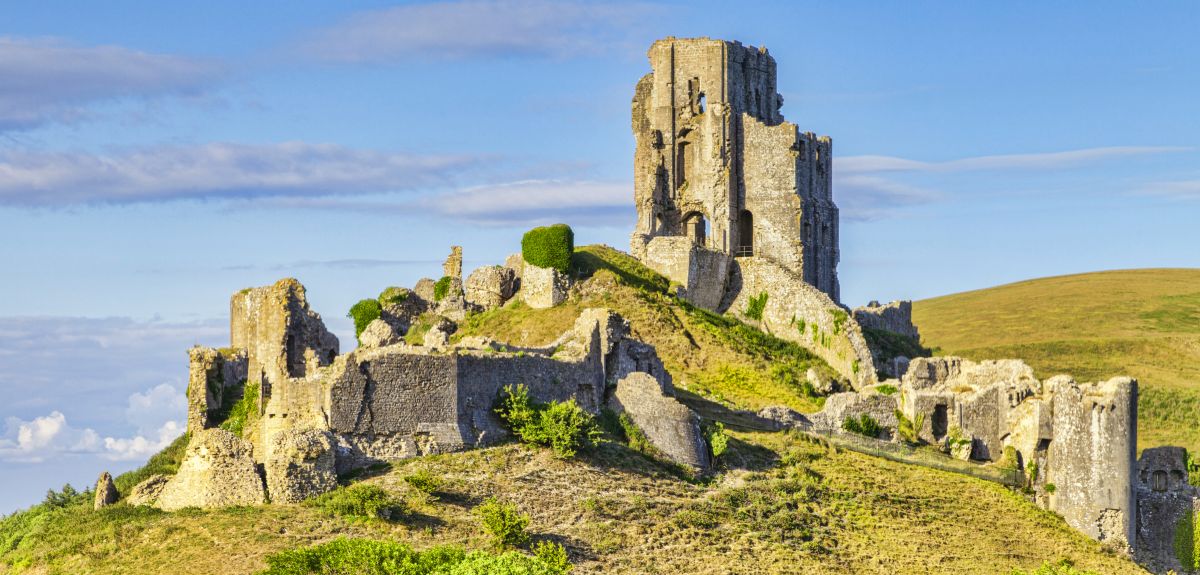
Take Lady Mary Bankes, who defended Corfe Castle against the first of two Parliamentarian sieges, beginning in May 1643. Along with her maidservants and a small group of soldiers, she personally patrolled the battlements, heaving rocks and hot embers over the walls. She died in 1661, and a memorial plaque in the church where she was buried commemorates her 'courage and constancy above her sex'.
Then there was Katherine Murray, mistress of Ham House. Left behind when her husband, William Murray, a close personal friend of Charles I, went away with him to war, she was forced to rely on her wits to preserve the family property in Richmond, right beside the heart of Parliamentarian power in London.
Or her daughter, Elizabeth Murray, who took over the property after her parents' deaths. In the period of Cromwell's rule she became a kind of double agent, joining the secret royalist organisation the Sealed Knot to work towards the restoration of the monarchy, while also keeping the company of Cromwell. Later, along with her second husband, she would become one of Charles II's most trusted advisers.
What is particularly fascinating about all of these stories, according to Dr Turnbull, is how all of these women used and manipulated traditional notions of femininity to serve their own ends. This is something that has often been missed in traditional accounts of these women, which take their outward affirmation of conventional gender roles at face value.
Katherine Murray and Elizabeth Bankes, for example, claimed they were only safeguarding their children's or their husband's rights when they were defending their property. Although Elizabeth Murray was suspected several times of being a double agent, she was never intercepted. 'What she intends I have not learnt', Sir Richard Browne, Charles II's agent in Paris, reported in the autumn of 1656. Elizabeth thus skilfully exploited the inability of male agents, on both sides, to decode her political motives.
'Focusing on them as mothers or as wives or as domestic beings doesn't really do justice to the level of their engagement and activity. Often they represented themselves in a way that has led us to undermine them. And we've kind of fallen for that,' says Dr Turnbull.
It is also important to recognise that these women were a part of a wider female culture. For example, Elizabeth's later political manoeuvring would not have been possible without the example of her mother. 'It's clear that Elizabeth was learning her craft from her mother. There's a sense of continuity between strong women in the family.'
Dr Turnbull has also drawn parallels between a miniature of Katherine Murray, painted by John Hoskins in 1638 and kept at Ham House, and similar portraits of Charles I's Catholic wife, Henrietta Maria. The fact that Katherine should choose to present herself in an analogous way to the queen, despite their different faiths, suggests that there was a distinct feminine culture at court that bound women together across divisions of religion and politics.
Dr Turnbull hopes that this fresh perspective will inform how this period is presented at heritage properties in the future. Her work has already contributed to a new 'Object in Focus' tour at Ham House, telling Katherine Murray's story through her portrait miniature.
'So often women in the early modern period are presented, in heritage properties, as domestic beings,' she says. But what I wanted to emphasise in this project is that, in spite of the formal and informal barriers to their activities, women had a stake in the political conflict. Elite women, like Katherine Murray and Mary Bankes, were moving around the country, they were visible, and they had a role in protecting themselves and their property.'
Read Dr Turnbull's articles on Katherine Murray, Elizabeth Murray and Mary Bankes here and here.

Athena Hawksley-Walker and Tom Fetherstonhaugh, both second-year music students at Merton College, Oxford, are currently performing the complete Beethoven violin sonatas in a series of concerts taking place in the Holywell Music Room, Oxford. They tell Arts Blog about this unique project.
Beethoven’s ten violin sonatas, composed between 1798 and 1812, are regarded as the cornerstone of the violin and piano repertory, and are hugely important works in the western classical music canon. They are unmatched in terms of a large-scale cycle of works for a violin and piano duo. Although their composition spans a somewhat smaller time period than some of his other works – for example his string quartets – they offer a huge insight into Beethoven’s development as a composer, with Sonata No.10 in G major sitting on the cusp of his movement into his fragmentary and transcendent so-called ‘late style’.
As well as being arguably the most important single body of works for violin and piano, the pieces demand both extreme technical skill from the performers and an ability to communicate effectively with each other in order to capture and express, through music, the full range of human emotion.
The very first time we played together it was in ‘opposite formation’: Tom on violin and Athena on piano. In fact, the first piece we performed was Beethoven’s violin Sonata No. 5, ‘Spring’. Our artistic partnership continues to grow and this series is our most ambitious yet.
The first three concerts in the series have already taken place, with the remaining sonatas set to be performed across the rest of the year. Sonatas 6 and 10 will be performed on Monday 14 May, and numbers 8 and 9 on Monday 22 October. Each concert will commence at 7.30pm.
On Monday 14 May a pre-concert talk will be given by Daniel Grimley, Professor of Music at the University of Oxford. Professor Grimley is an expert on European classical music and has particular research interests in the links between music, landscape, and geographical culture, covering music from the classical period up to 20th-century works.
Click here for more information on the concerts.
Athena Hawksley-Walker studied violin and piano at the Royal College of Music Junior Department for nine years with Ani Schnarch and Neil Roxburgh, winning prizes in violin, piano and theory, both at the RCM and from the Associated Board of the Royal Schools of Music. In addition, she was awarded Kingston Young Musician of the Year and Richmond Young Pianist of the Year and distinction in both violin and piano dipABRSM diplomas. Athena was in the National Youth Orchestra for four years, co-leading in her final year. She now studies with Michael Foyle at the Royal Academy of Music through the Oxford Music Faculty’s RAM scheme.
Tom Fetherstonhaugh is organ scholar at Merton College, Oxford, where is he is responsible for accompanying the college choir for BBC broadcasts, concerts, tours and services. He is a busy recitalist, giving solo concerts around the UK and Europe. Alongside his organ-playing, Tom is a conductor. He founded Fantasia Orchestra, a group of London musicians whose concerts have won critical acclaim: the Arts Desk has called the strings sound ‘already a thing of wonder’. Tom is about to start his second season as conductor of the Oxford University Sinfonietta.

Gijsbert Werner, Postdoctoral Fellow and Stuart West, Professor of Evolutionary Biology, both in the Department of Zoology, explain the process of plant cooperation, in relation to their new study published in PNAS, which has shed light on why cooperative relationships breakdown.
Unseen to most of us, almost all plants form below-ground interactions with beneficial soil microbes. One of the most important of these partnerships is an interaction between plant roots and a type of soil fungi called arbuscular mycorrhizal fungi.
The fungi form a network in the soil and provide the plant with soil minerals, such as phosphorus and nitrogen. In return, the fungi receive sugars from the plant. This cooperation between plants and fungi is crucial for plant growth, including of many crops. Plants sometimes even get up to 90% of their phosphorus from these soil fungi.
In collaboration with a team of international researchers, we set out to better understand plant cooperation. We wanted to know why some relationships of plants with soil fungi flourish and others collapse.
This involved analysing a large database of plant-fungal interactions containing thousands of species and using computer models to reconstruct the evolutionary history of the partnership. We found that despite having successfully cooperated for over 350 million of years, partnerships among plants and soil fungi can break down completely.
Once we knew that that plant-fungus cooperation could fail, we wanted to understand how and why the relationship breaks down. We found that in most cases the plants were replacing the fungi with another cooperative partner who did the same job, either different fungi or bacteria. In the other cases, plants had evolved an entirely different way of obtaining the required minerals – for instance, they had become carnivorous plants which trap and eat insects.
Our study shows that despite the great potential benefits of the relationship, cooperation between plants and fungi has been lost about 25 times. It is quite crazy that such an important and ancient collaboration has been abandoned so many times. So why did this happen?
One explanation is that in in some environments, other partners or strategies are a more efficient sources of nitrogen or phosphorus, driving a breakdown of previously successful cooperation between plants and fungi.
For instance, carnivorous plants are often found in very nutrient-poor bogs. Even an ancient beneficial fungus, specialised in efficiently shuttling nutrients to their partner plants simply cannot get the job done there. So, plants evolve a different way to get their nutrients: trapping insects.
A next step is to now find out in what conditions the various different nutrient strategies are found? Where on our planet do plants keep their original fungi? Where do they go for another solution to get their nutrients? Other work focuses on the potential that some fungi evolve to become ‘cheaters’ - taking the benefit from the partnership but no longer contributing to it and ultimately driving its breakdown.

Francesca Moll meets the academics hoping to heal divisions in modern society using a 16th-century work of speculative fiction.
There once was an island that was connected to a larger continent by a small but significant link. But then one day the citizens of this island decided to irrevocably separate themselves from the mainland, in order to pursue a dramatic and some might say unrealistic vision of a better society.
An accurate representation of Britain's current political situation? Actually, it's the premise of Thomas More's Utopia, a hugely influential early modern political treatise published exactly 500 years before the momentous Brexit referendum last June. But now this centuries-old story of a fictional social experiment is feeling eerily relevant.
According to Oxford's Wes Williams, Professor of French Literature and Fellow of St Edmund Hall, and Richard Scholar, Professor of French and Comparative Literature and Tutor at Oriel College, More's work still has some important lessons for modern society. They are collaborating on an innovative theatrical production, Storming Utopia, a 'mashup' of More's Utopia and Shakespeare's The Tempest.
An 'experiment in practical utopianism', the project aims to break down boundaries of age, class, race and gender in Oxford, bringing together a socially and ethnically diverse cast ranging in age from seven to 67 to ask what would make a better society.
Storming Utopia is also looking to build bridges between England and Europe. Jointly funded by a Knowledge Exchange Fellowship from TORCH (The Oxford Research Centre in the Humanities) and money set aside to fund collaboration between TORCH and the Cini Foundation in Venice, the production is also performed in Italian at the foundation's headquarters on the island of San Giorgio Maggiore.
Throughout, the play asks the question: 'If there was one thing you could change about the place you could live, what would it be?', prompting responses from the cast and audience. These have varied from making university libraries accessible to the general public, to scrapping private education, to radically reconstituting the nuclear family. One of the more creative ideas suggested flooding Oxford and turning the streets into Venice-like canals, to solve the city's notorious parking and traffic problems.
But as well as imaginative dreaming, Storming Utopia has also tackled bitter post-Brexit political divisions. This was particularly important to younger members of the cast, to express the anger and powerlessness they felt post-referendum.
'Everybody in the show who was under 18 had a really strong sense that their future had been taken away from them. And that they had no say in it. One of the young people in the show said: "What's been really great about this show is it's given us a voice that we don't otherwise have,"' says Professor Williams.
However, as theatre, Storming Utopia ensured that the representation of Brexit – after all, a kind of Utopian vision – was not only one-sided. Throughout the play several characters – including Boris Johnson – argue the case in favour. According to Professor Williams, the intention was to build bridges, not create greater divisions, and so it was important to explore a diversity of experiences and opinions. He says: 'Brexit is much a symptom as a cause, and Brexit is a symptom of divisions, boundaries, walls within British society.'
But at least within the small group of 21 individuals in the company, the project seems to be overcoming some of these deep divisions. Many of the actors, who have lived side by side in Oxford for years without getting to know one another, have formed close personal friendships across boundaries of age, social class, ethnicity and university or non-university affiliation.
Most rewarding was the chance to confront the deep generational divide becoming ever more present in politics, bringing together people decades apart in age and giving them a chance to learn from each other's different experiences.
Professor Williams says: 'You might think the main thing would be ethnic diversity, or perhaps religion, amongst all the various things that we think of as somehow determining difference. But actually it really was age that people talked about when we asked them what they learnt from this project. We constitute ourselves as little islands of age, and as we grow older, we take our little island of oldness with us.'
Professor Williams believes this shows that there is the potential to overcome even the most intractable of differences. 'In terms of what I'd like people to take away from the play, I think hope. Hope in the possibility of community, of people working together to make stuff happen. A bit of rage at the current state of affairs. But mostly Utopian hope.'
Professor Scholar agrees. 'I think that Storming Utopia has been a genuinely Utopian project, the bringing together and sharing in common of an experience involving people who wouldn't otherwise have had that chance. I count myself very lucky to have been a part of it.'

This blog post is adapted from an article published by the Gemini Observatory.
Even after decades of observations, and a visit by the Voyager 2 spacecraft, Uranus held on to one critical secret: the composition of its clouds. Now, one of the key components has finally been verified.
Professor Patrick Irwin from the University of Oxford's Department of Physics and global collaborators spectroscopically dissected the infrared light from Uranus captured by the eight-meter Gemini North telescope on Hawaii's Maunakea. They found hydrogen sulfide, the odiferous gas that most people avoid, in Uranus’s cloud tops. The long-sought evidence is published in the journal Nature Astronomy.
The Gemini data, obtained with the Near-Infrared Integral Field Spectrometer (NIFS), sampled reflected sunlight from a region immediately above the main visible cloud layer in Uranus's atmosphere. Professor Irwin said: 'While the lines we were trying to detect were just barely there, we were able to detect them unambiguously thanks to the sensitivity of NIFS on Gemini, combined with the exquisite conditions on Maunakea. Although we knew these lines would be at the edge of detection, I decided to have a crack at looking for them in the Gemini data we had acquired.'
Dr Chris Davis of the United States' National Science Foundation, a funder of the Gemini telescope, said: 'This work is a strikingly innovative use of an instrument originally designed to study the explosive environments around huge black holes at the centres of distant galaxies. To use NIFS to solve a longstanding mystery in our own solar system is a powerful extension of its use.'
Astronomers have long debated the composition of Uranus’s clouds and whether hydrogen sulfide or ammonia dominates the cloud deck, but lacked definitive evidence either way. Professor Irwin said: 'Now, thanks to improved hydrogen sulfide absorption-line data and the wonderful Gemini spectra, we have the fingerprint which caught the culprit.' The spectroscopic absorption lines (where the gas absorbs some of the infrared light from reflected sunlight) are especially weak and challenging to detect, according to Professor Irwin.
The detection of hydrogen sulfide high in Uranus's cloud deck (and presumably Neptune’s) contrasts sharply with the inner gas giant planets, Jupiter and Saturn, where no hydrogen sulfide is seen above the clouds, but instead ammonia is observed. The bulk of Jupiter and Saturn's upper clouds are comprised of ammonia ice, but it seems this is not the case for Uranus. These differences in atmospheric composition shed light on questions about the planets' formation and history.
Dr Leigh Fletcher, a member of the research team from the University of Leicester, adds that the differences between the cloud decks of the gas giants (Jupiter and Saturn), and the ice giants (Uranus and Neptune), were likely imprinted way back during the birth of these worlds. He said: 'During our solar system’s formation, the balance between nitrogen and sulphur – and hence ammonia and Uranus's newly detected hydrogen sulphide – was determined by the temperature and location of planet's formation.'
Another factor in the early formation of Uranus is the strong evidence that our solar system's giant planets likely migrated from where they initially formed. Therefore, confirming this composition information is invaluable in understanding Uranus's birthplace, evolution and refining models of planetary migrations.
According to Dr Fletcher, when a cloud deck forms by condensation, it locks away the cloud-forming gas in a deep internal reservoir, hidden away beneath the levels that we can usually see with our telescopes. He said: 'Only a tiny amount remains above the clouds as a saturated vapour. And this is why it is so challenging to capture the signatures of ammonia and hydrogen sulfide above cloud decks of Uranus. The superior capabilities of Gemini finally gave us that lucky break.'
Dr Glenn Orton of NASA's Jet Propulsion Laboratory, another member of the research team, said: 'We've strongly suspected that hydrogen sulfide gas was influencing the millimetre and radio spectrum of Uranus for some time, but we were unable to attribute the absorption needed to identify it positively. Now, that part of the puzzle is falling into place as well.'
While the results set a lower limit to the amount of hydrogen sulfide around Uranus, it is interesting to speculate what the effects would be on humans even at these concentrations. Professor Irwin said: 'If an unfortunate human were ever to descend through Uranus's clouds, they would be met with very unpleasant and odiferous conditions. However, suffocation and exposure in the -200C atmosphere made of mostly hydrogen, helium and methane would take its toll long before the smell.'
The new findings indicate that although the atmosphere might be unpleasant for humans, this far-flung world is fertile ground for probing the early history of our solar system and perhaps understanding the physical conditions on other large, icy worlds orbiting the stars beyond our Sun.
- ‹ previous
- 75 of 252
- next ›
 What US intervention could mean for displaced Venezuelans
  Setting the agenda for the next century of quantum
 10 years on: The Oxford learning centre making an impact
 Mapping the Moon: the world’s first lunar atlas goes digital
  Oxford and The Brilliant Club: inspiring the next generation of scholars
 New course launched for the next generation of creative translators
 The art of translation – raising the profile of languages in schools
  Opening a window into the quantum world
 Tracking resistance: Mapping the spread of drug-resistant malaria