Features
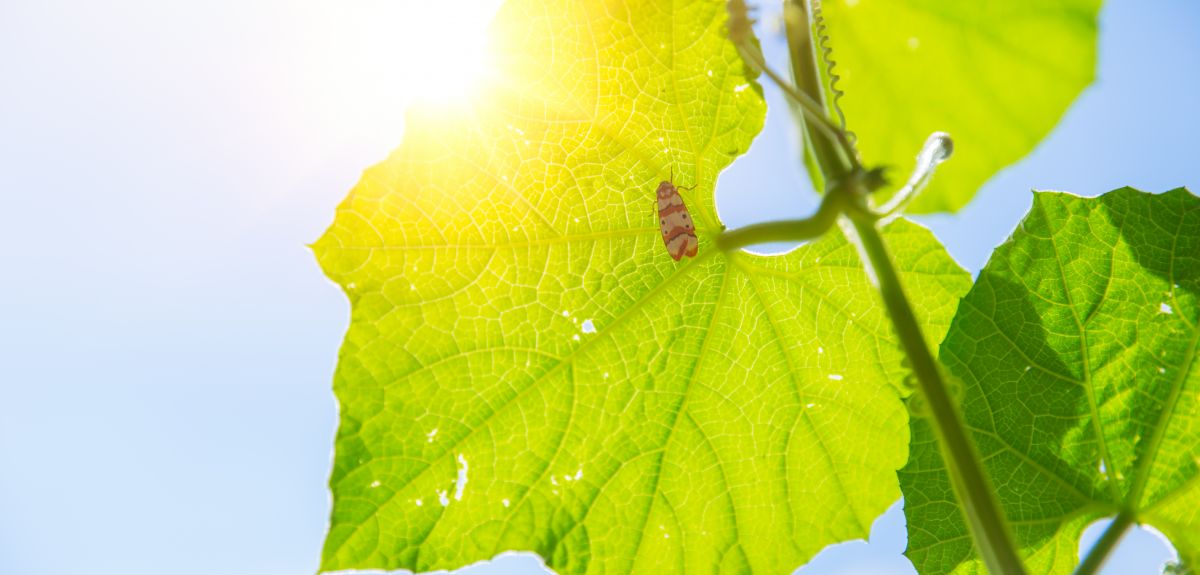
In a study of 11 different plant species, published in Molecular Biology and Evolution, researchers at the University of Oxford have shown that the speed at which plants evolve is linked to how good they are at photosynthesis.
The team from the Oxford Department of Plant Sciences detected differences in plant gene evolution that could be attributed to how good or bad those plants were at photosynthesis.
Plants need nitrogen to do photosynthesis. They use it to build the proteins they need to turn atmospheric CO2 into sugars. However, plants also need nitrogen to build their genes, and the different letters in DNA cost different amount of nitrogen to make - A and G are expensive while C and T are cheaper. What the study found is that plants that invest lots of nitrogen in photosynthesis use cheaper letters to build their genes. This molecular “penny-pinching” restrains the rate at which genes evolve and so plants that spend a lot of nitrogen on photosynthesis evolve more slowly.
The study provides a novel link between photosynthesis and plant evolution that can help explain why the number of plant species is unevenly distributed across the globe. It also helps to explain why plants that are highly efficient at photosynthesis form new species faster than plants with lower efficiency.
Lead author, Dr Steven Kelly, from Oxford’s Department of Plant Sciences, said: 'These results also allow us to make predictions about how plants evolve in response to a changing climate. For example, when atmospheric CO2 concentration goes up, plants don’t need to invest as much nitrogen in trying to capture it, and so more of the nitrogen budget in the cell can be spent on making genes. That means when atmospheric CO2 concentration goes up plant genes evolve faster.’
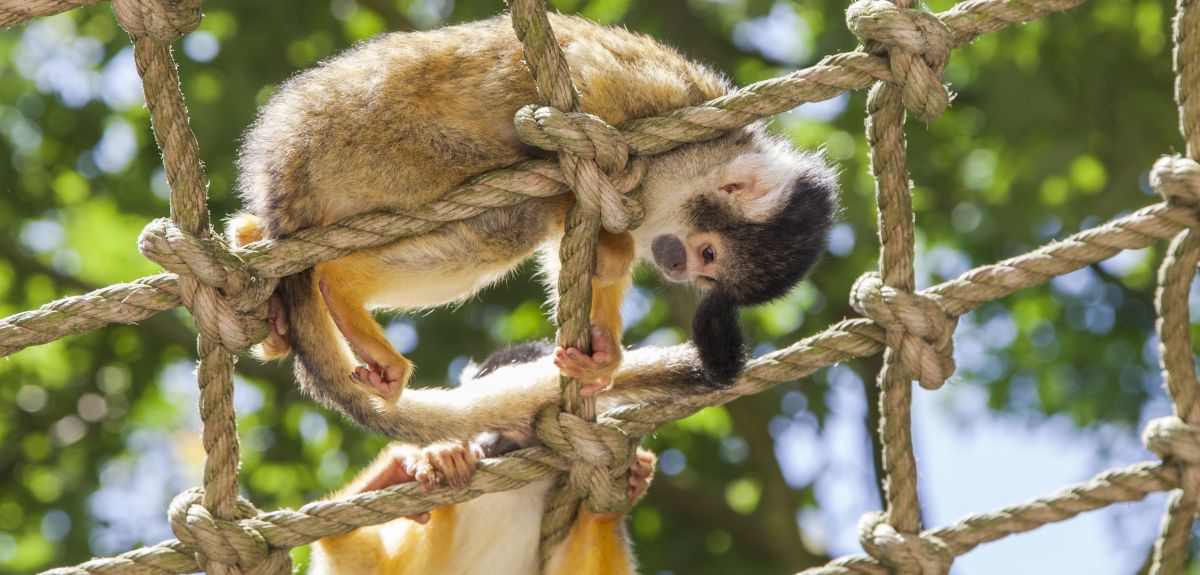
Is it possible to use natural resources effectively and protect the Earth's wildlife and biodiversity? Oxford University scientists have proposed a new framework that could achieve exactly that. William Arlidge, a doctoral student and Professor EJ Milner-Gulland, Tasso Leventis Professor of Biodiversity; Director, Interdisciplinary Centre for Conservation Science; Fellow of Merton College, discuss their new research as featured in BioScience.
In an effort to help answer one of the biggest questions in conservation, in our new paper we discuss whether a framework used to reduce negative impacts from development on biodiversity could be expanded to account for all human impacts on nature.
Biodiversity is the variety of life in all its forms on planet Earth. It’s a broad concept, and conserving it is complex as it needs multifaceted approaches that are aimed at understanding what is most valuable, and at most risk, and what are the best approaches to undertake conservation that is not at odds with other societal needs. Our current efforts to do so comprise a patchwork of international goals, national plans, and local interventions. While our conservation efforts are not without great successes, overall, they are failing to achieve all their desired outcomes. This is largely down to us, because human needs for ever-more space to grow food, harvest wild products like timber and fish, and build infrastructure, are squeezing out nature.
Our continued use of biodiversity to improve our wellbeing is, sadly, all too often in conflict with our efforts to conserve it. At the broadest scale the United Nations Sustainable Development Goals provide a global vision to conserve and sustainably use biodiversity, however guidance on how this broad vision translates to actions at national, regional, and local levels is not clear.
In our new publication, we propose taking a more systematic approach to achieving biodiversity conservation goals, by accounting for all human biodiversity impacts and conservation efforts within a unified global framework.
This framework expands on an existing concept known as the ‘mitigation hierarchy’, which offers a balanced and systematic way to account for and mitigate harmful impacts to biodiversity, while still allowing development activities to occur.
The mitigation hierarchy works by first trying to predict all the negative impacts that are likely to occur as part of a given activity. Creating a palm oil plantation, for example, will mean directly losing some tropical forested areas and their associated biodiversity. There will also be other more indirect impacts such as the risk of sedimentation, pollution and noise disturbance. To account for all these different impacts, sequential steps are taken: developers need first to consider the extent to which they can avoid causing damage. Then they need to minimise the damage they cause from their operations. Next, they should remediate any temporary damage. All these steps mitigate biodiversity impacts on site. Following the implementation of these steps, any residual impacts to biodiversity not mitigated must be offset by boosting biodiversity elsewhere.
Avoiding impacts could include selecting sites that have no biodiversity impact or foregoing the development effort all together. Minimisation could include restricting heavy machinery used to remove palm oil to particular roadways and halting construction during sensitive times. Remediation could include reinstating roads to their previous condition once they are finished with. Offsetting might include replanting forest habitat elsewhere. The logic in undertaking these steps is to achieve a neutral or positive level of impact to biodiversity after a given damaging activity (often referred to as ‘No Net Loss’ or a ‘Net Gain’ of biodiversity).
While the theoretical and practical challenges in achieving No Net Loss of biodiversity are becoming increasingly well described and reported (see papers from Joe Bull, Martine Maron, and David Lindenmayer), the underlying concept of the mitigation hierarchy is both powerful and much more widely applicable than has so far been appreciated.
Currently there is a widespread and piecemeal project-level approach to achieving No Net Loss of biodiversity taking place. This means that, if biodiversity gains and losses were to be aggregated, biodiversity could be lost even if individual projects appear to be reaching their targets. If the concept is to truly have biodiversity benefits, there is a need for a multi-scale approach to No Net Loss, so that wider goals are not contradicted by project-level use of the mitigation hierarchy.
In our publication we propose the use of the mitigation hierarchy to navigate the conservation-development trade-off at the broadest scale possible, the whole planet. Incorporating all human impacts on biodiversity within the single standardised paradigm with a broad biodiversity conservation goal. Crucially, a global mitigation hierarchy offers a systematic framework that is both scalable from the project to the national and international levels, as well as being standardised between the conservation sectors of sustainable use (e.g., certification schemes), minimising the impact of development (e.g., No Net Loss), and efforts to directly restore or protect sites (e.g., protected areas).
Conserving biodiversity while simultaneously seeking to use it for humanity's needs is a huge challenge, which some suggest is not possible on our current growth trajectory. Others have called for half the planet to be set aside for biodiversity conservation, or for more space to be given to nature. But in the absence of a clear pathway to achieving it, it is difficult to see how these aspirations can translate into real biodiversity gains. Our approach cannot solve all of these challenges, but what the mitigation hierarchy offers is transparency, enabling clear understanding of what the consequences of various uses of nature are, with flexibility to address a variety of human impacts on biodiversity, across different sectors and scales.
Fundamental changes are needed if humanity is to reverse the current biodiversity crisis and put the planet on a sustainable course for the future. However, these changes will only be possible if we can see a way forward. Quantifying and accounting for all human-caused impacts to biodiversity could help humanity to reduce these impacts in a feasible and equitable way. A global mitigation hierarchy could be the first step towards achieving such a vision.

Tomorrow, 18 April 2018, marks the 500th anniversary of one of history’s most iconic royal love stories: the marriage of the Italian Princess Bona Sforza to King Sigismund of Poland, Grand Duke of Lithuania.
In celebration, the Weston Library - part of Oxford’s Bodleian Library, is hosting the exhibition A Renaissance Royal Wedding. The display chronicles the unexpected union of the two royals from different cultures, and the Italian-Polish connections that developed as a result.
On 18 April 1518, the two were married in Cracow cathedral, Poland. Their lavish wedding was attended by dignitaries and scholars from across Christendomn. The relationship underpinned links of politics and kinship between the two countries, that evolved into a dynamic exchange of people, books and ideas which continued for decades, in a story still unfamiliar to many scholars and students of the sixteenth century.
An Italian ruler in her own right, Bona Sforza (1494-1557) was born a Milanese-Neapolitan princess and went on to be queen of Poland through marriage, before she became duchess of Bari, Puglia in 1524. By contrast, King Sigismund (1467-1548) was the scion of a large royal house which, at its peak (c. 1525), ruled half of Europe, from Prague to Smolensk. Their five children – who later ruled in Poland-Lithuania, Sweden and Hungary - presented themselves throughout their lives as Polish-Italian royalty. To this day, Queen Bona Sforza remains a high-profile - if controversial, figure in Polish history.
The Bodleian exhibition showcases Oxford’s exceptional collections relating to early modern Poland and Italy. Highlights include, Queen Bona Sforza’s own prayer-book – very rarely displayed in the UK. The book is a tiny treasure of Central European manuscript illumination, painted by the Cracow master and monk Stanisław Samostrzelnik, and decorated throughout with her Sforza coat of arms. Other objects in the display include an account of Bona’s bridal journey across Europe (the first book ever printed in Bari), a Ferraran medal of Bona from the Ashmolean’s collections, and early 16th-century orations, chronicles and verse produced in both Cracow and Naples testifying to the Italian-Jagiellonian connection.
The display, curated by Natalia Nowakowska and Katarzyna Kosior, of Oxford’s History Faculty, is part of a European Research Council (ERC) funded project, entitled Jagiellonians: Dynasty, Memory and Identity in Central Europe. To accompany the display, a public lecture and international conference on Renaissance royal weddings, with speakers from 13 countries, will be held over the coming weeks at the University (dates tbc).
A Renaissance Royal Wedding is running at the Weston Library, Broad Street, Oxford, until May 13 2018
Dr Molly Grace, NERC Knowledge Exchange Fellow in the Oxford University Department of Zoology, discusses the potential impact of IUCN Green Species List, a framework for a standard way of measuring conservation success. A project that she and the team at the Interdisciplinary Centre for Conservation Science played a key role in developing.
What is the goal of species conservation? Many would say that it is to prevent extinctions. However, while this is a necessary first step, conservationists have long recognized that it should not be the end goal. Once a species is stabilised, we can then turn our attention to the business of recovery - trying to restore species as functional parts of the ecosystems from which humans have displaced them. However, to do this, there must be a rigorous and objective way to measure recovery.
Imagine this scenario: A species is teetering on the brink of extinction. In fact, it has been classified on the IUCN Red List of Threatened Species (the global standard for measuring extinction risk) as Critically Endangered. You rally a global team of scientists, conservation planners, and land managers to put their heads together and figure out how to save this species. This team works relentlessly to bring this species back from the edge, and little by little, the species improves. After years, or even decades, of work, the team achieves its goal— the species is no longer considered threatened with a risk of extinction! However, no one is celebrating—in fact, the mood has become decidedly sombre.
There is a simple reason for this apparent paradox, due to limited conservation budgets, species which are classified as being at risk of extinction are preferentially awarded funding. While this makes sense at a wide scale - of course we should be working hardest to save the species which face an imminent risk of vanishing from the planet - it poses a problem for species who have benefited from concerted conservation actions and are no longer in the “danger zone.” Once the threatened classification vanishes, often so does funding. Without continued protections, species may slip back into the threatened category, nullifying the effect of decades of work. Thus, there is a perverse incentive to stay in the exclusive “highly endangered” club - at least on paper. But this prevents us from celebrating the huge difference that conservation can make.
With the creation of the IUCN Green List of Species, we hope to reverse this perverse incentive to downplay conservation success. The Green List, still in development, will assess species recovery and how conservation actions have contributed to species recovery. It will also calculate the dependence of the species on continued conservation, by estimating what would happen if these efforts stopped. This can be used as an argument for continued conservation funding. With the Green List working in tandem, we can stop thinking of Red List “downlisting”— moving from a high category of extinction risk, to a lower one—as a demotion which disincentivises funding, but rather see it for what it truly is: a promotion which should be celebrated. The framework would be applicable across all forms of life on the planet: aquatic and terrestrial species, plant, animal, and fungal species, narrow endemics to wide-ranging species, you name it.
In our recent paper, we presented this framework, which will potentially measure recovery and work in tandem with the assessment of extinction risk (IUCN Red List) to tell the story of a species. For example, a species that is in no danger of disappearing from the planet (Red List assessment) might nonetheless be absent from many parts of the world in which it was previously found, and so cannot be considered fully recovered (Green List assessment). The local loss of a species can have cascading effects on the rest of the ecosystem.
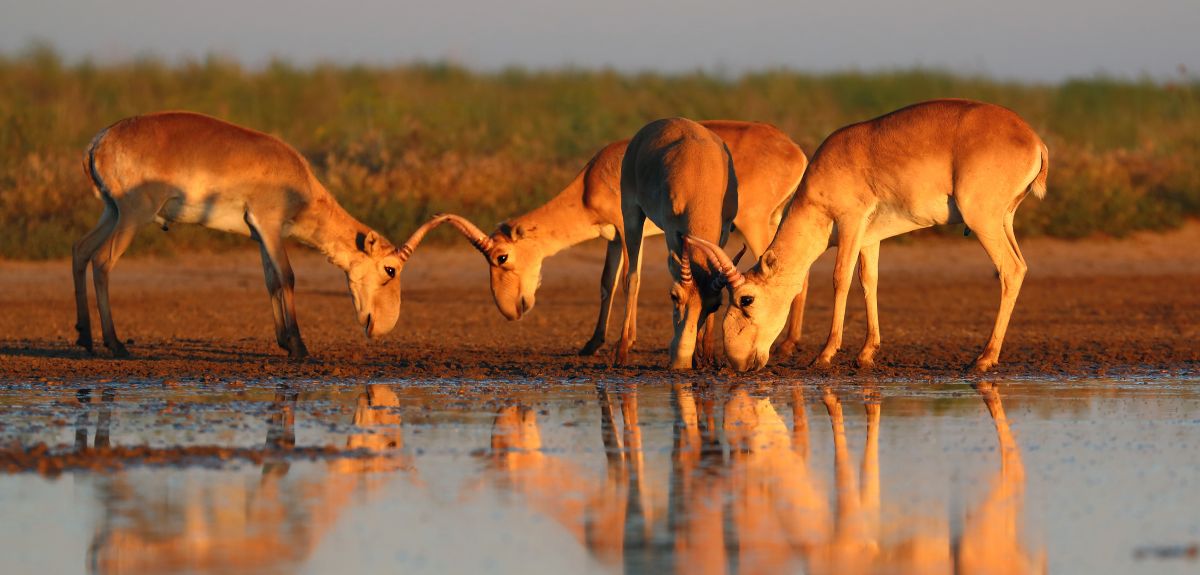
The Green List of Species also assesses the impact that conservation efforts have had, and could have in the future. For example, the charismatic saiga antelope (Saiga tartarica), found throughout Central Asia, is currently considered “Critically Endangered” on the Red List. However, our Green List assessment shows that in the absence of past conservation efforts, many more populations would be extinct or in worse shape today. We also show that with continued conservation, the saiga's future prospects are bright—a low risk of extinction, reestablishment of populations where they are locally extinct, and some functional populations.
We hope that the Green List of Species will help to encourage and incentivise more ambitious conservation goals, moving beyond triage at the edge of extinction.

JRR Tolkien and Susan Cooper; CS Lewis and Diana Wynne Jones. Oxford will always be associated with the greats of fantasy writing – and now the genre is being placed centre stage, courtesy of a new University-run summer school that will allow members of the public to explore this often-overlooked branch of literature.
Titled 'Here Be Dragons', the summer school will run from 11-13 September and is also aimed at prospective Oxford students with an interest in the fantasy genre.
Academics from Oxford's Faculty of English and invited speakers will present a series of talks on the history of fantasy literature, the major writers, and cross-cutting themes.
Organiser Dr Stuart Lee, from Oxford's Faculty of English, said: 'Oxford is the natural home for a summer school on fantasy literature. Many of the great British writers taught or studied here, and the English Faculty is building up an international research profile in the genre.
'If you are interested in fantasy literature – where it came from, what inspired the major writers, how to study it – then this is the school for you.'
The registration fee for the summer school (£200, or £150 for students) covers attendance and catering. For further information, see the full programme or the booking page.
The summer school coincides with a major free exhibition running throughout the summer at the Bodleian Libraries, titled Tolkien: Maker of Middle-earth.
The exhibition explores Tolkien's legacy, from his genius as an artist, poet, linguist and author to his academic career and private life. Visitors will be taken on a journey through Tolkien's most famous works, The Hobbit and The Lord of The Rings, encountering an array of draft manuscripts, striking illustrations and maps drawn for his publications. Objects on display include Tolkien's early abstract paintings, the touching tales he wrote for his children, rare objects that belonged to Tolkien, exclusive fan mail, and private letters.
The exhibition runs from 1 June to 28 October.
- ‹ previous
- 76 of 252
- next ›
 What US intervention could mean for displaced Venezuelans
  Setting the agenda for the next century of quantum
 10 years on: The Oxford learning centre making an impact
 Mapping the Moon: the world’s first lunar atlas goes digital
  Oxford and The Brilliant Club: inspiring the next generation of scholars
 New course launched for the next generation of creative translators
 The art of translation – raising the profile of languages in schools
  Opening a window into the quantum world
 Tracking resistance: Mapping the spread of drug-resistant malaria