Features
By Liam Bullock, Zakhele Nkosi and Maxwell Amponsah-Dacosta
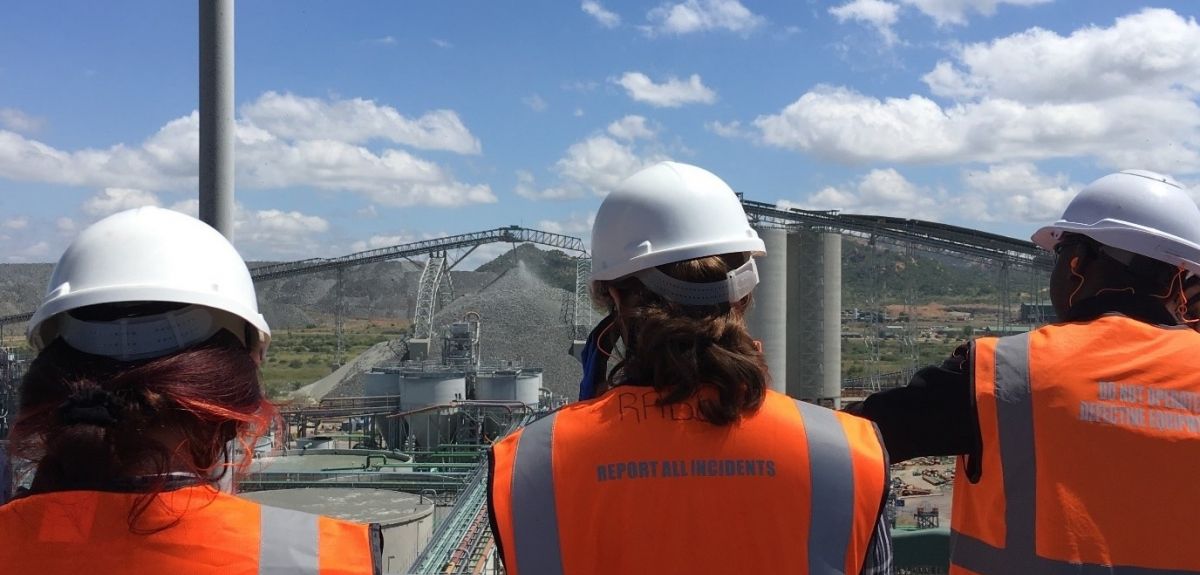
Having visited just a few of the many metal and diamond mines of South Africa, my colleagues and I are never short of astonishment of the sheer scale and efficiency of the operations.
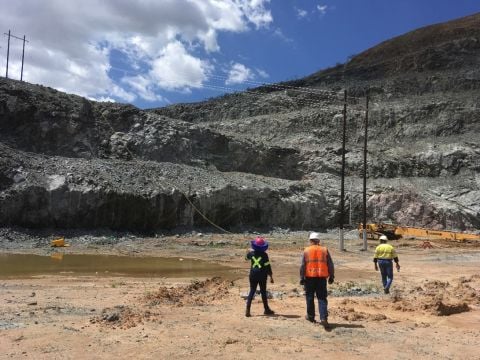 Some stretch for tens of kilometres in length, width and even depth. The size of the mines, coupled with the riches in the ground that are targeted, require town-sized populations coming on and off-site 24 hours a day, as the Earth is upheaved, moved, crushed, and divided for the valuable commodities.
Moving from the rock faces through to the concentrators and beyond, one cannot help but be both impressed and intimidated by the volumes of material that is cascading through the system.
Mine sites are literally well-oiled machines, and it is easy to witness both the pros and cons that sites have on our society. However, hidden in plain sight among the hectic operations is perhaps the biggest untapped source of material that could help us in our ongoing battle with climate change. A material often perceived as having a negative effect on the environment – mine wastes known as tailings.
Negative Emissions Technologies
The means of climate mitigation that could be met here is through the implementation of “negative emissions technologies” (NETs) at mine sites. These methods aim to remove carbon dioxide (CO2) from the atmosphere, addressing one of the biggest societal challenges we face as a collective.
 The gathering movement to NETs and CO2 removal forms part of a greater global response to limit temperature increase to well below 2 °C over the next few decades, as outlined by the Intergovernmental Panel on Climate Change (IPCC).
There are several possible NET methods of CO2 removal, including the advancing notion of utilising “enhanced weathering of rocks”. The method involves speeding up the chemical breakdown of rocks, a natural process that converts atmospheric CO2 into carbonate minerals or hydrogen carbonate and carbonate ions (“alkalinity”).
Basalt, a common fast-weathering volcanic rock at the Earth’s surface, has been marked as a highly appropriate rock type for both direct CO2 injection (as demonstrated by the pioneering CarbFix Project) and deployment through spreading crushed basaltic rocks on croplands. South Africa is built upon similarly reactive rocks, and the mining industry of the nation has delivered a ready-made batch of finely ground rock for any future CO2 removal strategies.
Mine waste potential
Hidden in plain sight among the hectic operations is perhaps the biggest untapped source of material that could help us in our ongoing battle with climate change.
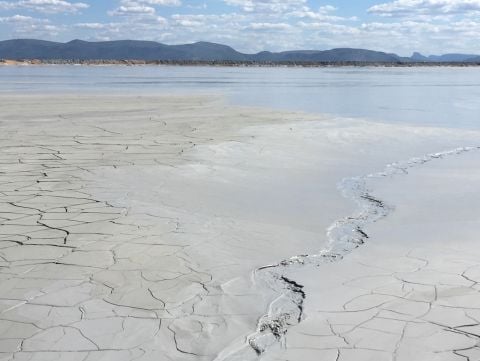
Mine tailings, which are the leftover rock material that remains following the extraction of the targeted commodity, are typically mud- to sand-like in size, and are stored on sites in dams and containment areas. While their hazardous properties such as their associated toxicity and threat of dam burst mean that tailings have often been considered nothing more than problematic, the millions of tonnes that are annually produced may actually represent a possible environmental solution.
The key is to identify the right types of mine tailings and find the most suitable method for enhanced weathering. The principle of enhanced weathering to mimic and accelerate natural chemical weathering, whereby minerals dissolve and react with atmospheric CO2 and water (rainwater, a weak carbonic acid), with the resultant bicarbonate solutions transported to oceans by rivers, where they are stored as alkalinity. The bicarbonate products may also later precipitate as carbonate minerals. Either way, the reaction results in a net uptake of CO2 from the atmosphere, trapping CO2 on a permanent basis.
It’s all in the de-tail
 Silicate rocks such as basalt are favourable for such reactions due to their high abundance of magnesium and calcium-rich minerals, which react readily with CO2 in the natural environment. Other rocks which contain these favourable minerals and chemistry are kimberlites, which host diamonds, and layered mafic intrusions, which can contain high amounts of platinum group metals, nickel, copper and chrome.
A number of studies have pointed to sequestration schemes at South Africa’s prominent diamond and platinum operations as a possible step towards addressing the climate crisis. Kimberlites and layered mafic intrusions host many of the expansive diamond and metal deposits of South Africa, including the world-famous Bushveld Complex, the largest layered igneous intrusion within the Earth's crust and home to approximately 80% of platinum group metal ore reserves.
The result of this wealth of resources is the production of millions of tonnes of waste material. Chemically, the waste material does not differ significantly from the original rock, making it a potentially hefty source for CO2 removal strategies. Overall, South African diamond and platinum mine wastes could represent one of the largest untouched CO2 removal sources in the world.
Getting up to speed
The problem with the natural weathering process as a practical solution to climate change is that it is a slow one, taking hundreds of thousands of years to occur and the uptake amount is dwarfed by the amount released through fossil fuel emissions. Therefore, enhanced weathering aims to speed up the chemical weathering rates such that CO2 is scrubbed from the atmosphere in meaningful quantities on human timescales, such as in decades rather than millennia.
Overall, South African diamond and platinum mine wastes could represent one of the largest untouched CO2 removal sources in the world.
The challenge of enhanced weathering is to find methods that speed up magnesium and calcium release from minerals, without producing more CO2 or other greenhouse gases. Enhanced weathering methods include crushing the material to give high reactive surface areas. The advantage of mine tailings is that the material has already been crushed to these favourable fine grain sizes during the extraction process, so this step has already been achieved.
Another possible enhanced weathering method is to increase the temperature and pressure of the reaction, but you run the risk of running up CO2 through emission intensive methods by this process. Direct CO2 stream injection (compared to the more diluted atmospheric CO2) means the rate of sequestration is less limited by rate of CO2 supply, speeding up the reaction. Additionally, biotechnologies and microbial acceleration processes may increase mineral dissolution and precipitation rates, with some additives and sorbents promoting increased reaction times. In order to speed up reactions to capture CO2 on human timescales, one or more of these methods is required. The question is – how can this be realistically achieved?
Time for action
In order to answer this question, desktop studies, laboratory experiments and site pilot schemes are required. Crucially, the time to act as now, and the mining industry recognises this. Where tailings were perhaps once perceived as a nuisance, mine companies now see the opportunity, and they are actively investigating the potential to capture CO2 at their own sites.
The time to act as now, and the mining industry recognises this.
The diamond mining company De Beers have launched their own carbon storage research project on their sites, including the kimberlite-rich tailings of their South African operations.
Their parent company, Anglo American, are working together with researchers from the Universities of Southampton, Oxford, Herriot Watt and Cambridge, as well as academic partners in South Africa, to investigate the viability of enhanced weathering methods at their Mogalakwena platinum mine site in the Bushveld Complex (GGREW Project).
The SAT4CCS project, led by researchers from the universities of Pretoria, Oxford and Cape Town, aims to assemble detailed information on tailings across South Africa. The aim is to identify the total potential for CO2 sequestration in the South African mining sector. The end-product will be a comprehensive catalogue, atlas and online database for available and suitable tailings, with recommendations for possible future CO2 sequestration project sites across the country.
The next few years will be crucial in the outcome of enhanced weathering as a viable method in the South African mining industry, requiring closer collaboration between industry, governments and scientists. Enhanced weathering of rocks at mine sites is not the silver bullet that can meet climate change targets set out in the Paris Agreement, but can form an integral part of the greater global movement to tackling climate change.
The SAT4CCS team
The ongoing database development of mine tailings in South Africa is being led by:
• Zakhele Nkosi, PhD candidate, lecturer and researcher in Applied Mineralogy and Historical Geology at the University of Pretoria, with a focus on diamond mine tailings for mineral carbonation and CO2 removal.
• Liam Bullock, Postdoctoral Research Assistant in Chemical Engineering at the University of Oxford, and member of the Greenhouse Gas Removal by Enhanced Weathering project.
• Maxwell Amponsah-Dacosta, PhD candidate at the University of the Western Cape who conducted his Masters’ research on the mineralogical characterization of South African mine tailings for the purpose of mineral carbonation.
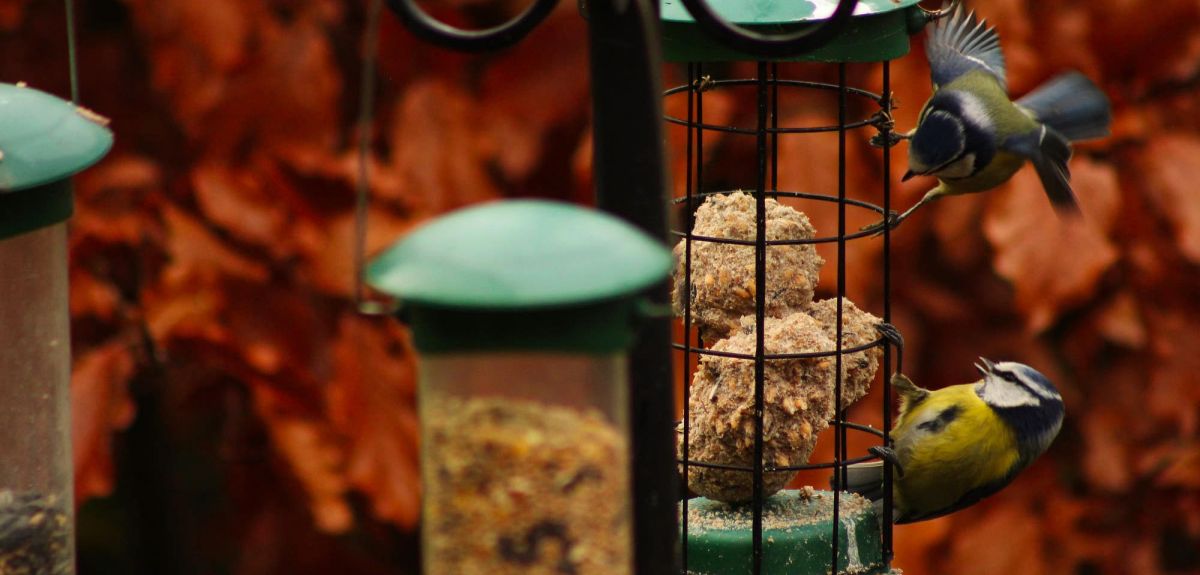
By Yadvinder Malhi
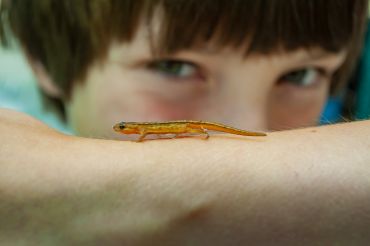 Miracles of nature in our back yards
I’ve found comfort and fascination in becoming more aware of this community of beings around me.
This close and frequent observation of the local natural world contrasts with much of my academic research over the past few decades. Working with local partners across several continents, I have been building a monitoring network, stretching from the Congo Basin to the high slopes of the Andes, from the sun-drenched savannas of Africa to the towering trees of Borneo, to track how tropical forests respond to global change. The observations have been long-term, but because of the commitments of coordination, of university life and of family, my personal immersion in any one locale has been brief. My individual contribution has been in the big picture, synthesising insights across these diverse sites, taking advantage of a common scientific methodology that enables rigorous comparison.
I have long been inspired by the explorer and scientist Alexander von Humboldt, revered as a founding father of ecology and the environmental sciences. At the very beginning of the 19th century, Humboldt travelled the underexplored reaches of the Americas, collecting vast ranges of scientific observations, building up grand cross-disciplinary theories of how the natural world worked, engaging with local and regional politics in continents and nations brimming with new frontiers of discovery and political revolution. There is a sense of scale and excitement in his writings, of the sheer joy of discovery, that quickens the pulse and reminds me of similar moments of joyful exploration and the occasional reckless adventure.
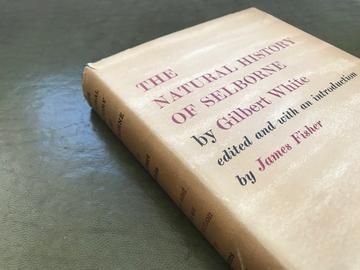 Gilbert White's classic book
Unlike Humboldt’s audacious intellectual and geographical reach, almost all of White’s writings are about one very small place, the vicinity of his house and garden. White’s most famous book, The Natural History and Antiquities of Selborne, was published in the year of revolution, 1789, yet he barely mentions the wider human-political world, including the American Declaration of Independence, wars in Europe, and France and Britain struggling for domination of India. At a time when naturalists were sharing specimens and ideas across Europe, he hated to travel and suffered badly from coach-sickness. The furthest he seems to have voyaged in his entire life was to Exeter and Norwich, and the journey from Selborne House to Oriel College was one of his few regular journeys. Nor did he venture into grand Theories of Nature. As an ecologist more easily attuned to the Humboldtian tradition in both my curiosity for discovering large-scale patterns and my love for exuberant tropical nature, I felt a little underwhelmed by White at first.
White’s writings are about one very small place, the vicinity of his house and garden.
Yet I came to appreciate the immense value of his approach as a counterpoint to planet-spanning snapshots. White wrote in detail about such things as plants, birds and worms, patiently observing the flowering times of plants, the migration patterns of birds, even the hibernation routines of his pet tortoise Timothy, purely for the joy of understanding them. He seems to have been the first to write so prolifically and empathetically about the behaviour of animals. He thought many naturalists were too desk-bound, and too focused on the anatomical study and categorisation of dead specimens rather than understanding the intricate and detailed stories that nature had to tell:
Faunists … are too apt to acquiesce in bare descriptions, and a few synonyms: the reason is plain; because all that may be done at home in a man’s study, but the investigation of the life and conversation of animals, is a concern of much more trouble and difficulty, and is not to be attained but by the active and inquisitive …
White wrote in detail about such things as plants, birds and worms, patiently observing the flowering times of plants, the migration patterns of birds, even the hibernation routines of his pet tortoise Timothy.
What White’s astute observational eye revealed was an understanding of animals as beings in themselves, with rich inner lives and complex behaviours, wants and needs. He laid open the wonder of a world in which creatures existed for their own purposes and needs, not as accessories to the drama of human history, but as vital, aware, self-motivated entities, ‘nations’ in themselves.
One example is the migration of birds, which he described as ‘a winged nation’. In the 18th century, it was a mystery what the swallows, martins and swifts, along with other birds that appeared only over the summer months, did during the winter. Did they bury themselves underground? The idea that such small animals flew off to the distant and exotic lands of Africa seemed inconceivable. Although White’s observations didn’t prove the migration idea, they revealed its possibility, and affirmed that there was no evidence that birds buried themselves and disappeared:
But in nothing are swifts more singular than in their early retreat … This early retreat is mysterious and wonderful, since that time is often the sweetest season in the year … Are they regulated in their motions with us by failure of food, or by a propensity to moulting, or by a disposition to rest after so rapid a life, or by what? This is one of those incidents in natural history that not only baffles our searches, but almost eludes our guesses!
 A pair of swans
One demonstration of his ecological mindset, his awareness of the connections between beings, and how even the most unglamorous of beings can play important roles, is his regard for the humble earthworm when most contemporary opinion regarded it as an ugly-looking pest:
Earthworms, though in appearance a small and despicable link in the chain of Nature, yet, if lost, would make a lamentable chasm … worms seem to be the great promoters of vegetation, which would proceed but lamely without them.
White’s empathy with the inner lives of other species, married with the emerging scientific values of meticulous observation, record-keeping and quantification, was something new.
To see humanity as but one member of a community of animal and plant ‘nations’ is intrinsic to many indigenous world views, including those of Europe. However, this way of seeing retreated in prominence in medieval Europe, and was further diminished by the elevation of the power of reason in the Enlightenment, which enhanced a sense of human superiority over Nature. White’s empathy with the inner lives of other species, married with the emerging scientific values of meticulous observation, record-keeping and quantification, was something new. His observations and writings made a quiet, patient beginning to a revolution that would eventually shake the foundations of our understanding of humanity’s place in the natural world.
The door that White eased ajar through his acute observation was one that Charles Darwin, Alfred Russel Wallace and others would throw wide open. Darwin, who was born 16 years after White’s death, described White’s writings as a key early influence that had deeply impressed him. When Darwin published On the Origin of Species (1859), the decentring of the human that White had inadvertently begun took a huge leap forward. Humans were not only one part of a community of beings, we emerged and evolved from the ecological and evolutionary webs of connection that weave that world together. And, in the subsequent decades, the whole few-thousand-year span of written human history would come to be understood as floating on a deep ocean of Earth time and evolution, thousands of millions of years deep, that’s unfathomable and almost incomprehensible in its scale.
I believe that the greatest challenge of our age is how we as a species and a civilisation overturn the assumption that human history and social and economic progress can be divorced from the natural world and its webs of interdependence.
The journey that White began, to change our self-understanding, recognising that humans are embedded in a wider natural world, remains incomplete. I believe that the greatest challenge of our age is how we as a species and a civilisation overturn the assumption that human history and social and economic progress can be divorced from the natural world and its webs of interdependence. This assumption is being acutely challenged, and its contradictions revealed as our civilisation approaches the planet’s biophysical boundaries, driven by our relentless quest for ever-increasing material consumption, production efficiency and economic growth.
Returning to Wytham Woods, I watch a different pandemic at work. Ash trees, one-third of the trees in these woods, are dying of a fungal infection. Such diseases are becoming more common in a world of increasingly connected trade. Every decade is warmer than the last, spring is earlier and the weather more erratic. The web of life is shifting and reweaving in complex ways, in some cases showing resilience and adaptability, in others precarious vulnerability. It’s more important than ever to understand and watch our local natural world closely for augurs of the changes to come. And this can be done only by meticulous observation by those people, often amateurs rather than professionals, with the patience and passion to learn to read and understand nature’s secret codes. At the level of international science, Humboldtian snapshots are increasingly being criticised as ‘helicopter science’; more valuable is long-term partnership and support for local expertise. What’s needed is that local expert or teacher who has the knowledge (or potential knowledge if given the chance) and the locally embedded dedication to do the close observation. In the schools and universities of the tropics, there are thousands of Gilbert Whites waiting: passionate observers of local nature that are so needed and so ready to contribute, if only given the encouragement and opportunity.
Humility and appreciation are made possible by acute observation, empathy and delight in the mysteries and quirks of other species, qualities that White reveals in his writings.
Addressing the profound challenge of global environmental change is complex and multifaceted. But one certainty is the need for a change of world view, the fostering of humility towards the natural world and its shared community of beings. Such humility and appreciation are made possible by acute observation, empathy and delight in the mysteries and quirks of other species, qualities that White reveals in his writings. Whether we make those observations ourselves in the field, or as readers of the nature writings of others, or even as awe-struck participants when we sit down to watch David Attenborough’s joy and delight in his latest programme, we’re all direct heirs of White and his approach to seeing the world. The door to a new way of seeing and humility that he helped to ease open is one that’s led us down a long and unexpected path of ever-deepening understanding of our place in the natural world. Together, we must now collectively walk through that doorway and work out where the path leads.
This article was originally published on Psyche (psyche.co).
Yadvinder Malhi is Professor of Ecosystem Science at the University of Oxford, programme leader of the Ecosystems Group at the Environmental Change Institute at Oxford, Jackson Senior Research Fellow at Oriel College, Oxford, and director of the Oxford Centre for Tropical Forests.

Building back better after COVID-19 is about just that - better. Better for populations. Better for economies. Better for the world. A tomorrow better than yesterday.
It should be hard to argue with that, whatever your political persuasion. No one seriously wants things to be worse. And yet there is still a way to go, to persuade some groups that ‘better’ is about more than GDP.
No one seriously wants things to be worse. And yet there is still a way to go, to persuade some groups that ‘better’ is about more than GDP.
Brian O’Callaghan, the lead researcher on Oxford University’s Economic Recovery Project, is accustomed to doing just that. Over the last year, since the pandemic arrived in Europe, Brian and his colleagues have been keeping track of governments’ spending on recovery, through Oxford’s Global Recovery Observatory, supported by the UNDP as well as IMF, UNEP, and GIZ through the Green Fiscal Policy Network.
Brian and his academic supervisor Professor Cameron Hepburn established the Observatory in March last year, aiming to understand if economic recovery was going to lead to a better future. That meant looking at whether the policies enacted by governments around the world met social and economic needs, but also whether they were directed at a ‘green’ or sustainable future, one in which climate commitments were met...or not.
In the midst of the havoc of 2020, it was not always an easy ‘sell’. (Officially, just 18% of international recovery spending is currently ‘green’ – and just 2.5% of total spending).
![Brian O'Callaghan [left] and Professor Cameron Hepburn.](https://www.ox.ac.uk/sites/files/oxford/media_wysiwyg/Brian%20and%20Cameron.png)
But, says Brian [above left with Cameron Hepburn right] , an economics researcher, a green recovery really does mean ‘better’ – in every sense. In a major report on Wednesday [10 March], written with Em Murdock from Harvard and published with the UNEP, they set out findings from the Observatory and make a powerful argument for the wrap-around benefits of sustainable recovery spending.
Brian O'Callaghan and Professor Cameron Hepburn established the Observatory in March last year, to understand if economic recovery was going to lead to a better future
The message is clearly already getting through. Since the middle of last year, a steady stream of administrations and policymakers from around the world have been beating their proverbial path to the Oxford team’s virtual door for advice on how to craft effective recovery plans.
In 2020, many requests came from advanced nations. But, in 2021, advice is overwhelmingly being sought by developing nations, which recognise the very real economic benefits of green spending - and are not so much building back but building for the first time.
‘Quite simply, you can get a bigger bang for your buck with green spending,’ says Brian, the Australian-born engineer-turned-economist. ‘This is particularly true in the developing world. For instance, investment in renewable energy can bring electricity to people who have never had it before.’
Quite simply, you can get a bigger bang for your buck with green spending...This is particularly true in the developing world. For instance, investment in renewable energy can bring electricity to people who have never had it before
Brian O'Callaghan
It is the sort of language which governments of all persuasions want to hear - new jobs, building future industry and maximising future prosperity. If it saves the world too, so much the better.
Brian is insistent that this is not an ‘either, or’ dilemma, there is no contradiction in being pro-jobs, pro-livelihoods and pro-environment.
Along with the report, Wednesday saw the launch of the Global Recovery Observatory, a joint project between the university, the United Nations Environment Program, the United Nations Development Program, the International Monetary Fund, and the German Agency for International Cooperation. It will continue and extend the work begun, and which still continues, in Oxford.
It is the sort of language which governments of all persuasions want to hear - new jobs, building future industry and maximising future prosperity. If it saves the world too, so much the better
Fitting the times, Brian’s first involvement with the project came through a Zoom meeting. In mid-March 2020, Brian’s doctoral supervisor, Professor Cameron Hepburn, wanted to discuss an urgent new idea. Brian had come to Oxford as a Rhodes Scholar to study renewable energy finance. But, given the international situation, the conversation turned to the imminent lockdown and the likely impact on the economy.
‘It seemed inevitable that the UK was going to go into a lockdown,’ says Brian. ‘And for us the first thought was that the economy was going to be in a lot of trouble.
This is not an ‘either, or’ dilemma, there is no contradiction in being pro-jobs, pro-livelihoods and pro-environment
At that point, it was not imagined that a year later, the world would still be reeling from the economic impact of the pandemic or that the impact would be as big. But the pair knew that even a few months’ economic shutdown would have major consequences. According to Brian, ‘It was obvious that the economy would come out of the lockdown in tatters and we would need a concerted effort on economic recovery.’
And so, thought the academics, what may a recovery look like? How could it impact climate progress? How about green energy investment and commitments to sustainability? Could there be an opportunity for ‘green’ spending to both aid recovery and progress climate targets?
Professor Cameron Hepburn determined on a project to survey leading economists around the world...a project was launched to call on some 230 other global leading economists, including central bank and ministry of finance leaders, to outline their thoughts on the crisis - it was to become a seminal work
Professor Hepburn determined on a project to survey leading economists around the world. Assembling an eight-strong team of assistants, a project was launched to call on some 230 other global leading economists, including central bank and ministry of finance leaders, to outline their thoughts on the crisis. As part of the project, Brian O’Callaghan and his team set about to launch Oxford’s Observatory, to track and understand COVID-19 spending.
Carefully avoiding any influence over the economists’ responses, the aim was to find out which policy options could both bring high economic returns and be good for the environment. In May, Cameron and Brian’s paper was published in partnership with Nobel laureate Joseph Stiglitz and the UK’s Professor Nick Stern and Dimitri Zenghelis – it was to become a seminal work.
But the work did not end there. Oxford’s Observatory kept tracking government recovery spending – and the Economic Recovery Project team became advisors to governments the world over.
As mentioned above, currently ‘green’ spending accounts for only 18% of recovery spending – and most of that comes from a few developed nations. Developing nations are keen to do the same. The main stumbling block is the high interest rates they would have to pay to fund the recovery spending. Brian O’Callaghan maintains, ‘Developing nations don’t have the same access to capital.’
He says, ‘We are issuing a big call to action [in the report] to advanced economies...to support investments in developing countries...or the crisis could put back by 10 years, the progress that has been made in alleviating poverty in these nations.’
Are we on track for a green recovery? Not Yet. But perhaps soon
The report underlines two key points:
- ‘A green recovery... can kill two birds with one stone...you get higher bang for your buck. Governments must be spending a higher proportion of recovery funds here.’
- And, ‘Advanced economies must consider generous concessional finance for developing countries [so they can borrow at low or zero interest rates] – that could support both development and climate action.’
Now in combination with the UN, the Observatory will continue to grow, tracking and assessing the spending of countries around the world. It can help countries to learn from the experiences of others, to see what works, what brings employment, industry, and prosperity – as well as what supports climate commitments.
More green recovery spending will follow, according to Brian. He emphasises the ‘yet’ in the headline of the report: Are we on track for a green recovery? Not Yet. But perhaps soon.

Music is as an important point of connection. Listening to music can spark new ideas, remind us of particular moments in the past - and shared experiences.
In the context of International Women’s Day, this event also reminds us to seek out the women who have been creative leaders in the past, and inspires us to better support and recognise such people in the future
To mark International Women’s Day, Lincoln College and Oxford’s humanities research centre, TORCH, are hosting a lecture-recital with Dr Samantha Ege, as she traces the vibrant creative network formed by black women composers in Chicago in the early 20th century.
The lecture-recital will paint a picture of a vibrant artistic community in Chicago between the 1930s and 1950s, with black women composers as its cornerstones
International Women’s Day is a moment of celebration and reflection. This year’s theme ‘Choose to Challenge’ asks us to challenge gender bias and inequality wherever we may find it, and to celebrate women’s achievements where they have previously been under recognised.
With The Black Chicago Renaissance Women: Lives & Legacies in Music, Dr Ege blends celebration and education, bringing to our attention the individual stories of women of the past - from the creative community space formed by the home of American composer Margaret Bonds to the ransacking of the majority of Nora Holt’s compositions. At the same time, the lecture is filled with music, the voices of these women brought into the current moment to be appreciated.
Dr Ege will play piano compositions by each of the four composers she discusses, including Florence Price’s Fantasie Nègre in F Minor, a piece previously thought to be incomplete, and reconstructed on Dr Ege’s new album, Fantasie Nègre: The Piano Music of Florence Price. One of Nora Holt’s two surviving compositions, the only ones remaining from the 200 she wrote, will also feature.
Through these pieces, the lecture-recital will paint a picture of a vibrant artistic community in Chicago between the 1930s and 1950s, with black women composers as its cornerstones. The Black Chicago Renaissance was a movement encompassing artists of all description.
These communities displayed strong models of black female leadership; they opened the doors for upcoming generations of black women to thrive as composers, performers, music entrepreneurs, and more
Dr Samantha Ege
Dr Ege says, ‘Though rightfully celebrated as a literary movement, in which writers such as Lorraine Hansberry, Gwendolyn Brooks, and Richard Wright voiced critical reflections of life on Chicago’s south side through their plays, poems, and novels, the Black Chicago Renaissance in fact comprised numerous creative threads.
‘Music-making abounded, birthing blues, jazz, and gospel innovations that would go on to transform American music. Black classical communities in Chicago similarly restructured the fabric of musical life in the United States. These communities displayed strong models of black female leadership; they opened the doors for upcoming generations of black women to thrive as composers, performers, music entrepreneurs, and more.’
This story of creativity and community feels particularly relevant in the current moment, as we have all been uprooted from our usual communities and as many creative people, particularly performers, have found their activities curbed. In the context of International Women’s Day, this event also reminds us to seek out the women who have been creative leaders in the past, and inspires us to better support and recognise such people in the future.
Dr Ege is deeply interested in exploring women as part of a creative network. She elaborates, ‘Florence Price was the first black woman composer to gain national recognition in the United States. It is easy to marvel at such an accomplishment in the era of Jim Crow America. But in doing so, we run the risk of overlooking the community to which she belonged, where many black women shared her ambition, passion, and talent.
‘In valuing women’s narratives upon their entry into historically male spaces, we end up viewing their lives narrowly and therefore incompletely. International Women’s Day commemorates a global history of women’s socio-political organising, protest, and triumph. It is a history shaped by diverse communities and diverse womanhoods. And this is what our event recognises.’
International Women’s Day commemorates a global history of women’s socio-political organising, protest, and triumph. It is a history shaped by diverse communities and diverse womanhoods. And this is what our event recognises
Dr Ege
Whether you are hoping to draw inspiration from the past, learn more about the history of this important movement, or simply appreciate some beautiful music, this lecture-recital provides an excellent opportunity to reflect on the legacy of the women composers of the Black Chicago Renaissance.
You can watch The Black Chicago Renaissance Women: Lives & Legacies in Music from 5pm to 6pm on Monday 8 March 2021 via the TORCH YouTube page, as part of the Humanities Cultural Programme and Lincoln College, Oxford.
You can find out more about Dr Samantha Ege’s work on her website.

Reliance on scientists and experts during an epidemic: evidence from the COVID-19 outbreak in Italy
Pietro Battiston, Ridhi Kashyap, and Valentina Rotondi
Twelve months on, we may be suffering from COVID-19 information overload, but a year ago it was a different matter. The world was frightened and people were eager for facts and information about the deadly new virus.
Faced with an unknown threat, people initially flocked to experts, scientists and health authorities. But, as the weeks progressed and the gravity of the pandemic intensified, reliance on experts and trust in them dwindled.
Faced with an unknown threat, people initially flocked to experts, scientists and health authorities. But, as the weeks progressed and the gravity of the pandemic intensified, reliance on experts and trust in them dwindled
Out of fear, fatigue with anti-pandemic measures and frustration at the inability of countries to control the deadly virus, signs of scepticism began to emerge.
For researchers from across the academic spectrum, COVID-19 offered an opportunity to study and understand first-hand public responses to the first pandemic of the digital age.
Sociologists and demographers at Oxford’s Leverhulme Centre for Demographic Science, led by Dr Ridhi Kashyap wanted to explore international reactions to COVID-19 as it moved beyond China and reached Europe. How did information-seeking and trust in scientists and health experts evolve?
To answer this question, Dr Kashyap’s team acted quickly to capture responses to the virus, from the end of February to mid-April 2020, as the number of deaths increased and Italy’s northern regions [the first area affected after China] went into lockdown. The team gathered data from three social media platforms in Italy: Twitter, Telegram (a messaging app) and Facebook.
With social media full of conversations about the virus, it was possible to collect digital trace data in real time – to see what was going on, what people were thinking and, critically, where they were getting their information.
‘We could analyse these digital footprints leading to where people sought information about this novel threat. What’s more, we could conduct rapid online surveys to reveal if reliance on experts and trust in their information was sustained, grew or waned,’ says Dr Kashyap.
We could conduct rapid online surveys to reveal if reliance on experts and trust in their information was sustained, grew or waned
Dr Ridhi Kashyap
On Twitter, they examined more than two million tweets and retweets in Italy which used the post popular Coronavirus hashtags (#coronavirusitalia and #covid19italia).
They classified the accounts which posted the tweets into different categories such as scientists, health authorities, media, politicians and government authorities. They then focussed on retweets of the most popular accounts, because they signal interest in the issue and agreement in what is being said.
At the start of the outbreak, the findings showed considerable increases in attention was given to scientists and health authorities. But in mid-March, shortly after the nation went into lockdown, retweets of health experts began to decrease.
On Telegram, the team gathered around 9,000 responses on how keen people were to receive information about COVID-19 from doctors, scientists, the government, health authorities, such as the WHO - and from celebrities. The questionnaires went out in four waves. The first went soon after the first case was detected, then three more, roughly a week apart.
Similar to the findings from Twitter, the Telegram results initially revealed increases in interest in information coming from scientists, health and government authorities, as opposed to celebrities. But, as the weeks passed, that level of interest waned.
Results initially revealed interest in information from scientists...as opposed to celebrities. But, as the weeks passed, that level of interest waned
Facebook is the country’s most popular social media platform, with 60% of the population using it. From the middle to end of March 2020, the team quizzed 900 respondents, drawn from Facebook users in Lombardy and Veneto, the area hit hardest by the disease.
In this survey fielded on Facebook, the team asked questions about health behaviours and knowledge linked to COVID-19, as well questions about support for public health measures to contain COVID-19.
The goal of the survey was to examine public health knowledge and attitudes, but also assess the willingness to modify health beliefs when exposed to correct information from experts. The survey asked questions such as: Are antibiotics helpful in preventing the Coronavirus infection? Can young people also contract COVID-19? Is washing hands useful for preventing the Coronavirus infection?
When respondents gave an incorrect answer to one of these questions, a randomly-selected group was shown information relevant to the question without a clear source, whereas the other half was shown the same information, but with an explicit clarification that it was coming an expert public health source, such as the WHO or Italian Institute for Public Health.
The survey found that, although levels of basic health knowledge about COVID-19 was good, signs of scepticism had emerged of public health experts among those who held incorrect beliefs. For those who had incorrect beliefs, showing information as coming from expert sources led them to become hardened in their beliefs and less likely to modify them. Trust in science and public health authorities was linked to better knowledge of COVID-19 and support for public health measures.
Dr Kashyap says, ‘Our research proves that trust in experts cannot be taken for granted. Yes, people crave trusted professional information at the beginning of an emergency, about which they know little. But that trust is fragile and can fall away...we saw that, although interest in the pandemic did not diminish, interest and trust in what health experts were saying certainly did.
‘We know too well the evolution of the virus, the different stages: waves, peaks, variants and lockdowns. Our study shows that trust moves too.’
Our research proves that trust in experts cannot be taken for granted...But that trust is fragile and can fall away
Dr Kashyap
She adds, ‘Evolution continues. Now we are entering a new phase of the pandemic: the vaccine roll-out. We hope it will lead us back to normality and this hope brought about by the scientific achievements of a new vaccine have the potential to revitalise trust in scientists and health experts again.’
In this context, it is more important than ever to ensure that reliable and trustworthy health information is presented and accepted by the public. Health experts are rallying against anti-vaxx information and its collateral damage of lives lost due to vaccine hesitancy. In the UK, the rates of those accepting the vaccine have generally been good – which suggests that public health experts are being heeded, although this cannot be taken for granted.
But some populations are believed less enthusiastic, with estimates suggesting less than half in some countries are prepared to be vaccinated. The information battle continues.
- ‹ previous
- 29 of 252
- next ›
 What US intervention could mean for displaced Venezuelans
  Setting the agenda for the next century of quantum
 10 years on: The Oxford learning centre making an impact
 Mapping the Moon: the world’s first lunar atlas goes digital
  Oxford and The Brilliant Club: inspiring the next generation of scholars
 New course launched for the next generation of creative translators
 The art of translation – raising the profile of languages in schools
  Opening a window into the quantum world
 Tracking resistance: Mapping the spread of drug-resistant malaria