Features

When a drop of liquid hits a surface at a sufficiently high speed, it splashes – that much isn't in doubt. But sometimes splashing isn't helpful. Researchers are working on methods of 'splash avoidance' that could prevent splashback of harmful or unhygienic fluids in a range of settings, from hospitals to kitchens – and perhaps even urinals.
In a new paper led by scientists at the University of Oxford and published in the journal Physical Review Letters, researchers show that coating a surface in a thin layer of a soft material like a gel or rubber could provide a simple solution to this problem.
Lead researcher Professor Alfonso Castrejón-Pita, Royal Society University Research Fellow in Oxford's Department of Engineering Science, said: 'We realised that no one had actually studied systematically what happens when droplets hit soft substrates. In our study, we dropped ethanol droplets on to soft materials made of silicone – the material often used in bathroom sealants. Silicone is very useful, as it can be made to have different levels of stiffness, ranging from a material comparable to jelly to something with a consistency more like that of a pencil rubber.
'We filmed the impacts with a high-speed camera at speeds of up to 100,000 frames per second – around 4,000 times faster than a typical mobile phone – and then studied the splashing dynamics. Combining these experiments with some theoretical modelling and detailed computer simulations, we found that tiny deformations of the substrate occur within the first 30 microseconds after impact, which, surprisingly, can be just enough to completely suppress splashing.
'What is most surprising is that you need about 70% more energy to get a drop to splash off these soft materials when compared with hard materials. If you think of a drop falling from a certain height, we need double the height to make it splash in the softest surfaces.'
There has been little work carried out into splash avoidance. It has been demonstrated that droplets in a vacuum don't splash, and droplets hitting a thin, elastic membrane are much less likely to splash. Moving the substrate at high speeds may suppress splash on one side of the drop but enhance splash on the other side. No one as yet has looked at how simple coatings could provide all-round splash protection.
Professor Castréjon-Pita said: 'We believe soft surfaces with the correct stiffness could be used in a number of situations in which "dangerous" or "nasty" fluids are used. It's surprisingly easy to for droplets to turn into aerosols or sprays when they splash: a drop of a typical solvent such as ethanol or methanol will splash if dropped from a height of around 20cm and will generate droplets of that material that can be carried away by air. So if you're working with dangerous chemicals or biomaterials, it would be helpful to know that you won't be generating sprays or aerosols if some drops fall, exposing you to diseases or harmful materials. This is also the case with the use of instrument trays during surgery – this technique could prevent the splashing of bodily fluids.
'As for hygiene, the transmission of campylobacter or other food poisoning agents in a typical kitchen is one example. In the UK, there is a big campaign to stop people from washing raw chicken before cooking because of splashing. A surface capable of stopping accidentally spilled drops of raw chicken fluids may be useful. And the development of a splash-free urinal would also be welcome!'
Professor Castréjon-Pita added: 'There's certainly more work to be done in this area. The softer you make a material, the stickier and weaker it often becomes – two things which aren't ideal for making useful, long-term coatings. The main challenge of this work is how to overcome that. Luckily, recent work has started to develop new materials that can be soft, strong and non-sticky – like tough hydrogels – so there are certainly a lot of approaches to be explored.'
This is a guest post by Mary Cruse, science writer at Diamond Light Source.
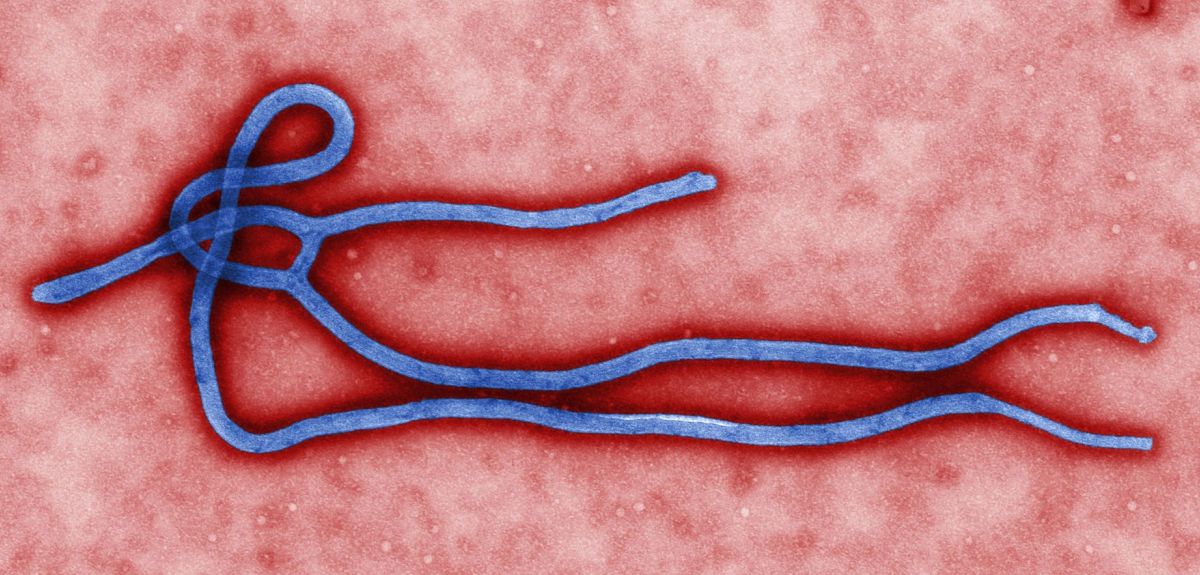
It was a December day like any other in the village of Meliandou: a remote outcrop in the densely forested region of southern Guinea. A young boy named Emile Ouamouno was playing by a tree filled with fruit bats.
Within weeks, the 18-month-old would be dead, along with his mother, sister and grandmother. Now identified as patient zero, Emile likely came into contact with infected fruit bats, becoming the first victim of the most deadly Ebola epidemic in history.
From Meliandou, the virus spread to the surrounding towns and cities, sweeping through friends, families and healthcare workers. By the time it was recognised as Ebola by the World Health Organisation, the virus had already spread through Guinea and would soon cross the border into Liberia and Sierra Leone.
From West Africa, Ebola travelled around the world – the UK, France, Spain and America were all affected by the deadly spread. And over the course of the next two years, more than 11,300 people would die as a result.
In early-2016, the WHO officially declared the Ebola emergency over. But there's no question that Ebola and other pathogens like it will emerge again.
In an increasingly connected world, the need to develop a frontline defence against viral epidemics is greater now than ever. And while there are many factors at play in successfully managing an outbreak, one of the greatest weapons we have is knowledge.
The way that viruses function is closely linked to their structure on the atomic level. Like most organisms, viruses contain complex molecular machinery that allows them to survive and thrive. By unpicking the atomic structure of viruses, we can identify vulnerabilities and create medicines that exploit these weaknesses to counteract infection.
Ebola has been around for a long time, but we've not yet developed either a working vaccine or a treatment to counteract the disease. This is partly because no outbreak has ever before been so widespread or so deadly. It's also because Ebola's intricate structure makes it a very tricky virus to treat.
Ebola is what's known as an 'enveloped' virus, meaning that it is surrounded by a protective membrane which contains proteins that allow it to latch on to host cells. These 'glycoproteins' make Ebola strong, but they also make it vulnerable.
Glycoproteins are important to Ebola's spread, so they're an obvious target for medical interventions. A vaccine currently in clinical trials induces immunity in patients by exposing them to small samples of the virus's glycoproteins.
Research from Diamond Light Source's crystallography beamlines suggests a similar approach could be used to develop antivirals. Led by Professor Dave Stuart, scientists from Oxford University have recently used synchrotron light to produce atomic-scale images of the cancer drug Toremifene and the painkiller Ibuprofen, bound to Ebola glycoproteins, thus preventing viral fusion.
The two common drugs appear to latch on to a small pocket in the structure of the glycoproteins, where they trick the Ebola cell into thinking it's attached itself to a host cell. The virus then begins releasing genetic information, but without a host cell viral spread looks to be disabled, and eventually the virus population withers.
This is a major step forward: we now have compounds that can inhibit the spread of Ebola. What's more, we know how they do it in atomic detail.
On their own, these drugs aren't enough to curtail infection, but now that we know exactly how they interact with the virus, it should be possible to improve the compounds so that they bind more tightly to Ebola and stop the virus in its tracks.
The Ebola crisis in West Africa centred the world's attention on the devastating consequences of viral epidemics. Three years on from the beginning of the outbreak and international health experts have learned some valuable lessons about the structure underlying the deadly virus, enhancing our ability to shield ourselves from attack.
These steps forward won't be enough to help those affected by the latest tragedy, but they demonstrate more than ever that basic research is the route to effective clinical impact.
We know that we need to act quickly to stamp out epidemics, and when it comes to fighting viruses, knowledge is power. That's why the ability to study pathogens like Ebola on the atomic level is so important.
Because, if we look closely enough, we might find an Achilles' heel, a chink in the armour, a way to fight back.

A new partnership has been formed to speed up the development of next-generation medicines arising from Oxford University research.
Called ‘Lab282’, the initiative will provide a £13million fund for biomedical researchers at Oxford, as well as support from an expert in residence, to promote the rapid translation of research into new drug discovery and development programmes.
Lab282 will accelerate the development of new treatments and cures for serious and debilitating disease, helping patients live longer and better lives, reducing the burden on global healthcare systems, and promoting economic growth.
The public-private partnership, which will run for an initial three years, includes the University of Oxford, Oxford University Innovation Ltd, OUI, (the university’s research commercialisation company), Oxford Sciences Innovation plc, OSI, (the world’s largest IP investment company dedicated to a single university), and Evotec AG (a drug discovery organisation with a track record of innovative academic partnerships).
Professor Matthew Wood, Associate Head of Medical Sciences Division (Research) at Oxford University, said: “Lab282 represents an important innovation for Oxford in maximising the impact of public funding in medical sciences. As the number one ranked medical school in the world it is critically important that the quality of our research is matched by high quality translational support which increases the likelihood of future societal benefits.”
New projects will be sourced across any therapeutic area exclusively from Oxford University researchers via OUI. Funding will come from OSI, and Evotec will contribute its drug discovery expertise and platforms to select projects and develop them.
Under the terms of the agreement, researchers may apply for awards of up to £250k, or more in exceptional circumstances. Sourcing and positioning of new projects for support from Lab282 will be aided by a drug discovery expert in residence seconded from Evotec, embedded in the university.
Should projects funded by Lab282 yield positive results, spinout companies from the university will be formed to further develop new therapies, supported by the Lab282 partners and/or new investors.
For more information, visit www.lab282.org

In a guest blog, GP and Doctoral Research Fellow at the Nuffield Department of Primary Health Care Sciences, Dr Brian Nicholson, explains how cancer safety netting can keep patients from harm.
Every day, thousands of people across the country visit their doctor with symptoms that could be a sign of cancer. While some may have easily recognisable high risk symptoms, such as difficulty swallowing (dysphagia) or coughing up blood (haemoptysis), the vast majority will have vague or non-specific symptoms like a cough, fatigue, or abdominal pain, where the likelihood of cancer is low.
Doctors must balance the risk between causing unnecessary alarm and wasting scarce resources through over-investigation, with the potential harm of delaying a diagnosis of serious disease.
The current best practice recommended for cancer diagnosis is ‘safety netting’ – a way of allowing doctors to spot serious disease by following up patients over time. The goal is to ensure that patients do not drop through the healthcare net, by monitoring them until their symptoms are explained.
This includes explaining uncertainty about the cause of symptoms and making sure patients receive test results, even if they do not attend a follow-up appointment.
However, there is little evidence on whether safety netting improves cancer detection and how best to apply this method for patients with vague symptoms.
Dr Brian Nicholson and colleagues at the University of Oxford have recently searched for evidence on how safety netting can be done effectively, and have published their findings of a study funded by Cancer Research UK in The BMJ.
Although their research found no apparent evidence on whether safety netting is effective, they did find evidence on the necessary components of safety netting, the roles of the patient and doctor, and the problems arising from miscommunication or misinterpretation of initial test results.
Based on this evidence, the authors recommend that doctors explain uncertainty about the cause of symptoms with patients, ensuring they understand why, when and with whom they should re-consult about concerning symptoms. Systems should also be put in place to ensure that test results are reviewed by somebody with knowledge of cancer guidelines, and that positive and negative results are communicated to the patient promptly.
Although the evidence base is uncertain, safety netting remains the best option, and is likely better than nothing. It is important that patients continue to visit their doctor until their symptoms are explained. We know that doctors are safety netting every day to keep their patients safe. By conducting research on safety netting we will be able to understand which safety netting messages and systems are effective.
The full findings of the report can be read in The BMJ.
A new study involving researchers from Oxford's Wildlife Conservation Research Unit (WildCRU) has revealed that the hunting and trapping of wild animals – for meat, medicine, body parts, trophies or live pets – is driving an 'alarming' number of species to extinction and in the process posing a food security threat for millions of people across Asia, Africa and South America.
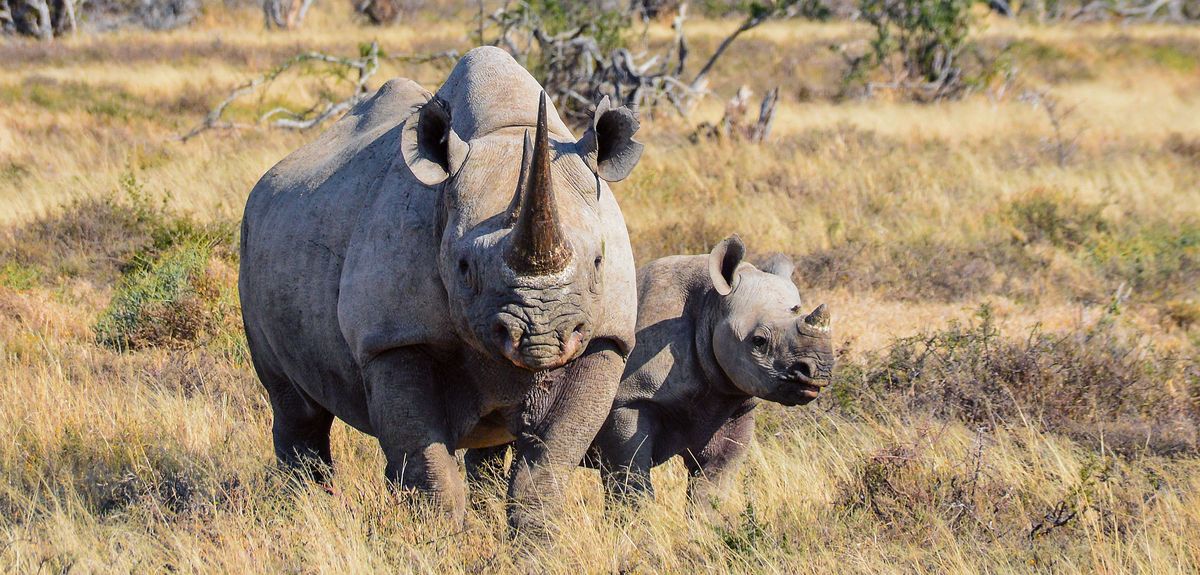
The study, led by Oregon State University and published in the journal Royal Society Open Science, used data collected by the International Union for the Conservation of Nature to identify more than 300 species of mammal under threat primarily because of overhunting. These include large animals such as the black rhinoceros, grey ox and Bactrian camel, as well as several species of bat and 126 species of primate, from the lowland gorilla and chimpanzee to a number of lemurs and monkeys.
Professor David Macdonald, Director of WildCRU, who worked on the study with research associate Guillaume Chapron, said: 'There are a plenty of bad things affecting wildlife around the world, and habitat loss and degradation are clearly at the forefront, but among the other things is the seemingly colossal impact of bushmeat hunting. You might rejoice at having some habitat remaining – say, a pristine forest – but if it is hunted out to become an empty larder, it is a pyrrhic victory.
'The number of hunters involved has gone up, and the penetration of road networks into the remotest places is such that there is no refuge left. So it becomes commercially possible to make a trade out of something that was once just a rabbit for the pot. In places like Cameroon, where I have worked, you see flotillas of taxis early in the morning going out to very remote areas and being loaded up with the bushmeat catch and taken back to towns.
'In WildCRU's fieldwork in Cameroon, we found that far from all the bushmeat was consumed for subsistence – much was sold in large cities, being eaten as a luxury by people reminiscing about a rural past. In the face of impending extinctions, that is an intolerable indulgence.'
Crucially, the study links wildlife conservation to human wellbeing through the lens of food security – people across much of the globe depend on wild meat for part of their diets. The study authors wrote: 'An estimated 89,000 metric tons of meat with a market value of about $200 million are harvested annually in the Brazilian Amazon, and exploitation rates in the Congo basin are estimated to be five times higher.' Loss of these mammals, say the authors, leads not only to an empty landscape and a ‘tragedy’ for conservation, but to an empty larder for the millions of people depending on wild meat for food.
Lead author Professor William Ripple of Oregon State University added: 'The illegal smuggling in wildlife and wildlife products is run by dangerous international networks and ranks among trafficking in arms, human beings and drugs in terms of profits.'
- ‹ previous
- 112 of 252
- next ›
 What US intervention could mean for displaced Venezuelans
  Setting the agenda for the next century of quantum
 10 years on: The Oxford learning centre making an impact
 Mapping the Moon: the world’s first lunar atlas goes digital
  Oxford and The Brilliant Club: inspiring the next generation of scholars
 New course launched for the next generation of creative translators
 The art of translation – raising the profile of languages in schools
  Opening a window into the quantum world
 Tracking resistance: Mapping the spread of drug-resistant malaria