Features
This academic term will be a busy one for the Humanitas Visiting Professorship programme.
Novelist and historian Dame Marina Warner will give her inaugural lecture as Visiting Professor in Comparative European Literature tomorrow (27 April). This will be the first in a series of talks by her called ‘The Sanctuary of Stories’.
From 9 May, historian and television presenter Simon Schama will give a public lecture and take part in a round table discussion with Craig Clunas and Margaret Macmillan on the past and its publics. He is Visiting Professor for Historiography.
He will be taking part in an in conversation with Craig Clunas and Margaret Macmillan on the 11 May.
Award-winning playwright Tom Stoppard is this year’s Visiting Professor of Drama Studies. He will give a public lecture on 18 May and a Q&A on 19 May.
Then on 25 May and 26 May respectively, renowned guitarists the Assad Brothers will give a talk and a recital as Visiting Professors for Classical Music.
Oxford University’s Professor Sos Eltis, the Academic Director for the Humanitas Visiting Professorship in Drama, says of Professor Stoppard’s visit: ‘Tom Stoppard is one of the greatest modern playwrights. He has delighted audiences worldwide with the wit, daring, wisdom, dazzling intellectual challenge and sheer theatrical fun of his plays.
‘He has pushed the boundaries of dramatic form and reinvented the play of ideas. These events will be a wonderful opportunity for schools, university students and anyone interested in theatre to hear an extraordinary writer offer new perspectives on his life and work.'
Professor Elleke Boehmer, director of TORCH, adds: 'We are thrilled to bring some of the world’s most inspiring thinkers and creative minds to Oxford for a richly diverse programme of workshops, talks and performances.
'This term we will be joined by leading figures from the spheres of theatre, history and music, including award winning playwright Tom Stoppard, world renowned historian Simon Schama and gifted guitarists Sérgio and Odair Assad. Exploring issues as wide ranging as public history and theatre making, the events are a rare opportunity for public audiences to join leading speakers for debate and discussion.’
Humanitas is a series of Visiting Professorships at the Universities of Oxford and Cambridge intended to bring leading practitioners and scholars to both universities to address major themes in the arts, social sciences and humanities.
Created by Lord Weidenfeld, the Programme is managed and funded by the Weidenfeld-Hoffmann Trust with the support of a series of generous benefactors and administered by TORCH | The Oxford Research Centre in the Humanities.
The events are free and open to all. For more information, including booking details, visit the TORCH website.
The website also includes a more detailed summary of the dates and content of each Visiting Professor’s visit.
The winners of the 16th Christopher Tower Poetry competition have been announced at Christ Church, Oxford.
The competition, which was judged by Alan Gillis, Katherine Rundell and Peter McDonald, attracted more than 1,100 entrants born between 1997 and 2000.
Ashani Lewis, from The Tiffin Girls’ School, Surrey, was awarded the £3,000 first prize for her poem Flowers From The Dark. Her poem is published in full below.
The winner of the second (£1,000) prize Safah Ahmed (Newham Collegiate Sixth Form Centre, London) with ‘Accent’ and the third prizewinner, Sophia West (Oxford High School) won £500 with ‘The Awakening’. Their schools receive £150 each.
This year's theme of wonder for the 16th Christopher Tower Poetry competition attracted over 1,100 entrants (all born between 1997 and 2000) with many schools encouraging entrants for the first time.
Poet Alan Gillis said: 'Reading through all the poems, I was struck first of all by the great range and diversity of work in terms of voice, style and subject matter. But overwhelmingly, I was impressed by the consistency of excellence.
'The experience of judging has been really uplifting because of the passion and daring, boldness and confidence of the poems entered. This is a wonderful competition.'
The competition is just one of the initiatives developed by Tower Poetry at Christ Church to encourage the writing and reading of poetry by young adults.
Other projects include summer schools (to which the first three winners are invited as part of their prize), poetry readings, conferences, an ongoing publication programme and website, which is used as an educational resource in schools.
You can see the winning entries for yourself on the Tower Poetry website where the young authors read their own poems. The winning poem by Ashani Lewis, Flowers From The Dark, is here:
She is quiet,
With skin as tight as the wheeling crows:
She kneels over the dirt and grows
The roses.
Your lawn chair holds a pale absence;
A tulip dies, falls back against the fence,
And decomposes.
You watch her.
(And from her fair and unpolluted flesh)
The shadows on the windowsill – fresh
Violets Break up the clean square of light,
And, thoughtless, obstruct the sight
Of her silence.
She grows the flowers
For you. From loam and wombs,
The pits of eyes and empty rooms,
From hipbones,
Harpoons, moons and crows: everything dark –
Seaweed, oil, the time around stars;
And olive stones.
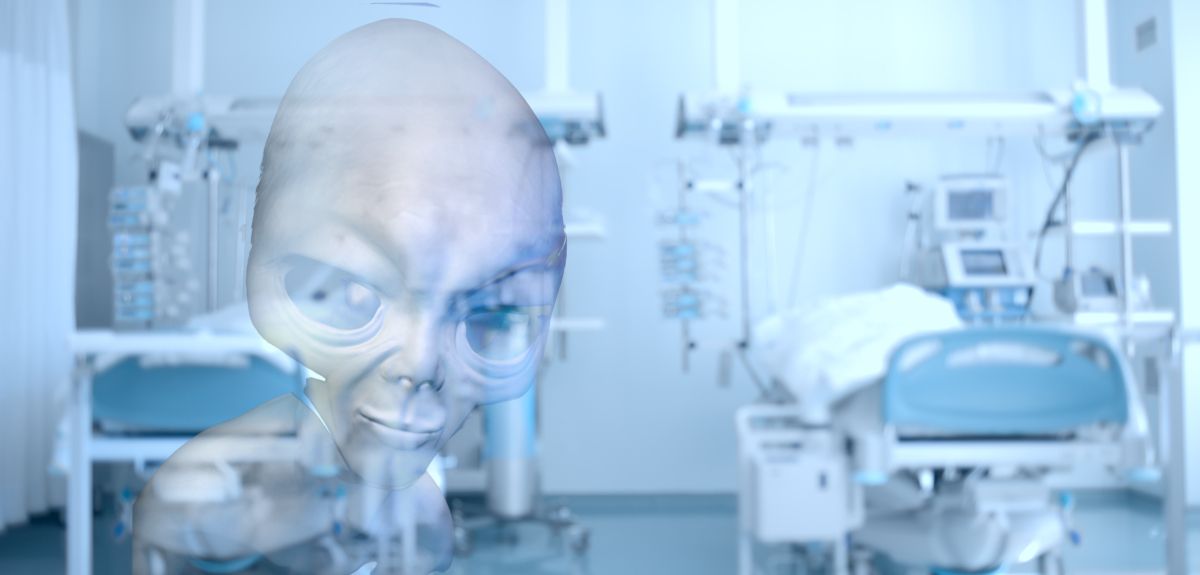
People admitted to intensive care have experienced feelings of being trapped in metal tubes, alien abduction, and having a gun to their head, amongst other things. While none of this really happened, for patients struggling with hospital-acquired delirium they seemed all too real.
These experiences are just some uncovered by the Critical Care Research Group at the University of Oxford. Lead researcher Julie Darbyshire explained: 'Delirium is a well-known consequence of prolonged stays in intensive care. Until now, research has focused on how medical staff can identify and treat the condition. But there has been almost no research on patients' experiences.'
Using a repository of in-depth interviews with patients and their family members held by the Health Experiences Research Group (HERG), in the Nuffield Department of Primary Care Health Sciences and published on the patient experiences website, www.healthtalk.org, the team re-analysed the transcripts for descriptions of delirium.
Dr Lisa Hinton from HERG said: 'Throughout the interviews we found an overwhelming sense of complete bewilderment and fear expressed in nightmares, altered realities and false explanations. Admission to intensive care is often a surprise and the experience is unlike even other areas of a hospital. With their senses limited, and their ability to communicate often hampered, it seems that people 'fill in the gaps' to create explanations for their experiences.'
However, those explanations are often false. One patient was surprised to discover that their ICU had just six beds, having built a mental image of a huge room with two levels. Another became convinced they were on a flying hospital, while a third was certain they had been kidnapped. Disturbing nightmares meant that some patients actively avoided sleep, setting back their recovery.
Sarah Vollam, Researcher and Intensive Care Nurse said, 'ICU staff are aware that patients may suffer delusions during their stay, but this paper offers a unique insight into what this is really like. It brings their experiences to life and demonstrates the power of qualitative research. The exploration of recurring themes in patients' delusions will assist ICU staff in their management of confused and hallucinating patients, as well as their general day-to-day practice.
One issue is that patients often have no control. Staff will be doing things but the patient may not know what is happening and frequently cannot ask. This may be one reason why some patients begin to develop paranoia, in a number of cases suspecting staff of wanting to harm them.
For others, reality blurs so that they cannot tell what is real and what has been a dream or hallucination. One patient saw all the people around their bed as plasticine figures like those in the Wallace and Gromit films.
The team say that the very real fear created through this confusion and uncertainty can set back patient recovery and leave traumatic memories even after leaving hospital. Their hope is that by raising awareness of how patients feel, research and medical practice can better help.
Julie Darbyshire said: 'For example, when delirium is identified staff often tell patients their experiences are normal – in a well-intentioned effort to reassure. Patients, however, know there is nothing normal about their experiences and would prefer to have that reality acknowledged.
'One simple change could help. Even when they cannot communicate, patients tend to have some awareness. Just explaining what is happening could help reduce the gaps in understanding where delirium can take hold.'
More information
Patients can experience two forms of delirium:
- Hyperactive delirium – the patient becomes restless, agitated or aggressive.
- Hypoactive delirium – the patient becomes withdrawn and uncommunicative. It is often harder to diagnose in intensive care where patients’ condition, drugs and equipment might all make it harder for them to communicate.
Julie Darbyshire has written an Editorial for the BMJ about the problems of noise in the ICU and the link with ICU-delirium.
Lisa Hinton has also written in the BMJ about her own experiences of intensive care unit noise.
The original interviews were conducted by the Health Experiences Research Group, Nuffield Department of Primary Care Health Sciences, University of Oxford, funded by ICNARC. Interview extracts from the original study are available on the www.healthtalk.org website run by the DIPEx Charity.
The earlier research completed by the Health Experiences Research Group was published in Critical Care 2008 (Field, Prinhja, and Rowan, Critical Care, 2008, 12:R21) and 2009 (Prinjha, Field, and Rowan, Critical Care, 2009, 13:R46).
Follow the University of Oxford Critical Care research team on Twitter @KadoorieCentre

As reported by the BBC, scientists at Oxford University have built a mathematical model to explain the secrets of the chameleon's extraordinarily powerful tongue.
The chameleon's tongue is said to unravel at the sort of speed that would see a car go from 0-60 mph in one hundredth of a second – and it can extend up to 2.5 body lengths when catching insects.
A team from Oxford's Mathematical Institute (working in collaboration with Tufts University in the US) derived a system of differential equations to capture the mechanics of the energy build-up and 'extreme acceleration' of the reptile's tongue.
The research is published in the journal Proceedings of the Royal Society A.
Derek Moulton, Associate Professor of Mathematical Biology at Oxford and one of the authors of the paper, said: 'If you are looking at the equations they might look complex, but at the heart of all of this is Newton's Second Law – the sort of thing that kids are learning in A-levels, which is simply that you're balancing forces with accelerations.
'In mathematical terms, what we've done is used the theory of non-linear elasticity to describe the energy in the various tongue layers and then passed that potential energy to a model of kinetic energy for the tongue dynamics.'
Special collagenous tissue within the chameleon's tongue is one of the secrets behind its effectiveness. This tissue surrounds a bone at the core of the tongue and is surrounded itself by a muscle.
Professor Moulton added: 'The muscle – the outermost layer – contracts to set the whole thing in motion. We've modelled the mechanics of the whole process; the build-up and release of energy.'
The researchers say the insights will be useful in biomimetics – copying from nature in engineering and design.
Previously, Science Blog has reported on the work of Dr Lingbing Kong in Oxford University's Department of Chemistry, who is exploring new methods of antibacterial vaccination that could combat the growing problem of antibiotic resistance.
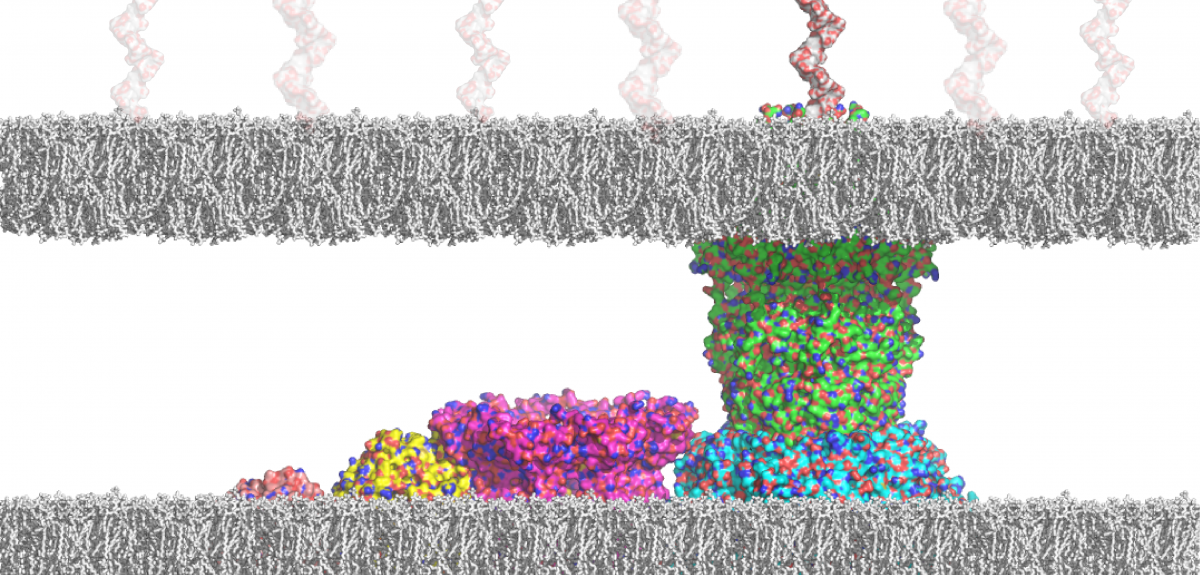
In a new paper published in Nature Chemistry, Dr Kong takes an in-depth look at capsular polysaccharides, or 'sugar armour' – the outermost layer of bacteria that provides a key defensive shield for pathogens (including against antibiotics).
Here, Dr Kong describes the latest research:
'I started the work contained in the paper in 2007 in the labs of Professor Ben Davis and Professor Hagan Bayley in Oxford's Department of Chemistry. The overall aim of my project was to elucidate the interaction of the capsular polysaccharide (CPS) K30 and its exporter outer membrane protein Wza, which would facilitate the development of novel antibacterial strategies. The biochemical, biophysical, and biological part of the project was going smoothly and led to the discovery of the first inhibitor of the Wza pore. It is, however, fundamentally important to analyse the interaction of the K30 CPS and the Wza pore at the single-molecule level, which would be crucial for later generations of the Wza inhibitor when resistant mutants appear.
'This part of the project had several barriers that had to be overcome – it has been a great challenge in academia to successfully analyse this kind of bimolecular interaction. The carbohydrate-protein interactions are generally weak, and the access to defined oligosaccharides and polysaccharides is always the main limiting factor. Therefore, we dedicated ourselves to achieving this goal.
'This new Nature Chemistry paper reports how we achieved this over the last nine years and reveals new insights into the important biological process.
'We have developed a generalised synthetic approach to obtain polysaccharides with defined sizes, which has rarely been attempted in literature. In polysaccharide-related syntheses, it has been a frequent bias that only one of the possible repeating ("monomer") units, typically the most synthetically accessible, is selected for synthesis. Our approach includes a non-biased analysis of the targeted polysaccharide for all possible minimum oligosaccharide repeating units. Next, multi-step organic synthesis gave the desired repeating units, which were then activated to form the according oligomers and polymers.
'Further separation by high-performance liquid chromatography afforded the defined large oligosaccharides and polysaccharides in pure forms. The analysis of the interaction between K30 carbohydrate fragments and the exporter Wza pore was carried out with an advanced droplet system that requires a volume as small as 200 nanolitres. This setup was developed to enable analysis and detection of the behaviours of the same protein pore before and after the addition of the sugar substrates, which was not possible previously. As a result, the weak interaction between K30 CPS and the Wza pores was detected at the single-molecule level.
'Analysis of the complex data revealed that only small (not large) fragments of the K30 fragments were translocated through the pore. We also observed capture events that occur only on the intracellular side of Wza, which would complement coordinated feeding by adjunct biosynthetic machinery.
'The techniques that we developed to recapitulate sugar export at the single-molecule level would potentially allow studies of all bacterial sugar export. This will facilitate not only the detection of the sugar-exporter interactions but also screening of blockers of the sugar exporters. In addition, the generalised approach that we developed for polysaccharide synthesis, ie polyglycosylation, could potentially be applied to all polysaccharide synthesis. Such approaches are rarely reported and usually not generalisable.
'Our approaches exemplified: 1) non-biased analysis of the chemical structures of the target polysaccharide; 2) rational design and solid synthesis of all polymerisable minimum oligosaccharide repeating units; 3) screening and optimization of conditions for polyglycosylation; and eventually 4) separation of individual oligomeric and polymeric products, which is followed by deprotection to afford defined and pure large oligosaccharides and polysaccharides.
'On the other hand, the advanced droplet system that we developed enables the detection and analysis of weak interactions between a membrane protein pore and the substrates in a very small quantity at the single-molecule level. For one single experiment, only one protein pore and 1 microgram (or even 1 nanogram) of substrate (given molecular weight 500 and a concentration of 1 minimole/litre or 1 micromole/litre, respectively) are required.
'Nowadays, mass spectrometry is one of the most sensitive techniques. The technology we developed would enable the detection and analysis of bimolecular interactions in the same resolution. We therefore expect our technologies to find far-reaching applications in numerous vital binding processes in glycobiology.'
- ‹ previous
- 127 of 252
- next ›
 What US intervention could mean for displaced Venezuelans
  Setting the agenda for the next century of quantum
 10 years on: The Oxford learning centre making an impact
 Mapping the Moon: the world’s first lunar atlas goes digital
  Oxford and The Brilliant Club: inspiring the next generation of scholars
 New course launched for the next generation of creative translators
 The art of translation – raising the profile of languages in schools
  Opening a window into the quantum world
 Tracking resistance: Mapping the spread of drug-resistant malaria