Features

Humans perceive the world around them with five senses – vision, hearing, taste, smell and touch. Many other animals are also able to sense the Earth’s magnetic field. For some time, a collaboration of biologists, chemists and physicists from the Universities of Oxford (UK) and Oldenburg (Germany) have been accumulating evidence that the magnetic sense in night migratory birds, such as the European robin, is based on a specific light‐sensitive protein in the eye. In the current edition of the journal Nature, this group demonstrates that the protein cryptochrome 4, found in birds’ retinas, is sensitive to magnetic fields and could well be the long‐sought magnetic sensor.
A collaboration of biologists, chemists and physicists have been accumulating evidence that the magnetic sense in night migratory birds, such as the European robin, is based on a specific light‐sensitive protein in the eye.
Henrik Mouritsen’s research group in Oldenburg succeeded in extracting the genetic code for cryptochrome 4 in night‐migratory European robins and then produced the protein in large quantities using bacterial cell cultures. Christiane Timmel’s and Stuart Mackenzie’s groups in the Oxford Chemistry Department then applied a wide range of magnetic resonance and novel optical techniques to study this protein and demonstrated its pronounced sensitivity to magnetic fields. The measurements required the development of new instruments by several generations of talented postdoctoral researchers and graduate students.
The team also shed light on the mechanism by which this sensitivity arises – based on electron transfer reactions triggered by absorption of blue light. Proteins like cryptochrome consist of chains of amino acids: robin cryptochrome 4 has 527 of them. Oxford’s Peter Hore and Oldenburg physicist Ilia Solov'yov performed quantum mechanical calculations supporting the idea that four of the 527 – known as tryptophans – are essential for the magnetic properties of the molecule.
According to their calculations electrons hop from one tryptophan to the next generating so‐called radical pairs which are magnetically sensitive.
According to their calculations electrons hop from one tryptophan to the next generating so‐called radical pairs which are magnetically sensitive. To test this experimentally, the team from Oldenburg produced slightly modified versions of the robin cryptochrome, in which each of the tryptophans in turn was replaced by a different amino acid to block the movement of electrons. Using the modified proteins, the Oxford groups were able to elucidate the role of different radical pairs in the observed magnetic field effects.
"We think these results are very important because they show, for the first time, that a molecule from the visual apparatus of a migratory bird is sensitive to magnetic fields" says Mouritsen. But this is not, the team emphasises, definitive proof that cryptochrome 4 is the magnetic sensor. In all experiments, the researchers examined isolated proteins in the laboratory and applied magnetic fields stronger than the Earth's magnetic field. "It therefore still needs to be shown that this is happening in birds’ eyes", Mouritsen stresses. Such studies are not yet technically possible.
However, the authors think the proteins involved could be significantly more sensitive in their native environment. In cells in the retina, the proteins are probably fixed and aligned, increasing their sensitivity to the direction of the magnetic field. Moreover, they are also likely to be associated with other proteins that could amplify the sensory signals. The search is on for these, as yet unknown, interaction partners.
These results show, for the first time, that a molecule from the visual apparatus of a migratory bird is sensitive to magnetic field.
Hore says: “If we can prove that cryptochrome 4 is the magnetic sensor we will have demonstrated a fundamentally quantum mechanism that makes animals sensitive to environmental stimuli a million times weaker than previously thought possible”.
The magnetic field effect work has been supported by external funding agencies such as DARPA; the US Air Force Office of Scientific Research; the EMF Biological Research Trust; the Office of Naval Research Global; the U.S. Army Research Office, an element of the DEVCOM Army Research Laboratory; the German Science Foundation; the SCG Innovation fund and the European Research Council. It is currently supported by the ERC Synergy Grant ‘QuantumBirds’.
Christiane Timmel is Professor of Chemistry in Oxford and Director of the Oxford Centre for Advanced Electron Paramagnetic Resonance (CAESR).
Peter Hore and Stuart Mackenzie are Professors of Chemistry in Oxford.
Full paper: Magnetic sensitivity of cryptochrome 4 from a migratory songbird, Nature (2021). DOI: 10.1038/s41586-021-03618-9, www.nature.com/articles/s41586-021-03618-9
![[The extraordinary challenges we face] will not be overcome with the efforts of just one sector or community. This report … provides critical guidance for how we can be more impactful and effective together](https://www.ox.ac.uk/sites/files/oxford/styles/ow_medium_feature/s3/field/field_image_main/shutterstock_1388894738%20%281%29.jpg?itok=EDAP5Z21)
The global climate change movement has been mapped for the first time in a ground-breaking Said Business School report, which calls for greater coordination of eco-action.
The report, Decisive Decade: Organising Climate Action, led by Marya Besharov, Professor of Organisations and Impact, and Rajiv Joshi, Executive in Residence, sets out the entire international green ecosystem and insists organisations, businesses and governments need to work together to beat climate change.
In the history of the climate change movement, the period immediately before the Paris Agreement in 2015 stands as a pivotal moment. It was an exciting time. Overall involvement in climate action intensified. Engagement from businesses, civil society organisations, governments and individual citizens increased dramatically. People were excited about the opportunities for change, and the organisations in which they participated acted on their enthusiasm.
If enthusiasm is not to be squandered and ambitious Net Zero targets achieved, urgent action is needed to bring together agents of change from business, civil society and government
The Decisive Decade: Organising Climate Action - Saïd Business School
The success of the Paris Agreement owes much to this widening engagement and commitment. But, if such enthusiasm is not to be squandered and ambitious Net Zero targets achieved, the report insists urgent action is needed to bring together agents of change from business, civil society and government.The report was commissioned by the global non-profit Mission 2020 which was established to encourage speedy implementation of the Paris Agreement.
Focusing on the distinct roles of business, philanthropic, civil society and public sector organisations, the report calls for ‘catalytic collaboration’ to achieve results.
Christiana Figueres, convenor of Mission 2020, insists greater coordination is needed across these diverse organisations in order to seize the opportunity unleashed in the wake of the Paris Agreement. Ms Figueres, also Executive Secretary of the United Nations Framework Convention on Climate Change (UNFCCC) during the Paris discussion, says business, civil society and government need to work together to stand a chance of achieving targets such as Net Zero.
Former United Nations climate change executive, Christiana Figueres insists greater coordination is needed across these diverse organisations in order to seize the opportunity unleashed in the wake of the Paris Agreement
The report uncovers key barriers to realising this potential and finds that involvement in climate action remains fragmented across sectors and suffers from limited participation of organisations in key regions of the world. Meanwhile, the various groups and organisations often frame the problem and its possible solutions differently. All of these factors, the report argues, impede coordinated, collective effort and require new strategies.
'[The extraordinary challenges we face] will not be overcome with the efforts of just one sector or community. This report … provides critical guidance for how we can be more impactful and effective together,' says Ms Figueres.
[The extraordinary challenges we face] will not be overcome with the efforts of just one sector or community. This report … provides critical guidance for how we can be more impactful and effective together
Christina Figueres
The report’s Saïd-based authors offer concrete advice on how organisations with a stake in the climate crisis can harmonise their actions, without giving up their distinct positions and approaches.
The report makes the case for ‘catalytic collaboration’ – bringing together organisations from different sectors that adopt distinct yet complementary approaches to addressing the climate crisis, grounded in nature, health, finance, sustainable development and economic justice.
Three key strategies for fostering catalytic collaboration are identified:
- Develop a shared narrative that captures the imagination of everyday citizens and powerfully conveys how social and economic systems can be transformed for the better.
- Build trust and create opportunities for joint action across sectors, regions and communities with different stakes and interests in the climate crisis.
- Strengthen accountability by creating clear pathways for corporations to meet net zero commitments and ensuring those most responsible for environmental damage are responsive to those most affected by it.
'More and more people are recognising that they, and their organisations, need to be involved in addressing climate change. This report helps them to understand how they can best contribute – what roles they can play and how to amplify their collective impact,' says Professor Besharov.
True Planet: Oxford research for a changing world
The world is in a climate crisis, and Oxford researchers are at the forefront of trying to find solutions in adaptation and resilience, nature, energy transition, clean road transport and green finance.
Our researchers are working with partners in industry, government, the third sector and at other universities to address these challenges and to propose innovative approaches and solutions. Find out more about our True Planet campaign http://bit.ly/trueplanet

When Oxford academic Dr Kira Allmann began volunteering at a library, she did not imagine it would result in a report calling for urgent government support for libraries to address deep digital inequalities.
The digital transformation of government services and private services – as with banking – has left many of the most marginalised people in our communities behind
Dr Kira Allmann
Libraries on the Front Lines of the Digital Divide summarises findings from a project in Oxfordshire libraries, written by Dr Allmann with fellow university internet experts Dr Grant Blank and Annique Wong. But it has resonance far beyond the county boundary.
Dr Allmann explains, ‘The digital transformation of government services and private services – as with banking – has left many of the most marginalised people in our communities behind. People have not been able to access their basic rights, because of lack of digital skills and access.’
The media anthropologist was one of around 80 volunteers providing free one-to-one digital assistance to library visitors, as part of a scheme to address the rising need for digital access and skills support.
Requests for digital help have varied widely, as the report reveals. Dr Allmann helped with everything from printing payslips to finding housing. She found herself showing people, with limited experience of the digital world, how to type a CV in Word or set up an email account.
‘I would painstakingly talk them through each keypress, translating slowly and carefully the visual vernacular of the digital world. (‘See that little square with a line sticking through it? That means 'compose a message'. Click on that...’)’
It was clear, libraries were providing an important service, and Dr Allmann felt she had a window into the day-to-day lived experience of digital exclusion.
Dr Allmann found herself showing people, with limited experience of the digital world, how to type a CV in Word or set up an email account
‘It seemed like an important field site,’ she said. ‘I’m always thinking like an anthropologist; I can’t turn it off. And I thought there were things happening there that weren’t appearing in the literature on digital disadvantage.’
Dr Allmann spoke with library staff members and teamed up with Dr Blank, who leads the Oxford Internet Survey, to develop a Knowledge Exchange Seed Fund project to study the digital provision of the libraries. The goal was to help the libraries learn more about customers with digital needs and understand what digital need looks like.
The project collected more than 1,000 surveys of library computer users and 19 interviews with staff and volunteers. It reviewed digital help booking records and session logs, and Dr Allmann and master’s student Annique Wong also observed and participated in digital help sessions.
Although there is an expectation everyone has access to the digital world, and everything from claiming benefits to booking vaccine appointments are done online, the team found many people are being excluded. Their key findings include:
- Nearly a third of library computer users (31.3%) don’t have a smartphone.
- Three in ten library computer users (30%) had no computer at home.
- Nearly a fifth of users (19%) had no internet connection at home.
- Over half of library computer users (58%) have incomes of £20,000 or less.
Based on the findings, the summary report makes several policy recommendations:
- Library staff’s digital skills should be enhanced, so staff are prepared for the high volume and complexity of digital help requests.
- Funding should be increased and more volunteers recruited.
- There should be a shift of focus for digital inclusion from skills to wellbeing, recognising that digital is just one aspect of a person’s social context
- Community awareness should be increased, and outreach is needed, to make libraries more welcoming for people excluded from services.
COVID-19 has altered libraries as public spaces, and most of the research took place before the first lockdown. But the team maintains libraries are a vital intervention space when it comes to digital inclusion.
Dr Blank says, ‘Looking ahead we believe libraries can become the digital inclusion hubs of the future across the UK, bringing together social support and technological access under one roof.’
Looking ahead we believe libraries can become the digital inclusion hubs of the future across the UK, bringing together social support and technological access under one roof
Dr Grant Blank
Their report argues that libraries can help to identify digital need and connect people with device donation schemes or skills learning. Libraries can be spaces for digital literacy development. But joined up thinking is needed, alongside integration with other local services - as well as more staff and volunteer time.
While the pandemic has suspended some of the library service’s digital services, including digital helper volunteer support, the library service has still been playing a key role during by offering vital access to online services. This included access to free Wi-Fi and computer terminals.
The report focuses on digital access in Oxfordshire libraries, but there are lessons for libraries across the country.
‘Going online is not optional anymore,’ says Dr Allmann. ‘We hope this report will boost the profile of libraries in the digital inclusion conversation and convince local and national governments to invest further.’
Read the full report here.

The law on marriage and civil partnerships, for both opposite and same sex couples, has been made equal – but not completely symmetrical; that is, concerning the option of converting one form of legal union into another, according to research by John Haskey, Associate Fellow at Oxford’s Department of Social Policy and Intervention published in Family Law.
Both same sex and opposite sex couples can become civil partners or they can marry. Consequently there are four possible ‘conversions’ of one form of legal union into another, only one of which is currently permissible - same sex civil partnerships can be converted to same sex marriages. The other three ‘conversions’ are not legally possible at present: same sex and opposite sex couples cannot convert from a marriage to a civil partnership, and opposite sex couples cannot convert from a civil partnership to a marriage.
One benefit of allowing all four conversions would be that couples could periodically reassess the form of their legal union and convert it to the alternative kind if they judged it appropriate. Such a review and reassessment might well be beneficial to the health of the relationship
John Haskey
An argument against two of these unavailable conversions is that the couples concerned did have the choice between the two legal unions: for example, opposite sex couples who formed a civil partnership did have the opportunity of marrying; similarly same sex couples who had married, could have opted instead for a same sex civil partnership, as the latter were introduced before the former.
In contrast, however, opposite sex couples who married earlier did not have the opportunity to have a civil partnership and there is the possibility that such conversions might be legislated. Other considerations and arguments might be deployed in favour of legislating the remaining two conversions.
According to John Haskey, ‘One benefit of allowing all four conversions would be that couples could periodically reassess the form of their legal union and convert it to the alternative kind if they judged it appropriate. Such a review and reassessment might well be beneficial to the health of the relationship.
'Undoubtedly perceptions about the characteristics of civil partnerships and marriages differ, and these differences may well vary for different age groups, so that conversions may be thought to allow some flexibility - a potential benefit - in the form of legal union with its associated expectations.’
He adds, ‘Another benefit of allowable conversions is that if a partner or spouse has a gender change, they can still remain married or as a civil partner with no disruption to their civil partnership or marriage - the union just changes for example, from an opposite sex one to a same sex one.’
The article reveals, the vast majority of same sex couples have not opted to convert their civil partnerships to marriages. John Haskey writes that, after December 2005, when same sex civil partnerships were introduced, 13,000 couples formed civil partnerships in the following nine months of 2006. After the initial rush, the monthly numbers fell to less than 1,000 a month and a seasonal pattern quickly emerged. Up to the end of 2017, he estimates, some 63,000 same sex partnerships had been formed.
Same sex marriage was introduced in March 2014, and the option to convert a same sex civil partnership to a same sex marriage in December 2014. The article estimates that up to the end of 2017, 23% (14,000) of civil partners had opted for conversion to marriage.
An important element in the argument for having, and retaining, civil partnerships has been that they avoid what many see as the paternalistic aspects of marriage, the couple preferring, it is claimed, to be equal partners, rather than husband and wife with their traditional roles
John Haskey
According to John Haskey, ‘The fact that a large proportion of civil partners have not converted their partnership may well reflect their contentment with the new status. Alternatively, they may have been unaware of the facility to convert, or even (erroneously) considered themselves either married or ‘as if married’.’
He adds, ‘An important element in the argument for having, and retaining, civil partnerships has been that they avoid what many see as the paternalistic aspects of marriage, the couple preferring, it is claimed, to be equal partners, rather than husband and wife with their traditional roles. (Inevitably, though, one wonders whether, had same sex marriage been legislated early and first, there would have been any civil partnerships on the statute book at all.)’
John Haskey concludes, ‘Overall, there has been extraordinary progress over the last two decades, and much of the advance can be attributed to the adherence to the principles of equality and non-discrimination, which, no doubt, will also play an important part in future reform. Three new legally recognised relationships in the space of less than two decades contrasts with centuries of having only marriage is remarkable, and may signify a new spirit of progressivism.’
The full article can be read here: Perspectives on civil partnerships and marriages in England and Wales: aspects, attitudes and assessments (familylaw.co.uk)
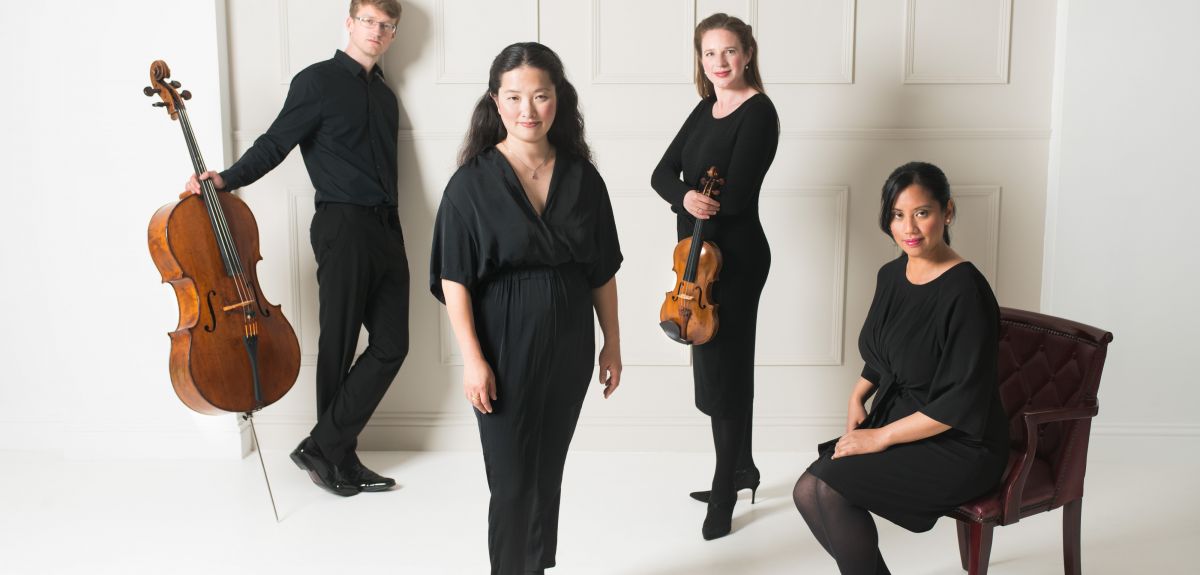
International concern over issues around representation has thrown a light on the classical music world and inspired ‘Diversity and the British String Quartet’, a wide-ranging collaborative project as part of Oxford’s TORCH Humanities Cultural Programme. Although focusing on the string quartet, it explores larger debates around inclusivity, access and identity within the classical music scene.
While the string quartet has associations of high art and intellectualism, it has been a medium for diverse and different British composers
While the string quartet has associations of high art and intellectualism, it has been a medium for diverse and different British composers. It also continues to inspire students, composers, and performers.
The project aimed to work with the widest possible range of those interested in the string quartet and music education, and to combine research with practical work and performance.
Diversity and the British String Quartet has been a collaboration between British music and music education specialists at the Oxford Faculty Of Music, the Villiers Quartet, contemporary composers, and schools.
Young people aged 14-18 at schools around the country have been involved, composing their own string quartets and working virtually over the last six months with professional performers, academics, and composers. On top of this work, the project has simultaneously evaluated the impact of the project on young people in terms of changing their perceptions of and relationship with classical music.
And the Villiers Quartet has commissioned five contemporary British composers to write ‘From Home’ quartets, exploring the experience of writing music in Britain in the current historical moment.
If classical music education is narrowed and defunded to the point of becoming an experience for those who can afford it, is inclusivity narrowed still further? Whose music is this, and what are the views of all those who have a stake in it?
Dr Joanna Bullivant
Dr Joanna Bullivant leads the project, which is supported by the TORCH programme. She believes the questions posed by the collaboration reach into the roots of our society. She says, ‘Increasing focus on STEM subjects in schools and universities, the global pandemic, and the Black Lives Matter protests have all raised important questions about the value of classical music performance and education in Britain.
‘If classical music education is narrowed and defunded to the point of becoming an experience for those who can afford it, is inclusivity narrowed still further? Whose music is this, and what are the views of all those who have a stake in it?’
Second year undergraduate and student mentor Chloe Green says, ‘The project facilitated important conversations and collaborations between diverse musicians in their processes of challenging preconceived notions about, and defining their own relationships to, the British string quartet tradition. It was a privilege to mentor the students as they developed their understandings of this tradition’s history and articulated their inspiring visions for its future.’
Graduate researcher and workshop participant Aaliyah Booker says, ‘I have learned a lot about composition and what it takes to write music for this type of ensemble. It has been fun doing research on the project and equally rewarding to be given an opportunity to play for the Villiers Quartet.’
For the Villiers Quartet, who guided the workshops with young people and commissioned the new quartets, this was a positive amongst the devastating and disruptive pause in performance caused by the pandemic.
Carmen Flores, violist, says, ‘We looked at string quartet composition from all angles - working with students, commissioning new works from our commissioned composers, and exploring repertoire of historical composers who were largely excluded from the mainstream story of British music.’
The live-streamed symposium (Monday 14 – Wednesday 16 June) is the culmination and public presentation of these activities through a series of talks, workshops, and performances.
Classical music has the potential to transform and enrich everyone’s lives, and we are committed to ensuring that those benefits are available to all. It promises to be a thrilling creative project
Professor Daniel Grimley
The symposium’s daily concerts will feature an array of rarely-heard British quartets, plus the world premiere performances of works by composers Florence Anna Maunders, Philip Herbert, Rob Fokkens, Alex Ho, and Jasmin Kent Rodgman. The student quartets, created during the project, will also be performed. Finally, expert speakers from the music industry and academia will address a range of issues in the history of the British string quartet and contemporary practice.
Dr Bullivant says, ‘This ambitious project has been a distinct learning curve for all of us, but hugely rewarding as we have been able to hear from so many different participants and voices on a subject that they are passionate about.’
And Dr Bullivant’s words are echoed by Professor Daniel Grimley, Deputy Head of Humanities, ‘Classical music has the potential to transform and enrich everyone’s lives, and we are committed to ensuring that those benefits are available to all. It promises to be a thrilling creative project.’
Diversity and the British String Quartet | TORCH | The Oxford Research Centre in the Humanities
Schools involved are: St Gregory the Great Catholic School, Oxford; St Marylebone School, London; Graveney School, London; Framingham Earl High School, Norfolk and Trinity Catholic School, Nottingham
- ‹ previous
- 23 of 252
- next ›
 What US intervention could mean for displaced Venezuelans
  Setting the agenda for the next century of quantum
 10 years on: The Oxford learning centre making an impact
 Mapping the Moon: the world’s first lunar atlas goes digital
  Oxford and The Brilliant Club: inspiring the next generation of scholars
 New course launched for the next generation of creative translators
 The art of translation – raising the profile of languages in schools
  Opening a window into the quantum world
 Tracking resistance: Mapping the spread of drug-resistant malaria