Features
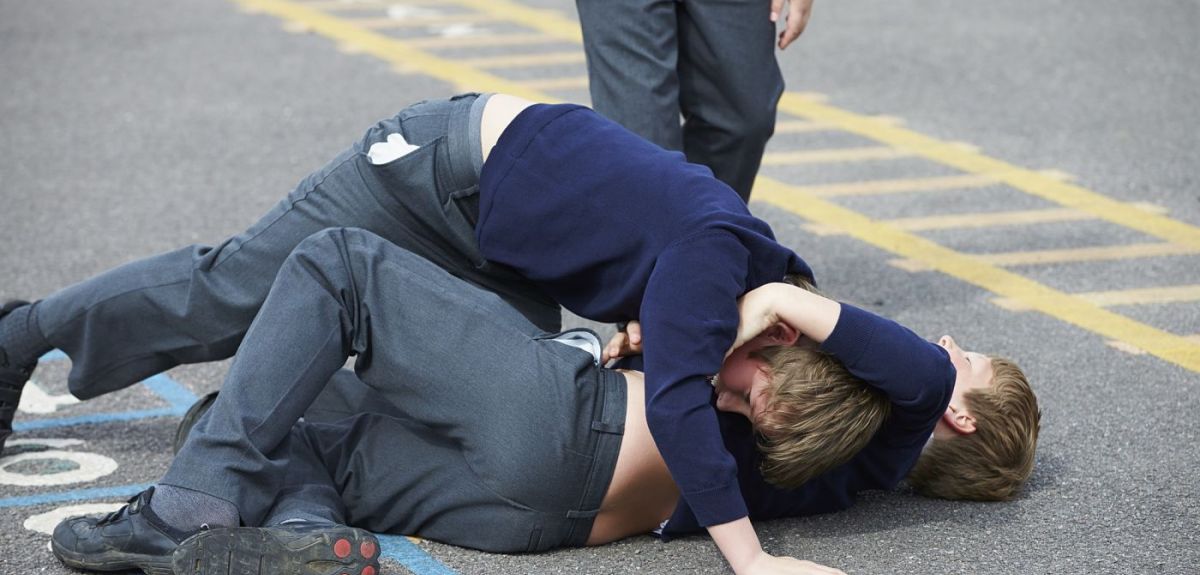
Why are men more aggressive than women?
There are two competing theories. However, a study by Oxford University researchers has found that both may actually be right.
Doctor Ralf Wölfer is part of the Department of Experimental Psychology. He recently published the results of a study across schools in three European countries, which mapped networks of aggression to see what they could tell us about differences between boys and girls.
I asked Ralf about the theories and how his research is bringing them together.
OxSciBlog: First of all, what are the two theories?
Ralf Wölfer: The two theories are sexual-selection theory and social-role theory. They’re really the competing sides of the nature-nurture debate. Sexual-selection theory says that males are competing for reproductive success, so are more aggressive generally and especially to other males. It’s human nature.
Social-role theory says that differences are sociological, based on traditional divisions of labour. Socialisation shapes gender specific identities, expectations and behaviour. So it’s nurture – how we’re brought up.
Traditionally, the two theories have been seen as competing. I’m not the first to use both theories – there have already been others saying we should consider both. But this paper took an empirical approach.
OxSciBlog: What was that approach?
Ralf Wölfer: We wanted to look at intra-sex and inter-sex aggression in a given environment. To avoid confusion, it might help to think of these as same-sex aggression and other-sex aggression.
We used detailed social network analysis to disentangle aggression across almost 600 social networks in different environments – teenagers in school classes for this study. We were able to score these environments for same-sex and other-sex aggression.
We hypothesised that a dual-theory approach, with sexual-selection theory explaining same-sex aggression and social-role theory explaining other-sex aggression, was better than applying just one.
For that dual-theory approach to be valid, we were testing two hypotheses:
Firstly, that males are more aggressive than females to same-sex individuals, and also more aggressive to other-sex individuals.
Secondly, that predictors derived from sexual-selection theory would explain differences between males and females in same-sex aggression whereas predictors derived from social-role theory would explain differences in other-sex aggression.
OxSciBlog: So what were these predictors?
Ralf Wölfer: For example, for social-role theory, you would expect boys in those groups with more traditional beliefs about masculinity to exhibit more other-sex aggression. For sexual-selection theory, you would expect to see more aggression in groups with a higher proportion of males to females, as there’s more competition among the boys.
Once we had the scores from the social network analysis we applied predictors from the two theories to see how well they could explain the differences in those scores.
OxSciBlog: How did you do the social network analysis?
Ralf Wölfer: This is one thing that was a useful lesson from the study design. Usually social network analysis is used to map friendship networks – positive relationships. In this case, the study used it to map a negative network of aggression. What we found is that it worked well when applied in this way.
The participants were from the Children of Immigrants Longitudinal survey in Four European Countries, a group that contained more than 10,000 students in nearly 600 classes. Each of those classes is a separate environment that can be compared with the others.
The study group was originally set up to compare children of immigrant and non-immigrant populations so there was a high proportion of students from ethnic minority groups. Many have parents from Turkey, Iraq and Morocco. That was important because we could look beyond a purely western European sample to a more varied group.
We then asked each student to nominate aggressors. Mapping aggression has often been done by self-reporting but we chose to use peer reporting as we felt it would be more accurate. We asked ‘who is sometimes mean to you?’
 |
| Sample aggression network of a school class. Black circles represent boys, and white triangles represent girls. Arrows indicate aggression nominations, with the direction of the arrow indicating the person nominated as an aggressor and the start of the arrow indicating the nominator. |
By counting nominations from boys and girls for each individual, we could give them a same-sex aggression score and an other-sex aggression score. Then we could determine an average same-sex aggression score and other-sex aggression score for each class.
As expected, on average males were more aggressive to both sexes although there were some classes where females were more aggressive.
OxSciBlog: When explaining these aggression scores, what did the results show?
Ralf Wölfer: They showed that our dual-theory hypothesis was right!
We found that sexual-selection theory explained differences in same-sex aggression. For example, those classes with a higher proportion of boys to girls saw more male-male aggression, while classes with a higher proportion of females or with a more equal social structure saw less male-male aggression.
Social-role theory explained differences in other-sex aggression. For example, classes with more traditional views of gender roles saw more male-female aggression, while classes with less traditional gender norms saw less male-female aggression.
OxSciBlog: In the end, what does that mean?
Ralf Wölfer: It is empirical evidence to confirm that we need to consider both biological and social explanations for aggression. Sexual-selection and social-role theory are both necessary. It is also important to differentiate between same-sex/intra-sex and other-sex/inter-sex aggression as the roots of each may be different. One way to do this is to use aggression networks, as demonstrated in this study.
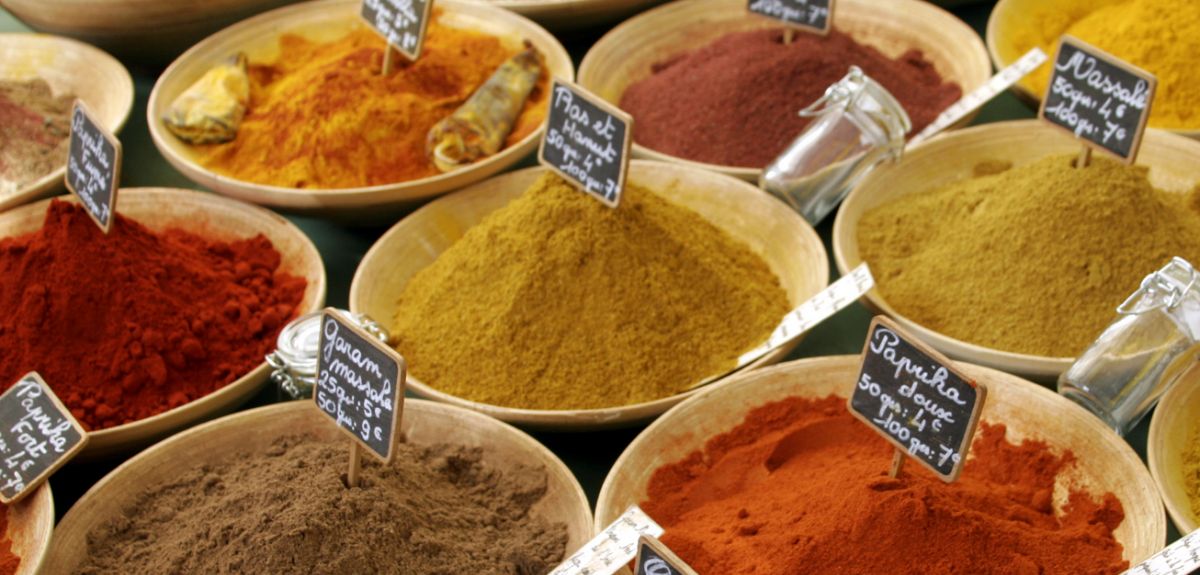
The "cradle of civilisation" is further east than you might have read in history textbooks at school, according to a new book by an Oxford academic.
The Silk Roads: A New History of the World, which is published this month by Bloomsbury, has been written by Peter Frankopan, Director of the Centre for Byzantine Research in the University's History Faculty.
Described as a "major reassessment of world history", Dr Frankopan’s book shows the importance of the 'east' (i.e. the region between eastern Europe and China and India) in developing the world's civilisation and religions.
He looks at countries which were crossed by the 'Silk Roads', which were trading networks that connected the West to East and spread led to cultural transmission between the two areas.
He says countries along this route have been overlooked by history, such as Kazakhstan, Uzbekistan, Mongolia, and Nepal. Even the role of India and China has been downplayed.
'While such countries may seem wild to us, these are no backwaters, no obscure wastelands,' he says. 'They are the very crossroads of civilisation. Far from being on the fringe of global affairs, these countries lie at its very centre — as they have done since the beginning of history.
'The Silk Roads were no exotic series of connections, but networks that linked continents and oceans together. ‘Along them flowed ideas, goods, disease and death. This was where empires were won – and where they were lost.'
Dr Frankopan says the prominence of western Europe since the 16th century caused this 'rewriting' of the past. 'Ancient Greece begat Rome, Rome begat Christian Europe, Christian Europe begat the Renaissance, the Renaissance begat the Enlightenment, the Enlightenment political democracy and the Industrial Revolution,' is how he describes this traditional assumption.
But in fact, it is actually western Europe, and Britain at its periphery, which was a relative 'backwater', he says. The Greeks and Romans had little interest in Europe, and letters sent home by Roman soldiers reveal that being sent to Europe or even Britain was an unwelcome prospect.
'The Greeks and Romans looked to the East,' says Dr Frankopan. 'Riches from the East paved the way for Rome's grandeur and the Silk Roads were the conduit for Eastern commerce, wealth, enlightenment and technology.'
The Silk Roads: A New History of the World can be ordered from Bloomsbury.

70 years ago today, the atom bomb was dropped on Hiroshima in Japan.
Professor Rana Mitter, an historian who specialises in the history and politics of China and Japan, and Nigel Biggar, Regius Professor of Moral and Pastoral Theology, explain the significance of the anniversary and the legacy of Hiroshima and Nagasaki.
Professor Mitter says the memory of the bomb has put the Japanese population off the idea of nuclear weapons forever. 'The horror of Hiroshima and Nagasaki has so much ingrained itself in the popular consciousness in Japan that it seems to me impossible that they would ever find a way to have their own nuclear weapons,' he explains.
Professor Mitter puts the bombing in the context of Asia, rather than just looking at relations between the USA and Japan. 'What is often forgotten is that the lead-up to the A bomb against Japan was the Japanese invasion of large parts of Asia where over 14 million Chinese were killed.
'Therefore we have to remember, balancing the horror of Hiroshima which we’ve heard so much about today and must never be allowed to happen again, with the fact that there was a context which people in Asia still remember quite clearly.'
Professor Biggar applies the "Just War" theory in Christian theology to the events. He says: 'If the bombs were dropped on Hiroshima and Nagasaki in order to use the mass slaughter of civilians to terrorise the Japanese government into surrender, then that is immoral.
'If on the other hand the bombs were dropped to hit important military targets and there was no other way of hitting those targets other than endangering the lives of civilians, according to Just War thinking that could have been morally permissible. Which of those two cases fits the facts, you would have to ask an historian. I suspect it was the first.'
He adds: 'From the beginning Christians have disagreed about whether following Jesus means you can use force on any occasion. I think that one may use it under certain circumstances but only as a last resort, never in vengeance and only as strictly necessary.'
Professor Mitter was interviewed about Hiroshima on the Today programme (at 2 hours 53 minutes) and Professor Biggar on All Things Considered, both on Radio 4.
Elleke Boehmer is Professor of World Literature in Oxford University's Faculty of English Language and Literature. She is also a published novelist. She has recently brought out a novel and will publish a major academic book in September. Professor Boehmer tells Arts Blog that each kind of writing can help the other.
AB: Your latest novel, The Shouting in the Dark (Sandstone Press), has just been published. Is it difficult to write fiction alongside writing academic books?
EB: Yes, the business of producing more than one kind of writing probably does look challenging, and there definitely are different demands on your energy and focus when you're writing fiction as against when you're writing academic books.
In fiction, there is more of a demand to keep the writing concentrated in whatever centre of consciousness, of the character or the narrator, that you as a writer are dealing with. In The Shouting in the Dark this definitely is the case, and I reworked the book nearly twenty times to get it absolutely right.
In academic writing the push is to stand a little to the side of the material and analyse. But ultimately in both kinds of writing, the thinking is happening through the writing. My gut feeling is that similar parts of the brain are firing.
It took me a while to come to this understanding though. I've been writing fiction alongside non-fiction for over 25 years now, and at first I did tend to think two different kinds of processes were involved. Thinking that used to make me feel very tired!
Can writing fiction improve your non-fiction writing or are they very separate things?
Definitely the different kinds of writing can help each other out. The things you learn about controlling language, and the structure of 'thought units', like paragraphs, work across and between the different strands.
Are there ways in which your research has informed your novels?
Yes, research does inform my novels, especially when I get fascinated by a topic I'm researching, but this isn't always beneficial for the fiction. One of my novels, Bloodlines, published in 2000, had as its imaginative springboard the fact that Irish republican soldiers fought in the Anglo-Boer War in 1899-1902, and mingled while in the Transvaal with local people.
I got stuck into a huge amount of research, including in the National Library of Ireland, which was very enjoyable, but in the end the research perhaps weighed too heavily on the story element.
Marina Warner calls this the green light of the study lamp shining through. With fiction, character or voice has to convince, not the scholarship.
Your next academic book, Indian Arrivals, 1870-1915 (OUP), comes out in September. What is it about?
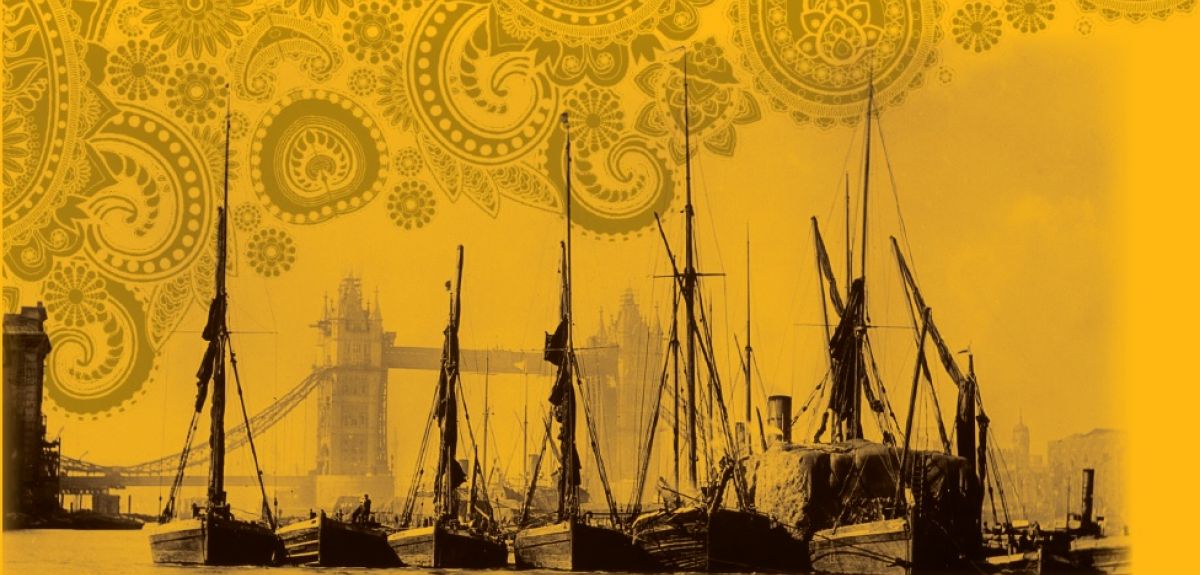
Indian Arrivals 1870-1915 is about turn of the century Indian travellers who wound their way through Suez to Britain, and the interesting and unexpected impacts that had on cultural and literary life over here, including shaping London's sense of itself as cosmopolitan and modern.
If, as is now widely accepted, vocabularies of inhabitation, education, citizenship and the law were in many cases developed in colonial spaces like India, and imported into Britain, then, the book suggests, the presence of Indian travellers and migrants needs to be seen as much more central to Britain’s understanding of itself, both in historical terms and in relation to the present-day.
The book demonstrates how the colonial encounter in all its ambivalence and complexity inflected social relations throughout the empire, including at its heart.
What sources did you use when researching the book?
Particularly useful sources were the manuscripts of the poets Sarojini Naidu and Rabindranath Tagore, which revealed how their work was frequently composed and translated en route, while travelling, and often on ships, so their works literally were 'travelling' documents.
I also read many English language newspapers of the time, including from India, which showed how cosmopolitan educated Indians felt they were, even when they hadn't yet left their homeland. The censuses of 1901 and 1911 were also very revealing, reflecting how surprisingly many people with Indian surnames lived around Britain's docklands at this time.
'A post-antibiotic era – in which common infections and minor injuries can kill – far from being an apocalyptic fantasy, is instead a very real possibility for the 21st century.'World Health Organisation Antimicrobial Resistance Global Report on Surveillance 2014
Around the world, governments are taking action to tackle the growing issue of anti-microbial resistance (AMR). In a number of countries, more than half of infections by some bugs are resistant to common treatments.
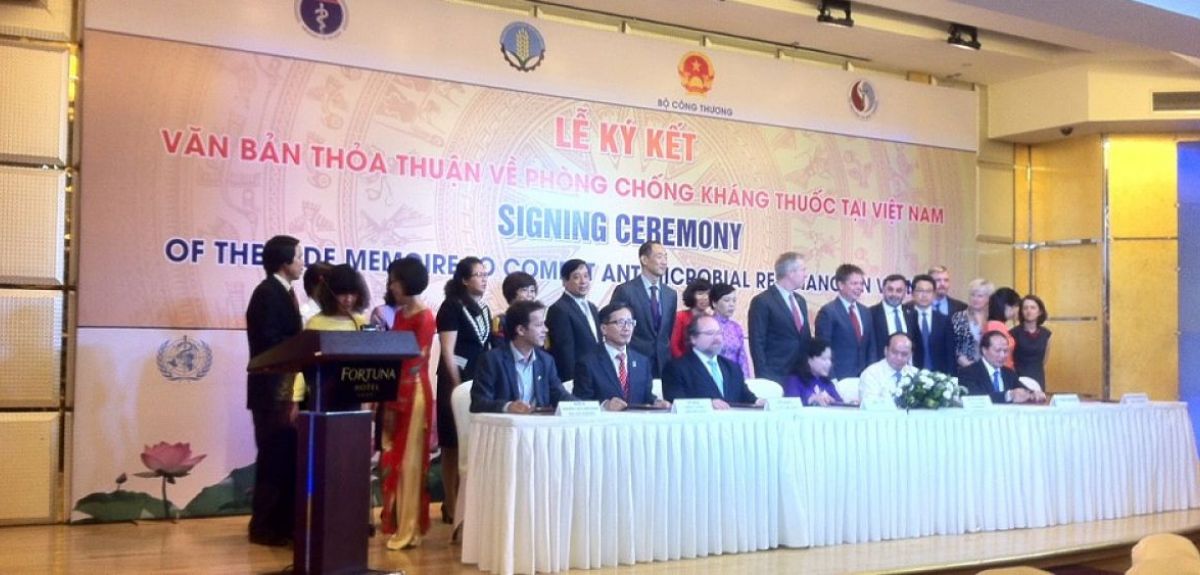
In Vietnam, the government is committed to confronting the issue. So in a recent ceremony four Vietnamese government departments signed an aide memoire on combating AMR with the World Health Organisation, the UN's Food and Agriculture Organisation. The other signatory was Oxford University, reinforcing the importance of the Vietnam-based Oxford University Clinical Research Unit (OUCRU) to healthcare in the South East Asian nation.
OUCRU, one of the Wellcome Trust’s major overseas programmes, has had key partnerships with the National Hospital for Tropical Diseases in Hanoi since 2006 and the Hospital for Tropical Diseases in Ho Chi Minh City since 1991. Its research covers a range of areas from tuberculosis to dengue fever. Currently, the unit is advising the government of Vietnam on a national action plan to counter anti-microbial resistance (AMR).
Professor Heiman Wertheim is the Director of Oxford University Clinical Research Unit Hanoi. He explains that AMR is a growing issue in Vietnam:
'In the community, 90% of the antibiotics are sold over the counter even though there is a prescription law. Most antibiotics are dispensed for acute respiratory infections, which are mainly viral and do not need antibiotics.
'What we see in the intensive care units of large hospital is that last resort antibiotics like carbapenems or colistin are being used frequently. Compare that to northern Europe, for example, where these drugs are rarely used. The issue in Vietnam is similar to that in other Asian countries like India and China.'
Another issue is the use of antibiotics in agriculture. In poultry and pig productions antimicrobials are typically used to prevent rather than to treat clinical disease. Most commercial animal feed is medicated with antibiotics. The amount of antimicrobials used to raise poultry is in the order of 5 – 7 times higher than in European countries.
Such widespread and indiscriminate use drives bugs to develop resistance, eventually rendering them immune to common treatments. Some countries have already taken steps to reduce the unnecessary use of anti-microbials to stave off this resistance, and Vietnam is set to join them.
So what does the new aide memoire mean for Vietnam?
Professor Wertheim explains: 'The Aide Memoire says that the partners will do everything they can within their means to combat AMR. This is the starting point of getting the funds and expertise needed to combat AMR. Those could be directed to developing surveillance strategies, diagnostics, treatment guidelines, education, awareness campaigns, research, policy development, and so on.'
OUCRU's main role will be supporting decision makers by providing research evidence to shape policy. The unit carries out clinical trials on how to best treat drug resistant infections, which provide important information to policy makers. In agriculture, they conduct studies on how antibiotic use there impacts on AMR and how this could be controlled.
Professor Wertheim adds: 'We work closely with the National Hospital of Tropical Diseases, a leading infectious disease hospital in Vietnam, and with them we plan to set up a national antibiotic resistance reference laboratory and a national AMR surveillance scheme.'
In Vietnam, Oxford researchers focus on four main areas:
- Emergence: looking at how and why antibiotic resistance is developing.
- Prevention: working out how best to prevent resistance developing.
- Alternative treatment options: to find the best treatment options for antimicrobial resistant infections.
- The role of agriculture: to identify of the main drivers of antimicrobial use and resistance in animal production.
Current research includes a study of how resistant infections occur, which looks at patients treated in hospital and those treated in the community. Other researchers are looking at improving the diagnosis of simple infections in primary health care. A further study is looking at pharmacy and prescribing practices to find ways of reducing unnecessary antibiotic use. Apart from AMR in people, researchers are investigating the dynamics of antimicrobial resistance in pig and poultry farms.
Tackling AMR is a big project, with changes required in many areas. The key question is whether it can make a difference. Professor Wertheim believes that it will, but it will take time and a commitment by all partners to work together and coordinate their efforts.
'I am confident that useful policies and interventions will be implemented though it may take a long time to see any effect. The magnitude of how antibiotics are being wasted currently can be changed and this could have a huge impact. If new antibiotics come to the market, we want to ensure these are used with more thought. To do this you need to create behavioural change, besides diagnostics and guidelines. That is a challenge.
'Another challenge is that all the stakeholders need to work together constructively and be complementary. Often you see organizations do similar work but with different methodologies which is a waste of resources. The best way will be to work together and harmonise what we do.'
- ‹ previous
- 147 of 252
- next ›
 What US intervention could mean for displaced Venezuelans
  Setting the agenda for the next century of quantum
 10 years on: The Oxford learning centre making an impact
 Mapping the Moon: the world’s first lunar atlas goes digital
  Oxford and The Brilliant Club: inspiring the next generation of scholars
 New course launched for the next generation of creative translators
 The art of translation – raising the profile of languages in schools
  Opening a window into the quantum world
 Tracking resistance: Mapping the spread of drug-resistant malaria