Features

The story of the Trojan Horse is well-known. First mentioned in the Odyssey, it describes how Greek soldiers were able to take the city of Troy after a fruitless ten-year siege by hiding in a giant horse supposedly left as an offering to the goddess Athena.
But was it just a myth? Probably, says Oxford University classicist Dr Armand D'Angour: 'Archaeological evidence shows that Troy was indeed burned down; but the wooden horse is an imaginative fable, perhaps inspired by the way ancient siege-engines were clothed with damp horse-hides to stop them being set alight.'
There is even doubt about the existence of the man said to have written the Odyssey, Homer, who is considered to be the greatest of Greek epic poets. Dr D'Angour explains: 'It's generally supposed that the great epics which go under Homer's name, the Iliad and Odyssey, were composed orally, without the aid of writing, some time in the 8th Century BC, the fruit of a tradition of oral minstrelsy stretching back for centuries.
'While the ancients had no doubt that Homer was a real bard who composed the monumental epics, nothing certain is known about him. All we do know is that, even if the poems were composed without writing and orally transmitted, at some stage they were written down in Greek, because that is how they have survived.'
Dr D'Angour explains the origins of another eight stories and myths in an article for the BBC, which has been reached millions of people as one of the most shared on the website over the last few days.
Dr D'Angour is currently undertaking a two-year project to recover the sounds of Greek music and to work out what significance these sounds have for some of the most famous poems from Ancient Greece.
'Imagine a situation in which all we had of five centuries of Western opera were the libretti, and only a few fragments of the music,' he explains. 'Such a situation is, more or less, that of students who engage with the poetry of classical Greece, which covers around five centuries from 800 to 300 BC.
'The poets who composed the Iliad and Odyssey, the love poems of archaic Lesbos, the victory odes of the early fifth century BC, and the choral passages of Greek tragedy and comedy — all composed the words to be sung and accompanied by musical instruments.
'Yet little attention is paid even to the rhythms so carefully inscribed into the words of these songs, which have long been known and studied under the forbidding aegis of Greek metre. Even less attention is paid to melodic structures, which thanks to the surviving fragments – as well voluminous writings by ancient authors and musical theorists (admirably translated and compiled by Andrew Barker in Greek Musical Writings) – is something on which we are now in a position to exercise an informed scholarly imagination.
'By neglecting the aural dimension, readers of ancient texts are bound to be missing something of the original aesthetic impact of these songs.'
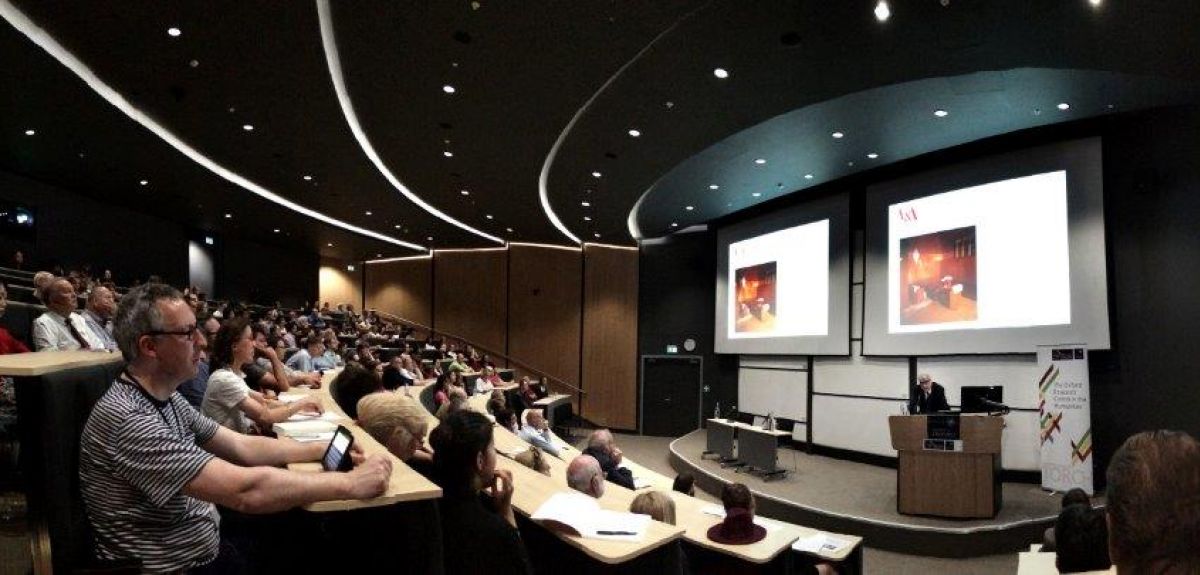
Delegates from around the world came to Oxford to learn about the ways in which new technology is changing the humanities on last week's Digital Humanities at Oxford Summer School (DHOxSS).
They also heard a talk from Martin Roth, director of the Victoria and Albert Museum, who spoke on the ways museums may change in response to new technologies.
From digitised archives and online reference material, to web-based teaching, online exhibitions, crowd-sourced research, and even app development, the “digital humanities” span a huge range of activities.
DHOxSS aimed to help researchers and students develop the skills and expertise to devise their own projects. It also gave them a chance to network: where traditional humanities might involve solitary work in the library, digital humanities research is often collaborative.
'Oxford has been very central in the development of digital humanities. It's always been at the forefront of using digital technologies to help humanities research,' said James Cummings, the director of DHOxSS. 'We offer a general introduction to digital humanities, as well as more technical courses, including digital libraries and curation.'
One digital humanities project at Oxford, CatCor, aims to produce a searchable online archive of the correspondence of Catherine the Great. Meanwhile, TopBib, a comprehensive bibliography of the monuments and artefacts of ancient Egypt, makes one of the longest-running research projects at Oxford available to the public online.
Public involvement is at the heart of many digital humanities projects, from open archives and online exhibitions, to large-scale calls for public contributions, as in the “citizen science” project, Ancient Lives, which involved 250,000 volunteers transcribing Greek papyrus documents on their own computers.
One of the highlights of the summer school was an open lecture by Martin Roth, director of the Victoria and Albert Museum. He spoke about how museums can both survive and flourish in the digital age by using technology as a tool for democratisation, perhaps even leading to a reinvented museum without hierarchy.
'Martin Roth's talk was fascinating to practitioners of the digital humanities and interested members of the public alike,' said Stephen Tuck, director of TORCH | The Oxford Research Centre in the Humanities, which hosted the lecture.
'It was interesting to hear how advances in digital design and media have changed museum practice while curatorial principles have remained the same since the 19th century.'
The summer school was organised by the University of Oxford's IT Services, the Oxford e-Research Centre (OeRC), the Bodleian Libraries, the Oxford Internet Institute (OII), and TORCH |The Oxford Research Centre in the Humanities.
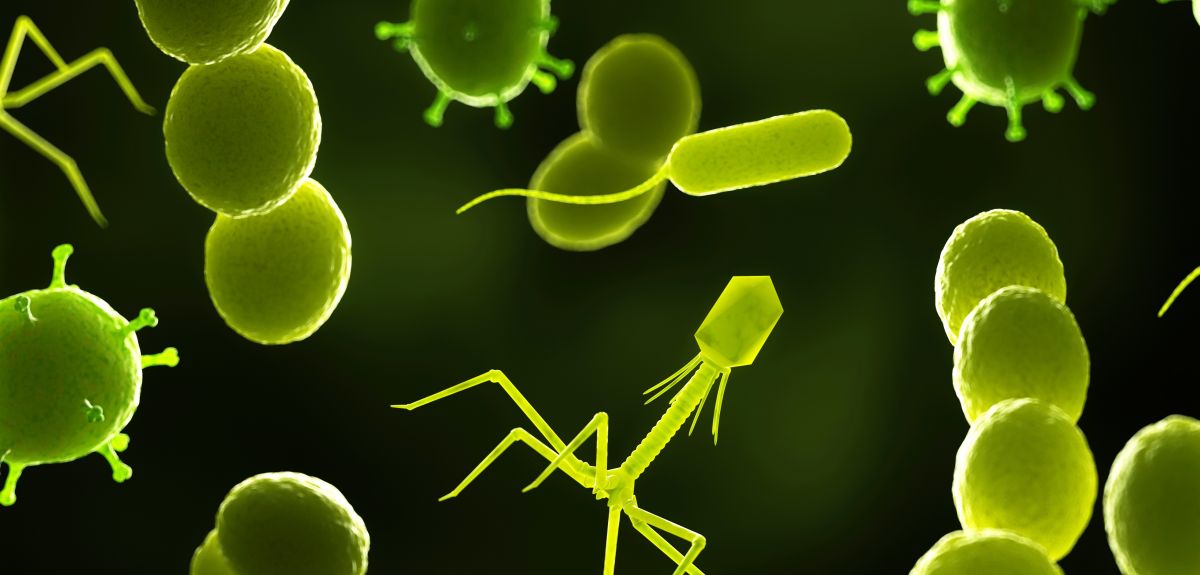
For hospital workers an outbreak of harmful bacteria in the wards is a nightmare, but what gives bacteria nightmares?
Perhaps the prospect of being eaten alive by a kind of viral parasite called a bacteriophage (bacteria eater): unlike antibiotics, which some bacteria have evolved a resistance to, bacteriophages are alive and so can fight back against bacterial counter-measures. But as yet the evolutionary 'arms race' between bacteria and their viral foes is poorly understood.
In a new study published this week in PNAS a team led by Oxford University scientists report a series of experiments examining this eternal war between bacteria and bacteriophages focusing on the bug Pseudomonas aeruginosa. I asked Alex Betts of Oxford University's Department of Zoology, first author of the study, about how we might recruit bacteriophages to fight for us…
OxSciBlog: Why did you focus on Pseudomonas aeruginosa?
Alex Betts: P. aeruginosa is very abundant in nature, it has been found in food, drinking water, soap, soil and even aviation fuel. It's also an opportunist and will infect humans if given a chance. In 2012 there was an outbreak of P. aeruginosa in a maternity ward in Belfast that tragically resulted in the death of three newborns. Some patients are particularly vulnerable such as those born with the genetic condition cystic fibrosis (CF) which affects over 10,000 people in the UK. CF patients can struggle to breath due to mucous in their lungs; P. aeruginosa easily infects their lungs where it can lead to a chronic infection and ultimately the death of the patient.
Whilst there are other bacteria that are more common causes of disease in hospitals such as E. coli and Staphylococcus, P. aeruginosa can be disproportionately problematic due to its high levels of antibiotic resistance. Many antibiotics are ineffective against it, which means if the patient's immune system cannot tackle the infection on its own then they can be in serious trouble, as is often the case with CF patients.
OSB: Why is understanding the relationship between bacteria and their viral parasites important?
AB: David Cameron recently said we face a 'medical dark ages' unless we tackle the problem of antibiotic resistance. No new antibiotics have been discovered for many years. But viruses can be used in a similar capacity to antibiotics, to kill bacteria infecting humans: this is referred to as phage therapy. In fact they were used to do so in the early 20th century but were abandoned in the west when penicillin was discovered. However, as resistance to antibiotics has increased the advantages of antibiotics relative to these virus parasites have reduced and they are once again in the limelight.
These viruses continued to be used in the Soviet Union and today in Georgia and Poland. They are currently the focus of a €5 million clinical trial (Phagoburn) for the treatment of infected burn wounds across multiple hospitals in Europe. These viruses have the potential to save lives if they are properly understood.
OSB: What did you find out about the 'arms race' between bacteria and 'bacteria eaters'?
AB: Unlike antibiotics, bacteriophage can adapt to the bacteria they hunt, so that even if the bacteria evolves to become resistant to the original phage, the phage can evolve back to overcome the bacterial resistance. In our experiment this cycle repeats itself over and over again and the bacteria were never able to permanently resist them. Under these conditions the viruses are constantly getting better at attacking the bacteria and reciprocally the bacteria are constantly getting better at resisting them.
This type of scenario is referred to as a Red Queen scenario, which comes from Lewis Carroll’s Through the Looking Glass. The red queen says to Alice: 'It takes all the running you can do to keep in the same place'. Here the bacteria and the virus are both running to maintain the same relationship.
In contrast to the arms race, we also observed a phenomenon called fluctuating selection, where the type of resistance that the bacteria display is governed by the most common version of the virus hunting them; the bacteria resistant to the most common virus become the most common bacteria, causing that virus to become less common, and as that virus becomes less common so do the bacteria that were resistant to it. Consequently the different types of bacteria fluctuate over time.
OSB: How could your research help to inform efforts to treat P. aeruginosa?
AB: Much of the in vitro work looking at the evolution of phage resistance has focused on single phage – single bacteria combinations. Largely looking at the relationship between Pseudomonas fluorescens (a comparatively harmless relative of P. aeruginosa) and a single viral parasite. However, in the practical application of bacteriophages to treat disease, it is likely that a combination of multiple different viruses, a bacteriophage cocktail, will be used. Here we expanded the existing view to include an important agent of human disease, P. aeruginosa, and a panel of six different viruses to get a broader view of the evolution of resistance in a clinically relevant microorganism.
Furthermore some of the same phages used in these experiments have been suggested for use in clinical trials to treat infections in humans. Our research highlighted that some phages are more susceptible to cross resistance than others, that means that in a cocktail, if resistance evolves to one of the phage, that resistance may also be effective against other phages making the cocktail less effective in the long run. These sorts of experiments could reduce the likelihood of cross resistance being a problem in bacteriophage cocktails.
OSB: What’s the next step for research in this area?
AB: Bacteria can be free-swimming, plankton-like organisms or they can attach to a surface and protect themselves in a jelly like layer called a biofilm. These biofilms are common in nature and contribute to bacterial resistance of antibiotics. These experiments were conducted under conditions where the majority of bacteria were free-swimming. Had the bacteria been predominantly in biofilms the nature of coevolution could have been quite different.
Additionally, phages could be used in combination with antibiotics to treat infections, it is possible that the presence of antibiotics could shift the balance of the arms races and lead to different outcomes, for example the complete eradication of the bacterial population. The nature of coevolution between biofilms and bacteriophages is not well studied and could be important for the use of phage therapy to treat infections in humans.
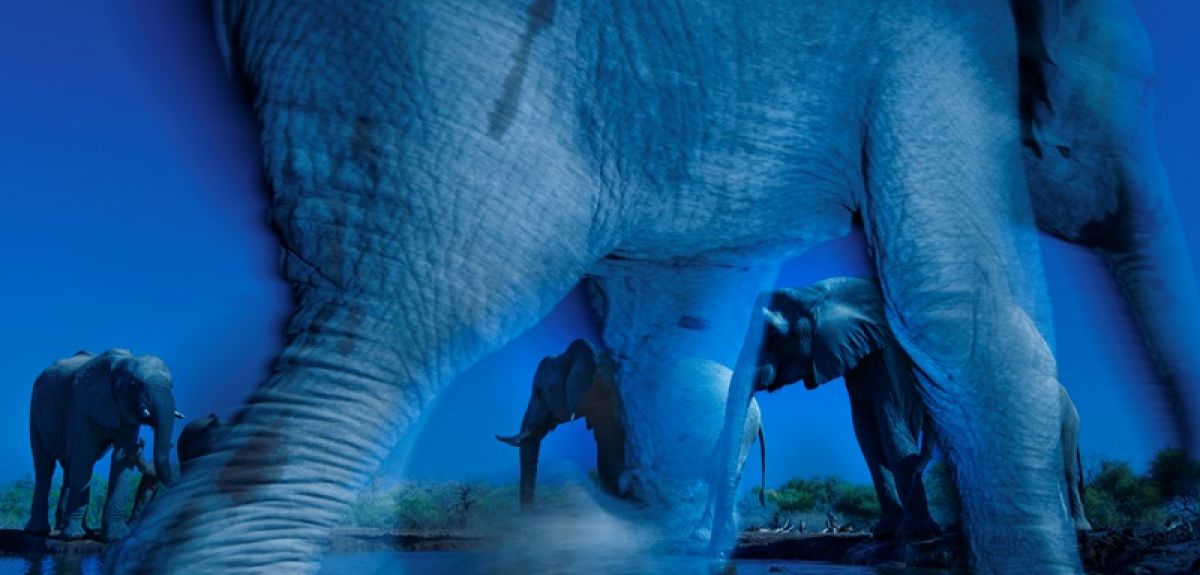
The Wildlife Photographer of the Year exhibition opens today at Oxford University’s Museum of Natural History.
The exhibition, which showcases some of the world's best nature photography, will be on display in the museum’s Main Court from today until 22 September.
The exhibition was put together after a worldwide competition in 2013. One of the winning entries is the ghostly image of elephants at a watering hole in Botswana's Northern Tuli Game Reserve (see above) by Greg du Toit.
'For many years I've wanted to create an image that captures their special energy and the state of consciousness that I sense when I’m with them,' he said. 'This image comes closest to doing that.'
To coincide with the exhibition, the museum is launching its own competition for photographs of wildlife a little closer to home.
It has asked for photographs of the swifts that nest in the museum's tower every spring. The winning image will be put on display alongside Wildlife Photographer of the Year from mid-August.


Oxford research into high-efficiency cooling systems for next-generation jet-engines has led to a new design of cooking pan that uses 40% less energy.
The 'Flare pan', based on research by Thomas Povey of Oxford University's Department of Engineering Science, has just been launched by kitchenware firm Lakeland.
Thomas worked with Isis Innovation, the University's technology commercialisation company, to license the new technology- the pan’s finned design ensures a more even heat distribution, speeds up cooking, and so lowers energy consumption.
The new pan has already won an award from The Worshipful Company of Engineers: you can watch the Lakeland video below where Thomas explains the science behind the technology.
- ‹ previous
- 165 of 252
- next ›
 Setting the agenda for the next century of quantum
 10 years on: The Oxford learning centre making an impact
 Mapping the Moon: the world’s first lunar atlas goes digital
  Oxford and The Brilliant Club: inspiring the next generation of scholars
 New course launched for the next generation of creative translators
 The art of translation – raising the profile of languages in schools
  Opening a window into the quantum world
 Tracking resistance: Mapping the spread of drug-resistant malaria
 Cities for cycling: what is needed beyond good will and cycle paths?