Features
A legion of aspiring novelists may have written it. But who is going to read the fiction of the lockdown? It is painful. It is personal. And, we have all lived it. Will we want to read about it, wonders Oxford Literature Professor Marina Mackay? It may be a very long time, she says, before we want to read about the pandemic – or before the definitive work is written.
But the stuffed inboxes of literary agents stand testament to a creative surge among the population, as thousands of aspiring writers have eschewed learning a language or practising the piano during lockdown, in favour of writing literature. In the last few weeks, agents report, a tsunami of long-neglected manuscripts has fallen on a stunned publishing industry, which weakly predicts a second wave in the autumn, as ‘great coronavirus novels’ are completed.
In the last few weeks, agents report, a tsunami of long-neglected manuscripts has fallen on a stunned publishing industry, which weakly predicts a second wave in the autumn, as ‘great coronavirus novels’ are completed
A few new writers, maybe even some literary stars, could emerge from the pandemic, having had the time to write. But it is a notoriously fickle field, with the chances of a first time novel being published traditionally ‘very slim’.

A pantheon of poets, including Wilfred Owen and Robert Graves, emerged from the First World War, speaking of the senseless sacrifice of a generation and of something bigger than themselves. There could be parallels with under-protected NHS staff. But while much of the language around COVID-19 has been of war – particularly, the Second World War, Professor Mackay says, in terms of literature, the current pandemic has more potential links to catastrophe stories, rather than traditional war fiction.
War writing is usually set against the background of conflict – energy and action are central to the experience and there is often a question lingering as to whether someone had a ‘good war’. Frequently, there is also a focus on whether the Government is handling the war well, whether they could do something different to make it all go away. In the case of COVID-19, although different measures could and have been taken in different countries, the pervading sense of powerlessness in the face of a pandemic, lends itself more to catastrophe fiction.
In terms of literature the current pandemic has more potential links to catastrophe stories, rather than traditional war fiction

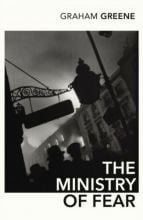
Previously, it has also taken decades for classic war novels and memoirs to emerge. And war literature often comes from a sideways angle, says Professor Mackay. The Ministry of Fear by Graham Greene was published in 1943, but was set against the background of the war, rather than being a personal account. Memoirs of harrowing events often come decades later. Some, such as The Forgotten Highlander, Alastair Urquhart tale of the Far Eastern war, were published 70 years later.
 There is always a lag with a novel,’ says Professor Mackay. While the First World War is renowned for poetry, it took many years before what we think of as the definitive fiction appeared. It was a decade before All Quiet on the Western Front, by Eric Remarque, was published, detailing the impact of the Great war on German soldiers.
It is not just the time it takes to write a book, though. ‘After World War II, people didn’t want to read about it,’ says Professor Mackay.
And, for most people, the pandemic has been a time of inaction, ‘The drama has taken place behind closed doors,’ she says. ‘There have been personal tragedies, but they have been hidden away.’
There have been absurdities, says the professor, wondering what sort of fiction could emerge from this, but, ‘For the most part, for most people, it has been monotonous but not necessarily literary.’
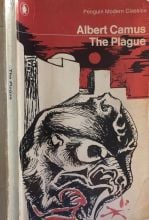
There are precedents of writing of wearisome experience. Published in 1947, The Plague by Albert Camus, is a fictional account of an epidemic, which can also be taken as a symbol for the German occupation of France, ‘The furious revolt of the first weeks had given place to a vast despondency, not to be taken for resignation, though it was none the less a sort of passive and provisional acquiescence.’
There are precedents of writing of wearisome experience...The Plague by Albert Camus is a fictional account of an epidemic, which can also be taken as a symbol for the German occupation of France
Professor Mackay speculates that there could be stories ‘framed against the altruism and selfishness’ that has been exposed by the pandemic. But she says, ‘This will be unlike classic war writing...there is an unreality and an absurdity out there.’
‘There have been moments of bathos,’ according to Professor Mackay. ‘At the beginning we had the hoarding of loo rolls, then we heard about trips to Barnard Castle....We failed in all sorts of ways. It has not been our finest hour.’
Although there has been tragedy, a majority of people have not been heroic and have had no adventures, inside their own homes. And it is unlikely there will be an appetite to read about how someone feels about being locked-down, when we are relishing new freedoms. Professor Mackay, who has written extensively about war fiction, points out that, in catastrophe writing, people feel powerless in the face of ‘impending doom’.
 Many books of the 1950s and 60s were framed against such a background, as the world lived through the nuclear build-up and the Cold War. It led to a whole genre, including The Day of the Triffids, by John Wyndham and, although HG Wells’s War of the Worlds was written in the 19th century, it was made into a radio play, a film and even inspired a musical in the second half of the 20th century, as expressions of powerlessness.
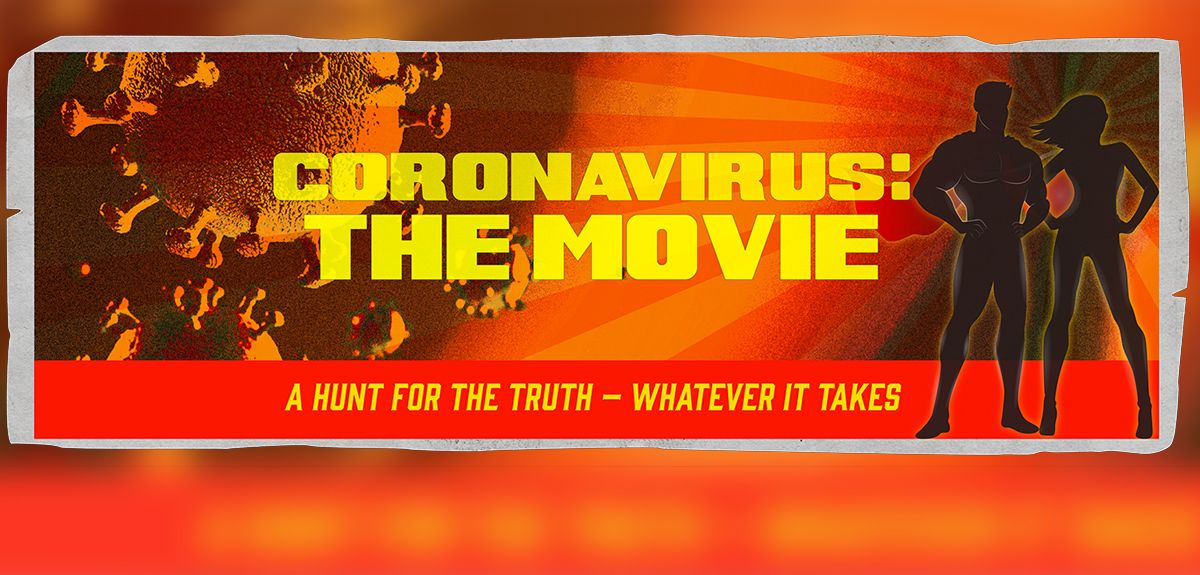
Maybe there will be a three-part mini-series about SAGE? Or, perhaps, we will return to cinemas to see the Rock find out Who caused Coronavirus? or Coronavirus: The Movie?
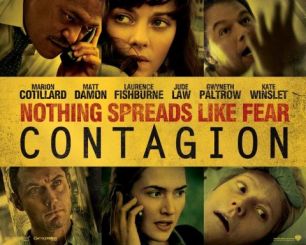
Catastrophe stories are very much in vogue. Recent years have seen numerous disaster movies, from Independence Day in 1996 to Contagion in 2011 and Geostorm in 2017.
Personal experience of the pandemic, written in these early days, may not be the stuff of literary agents’ dreams or Hollywood blockbusters. But agency and plot could be found in the search for a vaccine or in the political intrigue or scientific arguments and disputes. Maybe there will be a three-part mini-series about SAGE? Or, perhaps, we will return to cinemas to see the Rock find out Who caused Coronavirus? or maybe we will watch Coronavirus: The Movie?
Professor Mackay is the author of several books on war writing, most recently, Modernism, War and Violence and Ian Watt: The novel and the wartime critic.

One slogan of the COVID-19 crisis has attracted less publicity than certain others, despite its apparent roaring success. ‘Whatever it takes’ was not aimed at directly at saving lives, but at preserving the economy and the slogan has been (almost) too successful, according to Professor Bige Kahraman of Oxford’s Saïd Business School.
Speaking at the end of last month, the Associate Professor of Finance said that, in mid-March, the Federal Reserve chair, Jerome Powell, let it be known that the US central bank will do – whatever it takes – to keep the markets from going into freefall.
‘That was critical,’ said Professor Kahraman, to what followed – a sustained stock market run, in the face of bad news heaped upon bad news. While appalling economic indicators have emerged, with many economists and politicians warning of the biggest downturn in 300 years or 90 years or 30 years, the markets have gone up and up.
‘It is surprising,’ said Professor Kahraman. ‘From early April, the market just rallied. It was unexpected and it was against expectations. It was only one month after big market falls.’
In late February, the FTSE 100 had been standing at more than 7,000, but, by 12 March, it had crashed more than 24% - some 1,700 points to 5,230 over fears about COVID-19. Similar falls were seen on Wall Street as the Dow Jones average fell some 7,000 points from more than 27,000 to fewer than 20,000.
Professor Kahraman maintained it was Mr Powell’s reassurance that made all the difference. The Fed chair had begun by cutting interest rates – to less than zero. But received a distinctly frosty market response. But the US bank chief then sent a strong signal to the market that the US central bank would do – whatever it takes. And he was soon followed by UK Chancellor Rishi Sunak – with a massive injection of capital into the UK economy and plans to protect jobs with the furlough scheme and businesses with loans.
Investors rushed into the market....To such an extent, it started to get a little out of control. There was a momentum that saw market rises, whatever the bad news
‘Everyone was expecting unemployment to rise,’ said Professor Kahraman. ‘But there was a very strong commitment from major players. [In addition to Chancellor Sunak’s move] In the US, Congress passed a high speed Bill, which saw a $3 trillion bonus for the economy....The Fed started purchasing assets, including even junk bonds and ETFs… As a result, the market did not do what it had done in 2008, despite the bad news.’
What followed next was most unexpected, Professor Kahraman maintained, ’Investors rushed into the market....To such an extent, it started to get a little out of control. There was a momentum that saw market rises, whatever the bad news.’
The markets have crept up steadily ever since Mr Powell’s intervention, so that the index has recovered by more than 15% in the US and the UK – in spite of the dire economic warnings. At the end of May, the FTSE reached more than 6,200, while the Dow Jones went over 25,000 points – on lockdown-easing news.
Another factor in the market optimism, Professor Kahraman said, is that, although there are expected to be some closures, as firms cease trading - others will move into that space, ‘Some firms will fail but others will acquire their business, which will mean market concentration – which is good for profits. If they manage to survive, there could be higher profits for firms in future.’
We don’t have the same structural problems of the Great Depression. Europe was going into a slowdown, but this is an external shock [In the UK and the US] and the recovery should be fast once the treatments and vaccines are developed
And, said Professor Kahraman, ‘Although many industries have suffered a very negative affect, others have been boosted, particularly tech firms. This has been good news for them in terms of business.’
But, she warned, ‘This [longer term government fiscal stimulus packages] is not sustainable.’
Government bail-outs cannot be open-ended. However, Professor Kahraman does not believe we are heading towards a Great Depression-style slowdown.
‘Although some of the figures may resemble the economy around the same time, we don’t have the same structural problems of the Great Depression. Europe was going into a slowdown, but this is an external shock [In the UK and the US] and the recovery should be fast once the treatments and vaccines are developed.’
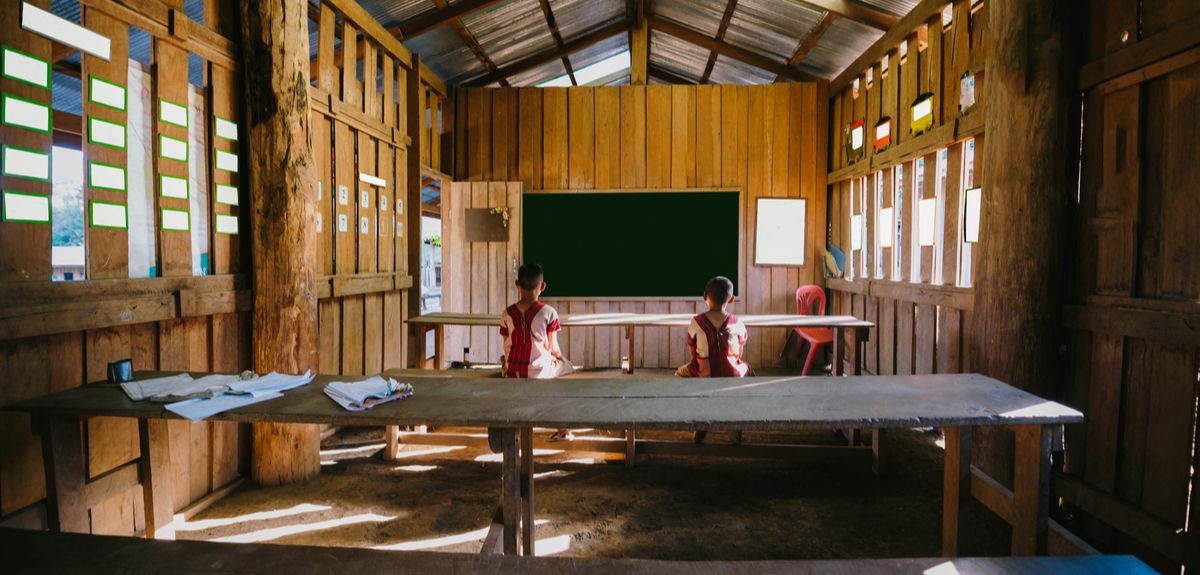
Eighty five per cent of children around the world in more than 150 countries are affected by school closures due to COVID-19. Many are currently receiving no education. And internationally, the fear is that some, not least girls, will never return to school. While the public health concerns of COVID-19 should, no doubt, be tackled now, policy makers could also act swiftly to avoid the education crisis turning into an education disaster.
Policy makers could also act swiftly to avoid the education crisis turning into an education disaster
No one knows how the virus will wreak havoc in coming months. Will there be a second peak in Europe or China? Will Africa escape the worst of the pandemic? Will the virus be contained in Latin America or South Asia, where it is currently not quite at its peak? The final consequences are fundamentally uncertain.
But this should not stop us acting now. Some potential actions are ‘no-regret’ policies - no one will regret them later and they are a good use of resources now - however the pandemic evolves. Elsewhere, I have expanded on no-regret policies in the areas of public health, social protection, the economy and the manufacturing and distribution of a vaccine when it becomes available. Here, I want to focus on no-regret policies for education, specifically for lower and middle income countries - though they have global relevance.
This blog argues for three areas of no-regret policies:
- First, ensuring learning continues to happen in whatever form is possible;
- Second, that special actions are prepared for remedial action and reversing dropout later; and
- Third, learning the lessons from digital education, in order to move towards a more inclusive and effective digital learning system later, even in resource-constrained countries.
COVID-19 could not have come at a worse time for children. It is generally acknowledged that there is a serious learning crisis in the developing world. While enrolment has increased to historically unprecedented rates, too few children are learning. For example, a recent World Bank report highlighted that three out of four children in grade 3 in Kenya, Tanzania and Uganda cannot read a sentence such as, ‘the name of the dog is puppy’. In India, by grade 3, three-quarters of children cannot solve 46 minus 17, and by grade 5, it is still a problem for half of them.
Abhijeet Singh, an Oxford DPhil, now at Stockholm School of Economics, has shown that pupils typically start at similar levels, but then some fall behind, never to catch up, in the kind of school systems we find across these countries. And now, children who were especially at risk of falling behind, have lost their access to school because of COVID-19. Often, such children are from disadvantaged families – and now they have to learn at home, if at all.
Children who were especially at risk of falling behind, have lost their access to school because of COVID-19
The first no-regret policy should be to try to keep children learning now, as much as we can. Some are at risk of falling behind in the way Dr Singh has shown - and catching up never quite happens in the educational systems of the developing world. And the signs are not good. Work by the Centre for Global Development found that 95% of children, currently at home in Senegal, were not given any work by teachers, while 30% were not involved in anything educational. Supporting learning by any means available is essential – digitally, via radio or TV, via homework distributed to children’s houses, community workers identifying children vulnerable to lose out and more.
The second no-regret policy should be to prepare now to ensure children are identified and targeted for remedial education, or to reverse drop-out later. Children will be behind, but some will be more behind than others. This is the time to plan for better forms of remedial teaching, such as the type of programmes pioneered by Pratham in India, and in recent years across the world. Evidence of their potential at scale is strong as joint work, including with the RISE programme and others at Blavatnik School of Government at Oxford, have shown.
There is another reason why it is important to do this now. Much evidence exists to show that, during economic hardship, children will not just temporarily leave school, but do so permanently. And this is likely to happen now too. This affects, not least girls - with early marriage one of the consequences. It is the time to consider how such children, who may intend to drop out, can be reached. Maybe conditional cash transfers, targeted at adolescent girls, could be considered, whereby cash is offered to families conditional on children doing homework - which will continue after schools reopen, if children continue to attend.
Much evidence exists to show that, during economic hardship, children will not just temporarily leave school, but do so permanently. And this is likely to happen now too
The third no-regret policy concerns digital learning: this may well be its time. But, unless we start acting now, this will be the start of more learning inequalities rather than fewer in the future.
All over the world, the scale of digital teaching and learning has exploded, with countries and schools looking for ways to connect to pupils. Crucially, though, there are huge inequalities of access within countries - and between them. This was highlighted by a report we did at Blavatnik School of Government - as at least three billion people remain digitally unconnected.
No doubt, the appetite for digital learning will be increased by this crisis. And doing this as well as we can is a first step. But if we do not start attacking digital inequalities through inclusive access, and prepare now to roll out at scale across the world, educational inequalities will continue to expand ever more. Work on a Digital Roadmap and Digital Toolkits may help policy makers get ahead. But there is more. The way digital tools, such as Zoom, Teams, Skype and the like, have been used for education all over the world is only exploiting their communication opportunities.
Digital learning systems are very different. If used well, they allow low-cost individualised learning at the right level with feedback loops to suit each child, rather than exposure to the same for all children in a ‘Zoom’ class. This has substantial potential in low-resource environments. A recent report by a team I led at Oxford gives more ideas. The key now is to learn as much as we can from the digital experiences during the crisis, and then get educational systems ready to using digital tools in the future in an inclusive way.
The developing world faces a learning crisis...We do not have to wait until after the COVID-19 virus has passed to start tackling it. Nobody will regret acting now
The developing world faces a learning crisis, exacerbated by the COVID-19 pandemic. We do not have to wait until after the COVID-19 virus has passed to start tackling it. Nobody will regret acting now. And it will make responding later easier - and more affordable.
Professor Stefan Dercon
University of Oxford (Blavatnik School of Government and Economics Department)

Most of the biological processes that keep us alive depend on multiple proteins working together. One of biology’s great puzzles is how this multitude of proteins and their complex interactions came to be.
Now, an international team, including University of Oxford Professor Justin Benesch and DPhil student Shane Chandler from the Department of Chemistry, has revealed that complexity can evolve through surprisingly simple mechanisms. They identified the evolutionary “missing link” through which haemoglobin — the protein complex that transports oxygen in our blood — evolved from simple precursors.
They found that the emergence of modern haemoglobin’s structure and function was triggered by just two mutations more than 400 million years ago. The team, led by the University of Chicago, also included researchers from Texas A&M University and University of Nebraska-Lincoln.
The study, Origin of complexity in haemoglobin evolution, was published today in the journal Nature.
The team’s strategy was a kind of molecular time travel going back hundreds of millions of years. They used statistical and biochemical methods to reconstruct and characterise ancient proteins before, during and after the earliest forms of haemoglobin were evolving. This allowed them to identify the missing link during haemoglobin evolution – a two-part complex, which existed before the last common ancestor of humans and sharks. This ancient complex did not yet possess any of the critical properties that allow modern haemoglobin to carry oxygen from the lungs to the brain, muscles and other tissues.
A key question was to determine through which interfaces the ancient proteins assembled, a question tackled by Chandler and Benesch in Oxford, who said: 'Part of the puzzle that needed to be solved was how haemoglobin attained its four-subunit structure. This required us to develop new methods for detecting protein-protein interfaces and revealed the historical order of assembly of this remarkable molecule.'
The traditional view of how biological complexity evolves is that it increases gradually over the course of many mutations that each cause small improvements in fitness. The new research shows that complicated new structures can come into being very quickly.
University of Chicago Professor, Joseph Thornton, who led the study, said: 'We were blown away when we saw that such a simple mechanism could confer such complex properties. This suggests that jumps in complexity can happen suddenly and even by chance during evolution, producing new molecular entities that eventually become essential to our biology.'
Read the study, “Origin of complexity in haemoglobin evolution,” in the journal Nature.
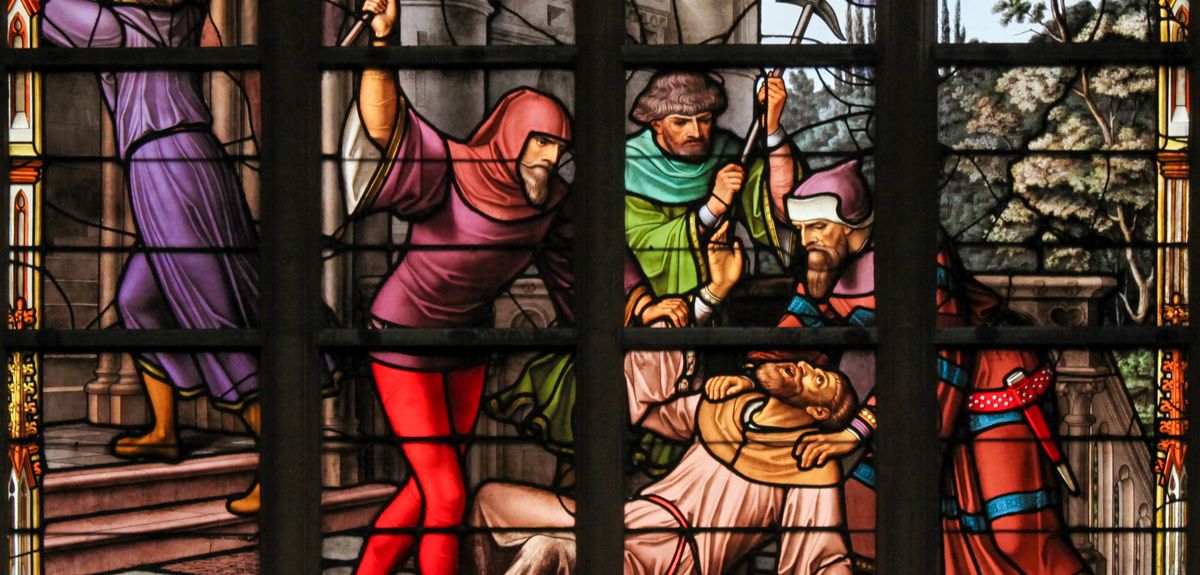
Racial and class-based divisions, economic strife and extreme politics have all followed pandemics in history, as suffering populations and authorities have sought answers and scapegoats for their plight. Whatever tensions or problems existed, epidemics have found them, sharpened them and they have come into the open as the illness receded - from the Black Death in 1348 to the plague of 1665 from the 19th century cholera epidemics and the 1918 flu to HIV/AIDS. Many large-scale outbreaks of disease have resulted in scapegoating of minorities and been followed by prolonged civil unrest.
But Oxford Professor of Medical History, Mark Harrison says, ‘When there has been extremism and tensions [following an epidemic], they have already existed....Epidemics in themselves don’t cause tensions, they expose them....The lesson of history is that epidemics accentuate problems and bring them into the open.’
When there has been extremism and tensions [following an epidemic], they have already existed....Epidemics in themselves don’t cause tensions, they expose them
The effects can be dramatic, as evident in even recent years: in 1986, the Duvalier family, which had ruled Haiti for nearly three decades, was swept from power after the country's economy was brought to its knees in the midst of the AIDs crisis. Jean-Claude ‘Baby Doc’ Duvalier, who took power after his father's death in 1971, had previously enjoyed overseas backing for his regime. But panic around the condition was widespread in the mid-1980s and the Haitians were made a 'special risk factor group'. The impact of that decision on the Haitian population and on 'Baby Doc' was enormous. The nation's travel industry collapsed virtually overnight and with it went the precarious economy. Haitians are perceived to have been doubly victimised: first by the import of HIV/AIDS from the US and then by the stigmatisation of Haitians. But the link with AIDs, and the action taken of naming the nation, saw the unpopular Haitian regime driven from power after nearly 30 years in charge and 'Baby Doc' leave for exile.
Horror
In earlier centuries, there have been a variety of responses to pandemics and epidemics - some have been extreme, even heinous, others have followed as a consequence of the illness and the loss of life. Six centuries before the Duvaliers were forced out of Haiti, the Black Death of 1348 saw anything from one third to a half of Europe's population wiped out, as plague raged across the Continent. The enormous magnitude of the crisis, saw a complete change in the social landscape and, in the aftermath, there were horrific anti-Semitic attacks across Europe. Rumours and wild accusations led to populations and their rulers looking for scapegoats - and to cancel debts and seize Jewish property - and there are records of appalling attacks on whole communities.
Scapegoating of communities or individuals, has followed in the wake of other pandemics, as people have sought answers or simply to punish those they hold responsible. But reports from 1349, also show that a penitent movement, the flagellants, developed, comprising survivors of the pandemic. They moved from country to country flogging themselves in public, to atone for their sins - which, it was feared, had caused the Black Death.
The Black Death of 1348 saw anything from one third to one half of Europe's population wiped out...and, in the aftermath of the plague, horrific anti-Semitic attacks across Europe
Long term impacts
After the initial horror, the Black Death had a long-term impact on the social fabric of Europe. With so many peasants losing their lives, the epidemic was followed by a labour shortage and wage inflation. Since the lower classes were able to command greater rewards for their work, the days of peasants being tied to a master's land were largely gone. It effectively proved to be the end to serfdom in England, with peasants, who were previously unable to leave their master's lands, seeking better opportunities and more money in towns. For those who survived the pandemic, it meant the possibility of mobility and a better standard of living. There was such concern among the ruling class, about the increase in wages and peasants roaming the country searching for better job opportunities, that the 1350 Statute of Labourers' Act was enacted. This made it illegal to receive higher wages than had been offered in 1346, ‘the twentieth year of our reign of King Edward III’.
There is also evidence, says Professor Harrison and fellow medical historian Dr Claas Kirchhelle, that suffering and epidemics bring communities together, across cultural and class divides, as they combine to fight illness and prevent outbreaks. Responses to the same pandemic have also differed in different countries, with some looking to blame while other populations reacted with cooperation. The Spanish were not held responsible for the Spanish Flu, which had not originated in the Iberian peninsula anyway. And, according to Dr Kirchhelle, 'The third plague pandemic saw different faiths and ethnicities in the cosmopolitan Egyptian city of Alexandria come together to take communal health action.'
Around the world, the impact of the COVID-19 pandemic has manifested in populations spontaneously coming together in song or in support of healthcare workers. In countries, such as Germany, where there was an effective initial response to the pandemic, recent opinion polls indicate a rise of trust in government parties and a decline in support for opposition parties and the far right - despite individual acts of militancy. But, in the US, some groups have been demanding the lifting of restrictions, in the face of lockdowns, and at the same time there has been criticism of the handling of the epidemic and inequalities.
Backlash
According to Professor Harrison, much depends on how the pandemic is handled by governments and whether this is seen to be fair or furthering inequality. We are yet to see the aftermath of COVID-19 but, Professor Harrison says, there is already evidence of a ‘backlash’ with many attacks on 5G installations and online conspiracy theories receiving more-than-usual attention and support. He maintains, ’In some previous cases [in history], governments have inflamed tensions. [In other cases] it has been economic effects or class or racial/ethnic tensions.’
Professor Harrison adds, ‘The 5G attacks aren't simply based on conspiracy theories, but have been conducted by people who appear to see the communications infrastructure as a form of oppression and want to hinder a return to normality.’
The 5G attacks aren't simply based on conspiracy theories but have been conducted by people who appear to see the communications infrastructure as a form of oppression and want to hinder a return to normality
Throughout history, populations have sometimes responded dramatically to the problems faced by illness within their society. In London of 1665, which was riven by plague, there were riots and attacks on the authorities. People flouted restrictions on movement and deep social divisions were exposed as the wealthy classes fled, leaving poorer people in the plague-ridden capital. But, once the danger was over, people flocked back to London. According to Samuel Pepys, ‘Now the plague is abated almost to nothing… to our great joy, the town fills apace, and shops begin to be open again’.
‘Inequality became an issue in 1665,’ says Professor Harrison. ‘And the cholera epidemics of the 19th century exacerbated tensions between the working class and governments in Paris and Moscow.’
But what causes huge upheaval in one country, will not necessarily be reflected in others. According to Dr Kirchhelle, the cholera pandemics also inspired significant collective action for public health. While initial British responses to cholera were unstructured, the period between the 1850s and 1890s saw different cities, local authorities, and successive national governments decide to construct large-scale affordable water, sanitation, and hygiene systems throughout Britain. Financed by cheap credit and local taxation, citizens took great pride in their collectively-built and owned health infrastructure.
Responses and reactions
Ultimately, Professor Harrison maintains, ‘Situations in different countries, lead to different outcomes....What should concern us about the present pandemic is the longer term impact, the economic impact.’
He says, ‘Class and ethnicity can become an issue, if there is perceived to be an unequal impact of a disease and the way it is handled...If poor people are seen to be more at risk and if the lockdown is felt more by them, then it can lead to tensions.'
Key to the likely response, will be the measures brought in to deal with easing the restrictions. Sensitive ‘policing coupled with targeted aid for vulnerable communities becomes really important’
While public support of collective symbols such as the National Health Service is at an all-time high, we are already seeing significant concerns about the disproportionate effects of the pandemic in poorer urban areas and British Asian and Middle Eastern communities, says Dr Kirchhelle.
‘There could also be a perception of a generational divide, (which is already there in our society) and those most likely to break measures are youths and young adults,’ Professor Harrison maintains. ‘They already resent the lockdown and the economic measures. It is a toxic mixture.’
Key to the likely response, says Professor Harrison, will be the measures brought in to deal with easing the restrictions. Sensitive ‘policing coupled with targeted aid for vulnerable communities becomes really important’.
Rumours and theories are often rife in times of epidemics, more so now because of the easy international methods of communication. According to Professor Harrison, ‘In previous epidemics, rumours have expressed a social truth of marginalisation...and they can become a focus for action.’
He has concerns about potential for scapegoating communities, ‘There is disinformation on all sides at the moment...but in previous epidemics, countries have become concerned about other countries who were seen to be taking advantage of the situation.’
Professor Harrison says, ‘In the 1890s, the European powers imposed heavy quarantines and embargoes [because of cholera] against their competitors. But these became untenable over time. Their economies were interconnected and they had to work together....And it led to the first international sanitary agreements.’
Both academics hope for a similar response to the COVID-19 crisis, with the best way out of the current and future pandemics lying in rapid, transparent, and collective international action to coordinate public health interventions, develop effective diagnostics, vaccines, and therapeutics, and protect vulnerable communities. According to Professor Harrison, ‘This probably will come about because of shared economic interests, but it won't happen immediately in all sectors.’
- ‹ previous
- 42 of 252
- next ›
 What US intervention could mean for displaced Venezuelans
  Setting the agenda for the next century of quantum
 10 years on: The Oxford learning centre making an impact
 Mapping the Moon: the world’s first lunar atlas goes digital
  Oxford and The Brilliant Club: inspiring the next generation of scholars
 New course launched for the next generation of creative translators
 The art of translation – raising the profile of languages in schools
  Opening a window into the quantum world
 Tracking resistance: Mapping the spread of drug-resistant malaria