Features
By Sarah Whitebloom
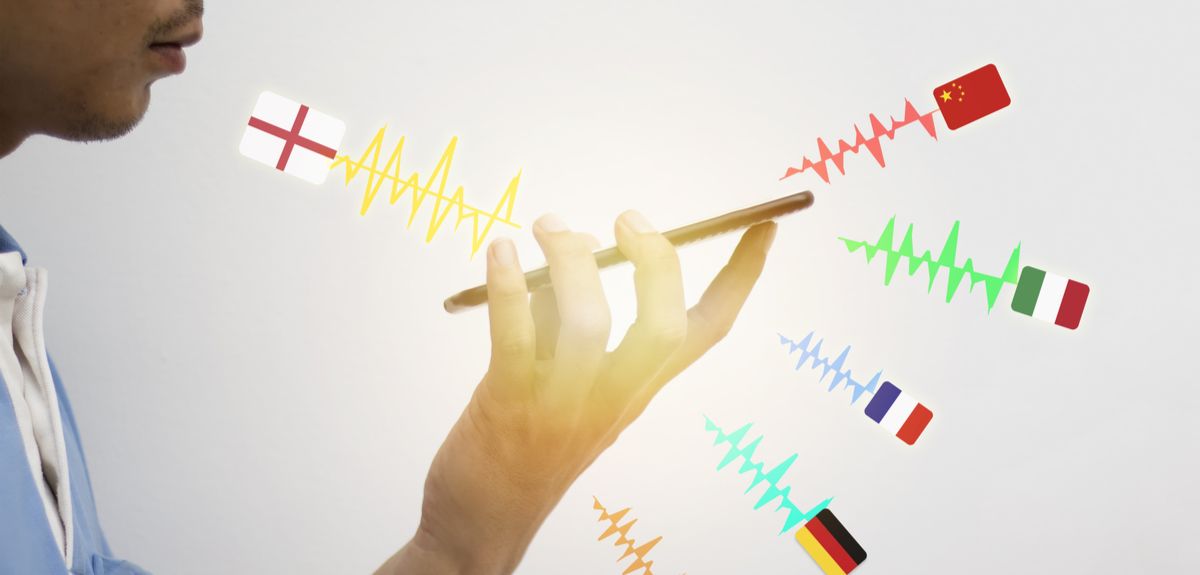
A surge in interest in language learning has emerged as a phenomenon of the current social distancing. One popular language learning apps has claimed increased usage of more than 200%, while others are reporting new sales up more than 50%.
Academics maintain it shows a pent-up interest and wish to study languages. For a nation supposedly averse to speaking other languages, the British have been turning in numbers to foreign tongues as a first resort – in the absence of more traditional forms of entertainment.
For a nation supposedly averse to speaking other languages, the British have been turning in numbers to foreign tongues as a first resort
‘It shows there are a lot of people who want to learn a language,’ says Oxford Professor Katrin Kohl. ‘It’s surprising how often you meet people in all walks of life who are taking language courses.’
But, she maintains, many people have been put off by unrealistically difficult exam syllabuses at school: ‘GCSE and A level papers are too demanding and grading is too harsh when compared to other subjects.'
‘The exam system conspires against language learners...they’re discouraged on all fronts.’
Professor Kohl says that, while many people therefore believe they are ‘rubbish at languages’, there is clearly interest. She also highlights that there is a huge pool of talent for languages in the UK. In England, for more than one in five primary school children and almost one in six students at secondary level, English is a second language. ‘This means they already have well-developed language learning skills, a benefit that isn’t sufficiently valued at present.’
It might seem that, with globalisation, everyone speaks English. But Professor Kohl says: ‘That simply isn’t the case. The world isn’t just culturally diverse, it’s also linguistically diverse. People care about their distinctive languages, as we can see in Wales and Ireland.
'Developments such as this surge in interest shows that people see language learning as a fruitful way to spend time.’
Apps have revolutionised what’s on offer for learners. You can get quite a long way with apps and they can continue to support your learning, even if you later join a class
She dismisses the idea that online and app learning will not assist people to take up classes in future: ‘Apps have revolutionised what’s on offer for learners. You can get quite a long way with apps and they can continue to support your learning, even if you later join a class. They incentivise you, send you reminders and introduce competition, allowing you to test yourself.’
Professor Kohl insists: ‘Language learning thrives on variety of learning styles and options.’
She recommends:
- Don’t set the bar too high
- Set a modest minimum per day, and do more if you’re feeling energetic
- Vocabulary learning can be fun with a helpful app, and you can measure your progress
- Practice pronunciation – find how a word is pronounced online by typing in the word and ‘pronounce’
- Read a novel in the language with a strong plot, e.g. a Georges Simenon thriller if you’re learning French, and refer to a translation. Or read a translated Agatha Christie and refer to the English original (Set yourself very short sections to begin with). There again, La Peste by Albert Camus is currently proving very popular.
- Watch ads and kids’ stuff on YouTube.
- Watch a non-serious film with subtitles, then watch it without, in very short sections.
- Follow news stories – e.g. developments with the coronavirus crisis. Compare the reporting.
- Research information about a hobby in a country where the language is spoken. Find a blog that’s relevant.
- What place might you go to where the language is spoken? Explore local websites to find out what there is to see and do using local websites, and involve Google Translate to help you along.
- Try your hand at translating a very simple text, with a dictionary and Google Translate·
- Find a language learning buddy. It’s much easier to learn a language and keep it going if you’re doing it with someone else or in a class.
If you give up because it’s hard work and progress is slow, remember that’s normal. Start again and set the bar lower. The effort won't be wasted!
It’s a great way to keep your brain in trim – studies have shown that using more than one language can delay the onset of dementia by four to five years, and language learning has similar benefits.
By Sarah Whitebloom
People need simple choices, not suggestions, in the Covid-19 crisis - so they do things that are good for them and for the community by default, according to Dr Kate Orkin, senior research fellow in behavioural economics with Oxford’s Blavatnik School of Government.
Dr Orkin points out that, in Choice Architecture, Richard Thaler and Cass Sunstein highlight that people have limited attention or ‘headspace’ and can be nudged to make better choices (as judged by themselves) without forcing them to act. But nudging in the current context does not mean making suggestions as to whether people should stay at home. They need to be given simple choices, she says: ‘The famous example of this was when it became the default option to save in pensions in the US - more people saved,’ she says.
To encourage cooperation, basic game theory suggests, you need to have some sanctions to get people to cooperate, says Dr Orkin. This can include fines but also social pressure. Dr Orkin maintains: ‘Statistics show that 82 per cent of Britons would support the police being able to arrest or prosecute anyone who should be self-isolating but isn’t.’
Statistics show that 82 per cent of Britons would support the police being able to arrest or prosecute anyone who should be self-isolating but isn’t
But, key to encouraging people is to highlight that the majority is doing the right thing, not that the minority is doing the wrong thing. According to Dr Orkin: ‘Research shows that, if you highlight people doing a bad thing, it suggests it isn’t that bad and they do it more.
‘It is much more effective to highlight positive behaviour or ask people to do the right thing.’
Dr Orkin says: ‘These Italian mayors all over social media scolding their constituents for doing the wrong thing may be funny, but evidence suggests it isn’t actually very helpful.’
People learn socially, she says, they watch what others around them do and they’re very influenced by people like them.
‘Evidence from smoking cessation, exercise, diabetes management programmes show people are very influenced by hearing from others like them who have managed to make a positive change. And it helps if it is relatable: if people who can talk about how they’ve struggled and overcome those struggles.’
But will it be a problem to start with three weeks social-distancing, if it then has to be extended? Will it be less likely that people less likely to stick to it?
‘I don’t think so,’ says Dr Orkin. ‘It is true that people tend to set reference points or targets and stop when they reach their goals. But that’s instinctive behaviour – it is not difficult to overcome. ‘
She adds: ‘There is this sense are hard and fast rules about human behaviour. But we are agents, we can control our actions. We can also be quite easily guided.’
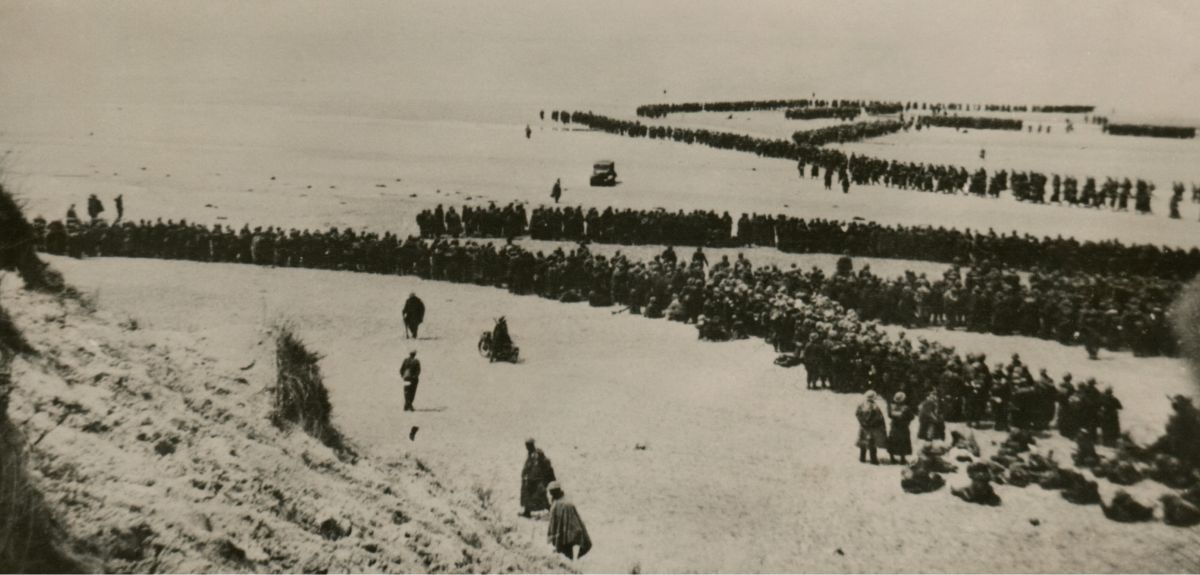
Appropriate wartime analogies might be...in Dunkirk where the big transport ships are being overturned in the channel they send in all the little boats: everyone needs to play their part.
Dr Orkin points out that the renowned psychologist Daniel Kahneman uses this idea of System 1 and System 2 - we almost have two brains. System 1 is automatic thinking, almost by instinct. We are guided by emotions, we use rules of thumb, we overinterpret cues. This particularly kicks in when we’re tired, hungry or anxious. System 2 is more considered and rational.
In the current crisis, Dr Orkin says, public health action should have simple structures to guide people when they’re using system 1.
‘So just set the default: don’t go out the house. Or – you can only buy two packets of loo roll.’
But, she says: ‘If you need people to make an active choice, you want to help people switch into system 2. And you want to give them motivation to do the right thing.’
This can be used by everyone – supermarket managers managing queues, local councils managing parks. As for whether it would be appropriate for the authorities to put people on a ‘war footing’, using analogies from wartime to encourage ‘good’ behaviour, Dr Orkin says that, in her opinion: ‘Appeals to do the right thing are effective, appeals to civic duty are effective. I personally think you want a message which emphasises that everyone has to play a role and it isn’t going to be fixed by one grand plan.’
Appropriate wartime analogies might be: Your actions have consequences for others. Don’t leave your black-out curtains open, the whole street will get bombed, not just you. Or, she says, there’s the scene in Dunkirk where the big transport ships are being overturned in the channel and then they send in all the little boats: everyone needs to play their part.

If families are going to survive the Covid-19 lockdown happily, planning is going to be key, according to Professor Ann Buchanan of Oxford’s department of social policy, who has come up with the Four Bs as a plan for a successful family lockdown.
A good way to handle to stress is to have a routine that happens five days a week with more relaxed days at weekends
Planning needs to go into daily life, she maintains, in order to alleviate the inevitable stress on both children and parents of constant contact. Professor Buchanan’s Four Bs are all about planning. She says: ‘A good way to handle to stress is to have a routine that happens five days a week with more relaxed days at weekends. But, kids of all ages, also need the Four Bs.’
- First, Busy. The temptation is that younger children will spend their time in front of the TV while older children spend all day on social media.
- Second, Brain. Hopefully, schools have given projects/challenges, which they work on with friends, but which also require some work on their own.
- Third, Body. Exercise. The government has set strict rules- no team games but walking, cycling, running are all allowed.
- Finally, Buddies. Most kids are good at linking up with friends on social media. But, if parents are not careful, this can be a full day activity.
Professor Buchanan says: ‘My instinct would be to divide the day into three - Brain in the morning, Body in the afternoon and Buddies after tea.’
And, she says: ‘Once children get a routine, parents will have time to concentrate on their work. So settling children is good for parental mental health. They need to look after themselves. Many parents are struggling with less money on top of all the other problems.’’
The beauty of the Four Bs, though, is that you don’t need children for them to work. Everyone benefits from having a routine, according to the Professor.
‘You need to get up at regular times and not just wear sloppy clothes,’ she says.
This crisis and the prime minister’s call to stay at home came suddenly on families, who may, in normal times, see little of each other. Coronavirus left no opportunity for planning - and there is no knowing how long this situation will continue
But why is this period proving so difficult for families? Isn’t it good for parents and children to be together? And, after all, we are together at other times of year; Christmas and holidays. But, says Professor Buchanan, this crisis and the prime minister’s call to stay at home came suddenly on families, who may, in normal times, see little of each other. Coronavirus left no opportunity for planning - and there is no knowing how long this situation will continue.
‘It’s challenging,’ she says. ‘Christmas and holidays are limited and it can be stressful just being together for two weeks. We don’t know how long this is going to go on.’
Being thrown together overnight, with little opportunity even to go outside, has created a ‘very intense’ situation. Professor Buchanan says: ‘These are stressful times for parents...They may have their own work to do, but they also have to think about their children's wellbeing. Meanwhile, many children will be anxious and worry about their own health.’
A key way to maintain motivation, for teenagers and adults alike, is to focus on the fact that self-isolation is for doing something for someone else. Professor Buchanan says: ‘It gives them a purpose, if you appeal to people’s better nature. [If they don’t think about their situation] It takes them out of themselves. The fact that it is a global emergency in that it is not just our emergency.
‘It always makes you feel better if you’re doing something for someone else – or saving the world.’
By Sarah Whitebloom
Self-isolation, lock-downs, economic chaos and closed borders: responses to today’s COVID-19 pandemic have their roots in history. In the past, there has also been panic-buying, attempted flight, fake news, quack remedies, beleaguered health authorities and a race for vaccines – all in the face of millions of deaths.
From earliest history to the SARS epidemic, the world has endured plagues, viruses and infections that have inspired panic among populations, rulers and politicians alike – as well as countless untimely deaths. From the Black Death of 1348 to the London plague of 1665, from the repeated impact of cholera in the 19th and 20th centuries, to the millions lost in the 1918 ‘Spanish’ flu, leaders have often struggled to know what to do while populations have reacted with fear and later, occasionally, fury. The reaction to COVID-19 can be seen very much in this tradition, as concern has turned into pressure for the strictest containment measures, alongside the determined – and unprecedentedly rapid - pursuit of a cure.
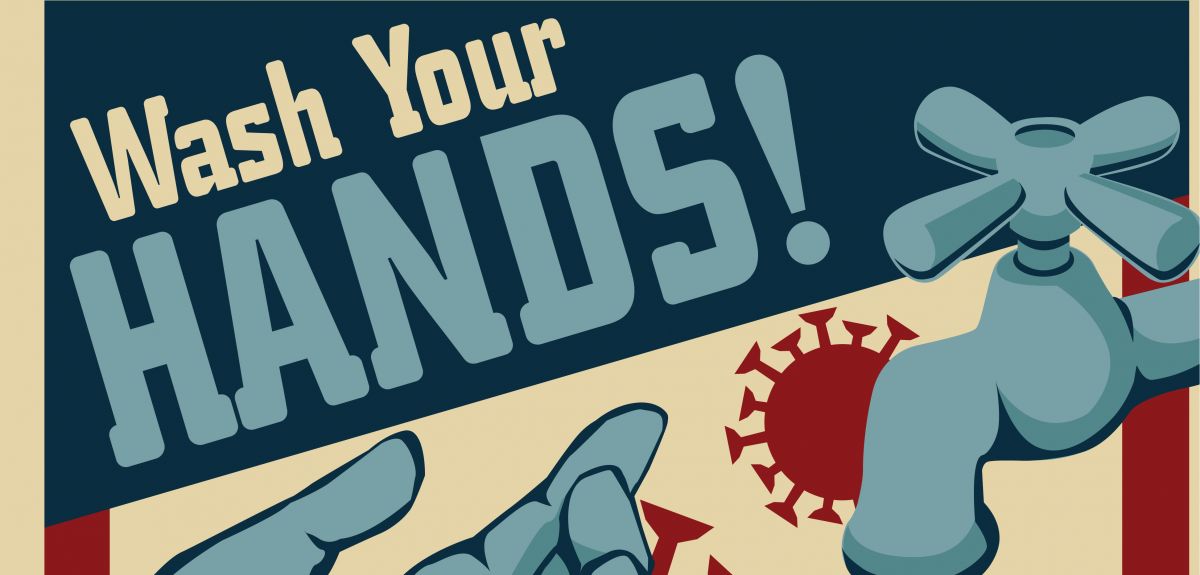
During cholera epidemics, propaganda was used to urge people to pursue physically and morally 'healthy' habits from staying calm and washing their hands – just as it has been today - to praying for salvation and quitting alcohol. In the 1918 epidemic, face masks were in common use and, in earlier times, people were ordered to quarantine. In the distant past, though, civil disorder sometimes followed. Public compliance eventually turned into public dissatisfaction with measures, which included infected people literally being shut into their houses.
In the 1918 epidemic, face masks were in common use and, in earlier times, people were ordered to quarantine
As in the past, in the current crisis there will be ‘pinch points’, according to historians, for instance if the number of cases rises despite social distancing and the authorities will need to issue reassurance or adjust the measures being taken. While social distancing is an internationally agreed approach, as the situation changes, governments around the world will be under pressure to put in place policies for an eventual move to less draconian measures. At that point, Oxford Professor of the History of Medicine, Mark Harrison, maintains international leaders will need to look for an ‘exit strategy’ or an end in sight from the current lockdown approach. Professor Harrison says: ‘Governments will need to ask, how do we de-escalate? What measures do we put in place and can we re-escalate at a later point?’
Although the threat to life from the plague was in a completely different order to that presented by COVID-19, the measures taken in London in 1665 were not dissimilar to current international social distancing. From the beginning of the plague outbreak, there was strict quarantine of infected people, trades closed down and many fled the city. But, in chaotic Restoration-era London, crime and disorder followed harsh restrictions. Samuel Pepys wrote in his diary: ‘This day, much against my will, I did in Drury Lane see two or three houses marked with a red cross upon the doors, and ‘Lord Have Mercy upon Us’ writ there – which was a sad sight to me, being the first of the kind… that I ever saw.’
Although the threat to life from the plague was in a completely different order to that presented by COVID-19, the measures taken in London in 1665 were not dissimilar to current international social distancing
Opposition was swift. In the documents of a case discussed at court at Whitehall in the presence of Charles II, 28 April 1665, it states: ‘Upon Information given unto this Board, that the house, the Signe of the ship in the New buildings in St.Giles in the fields, was shutt up as suspected to bee infected with the Plague, & a Cross and paper fixed, on the doore; And that the said Cross & paper were taken off, & the door opened, in a riotious manner, & the people of the house permitted, to goe abroad into the street promiscuously, with others.’
This was not an isolated incident. In a letter from a civil servant, 1665, also in the National Archive, it states: ‘Death is now become so familiar, and the People soe insensible of danger, that they look upon such as provide for the publick safety, as Tyrants and Oppressors.’
Government experts are already talking about scaling back the strict measures over time. The current lockdown is initially going to last three weeks. And over the next 12 months greater and lesser restrictions may be applied, depending on the course of the virus.
Widespread use of testing offers a way of relaxing measures but GPS monitoring advocated in South Korea is proving controversial there. Professor Harrison says: ‘Maybe they [the government] will have to communicate with people that they will have to accept some risk as a price for their freedom. Maybe they will have to make available more intensive care beds, in expectation of more cases....The prime minister said there was light at the end of the tunnel of 12 weeks. That is the target. But there could be dissatisfaction if de-escalation doesn’t happen...Resentment could build up.'
In one important respect parts of the COVID-19 response are very different from previous centuries - or even decades. This includes the speed with which scientists have been able to identify, sequence, and share information about a completely novel pathogen, the development of promising diagnostics, vaccines, and treatments within just over three months of the virus being identified, and global real-time disease surveillance
Problems could arise, if, as happened in 1665, there are secondary waves of infection. The plague raged in the City for more than 12 months, but according to the Bills of Mortality, the peak was not reached until September 1665 – a full year after the first reports of illness. And there were still deaths after this peak, affecting some people who had returned to London, in the expectation it had ended. Professor Harrison says: ‘It is still too early to say what is working and what isn’t [in terms of the fight against the virus]. There’s a reasonable high probability that there will be some immunity [for people who have had the virus] but we don’t know how long that would last.’
Careful studying of how countries such as China and South Korea, which rapidly implemented strict social distancing early on and then balance a de-escalation of measures, will provide valuable lessons for the rest of the world.
Dr Claas Kirchhelle, lecturer in the history of medicine at University College Dublin and fellow of the research and policy unit, the Oxford Martin School, says: 'Restricting the movement of people and implementing other rudimentary forms of social distancing have been mainstays of disease responses for centuries - alongside rumours, stigmatisation, and often desperate attempts to find remedies ranging from charms to quack medicines'.
Responses often varied according to cultural precedents and the specific biological profile of the pathogens involved. But, he says, in one important respect parts of the COVID-19 response are very different from previous centuries - or even decades. This includes the speed with which scientists have been able to identify, sequence, and share information about a completely novel pathogen, the development of promising diagnostics, vaccines, and treatments within just over three months of the virus being identified, and global real-time disease surveillance.
Dr Kirchhelle says the response to COVID-19 marks a dramatic acceleration of disease response strategies, which gradually emerged from the second half of the 19th century onwards. During this period, the discovery of germ-theory gradually revealed the biological causes and transmission modes of previously mysterious and untreatable diseases.
Resulting blessings were manifold: from increasingly reliable diagnostics and more targeted non-therapeutic interventions like chlorination or campaigns against flea-bearing rats to the development of effective vaccines and specific therapies like antibiotics. At the same time, nation states also became better at coordinating their response to international disease outbreaks. Convened in response to the cholera pandemics sweeping the globe, a series of international sanitary conferences began to lay the legal groundwork for standardised quarantine periods, disinfection methods, and international information sharing on infectious disease.
At the time of the 1918 flu pandemic, many people expected that science and officials would be able to take action. But the tried-and-tested approaches of traditional bacteriology failed. The disease was not caused by a bacterium but by an unusually deadly influenza virus. Not knowing what this was meant ‘they didn’t know what they were facing’. Coming at the end of the Great War and with actual incidence rates often censored by wartime and post-war governments, the 'flu' was able to move quickly around the world and across a broken Europe. And, as now, many people thought it was ‘just flu’. Dr Kirchhelle says: ‘There seemed no way to stop it spreading; it was explosive and devastating.’ Many people actually died of bacterial superinfections, which spread easily in malnourished bodies and in mass wards and could today have been treated with antibiotics.
Concerted international action has been critical in terms of tackling COVID-19. Although the current advice is very much in line with traditional attempts to starve a disease of susceptible new bodies, the rapid scientific response to a rapidly spreading infection has been ground-breaking. According to Dr Kirchhelle: ‘There has been a radical sharing of information and a very rapid sequencing of the pathogen's genetic code.’
He concludes: ‘The WHO in particular has worked well, despite chronic underfunding, and the fact that it has few actual powers to enforce compliance. The COVID-19 pandemic shows that new pathogens can rapidly spread globally. Hopefully, our current experience of vulnerability will lead to a long-term strengthening of international cooperation when it comes to tackling infectious disease and improving health systems in all parts of the world.'
by Sarah Whitebloom
Measures taken by governments in the coming months to control COVID-19 will determine the impact of the pandemic on the global and national economies, according to Oxford professor of economics Simon Wren-Lewis. In his latest blog, Professor Wren-Lewis argues: ‘It is impossible to predict what the full year impact will be until we know what controls are essential and what controls can be relaxed while maintaining an effective test/trace/isolate regime.’
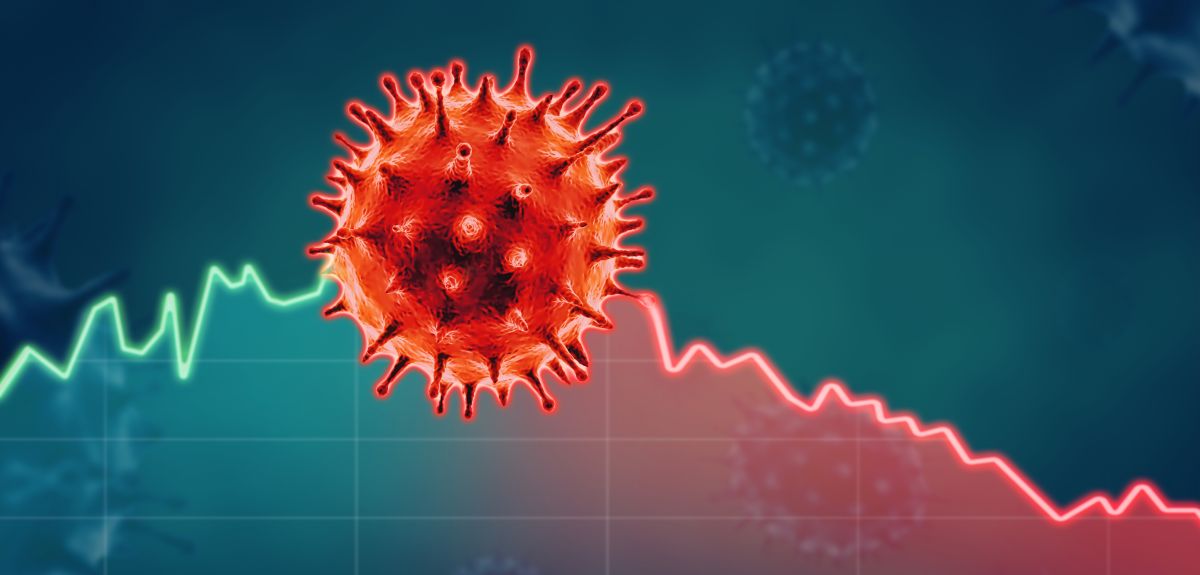
His work modelling the impact of a pandemic – which anticipated a six per cent fall in GDP over 12 months – was based on the crisis lasting just three months. But, with COVID-19 set to be present in the community for a longer period, the way that the response is managed and implemented will be critical to its economic impact.
‘We assumed the pandemic was just a three month affair. If we look at our severe pandemic case including falling social consumption, we had GDP in the pandemic quarter falling by 30 per cent. There was a similar fall in consumption. However, because our severe pandemic lasted for just one quarter, GDP for the year as a whole fell by only six per cent. So how good a guide are those numbers to this coronavirus pandemic?’
Key to the economic impact will be ‘the strength of social distancing controls, the degree of business and worker support from governments and whether governments can relax social distancing before three months are up
Professor Wren-Lewis says the predicted fall of 30 per cent ‘does not look obviously wrong and may well be an underestimate’. But, he emphasises ‘this is not a precise figure’.
It is what comes next that is crucial. Key to the economic impact will be ‘the strength of social distancing controls, the degree of business and worker support from governments and whether governments can relax social distancing before three months are up’.
Professor Wren-Lewis says: ‘Once the number of cases are brought right down, it is likely governments will do what China is currently doing, and move to a strict contain regime,’ he writes. ‘This involves a very stringent regime to test those who might still get the virus and the isolation of known contacts, combined with some continuation of social distancing controls....I think this will inevitably be how other countries deal with the virus once numbers are down.’
But, he warns: ‘Some will do it well, and others may not, leading to controls being reintroduced.’
Despite the expected longer term presence of COVID-19, the theory behind the earlier modelling essentially holds true, according to Professor Wren-Lewis. The main supply side impact comes from school closures which, as he says, now look set to last until the summer. Meanwhile, workers will be reluctant to use grandparents – unlike the assumptions in the study.
The study had predicted a fall in social consumption and a heavy impact on the leisure industry – which has been borne out. But, Professor Wren-Lewis says: ‘There is a limit to how far GDP can fall because we will not eat less, and we will not spend less on housing or heating. Expenditure on clothing and particularly durables may be delayed to some extent, as people avoid personal contact, but online purchases should continue.’
Professor Simon Wren-Lewis says: ‘There is a limit to how far GDP can fall because we will not eat less, and we will not spend less on housing or heating
This is why the action that governments take now is so critical. Professor Wren-Lewis says: ‘We assumed there would be no attempt at suppression beyond school closures...This coronavirus pandemic will not be a one quarter affair, because governments quite rightly have not been prepared to see a short sharp peak where their health services will be overwhelmed.’
Talking about initial responses to COVID-19, he continues: ‘Nearly all Western governments underestimated how quickly the virus would spread.’
But, he says: ‘It is easier to control the virus by relaxing controls than creating such controls from scratch...The key issue for the economy once numbers come down is how many controls can be reduced or eliminated while keeping a lid on new case numbers.’
The key issue for the economy once numbers come down is how many controls can be reduced or eliminated while keeping a lid on new case numbers
At the heart of this, on the supply side, will be ‘whether schools reopen’ and on the demand side, ‘what parts of social consumption can be made safer’. Professor Wren-Lewis says: ‘Because some relaxation will almost certainly be possible, then GDP growth will partially bounce back, but how much they will bounce back is very unclear at present...our study, which had GDP being above the no-pandemic case in the second quarter, does not apply to the pandemic we are now in.
‘As a result, the first year GDP impact of a six per cent fall our study is much too small. It is impossible to predict what the full year impact will be until we know what controls are essential and what controls can be relaxed while maintaining an effective test/trace/isolate regime. We will get some idea from China’.
Read more on Professor Wren-Lewis’s blog: https://mainlymacro.blogspot.com/2020/03/the-economic-effects-of-pandemic.html
- ‹ previous
- 45 of 252
- next ›
 What US intervention could mean for displaced Venezuelans
  Setting the agenda for the next century of quantum
 10 years on: The Oxford learning centre making an impact
 Mapping the Moon: the world’s first lunar atlas goes digital
  Oxford and The Brilliant Club: inspiring the next generation of scholars
 New course launched for the next generation of creative translators
 The art of translation – raising the profile of languages in schools
  Opening a window into the quantum world
 Tracking resistance: Mapping the spread of drug-resistant malaria