
Rice gene discovery could cut fertiliser use while protecting yields
Researchers from the University of Oxford, Nanjing Agricultural University, and Institute of Genetics and Developmental Biology (Chinese Academy of Sciences) have finally identified the master regulator in plants that balances root and shoot growth when nutrients are limited. In field trials, rice plants with a natural, improved version of the gene had yield increases of up to 24%. The breakthrough, published in the prestigious journal Science, could ultimately improve global crop yields while reducing dependence on synthetic fertilisers.


Our study clearly shows that this regulator is a promising target for sustainable crop improvement. It was extraordinary to see the difference that the improved version of the gene had on rice yields during our field trials.
Corresponding author Dr Zhe Ji, Department of Biology
Nitrogen fertiliser is essential for modern agriculture but is environmentally costly, contributing to greenhouse gas emissions, water pollution, and soil degradation. Crops typically respond to nitrogen deficiency by investing more in root growth to forage for nutrients, often at the expense of shoot development and grain production. While adaptive in the wild, this trade-off limits agricultural productivity.
Up to now, the molecular driver of this developmental switch has been unknown. In the new study, the researchers not only identified the gene responsible, but demonstrated that manipulating this in rice can maintain shoot growth and yields even when nitrogen levels are low.
In controlled greenhouse and field experiments, the researchers showed that rice plants lacking a functional version of a gene called WRINKLED1a lost the ability to invest more in root growth under low-nitrogen conditions, and had reduced shoot growth when nitrogen was abundant. Conversely, plants genetically modified to overexpress the gene showed stronger growth in both roots and shoots, as well as a more constant root-to-shoot ratio as external nitrogen levels varied.
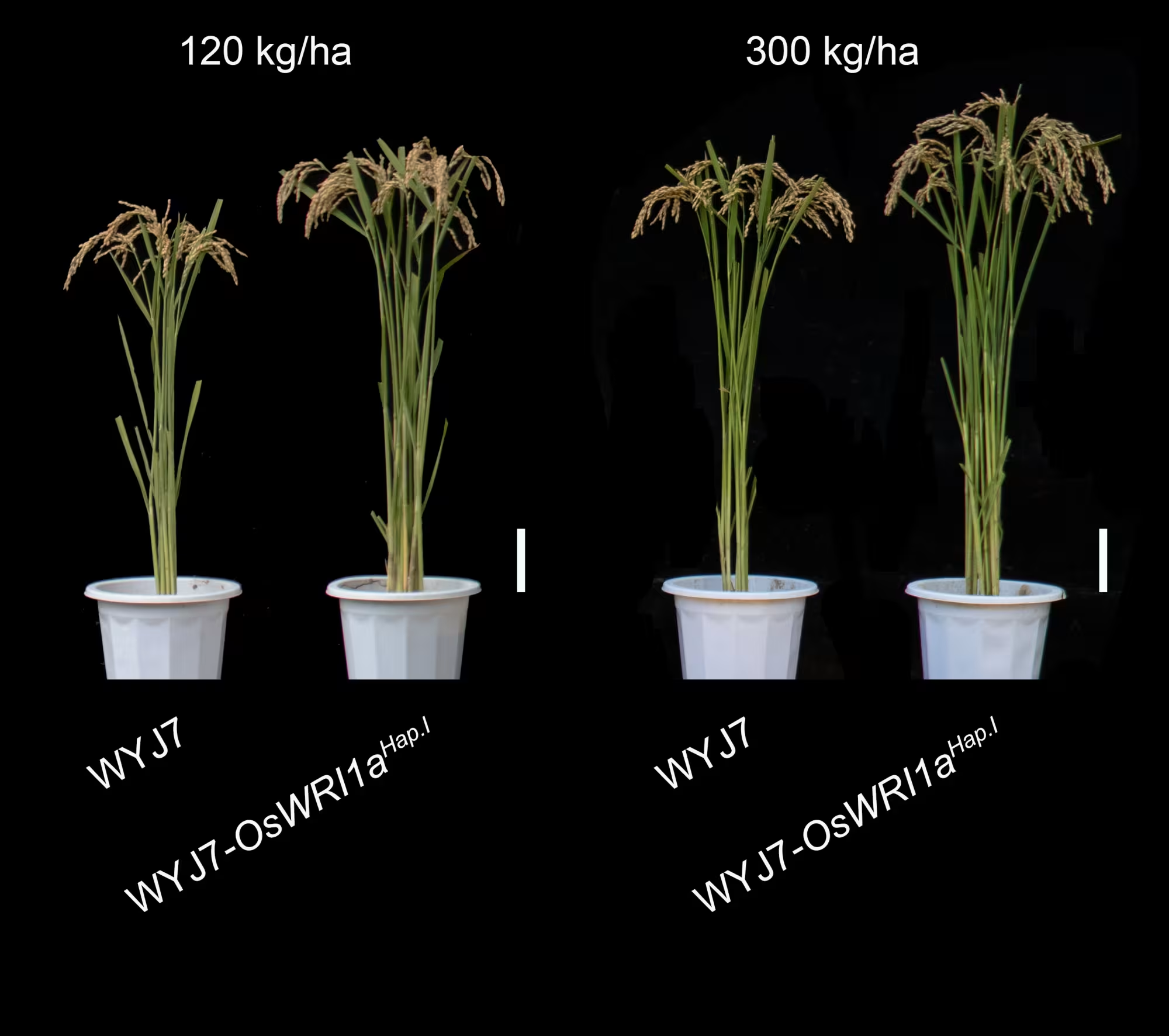
Corresponding author Dr Zhe Ji (Department of Biology, University of Oxford and Calleva Research Centre) said: ‘Our study clearly shows that this regulator is a promising target for sustainable crop improvement. It was extraordinary to see the difference that the improved version of the gene had on rice yields during our field trials.’
The team demonstrated that WRINKLED1a has distinct roles in the shoot and root. In the shoot, it acts as an activator, switching on a key regulatory gene (NGR5) that promotes shoot branching. In the roots, WRINKLED1a activates genes involved with nitrogen uptake. It also disrupts the formation of a protein complex which normally stops the accumulation of auxin – a plant hormone that promotes root growth. Interestingly, WRINKLED1a does not disrupt this protein complex in the shoot, showing that its roles are tissue-specific.
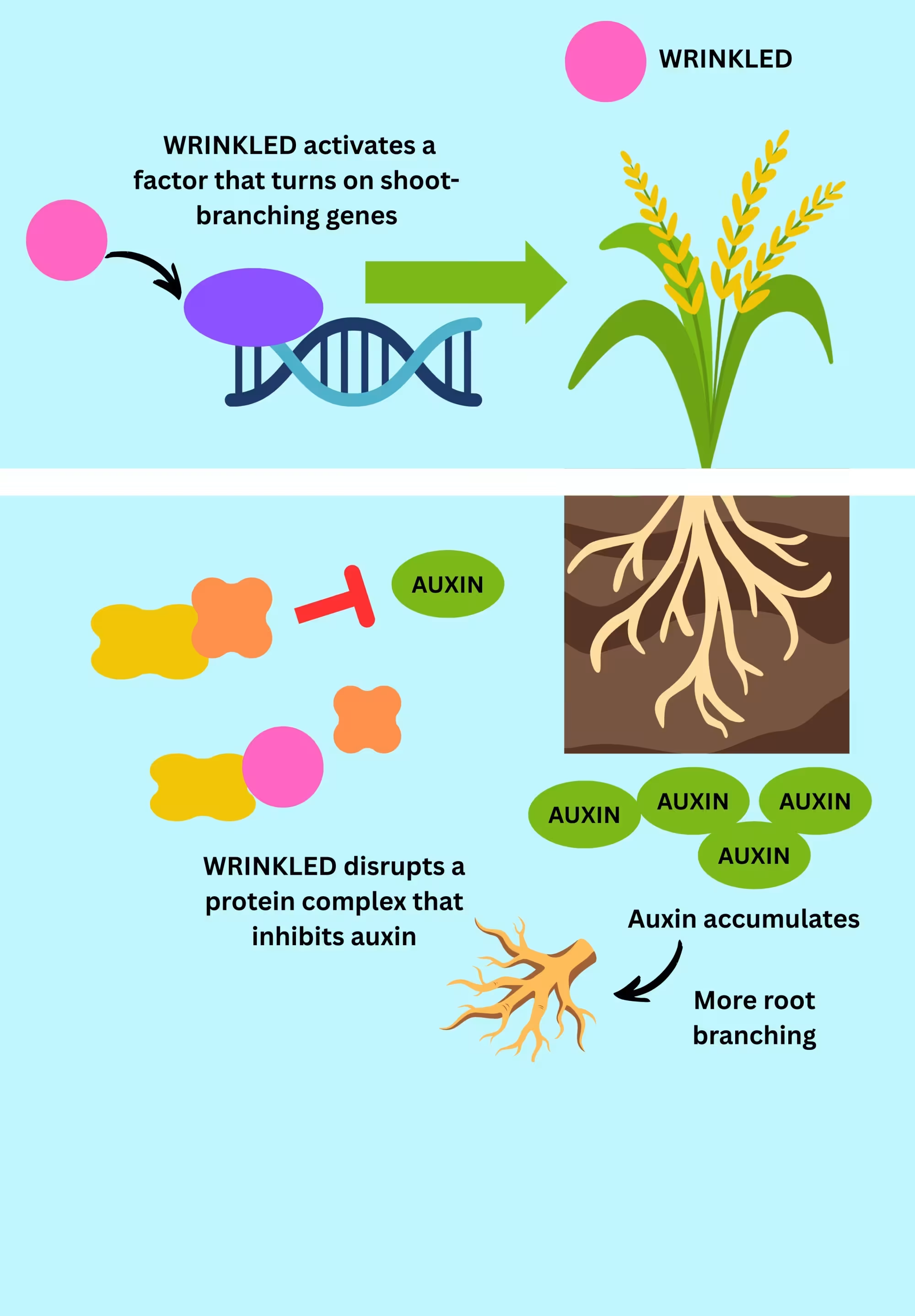
Lead author Dr Shan Li (Nanjing Agricultural University, China) added: ‘WRINKLED1a helps rice avoid the usual ‘more roots, less shoot’ trade-off under nitrogen limitation, supporting stable yields with lower nitrogen inputs. The next step is to investigate whether homologous genes in other crops, such as wheat and maize, can be leveraged to achieve similar outcomes.’
The study ‘OsWRI1a coordinates systemic growth responses to nitrogen availability in rice’ has been published in Science.
For more information about this story or republishing this content, please contact [email protected]


