Expert Comment: The war in the Gulf
Dr Rob Johnson, Director of the Oxford Strategy, Statecraft, and Technology (Changing Character of War) Centre and Senior Research Fellow of Pembroke College, University of Oxford, analyses the strategic implications of the US–Israeli airstrikes on Iran, assessing the risks of regional escalation alongside the potential for longer-term shifts in Gulf security and global energy stability.
 Dr Robert Johnson
The American justification for its actions was that diplomatic talks intended to constrain Iran’s nuclear programme had collapsed. This breakdown followed years of deteriorating trust since the end of the original JCPOA agreement, which had once limited Iranian nuclear activity. The strikes also came in the aftermath of earlier American and Israeli operation in 2025, the “12‑Day War”, which aimed to destroy Iran’s nuclear facilities. Then there was a new turn of events, as thousands of Iranians poured onto the streets in protest against collapsing public services, corruption, and years of oppression. The IRGC had grown significantly more powerful within the regime, and it unleashed a wave of terror. Although casualty numbers remain uncertain, estimates suggest that tens of thousands may have been killed by their units.
In 1999, it had been decided that there should be an international ‘Responsibility to Protect’ civilian populations facing mass murder from their governments, a fact which overturned the Westphalian norm and added to the justifications for intervention against Iraq in 2003. The fostering of international terrorism, another feature of the Iranian regime, had led to intervention in Afghanistan too, following the shocking attack of 11 September 2001. Today, the concern is more about international law, although that very concept is driven by consensus and is subject to political interpretations.
The American justification for its actions was that diplomatic talks intended to constrain Iran’s nuclear programme had collapsed. This breakdown followed years of deteriorating trust since the end of the original JCPOA agreement, which had once limited Iranian nuclear activity. The strikes also came in the aftermath of earlier American and Israeli operation in 2025, the “12‑Day War”, which aimed to destroy Iran’s nuclear facilities. Then there was a new turn of events, as thousands of Iranians poured onto the streets in protest against collapsing public services, corruption, and years of oppression.
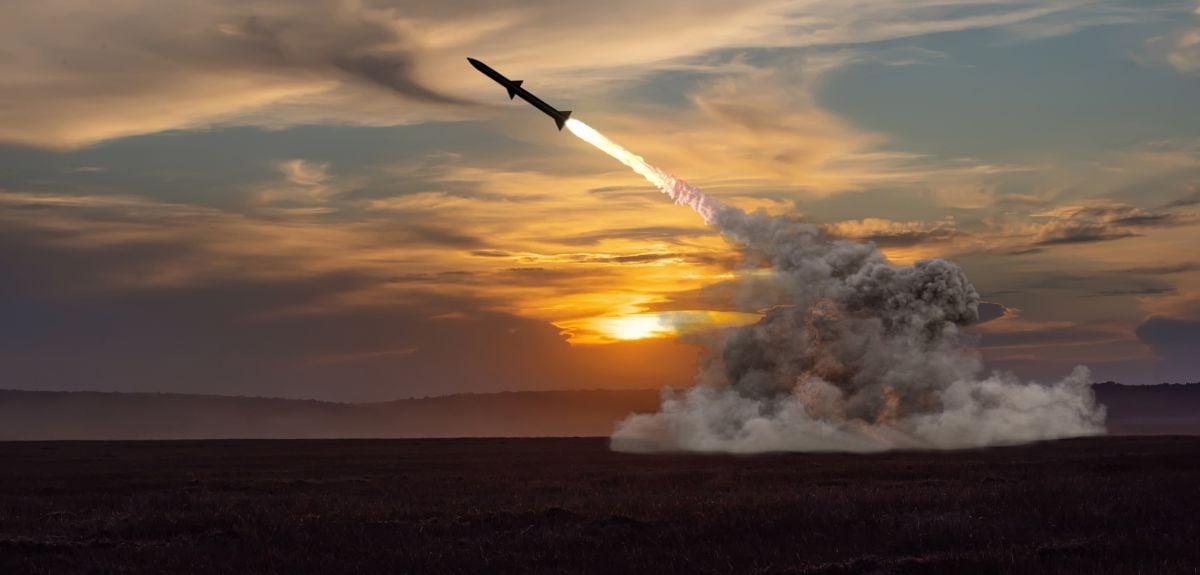
Following the February 2026 airstrikes, Iran retaliated, launching missiles at American bases in Qatar, Kuwait, the UAE, and Bahrain. Additional missiles landed in Abu Dhabi, Doha, Kuwait City, and Riyadh. Iran also fired missiles at Israel, though these were largely intercepted by US naval forces and local air defence systems. At a stroke, what could have been a limited conflict was widened by Teheran into a regional one. Instead of two enemies, it now had seven. Despite Tehran’s vow of a “crushing response,” its rhetoric typically exceeds its operational capacity, especially when the regime faces internal instability. Indeed, the Iranian leadership will be as concerned about renewed domestic unrest as about American, Israeli, and Gulf States’ military action.
America has the option to sustain a long‑term air campaign to dismantle Iran’s air defence network, missile systems, and drone capabilities. The US might also support internal resistance movements should opportunities arise, although Washington appears to be saying that is a matter for the Iranian people.
Economically, there is global concern that a prolonged conflict could destabilise energy supplies. Europe, India, and China rely heavily on stable oil flows, and volatility in the Gulf would have worldwide repercussions. Russia, conversely, might benefit from higher oil prices - an irony given that the United States had recently acted decisively against the Venezuelan regime in 2026, decreasing an energy source previously useful to Russia and China. The deeper strategic significance may have been under-appreciated in the United States.
The US states it is acting against a dictatorship working toward a nuclear arsenal that would threaten American and allied security. Should Iran’s regime be overthrown, whether through internal upheaval or external pressure, Russia and China would lose another strategic partner, and the global flow of hydrocarbons could stabilise significantly. This may also be Washington’s strategic intention.
The US states it is acting against a dictatorship working toward a nuclear arsenal that would threaten American and allied security. Should Iran’s regime be overthrown, whether through internal upheaval or external pressure, Russia and China would lose another strategic partner, and the global flow of hydrocarbons could stabilise significantly. This may also be Washington’s strategic intention.
Beyond nuclear concerns, Iran has long pursued a policy of regional influence through sponsorship of paramilitary groups. Yemen’s Houthi movement has received extensive Iranian support, enabling disruptive attacks in the Red Sea. Hezbollah in Lebanon, a major Iranian proxy, has played a key role in conflicts against Israel and in shaping Syrian and Lebanese politics. Iran has also provided significant military support to Hamas and has a long history of sponsoring terrorism. Many observers hope that the 2026 crisis may represent the beginning of the end for the Islamic Republic’s regional destabilisation.
Western far‑left groups and Islamist factions protest against America’s actions, but these groups ignore the brutality faced by Iranian women and other citizens opposing the regime. Protesters in Iran, including students, workers, families, and women rebelling against mandatory headscarf laws, have faced imprisonment, torture, and death. Their struggle for dignity, democracy, and basic freedoms is often overshadowed by the discourse of ‘resistance’.
The central strategic question is: have the American and Israeli airstrikes achieved enough to halt Iran’s nuclear ambitions or catalyse internal political change? Airpower alone may temporarily delay nuclear development, perhaps for several years. But a lasting resolution would require active participation by the Iranian people themselves. Widespread civil resistance, a general strike, mass protests, and refusal to accept clerical rule, could ultimately topple the ayatollahs.
Looking ahead, if the Iranian regime survives the current crisis, it is expected to resume its longstanding patterns of violence, including support for proxy militias and targeted attacks against American personnel and interests. In Iraq, for example, Tehran has nurtured “popular militias” that challenge the American presence and intimidate local opposition.
The central strategic question is: have the American and Israeli airstrikes achieved enough to halt Iran’s nuclear ambitions or catalyse internal political change? Airpower alone may temporarily delay nuclear development, perhaps for several years. But a lasting resolution would require active participation by the Iranian people themselves. Widespread civil resistance, a general strike, mass protests, and refusal to accept clerical rule, could ultimately topple the ayatollahs.
One thing is certain: While many observers expect this intervention to be short‑lived, it is merely one episode in a much longer struggle that will continue until the Iranian regime loses its grip on power.
For more information about this story or republishing this content, please contact [email protected]

 Oxford’s women triumph in historic 80th boat race
 Spectacular fossil treasure trove pushes back origins of complex animals
 Oxford scientists uncover how the brain resolves emotional ambiguity
 Expert Comment: In Claude We Trust? Evaluating the New Constitution
 Oxford tops QS World University Rankings in four subjects, named overall top for Humanities
 Expert Comment: Four years of full-scale war and Ukrainian resistance continues
 Expert Comment. Ukraine war: Putin’s masterclass in delusion, denial and defeat
 Expert Comment: Reflecting on the third anniversary of Russia's invasion of Ukraine