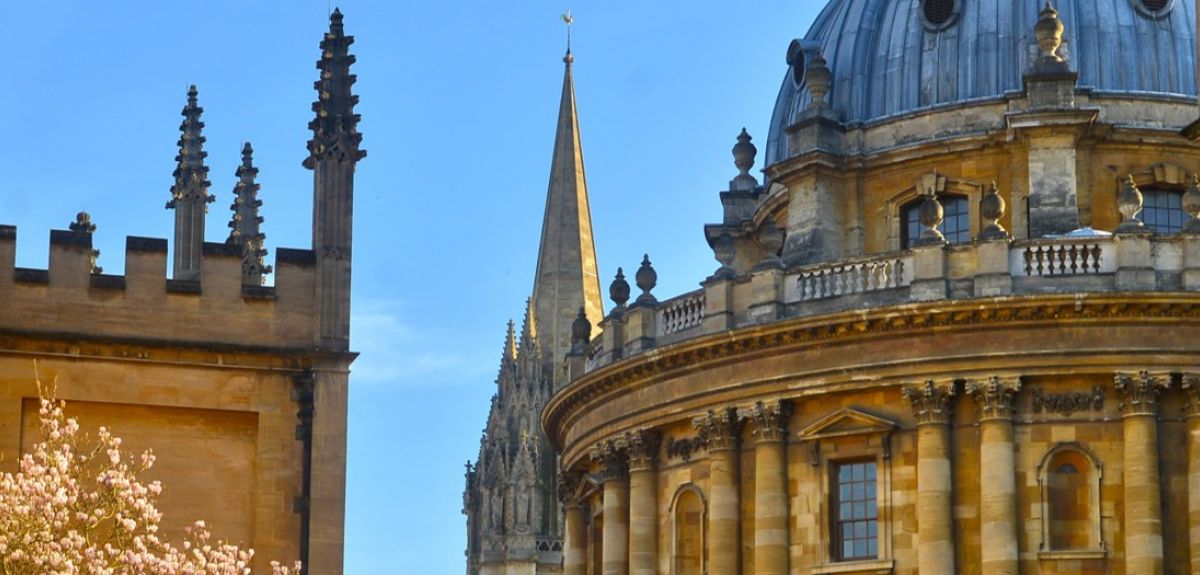
Eight Oxford academics elected Fellows of the British Academy
Eight researchers from the University of Oxford have been made Fellows of the British Academy in recognition of their outstanding contributions to the humanities and social sciences. Richard Ovenden, Bodley's Librarian and the Helen Hamlyn Director of University Libraries, has also been awarded an honorary fellowship.
Founded in 1902, the British Academy is the UK’s national academy for the humanities and social sciences. It is a Fellowship consisting of over 1,800 world-leading scholars from the UK and overseas. In 2025, a total of 58 UK Fellows, 30 International Fellows and four Honorary Fellows have been elected to the British Academy Fellowship.
The eight newly elected fellows and honorary fellow from Oxford are:
- Professor Peter Thonemann, Professor of Ancient History; Forrest-Derow Fellow and Tutor in Ancient History, Wadham College
- Professor Stefan Nicolaas Dercon CMG, Professor of Economic Policy, Blavatnik School of Government and Economics Department
- Professor Margaret Hillenbrand, Professor of Modern Chinese Literature and Visual Culture
- Professor Lionel David Smith, Professor of Comparative Law; Fellow, Brasenose College
- Professor Rosalind Margaret Ballaster, Professor of Eighteenth-Century Studies and Professorial Fellow in English, Mansfield College
- Professor Alexander Betts, Professor of Forced Migration and International Affairs, University of Oxford; Fellow, Brasenose College; Pro-Vice-Chancellor for External Engagement
- Professor Daniel Grimley, Head of Humanities and Professor of Music; Professorial Fellow, Merton College
- Professor Alison Grace Salvesen, Professor of Early Judaism and Christianity, Faculty of Asian and Middle Eastern Studies
- Honorary fellow, Richard Ovenden, OBE, Hon FBA, FSA, FRSA, FRHistS, FRSE, Bodley's Librarian and the Helen Hamlyn Director of University Libraries
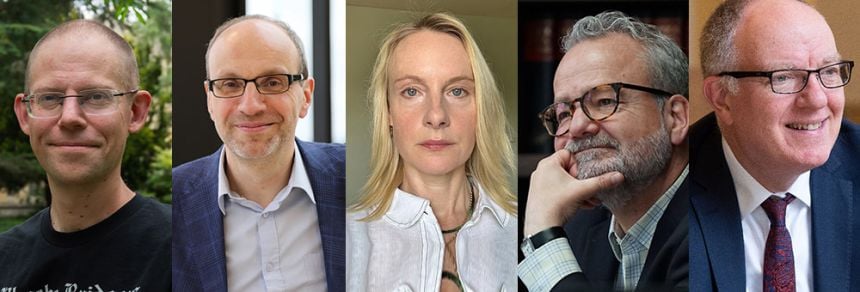 Peter Thonemann; Stefan Dercon; Margaret Hillenbrand; Lionel Smith; Richard Ovenden
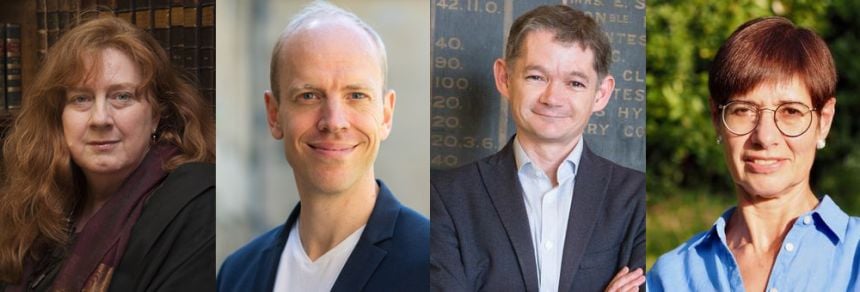 Ros Ballaster; Alex Betts; Dan Grimley; Alison Salvesen
Professor Peter Thonemann said: ‘I am deeply touched, and honoured, to have been elected as a Fellow of the British Academy. The Academy plays a crucial role as a beacon and advocate for scholarship in the Humanities, Arts and Social Sciences in the UK; at a time when so many of our Humanities departments are under threat of cuts or closure, the support which the Academy provides to researchers in the Humanities, particularly junior and precariously situated scholars, is more important than ever. I hugely look forward to contributing to the Academy’s mission.’
Professor Rosalind Ballaster said: 'From my first day as an undergraduate I have wanted nothing more than to live in and for literature. It has been my privilege to share the joy of that experience with other scholars and with students - and to learn so much from them. Now more than ever it feels important to foster the hard thinking and the critical curiosity the best research and teaching in the Humanities requires. Election to the British Academy as a Fellow is a huge honour as well as a new opportunity for me to advocate for the value of our work.'
Professor Stefan Nicolaas Dercon said: ‘I am honoured to be elected a Fellow of the British Academy. It is a privilege to join a community committed to rigorous scholarship as a foundation for better policy in the UK and globally.’
Professor Margaret Hillenbrand said: ‘I’m very happy that the British Academy has recognised the study of literary and visual culture from contemporary China in this way. There’s still a huge knowledge deficit about China in the UK, particularly beyond the domains of economics and geopolitics, and the British Academy is an institution that really has the power to change that, through its funding, its public engagement, and the connections it builds between researchers. I’m also very grateful to Wadham and to the Faculty of Asian and Middle Eastern Studies for creating such supportive environments for research.'
Professor Daniel Grimley said: ‘It is humbling to have been elected to a fellowship of the British Academy alongside such distinguished colleagues. The arts and humanities are under unprecedented strain, and we need to speak with a collective voice more urgently than ever before. I will support the Academy’s efforts to advocate for all our disciplines and to continue to make the case for the centrality of the arts and humanities across the sector and beyond.’
Professor Alison Salveson said: 'The Academy’s role in supporting and promoting the Humanities and Social Sciences is especially important in the present time. I am deeply honoured to have been elected a Fellow.'
Professor Lionel David Smith said: ‘At Oxford and other universities, I have been most fortunate in benefiting from an excellent education, in having outstanding students, and in working with brilliant and generous colleagues. All these things are essential to being a successful scholar.’
Professor Alexander Betts said: 'I am deeply honoured to be elected a Fellow of the British Academy. Many congratulations to all the new fellows for 2025, particularly my Oxford colleagues from across the Social Sciences and Humanities Divisions. The BA's work is especially vital at a time when we need to celebrate and promote the social sciences and humanities, and to ensure that their insights inform public debate.'
Richard Ovenden said: ‘I have always regarded the British Academy as the pinnacle of excellence in the humanities and social sciences. To receive the Honorary Fellowship means an immense amount, as it recognises the importance of libraries, archives, and the preservation of knowledge as a vital underpinning of scholarship. I hold this Fellowship for all librarians and archivists.’
Professor Susan J. Smith PBA, President of the British Academy, said: ‘One of my first acts as the incoming President of the British Academy is to welcome this year’s newly elected Fellows. What a line-up! With specialisms ranging from the neuroscience of memory to the power of music and the structural causes of poverty, they represent the very best of the humanities and social sciences. They bring years of experience, evidence-based arguments and innovative thinking to the profound challenges of our age: managing the economy, enabling democracy, and securing the quality of human life.
‘This year, we have increased the number of new Fellows by nearly ten percent to cover some spaces between disciplines. Champions of research excellence, every new Fellow enlarges our capacity to interpret the past, understand the present, and shape resilient, sustainable futures. It is a privilege to extend my warmest congratulations to them all.’

 Oxford tops QS World University Rankings in four subjects, named overall top for Humanities
 New study finds that stored sperm deteriorates across the animal kingdom
 Expert Comment: From frontier to feedback loop - Why space must become circular
 Blood test may improve survival of childhood cancer in Africa
 University of Oxford receives further £2m gift from Fondation Docteur Sadok Besrour to strengthen academic primary care in Tunisia
 Professor Karen Leeder awarded 2025 Griffin Poetry Prize
 Oxford academics awarded European Research Council Advanced Grants for cutting-edge research
 Academy of Medical Sciences elects five Oxford researchers as new Fellows