Features
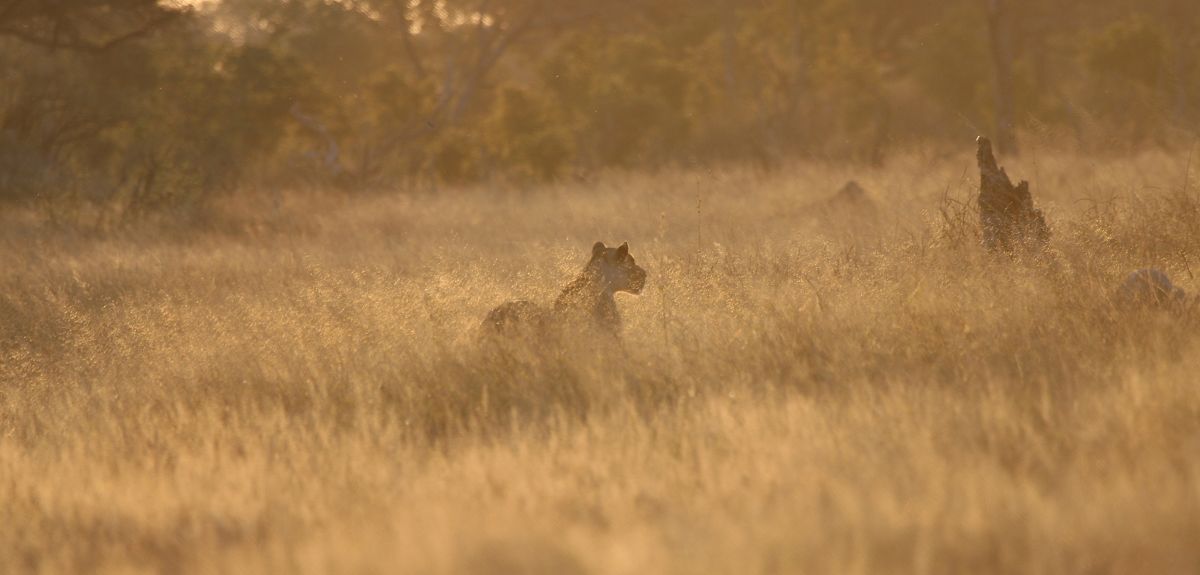
They are one of the world’s most charismatic big cats, but what does it take to understand the lives of wild lions?
Someone who knows is Andrew Loveridge of Oxford University’s Wildlife Conservation Research Unit (WildCRU), who has been studying lions in Zimbabwe for over a decade and recently won the SATIB Trust Award for his lion biology and conservation work.
I asked Andrew about how he tracks and studies lions, gaining insights into lion behaviour, and how people can live alongside these iconic predators…
OxSciBlog: What are the challenges of studying lions in the wild?
Andrew Loveridge: Lions tend to live in the last wilderness areas of the planet - and these are naturally remote and often fairly inhospitable to people (the reason they remain wilderness areas in the first place). Most people visualise Africa as being Disney-like wide open plains, and while plains habitats do exist in Africa, much of the continent is more densely wooded.
Hwange, the National Park we work in, is one such place being thickly wooded bushland-savannah with very few access roads. Lions in this ecosystem have home ranges in excess of 300km2 so they are typically tricky to find and study.
Monitoring enough of the population to provide a meaningful scientific insight into population processes and behaviour presents quite severe logistical challenges. We overcome this by covering extensive areas in 4X4 vehicles - often spending weeks at a time camping in remote areas of the park, by using technology such as GPS radio-collars (and recently GPS collars that return our data via satellite) and having access to a micro-light aircraft which helps us locate lions more easily.
Of course all this requires considerable funding to put in place and maintain, so outside the field the biggest challenge is raising the funding to maintain the study. We have been very fortunate in recent years to have received substantial grants from Panthera, Thomas and Daphne Kaplan, and recently the Robertson Foundation, as well as ongoing support from the SATIB Trust.
OSB: How can fieldwork studies help to inform conservation efforts?
AL: A common misconception is that lions are common and widespread in Africa. Whilst it is true that lions are commonly sighted in some of Africa’s well protected photographic safari destinations they fare less well in areas with limited or no protection. In such areas they compete with burgeoning human populations for limited space and resources. In the last 50-100 years the geographic range of the African lion is thought to have declined by 80%.
Surprisingly, for such an iconic and well known species, even basic biological statistics such as population size and crude population trends are unknown for many (if not most) lion populations in Africa. Along with our more academically-orientated scientific work we provide local managers and decision makers with the baseline information they need to adequately manage lion and other wildlife populations. In this way our work has a direct influence on conservation planning and policy.
We are only just learning what long term effects human activities, such as trophy hunting and retaliatory killing over livestock loss have on lion populations. A better understanding of these issues helps African conservationists to preserve and manage a species that has huge economic, ecological and cultural importance. Robust conservation decisions need to be based on reliable and detailed biological information.
OSB: What surprises about lion behaviour has your research revealed?
AL: Lions are probably one of the best-studied mammalian species, nevertheless, they still do things that surprise and intrigue our research team. Possibly one of the most intriguing aspects of lion behaviour is their wide ranging behaviour and ability to move over extensive areas. Understanding these movements is one of the key challenges in protecting lion populations because wide ranging carnivores frequently come into conflict with people. Protected areas need to be large to accommodate the ranging behaviour of large carnivores.
The surprisingly extensive movement of our lions was recently illustrated by a male lion that moved from our study area in Hwange National Park, Zimbabwe, to Livingstone town in Zambia. This movement took just over a month and in this time the lion walked around 220km. He crossed the 100m wide Zambezi River below Victoria Falls, negotiating the substantial white water rapids.
We have recorded extensive ranging movements in the past particularly in young dispersing males. However, this is longest movement and this particular study animal was 10 years old - which makes this behaviour even more intriguing. This demonstrates how little we actually know about movements of lions between regional populations. This is crucial information if we are to avoid population isolation which could spell disaster for the genetic health and long-term viability of large carnivore populations.
The other unique aspect of lion behaviour revealed by our study is the lions’ unusual behavioural responses to the local ecosystem. In the dry season in Hwange National Park water is provided for wildlife at artificially pumped waterholes. These attract high abundances of prey species and our research has revealed that lions configure their ranges to ensure access to this rich prey resource.
Elephants are the most locally abundant herbivore in the area. Because of their massive size elephants are usually not troubled by lions, however lions in our study area have learned to pick out and kill even quite large elephant calves. Elephants make up a significant proportion of lion diet in the ecosystem, particularly in dry years when elephants are stressed by shortage of browse and water.
OSB: How can this research help people to live alongside lions?
AL: The research team in Hwange has just completed the first phase of a human-wildlife conflict project, focused on conflict with lions, but also including species such as the spotted hyaena in the research. This phase has focussed on understanding both the ecological and human economic and sociological factors that contribute to conflict situations. Understanding the root causes of human-wildlife will hopeful allow us to implement locally suitable interventions in the next three-year phase of the project, funded by Panthera and the Robertson Foundation.
In the nearby Makgadikgadi ecosystem in Botswana a recent WildCRU study discovered that lions feed almost exclusively on wild prey when it is seasonally abundant, but in periods of wild prey shortage they switch to killing perennially abundant domestic livestock. Lions appear to weigh up the considerable risks of killing domestic stock by only doing so in times of wild prey scarcity. This pattern is mirrored in the Hwange ecosystem. Here we have found that lion predation on livestock peaks in the wet season.
There are two reasons for this: Firstly water is freely available in thousands of ephemeral waterholes and wild prey disperses widely throughout the ecosystem. This makes wild prey more difficult and less predictable for lions to find. At the same time people in surrounding communities plant their crops in the wet season. Livestock guarding is neglected as people focus on tending their fields, leaving domestic animals vulnerable to predation.
Understanding the underlying ecological processes is the key to putting in place appropriate and successful interventions to ease or eliminate human-wildlife conflict. It would be pointless and expensive to implement inappropriate or ill conceived interventions that do not address the root causes of the problem. To address some of the conflict problems we are designing suitably targeted livestock husbandry systems, investigating the potential use of predator proof fencing and seasonal protective structures. We are employing local men to assist villagers to improve livestock protection and to deter predators.
OSB: How will the SATIB award/land rover help in your work?
AL: It is a huge honour to accept the 2012 SATIB Award, especially knowing how passionate and dedicated Brian Courtenay and the other Trustees of the SATIB trust are to conservation of African wildlife and wild places. It has also been a great opportunity to raise the profile of the lion project and what we are trying to achieve in conservation of the species and its habitat.
Like the species we study, lion researchers have to cover extensive areas of remote and often inhospitable wilderness. Having a tough and reliable off-road-capable research vehicle, such as the specially fitted Land Rover Defender LWB that came with the SATIB award, is an absolutely essential part of undertaking research on this species. In the coming year the project team will also be undertaking survey work in the surrounding region, so having a new vehicle will be extremely helpful.
OSB: What's next for the Hwange Lion Project/your research?
AL: Long-term biological studies are relatively rare. The Hwange Lion Project has been running for just over 12 years, during which time we have gained a unique insight into the population dynamics and conservation of this particular lion population.
The core of our effort is to maintain the monitoring work and continue to add to this long-term understanding. In addition to this we are continuing undertake research on human-wildlife conflict at the borders of Hwange National Park and this year we will be embarking on some exciting new initiatives to work with local communities to reduce levels of human-lion conflict. In doing so we hope to reduce the number of lions killed by angry herders over loss of domestic stock.
Another exciting component of the project is an initiative to identify and conserve habitat corridors that that link the core Hwange lion population with other regional protected areas. We have already found evidence that these exist and it is important that habitat corridors are recognised and protected in the face of ever expanding human populations.
My other research includes a three-year project, funded by the Darwin Initiative for Biodiversity, on the sustainable management of leopards in Zimbabwe.
A bio-inspired superglue has been developed by Oxford University researchers that can’t be matched for sticking molecules together and not letting go.
It could prove to be a very useful addition to any toolbox for biotechnology or nanotechnology. You could use the glue to grab hold of proteins or stick them immovably to surfaces. You could even use it to assemble proteins and enzymes to build new structures on the nanometre scale.
‘We’re very interested in creating protein assemblies. We want to be able to treat proteins like Lego,’ explains Dr Mark Howarth, who with his graduate student Bijan Zakeri at the Department of Biochemistry developed the superglue. ‘But previously we’ve been limited to ill-controlled processes or have had to build using weak biological interactions.’
The Oxford biochemists came up with their new super-strength molecular glue by engineering an unusual protein from a type of bacteria that can cause life-threatening disease.
While many people carry Streptococcus pyogenes in their throat without any problems, the bacteria can cause infections. Some are mild, like impetigo in infants or a sore throat, but some can kill, like toxic shock syndrome or flesh-eating disease.
What attracted the biochemists’ interest was a specific protein which the bacteria use to bind and invade human cells.
‘The protein is special because it naturally reacts with itself and forms a lock,’ says Mark.
All proteins consist of amino acids linked together into long chains by strong covalent bonds. The long chains are folded and looped up into three-dimensional structures held together by weaker links and associations.
The protein FbaB from S. pyogenes has a 3D structure that is stabilised by another covalent bond. This strong chemical bond forms in an instant and binds the loops of the amino acid chain together with exceptional strength.
Mark and his colleagues reckoned with a bit of engineering they could split the protein around this extra covalent bond. Then, when the two parts were brought together again, they might dock and form this strong bond once more.
The two parts would be locked together immovably – stapling together anything else attached to their tails. That is what the researchers have now demonstrated in this week’s PNAS.
They’ve nicknamed the larger fragment which formed the bulk of the original protein ‘SpyCatcher’. Once SpyCatcher gets hold of the shorter protein segment, ‘SpyTag’, it never lets go.
At least, the researchers with their collaborators at the University of Miami tried to measure the force needed to pull apart SpyTag from SpyCatcher using an atomic force microscope.
But when they pulled on each end, the chemical links holding the proteins to the apparatus broke first. Boiling in detergent won’t separate the protein fragments either.
‘Our system forms rapid covalent bonds with high efficiency and high stability,’ says Mark.
When SpyCatcher and SpyTag are brought together, they bond in minutes with high yield. It doesn’t matter whether it is in acidic or neutral conditions, or whether it is 4°C or 37°C.
They will stick together in test tube reactions or inside cells. And importantly, they don’t stick to other things – there’s no equivalent of getting your fingers stuck to the Airfix model you’re building.
Mark explains that there isn’t really any equivalent way to bind biomolecules together. There are chemical reactions that can join two proteins together covalently but often only small proportions react, they take a long time, or they require UV light, toxic catalysts or reaction conditions that could damage living cells.
The ability to attach SpyCatcher and SpyTag onto other molecules you want to glue together could have many applications. For example, sticking all the enzymes involved in a chemical process into a small factory could speed reactions and increase yields.
Or you might want to bring all the elements together that plants use to turn sunlight into energy with only water as a waste product. Scientists have long wanted to come up with ways of achieving photosynthesis artificially for useable green energy.
But the first uses of the molecular superglue may well be in the research lab, grabbing hold of structures within biological cells. That way you could resist the forces generated by important motors, machines and transporters inside the cell.
Mark and his team are now working on developing the molecular superglue technology through Oxford University Innovation, the University of Oxford’s technology transfer company.
The study was carried out with funding from the Clarendon Fund at Oxford.
A series of walking tours launched next week show how you can discover the maths hidden in our urban surroundings.
Anyone can join the free tours of London and Oxford which explore how cities – their buildings, roads, railways, sewers, and power systems – are all built on mathematical foundations.
The tours are part of Maths in the City, a project led by Marcus du Sautoy, Charles Simonyi Professor for the Public Understanding of Science at Oxford University’s Department for Continuing Education. The project’s website has many more examples of hidden maths in cities across the globe and invites people to contribute their own mathematical finds.
The first London tour starts next week and will travel from Tate Modern to St Paul’s Cathedral, explaining the maths underpinning the architecture, networks, topology and resonance of the capital, as well as getting people involved in fun demonstrations.
More tours of both London (running April-June) and Oxford (running March-May) are planned over the coming months with the tours led by a crack team of Oxford maths students.
However, if you can’t wait you can always explore the tours online and even print off a guide to take the walks yourself.
A method for imaging the brain that has largely been confined to neuroscience labs may now find its place as a proper tool for medical diagnosis.
Oxford University scientists have come up with a new approach that turns functional magnetic resonance imaging (fMRI) from something that produces pictures of changes in brain activity into a full numerical measure of how the brain is working.
Doctors may be able to use this new MRI approach to provide a lot more clinically useful information about patients coming in with strokes, brain injuries or a variety of other conditions.
Functional MRI is a tremendously successful research method for imaging the brain. The pictures it produces of the working brain are now pretty familiar, with different regions of the brain ‘lighting up’ while those being scanned do different tasks, and it has taught us a lot about the organisation of the working brain in health and disease.
However, the technique only captures relative changes in the MRI signal. And what is more, the MRI signal reflects a complex mix of different physiological processes going on in the brain, such as changes in blood flow and brain cells burning up the oxygen they get from the blood. That is: fMRI is very much an indirect indicator of brain activity, not a pure measurement technique able to put a value on specific brain processes.
‘MRI is great for localising which areas of the brain are activated during different stimuli and so helping us to understand how the brain works as a whole,’ explains Dr Daniel Bulte of Oxford's Centre for Functional Magnetic Imaging of the Brain (FMRIB), who led the work. ‘However the images we produce are just that, pictures. They are not measurements.’
The scientists at FMRIB have countered this by introducing a new approach to MRI scanning. They report their work in the journal NeuroImage.
Patients lie in the MRI scanner and breathe air through a mask or nose tubes. By simply varying the proportion of carbon dioxide and oxygen the patients breathe through the mask, the scientists show it is possible to use the MRI signal to measure blood flow, blood volume, oxygen use and brain metabolism across the whole brain.
‘By making some slight changes to the air breathed by a patient in the scanner we can produce beautiful images of brain physiology that actually correspond to real measurements,’ says Daniel. ‘During the scan the subject would spend short periods breathing a little extra oxygen than normal and short periods breathing a little extra carbon dioxide. The subject would not notice either of these as the changes are quite subtle compared to normal air.’
The measurements are comparable to those obtained with another more complex medical technique called Oxygen-15 positron emission tomography, or 15O-PET. However, the MRI approach would have a number of advantages and – importantly – wouldn’t expose patients to the radioactive labels used in PET.
‘The problem with 15O-PET is that it is very, very expensive, there are very few places in the world that can do it, the scans take a long time, and it requires giving the patient a significant dose of radiation,’ says Daniel. ‘Our MRI method takes less than 20 minutes to perform, could be run on any modern clinical MRI scanner, is very cheap and uses no drugs or injections, and exposes the patient to no ionising radiation.’
Daniel adds that it could be a real boon in hospitals: ‘At the moment most stroke patients get a CT scan when they arrive at the hospital, and very few get an MRI. The main reason for this is that MRI is much more expensive than CT, and the imaging techniques currently available do not provide enough diagnostic information to be sufficiently useful for most patients. Thus the diagnoses and treatments are arrived upon with very little detailed information about what is actually going on in the patient's brain.
‘A scan such as this one could potentially be used to provide emergency room staff with much more information about a variety of different diseases and injuries, improving the outcomes for the patients, and saving time and money. We hope to start trialling the scans with patients with a range of different diseases later this year.’
The study was funded by the EPSRC, MRC, Wellcome Trust, Dunhill Medical Trust and the NIHR Oxford Biomedical Research Centre.
They may have looked more like a green carpet than a forest but the first land plants really did change the world.
New research led by scientists from Oxford University and Exeter University has shown that the invasion of the land by plants in the Ordovician Period (488-443 million years ago) cooled the climate and triggered a series of ice ages.
I asked Liam Dolan of Oxford University’s Department of Plant Sciences, one of the leaders of the research reported today in Nature Geoscience, about the work and what it reveals about yesterday’s - and tomorrow’s - climate:
OxSciBlog: What sort of plants were there during the Ordovician?
Liam Dolan: The fossil record tells us that the first plants to grow on land appeared sometime before 475 million years ago during the Ordovician Period.
We only have fossilised remains of small fragments of plants but we don’t know how the bits fit together – a bit like a jigsaw puzzle with a lot of the bits missing. It is safe to say that these plants were very small and probably looked like liverworts and mosses - their closest living relatives.
OSB: How did the climate change during this period?
LD: Climate changed dramatically during the late Ordovician Period. It changed from a climate that was warmer than today (with no ice) into an ice age. Ice ages are pretty rare in Earth history and what gave rise to the Ordovician glaciation has always been a mystery.
OSB: How did you test whether plants triggered this change?
LD: While increasing the amount of carbon dioxide causes global warming, removing carbon dioxide from the atmosphere causes global cooling. One of the dominant mechanisms for removing carbon dioxide from the atmosphere is silicate weathering: the chemical reaction between silicate minerals of rocks and carbon dioxide in the atmosphere.
We tested the hypothesis that non-vascular plants (mosses) increase rates of silicate weathering. To our amazement we found that these simple plants did in fact increase the weathering of silicate minerals. We then incorporated these measurements of silicate weathering rates into computer models of Ordovician Period climate.
When we re-ran the models with our new data, we discovered that the appearance of the first land plants in the Ordovician plants would have caused a dramatic decrease in atmospheric carbon dioxide which would have brought about climate cooling and contributed to the initiation of the late Ordovician ice age.
OSB: What do your results reveal about how plants influence climate?
LD: We know that plants play a critical role in climate systems by pulling carbon dioxide out of the atmosphere in two ways: Firstly, plants carry out photosynthesis, which converts carbon dioxide into plant biomass that store carbon. Secondly, plants increase rates of silicate weathering, the chemical reaction that breaks down rocks, and in so doing removes carbon dioxide from the atmosphere.
We knew that the dramatic cooling of the planet between 300 and 200 million years ago was the result of the evolution of large plants with large rooting systems that caused huge changes in both of these processes. In the results we published today we showed that the appearance of the first land plants had an effect much earlier - 100 million years earlier.
For me the most important take home message is that the invasion of the land by plants - a pivotal time in the history of the planet - brought about huge climate changes. It should also remind us that the removal of large areas of the world’s vegetation, which act as carbon stores, will increase atmospheric carbon dioxide levels and cause dramatic climate change.
OSB: What can they tell us about plants and climate change today?
LD: Our discovery emphasizes that plants have a central regulatory role in the control of climate: they did yesterday, they do today and they certainly will in the future. This study warns us that if we continue destroy the Earth’s vegetation, by felling forests and draining wet lands, we will suffer dramatic climate change: the opposite of an ice-age. That’s called global warming.
Professor Liam Dolan is based at Oxford's Department of Plant Sciences.
- ‹ previous
- 191 of 252
- next ›
 Setting the agenda for the next century of quantum
 10 years on: The Oxford learning centre making an impact
 Mapping the Moon: the world’s first lunar atlas goes digital
  Oxford and The Brilliant Club: inspiring the next generation of scholars
 New course launched for the next generation of creative translators
 The art of translation – raising the profile of languages in schools
  Opening a window into the quantum world
 Tracking resistance: Mapping the spread of drug-resistant malaria
 Cities for cycling: what is needed beyond good will and cycle paths?