Features

In a remote semi-desert region of South Africa, the Karoo veld, what looks like a huge satellite dish has risen up to dominate the landscape.
But instead of tuning into TV this dish is the first part of a giant radio telescope called MeerKAT that will play a key role in the creation of the world’s largest telescope, the Square Kilometre Array (SKA).
Last week saw the official launch of this first dish of many, I asked Matt Jarvis of Oxford University's Department of Physics, one of the Oxford scientists involved in MeerKAT, about plans for the new telescope and where it will lead…
OxSciBlog: What is MeerKAT and why is it important?
Matt Jarvis: MeerKAT is actually made up of 64 dishes, each 13.5m in diameter. All of these dishes are connected to make up a single telescope that operates at radio wavelengths (around medium-wave for the people who still have analogue radios), much like a satellite dish but rather than receiving information from satellites it detects radio waves from astrophysical phenomena such as jets emanating from around black holes and sites of star formation. It is the precursor to the Square Kilometre Array which will extend MeerKAT from 64 to 254 dishes in around 2020, making it much more powerful.
OSB: What questions will MeerKAT investigate?
MJ: MeerKAT will detect radio waves from the distant reaches of the cosmos. It allows us to trace a range of physical processes that occur in the Universe, such has high-speed jets (moving at close to the speed of light) which arise from accretion around black holes, both in our own galaxy and from supermassive black holes in the centres of distant galaxies. It will also be able to detect neutral hydrogen gas, the fundamental building block of all the things that we can see in the Universe, from stars to galaxies, enabling us to determine how this gas gets turned into stars over the history of the Universe. By using the radio emission from these distant galaxies we will also be able to investigate the impact of Dark Energy and Dark Matter in the Universe and how these may evolve, possibly leading us to reassess how gravity acts on very large scale.
OSB: How are Oxford scientists involved in the project?
MJ: Oxford has a large involvement in MeerKAT. Two of the Large Surveys to be undertaken on MeerKAT are co-led by Oxford staff. I’m the co-PI of the deep radio continuum survey (MIGHTEE) to study how galaxies evolve over the history of the Universe and Rob Fender is the co-PI of the THUNDERKAT survey which aims to detect all of the phenomena which go bang, such as stars colliding together, bursts of radiation when a star dies and accretion events on to a black hole. We have also been involved in some of the technical development for the receivers on the dishes.
OSB: How will work with MeerKAT feed into SKA?
MJ: MeerKAT is essentially a stepping stone to the SKA, in terms of both science and engineering. The work we will do will set the stage for the SKA to really move us forward into a whole different regime of radio astronomy. MeerKAT will be a fantastic facility in its own right, providing us with the most sensitive radio surveys in the southern hemisphere, however, the SKA will be able to take such surveys and expand them by an order of magnitude in sensitivity and ability to map large volumes of the Universe. From a more technical perspective, the lessons learned from constructing MeerKAT will feed into the design specifications of the SKA, and will also mean that we can test new algorithms to turn the raw data into scientifically useful maps and catalogues for use throughout the community.
OSB: What are the challenges of dealing with data from MeerKAT/SKA?
MJ: The main challenges are the sheer data volume that we need to handle. For example, we are unable to store the raw data coming from the telescope, and have to reduce it very quickly in order to keep up with the observations. This requires a large effort in data transport, supercomputers and having the necessary computer code to handle the data effectively.
OSB: What is the next big milestone in MeerKAT's progress?
MJ: The next big milestone will be when there are 16 dishes on the ground and all hooked up. This will then enable us to start carrying out the science, before the whole 64 dishes are in place. This is something quite unique to radio astronomy, in that we don't need the whole telescope to start doing some of the science.
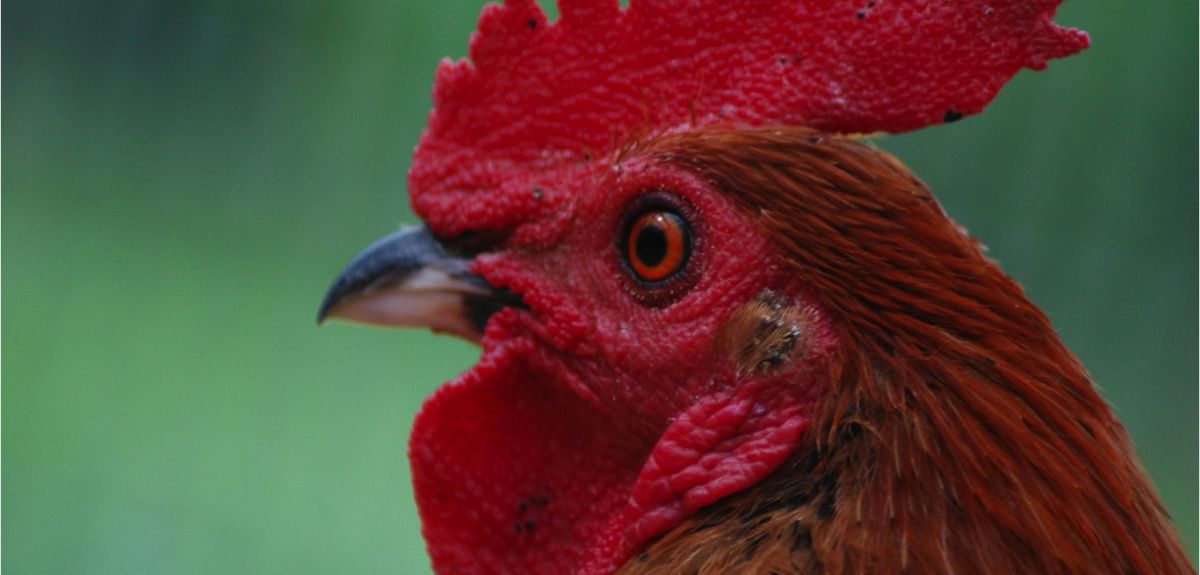
Do males have more to gain than females from mating with additional partners?
The theory that they do, and that this can help to explain different sex roles observed in the males and females of many species, is known as 'Bateman's principles', named after the work of English geneticist Angus John Bateman.
In a recent study reported in Proceedings of the Royal Society B a team, led by Oxford University researchers, investigated Bateman's principles in relation to populations of red junglefowl (Gallus gallus), the wild ancestor of the domestic chicken.
'Bateman's principles state that males are more variable than females in the number of offspring they produce and number of sexual partners,' explains Dr Tom Pizzari of Oxford University's Department of Zoology, one of the research team. 'This leads to a stronger relationship between number of offspring and number of partners in males than in females. In other words, males gain more reproductive success by mating with additional partners than females do.
'This difference is explained by the fact that males produce orders of magnitude more sperm than there are eggs available for fertilisation, so their reproductive success is strongly limited by female (egg) availability. Females on the other hand tend to produce a smaller number of larger eggs, and generally mating with additional males does not influence the number of eggs that a female can afford to produce.'
To test the principles the team studied groups of red junglefowl and carefully recorded all mating events and assigned parentage to every offspring produced. They then ran experiments to test the relationship between reproductive and mating success.
'Studying Bateman's principles properly presents many challenges,' Tom tells me. 'First, detailed information on mating success (who mates with whom) is required. Previous studies did not measure mating behaviours, but simply inferred who mates with whom based on parentage of the offspring. This approach however, misses out all those mating events which failed to result in fertilisation.
'Second, Bateman's principles are concerned with how males increase their reproductive success by mating with additional females. However, there are other pathways through which males can increase the number of offspring sired: mating with particularly fecund females, and defending their paternity in sperm competition. Again, most studies so far have explored Bateman's principles without controlling for these alternative pathways.
'Finally, one must be very careful about how to interpret a positive relationship between reproductive success and mating success in females. One possibility is that females genuinely increase the number of offspring produced by mating with additional males, another is that females that are inherently more fecund are more attractive to males and so end up with more partners.'
The new study showed that in failing to address these challenges traditional approaches can lead to very drastic biases in estimating Bateman's principles and that future research in this area should combine independent data on mating behaviour, multivariate statistics, and experimental tests.
'Our results suggest that once these biases are controlled for, Bateman was essentially correct: males gain more reproductive success by mating with additional partners than females, however these sex differences are much smaller than estimated by traditional methods,' Tom comments.
'This means that males are more strongly selected to compete over access to mates than females, explaining why sexual selection is typically more intense in males, providing an answer to Darwin's original question of why it is males that often display more exaggerated traits in a species.'

Parliamentarians have been given a fascinating insight into one of the Second World War's forgotten stories by an eminent Oxford academic.
Professor Rana Mitter, Director of the University of Oxford China Centre and a Fellow of St Cross College, addressed the All Party Parliamentary Universities Group on China's role in World War II, and how the eight years its people spent resisting the Japanese helped shape the country's future.
Professor Mitter's lecture was one of just four chosen to be delivered from 185 submissions as part of the Frontiers of Knowledge series. It was also the only humanities talk chosen.
The lecture was held, by kind permission of the Lord Speaker, in the River Room in the House of Lords, and was introduced by Lord Norton of Louth.
Professor Mitter's research drew on material from Chinese archives that remained sealed until five or 10 years ago.
The lecture was based on his recent book, China's War with Japan, 1937–45: The Struggle for Survival, which was chosen as a 2013 Book of the Year by the Economist, Financial Times, New Statesman, Sunday Telegraph, Daily Telegraph, and Observer.
Professor Mitter told parliamentarians: 'The story of China in World War II is one of the last great unknown stories of one of the most famous world conflicts.
'It's really very strange that we haven't known in the West what happened to China in World War II for so many decades, because the effect on China was devastating.
'Fourteen million or more Chinese were killed, 80 to 100 million became refugees, and the tentative modernisation that was happening in China before the war was smashed into pieces.
'All of this came together to shape the China that we know today – the rising superpower – and yet the experience of the Chinese people resisting Japan and coming through those eight years of war is simply very little known.'
Professor Mitter went on to outline why a war that devastated China has been largely forgotten, and why World War II was so important in China's global rise.
The lecture illuminated the roles of towering political figures such as Mao Zedong and China's nationalist leader, Chiang Kai-shek, and explained the ways in which their legacy is shaping the fraught relations between China and Japan today.

Our perception of time can depend on a number of factors – what we’re doing, how much we’re focusing on it, how we’re feeling. But there's also quite a bit of variability between us in our individual sense of time passing.
Researchers at Oxford University have investigated what plays a part in our perception of short, fleeting times of under a second.
In a new paper published today in the Journal of Neuroscience, they show that levels of a chemical in the brain – a neurotransmitter called GABA – accounts for some of the difference in our perceptions of subsecond intervals in what we’re seeing.
Oxford Science Blog asked Dr Devin Terhune of the Department of Experimental Psychology about the study. So depending on who you are and your judgement of time, if you have somewhere between 2 and 5 minutes to spare, read on.
OxSciBlog: Why is perception of time important to understand?
Devin Terhune: Our ability to perceive duration is one of the most fundamental features of conscious experience and thus it is of great importance to our emerging understanding of how the brain generates consciousness. Second, time perception is necessary for a wide range of abilities, from playing sports and musical instruments to day-to-day decision-making. Studying time perception has considerable potential to greatly inform the broader domains of psychology and neuroscience.
OSB: What can influence time perception?
DT: A variety of factors can affect our perception of time. Two common factors are attention and emotion. If we focus on something, time seems to slow down somewhat (hence the common phrase 'a watched kettle never boils'), whereas it seems to go by faster if we're daydreaming or thinking about something else. In contrast, we tend to overestimate time when we’re frightened, or underestimate it when we’re experiencing joy.
OSB: Tell us about the sort of time perception you investigated in this study
DT: We studied people's perception of short durations of visual images lasting around half a second.
In the specific task we used, participants were first trained on a particular image that lasted around half a second. Subsequently, they saw the same image for a range of different intervals – some shorter, some longer. Participants were asked whether each image was shorter or longer in duration than the trained interval. This task allowed us to determine whether someone is underestimating or overestimating the duration of the images, as well as their precision in the task.
OSB: And this judgement of time can be affected by the way neurons in the brain respond to what we are seeing?
DT: A number of studies have recently shown that when neurons in visual regions of the brain 'fire' more strongly, a person is more likely to overestimate the duration of a visual event, whereas when the neurons 'fire' less, they are more likely to underestimate the event. Accordingly, different ways of altering these firing responses may thus affect time perception.
OSB: What did you find?
DT: Our study showed that participants' tendency to under- or over-estimate how long the image lasted was associated with a particular neurotransmitter in the brain known as GABA.
Individuals who tended to underestimate the visual intervals were found to have higher GABA levels in the region of the brain responsible for visual processing.
Importantly, GABA levels in a second region of the brain that supports movement and motor functions were unrelated to time perception. Also, GABA levels in the visual area were unrelated to time perception in a non-visual task.
These results suggest that GABA levels in visual regions of the brain may account for variability in our perception of visual intervals.
OSB: What does this suggest is going on in the brain?
DT: We believe that higher GABA levels results in a greater reduction of the firing of neurons in response to a visual image, leading to underestimation.
OSB: Do we as individuals really differ in how we perceive time and events?
DT: It's intuitive to think that our perception of the world is similar to others, but just like many other conscious visual experiences, there is considerable variability in our ability to perceive time. This variability is more apparent for longer intervals – for instance, we all have friends who say they were only gone for two minutes when it was actually closer to ten. This variability is present for very short intervals too.
OSB: Could this tell us anything about our perception of time in everyday situations?
DT: This finding may account for why some people are better at judging very short durations than others. Since we used particular types of images in the lab, we have to be careful about how much we can generalize. However, these very short intervals are important to a range of tasks. For instance, running to catch a ball requires you to estimate when the ball will arrive in a particular location that you can reach. Similarly, when playing a musical instrument as part of an orchestra or band, it is important that you can accurately judge the specific time at which you need to play a particular note.
OSB: Is it wrong to feel slightly unsettled that what we experience and think to be an accurate representation of time passing may not be?
DT: At first glance, it could be somewhat unsettling. However, in the grand scheme of things, the vast majority of people have decent time perception. It's just that some of us are better than others, just like in a range of other cognitive, motor, and perceptual functions. Some of us have better attention or memory than others, some of us are better at riding bicycles, and so on.
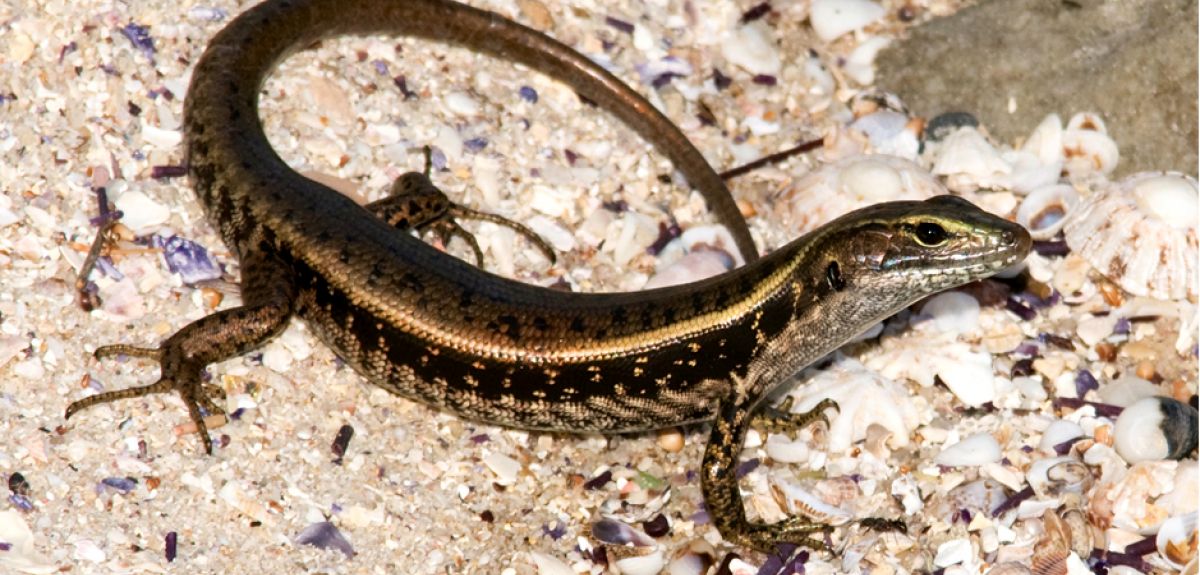
When it comes to spatial learning males are better than females, and bold and shy individuals are better than average ones, at least if you're a lizard.
The findings, from a new study of the Easter Water Skink (Eulamprus quoyii) - a lizard that lives throughout Eastern Australia and can grow over 12cm long - are the first evidence of sexual learning differences in a reptile. A report of the research is published in this week's Proceedings of the Royal Society B.
A team led by Oxford University and Macquarie University, Sydney, scientists took 64 skinks, 32 males and 32 females, and released them into a series of strange environments to investigate how differences in personality influence how they learn. These environments included features they would like, a 'warm' refuge made of a box with three entrances heated by an incandescent bulb, and features they wouldn't, a 'cold' refuge made of a similar box chilled with ice packs.
By introducing the skinks to simulated predator events (being chased away into a refuge) the researchers determined which returned quickly to bask in a warm refuge ('bold' lizards) and which took longer than average to return ('shy' lizards). They then tested the lizards once a day for 20 days in a setting where they were again exposed to simulated predatory attacks and given a choice between a safe refuge (chasing stopped) and an unsafe refuge (the refuge was lifted and chasing continued) that were always located in the same place.
'We found that male lizards were better at this spatial learning task than females, with twice as many males as females learning the spatial task within 20 trials,' explains Pau Carazo of Oxford University's Department of Zoology, who led the research.
'While this is the first evidence ever of sexual learning differences in a reptile, we believe it reflects the fact that males are forced to spend more time moving through their environment in search for females or patrolling their territory to guard it against other rival males. We also show that, across the sexes, the boldest and shyest individuals were overall better learners than intermediate individuals.'
According to the team this is the first evidence that individuals at the extreme ends of a personality axis are better learners than individuals with intermediate personality traits. This does not fit well with current theories about how personality and learning may co-evolve: the team proposes the idea that spatial learning ability and personality are both linked with male reproductive strategies.
'In Eulamprus, as in many other lizard species, male lizards exhibit two alternative reproductive strategies. Some male lizards defend territories, which not only requires them to be bold but also to constantly patrol their territory and remember rival males at its boundaries (which would favour good spatial learners),' Pau tells me.
'In contrast, other males adopt an alternative sneaker strategy whereby they are forced to navigate over long distances (which would also favour good spatial learning abilities) to sneak into other males' territories and try to mate with resident females. Because these males do not defend territories and normally avoid fights, they are likely to be shy.
'We suggest that males that are particularly good at either of these two strategies are likely to be good spatial learners and are either extremely bold or extremely shy individuals. This new hypothesis may help to explain how personality and learning co-evolve, and to understand the evolutionary processes that may lead to the striking individual differences in learning than can be observed in most animal species studied to date.'
- ‹ previous
- 172 of 252
- next ›
 Setting the agenda for the next century of quantum
 10 years on: The Oxford learning centre making an impact
 Mapping the Moon: the world’s first lunar atlas goes digital
  Oxford and The Brilliant Club: inspiring the next generation of scholars
 New course launched for the next generation of creative translators
 The art of translation – raising the profile of languages in schools
  Opening a window into the quantum world
 Tracking resistance: Mapping the spread of drug-resistant malaria
 Cities for cycling: what is needed beyond good will and cycle paths?