Features
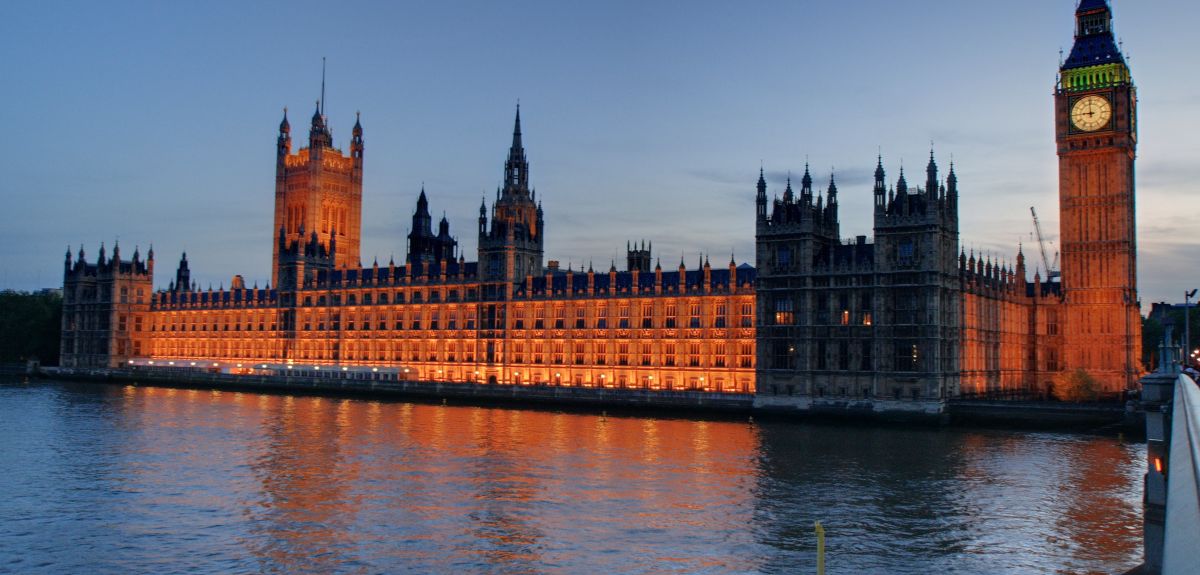
As the final votes are counted and the UK's latest parliament begins to take shape, Oxford University historian Dr Jonathan Healey looks back at 750 years of parliamentary history to pick out what he calls 'the five worst parliaments of all time'.
This is a guest post for Arts Blog. You can see more of Dr Healey's blogs on The Social Historian.
The Bad Parliament, 1377
Doing just what it says on the tin, the Bad Parliament will go down as one of the few assemblies in history that was actually pro corruption.
Disturbed by the damage done by the sanctimonious ‘Good Parliament’ to the garden duck-house industry, the ‘Bad’ decided it befitted the Palace of Westminster to reward courtiers for all kinds of peculatory pilferings. Then, realising there were at least three small buboes in England that they hadn’t yet pissed off, they pulled one of those classic anger-harvesting manoeuvres out of the bag, and imposed a poll tax.
Peasants revolted, nobles were chased out of their mansions quicker than you can say ‘Ed Miliband’, and Richard II had his first serious go at throwing away his crown.
The Merciless Parliament, 1388
Things got even worse with the Merciless Parliament of 1388.
Ruled with sinister glee by the so-called Lords Appellant, the Merciless Parliament was created (one suspects) by forcing a nest of wasps to mate with Katie Hopkins, and cramming their multiple spawn together into a poorly ventilated Wetherspoons toilet.
It made life for its enemies about as much fun as being Eric Pickles’ ham sandwich. Anyone who dared support King Richard II against the Malevolent Appellants found Parliament quickly getting medieval on their ass. Its brutal punishments included hanging, drawing, quartering, beheading, and exile to Ireland.
Fortunately, the people of Kent suddenly noticed they hadn’t rebelled for at least seven years, and went on a well-timed rampage. This forced parliament to concentrate on raising troops rather than lowering life-expectancies, and everyone breathed a sigh of relief. Until…
The Parliament of Bats, 1426
Called to sit in Leicester because it was obviously much more civilised than London, the ‘Parliament of Bats’ came at a time when the nobility’s antics were starting to make Game of Thrones look like an episode of Peppa Pig.
Fearing violence (and improper parliamentary language), the government made the not-unreasonable suggestion that MPs should leave their swords and bows-and-arrows at home rather than bringing them to debates. To the Furcoat Mafia, though, this was just another case of health-and-safety gone mad, so they fired a jet of meady piss in the face of the new rules: arming themselves with a terrifying array of clubs and bats, and turning up anyway.
Worryingly, this fractious Parliament was presided over by a four-year-old (as opposed to someone just acting like one), so it’s nothing short of miraculous that more people didn’t end up under car parks.
The Rump Parliament, 1648-53
Created after a purge , the Rump Parliament is named for its size, though the name’s also an accurate description of what it sat on for four years.
Having, in fairness, significantly reduced the amount of extant Charles I in 1649, the Rump then proceeded to do nothing. Repeatedly.
So addled was the Rump that its MPs spent around eight of their four years arguing about the meaning of the word ‘encumbrance’. No-one pointed out that they could’ve solved the debate by getting a mirror and just looking at themselves. Its only successes came when it started a war with the Dutch out of sheer boredom, and in its brave attempt at bringing the gospel to Wales (though sadly this didn’t have anything to do with gospel music).
Fortunately, Oliver Cromwell was on hand to liven things up. On 20 April 1653, he burst into the house, called a couple of MPs whoremongers, and took away all their baubles. He then brought in a new parliament comprised of religious lunatics and lawyers, though for some reason this didn’t work very well either.
The First Protectorate Parliament. 1654-55
The First Protectorate Parliament followed on from this, and should’ve been brilliant.
Its MPs were only supposed to be those of ‘known integrity’ and of ‘good conversation’. But sadly their rule didn’t live up to their repartee, and they quickly knuckled down to some quality whingeing.
Even after Cromwell barged in (again), and threw a weapons-grade wobbly, they continued in their heroic efforts to be about as useful as a barbed-wire codpiece.
Such was their refusal to do anything vaguely like work that the Lord Protector decided to dissolve them after five lunar months rather than the five calendar ones in the constitution (a UKIP history curriculum would no doubt claim this as a case of his ‘giving in to Islam’).
It meant that Cromwell had now purged Parliament once (arguably twice), and dissolved it prematurely twice (arguably three times).
Naturally his statue now stands outside the modern-day House of Commons.
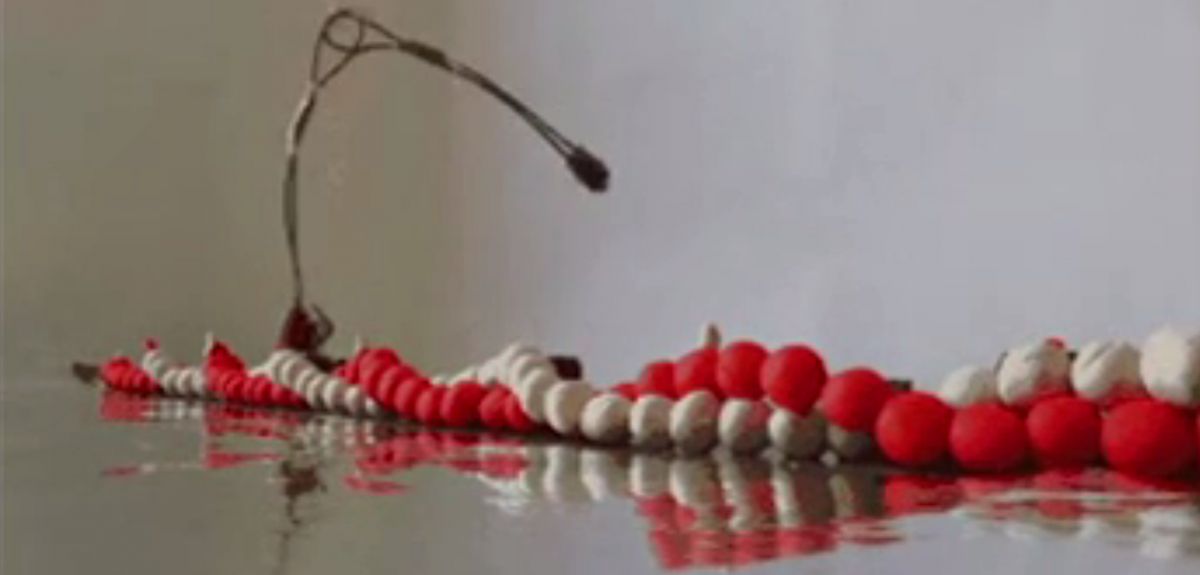
The 'stiff-legged' walk of a motor protein along a tightrope-like filament has been captured for the first time.
Because cells are divided in many parts that serve different functions some cellular goodies need to be transported from one part of the cell to another for it to function smoothly. There is an entire class of proteins called 'molecular motors', such as myosin 5, that specialise in transporting cargo using chemical energy as fuel.
Remarkably, these proteins not only function like nano-scale lorries, they also look like a two-legged creature that takes very small steps. But exactly how Myosin 5 did this was unclear.
The motion of myosin 5 has now been recorded by a team led by Oxford University scientists using a new microscopy technique that can 'see' tiny steps of tens of nanometres captured at up to 1000 frames per second. The findings are of interest for anyone trying to understand the basis of cellular function but could also help efforts aimed at designing efficient nanomachines.
'Until now, we believed that the sort of movements or steps these proteins made were random and free-flowing because none of the experiments suggested otherwise,' said Philipp Kukura of Oxford University's Department of Chemistry who led the research recently reported in the journal eLife. 'However, what we have shown is that the movements only appeared random; if you have the capability to watch the motion with sufficient speed and precision, a rigid walking pattern emerges.'
One of the key problems for those trying to capture proteins on a walkabout is that not only are these molecules small – with steps much smaller than the wavelength of light and therefore the resolution of most optical microscopes – but they are also move very quickly.
Philipp describes how the team had to move from the microscope equivalent of an iPhone camera to something more like the high speed cameras used to snap speeding bullets. Even with such precise equipment the team had to tag the 'feet' of the protein in order to precisely image its gait: one foot was tagged with a quantum dot, the other with a gold particle just 20 nanometres across. (Confusingly, technically speaking, these 'feet' are termed the 'heads' of the protein because they bind to the actin filament).
So how does myosin stride from A to B?
The researchers have created a short animation [see above] to show what their imaging revealed: that Myosin 5a takes regular 'stiff-legged' steps 74 nanometres in length. The movement resembles the twirling of a dividing compass used to measure distances on a map. With each step the heads of Myosin 5a bind to the actin filament before releasing to take another step. In the animation flying sweets represent ATP, which provides the energy to power the motor protein.
'I describe the motion as a bit like the walks in the Monty Python sketch about the Ministry of Silly Walks,' said Philipp. He adds that we have to imagine that this movement is taking place in a hostile and chaotic nanoscale environment: 'Think of it being rather like trying to walk a tightrope in a hurricane whilst being pelted with tennis balls.'
'We've uncovered a very efficient way that a protein has found to do what it needs to do, that is move around and ferry cargos from A to B,' explains Philipp. 'Before our discovery people might have thought that artificial nanomachines could rely on random motion to get around but our work suggests this would be inefficient. This study shows that if we want to build machines as efficient as those seen in nature then we may need to consider a different approach.'
It seems that if you're designing tiny machines 'silly' walks may not be so silly after all.
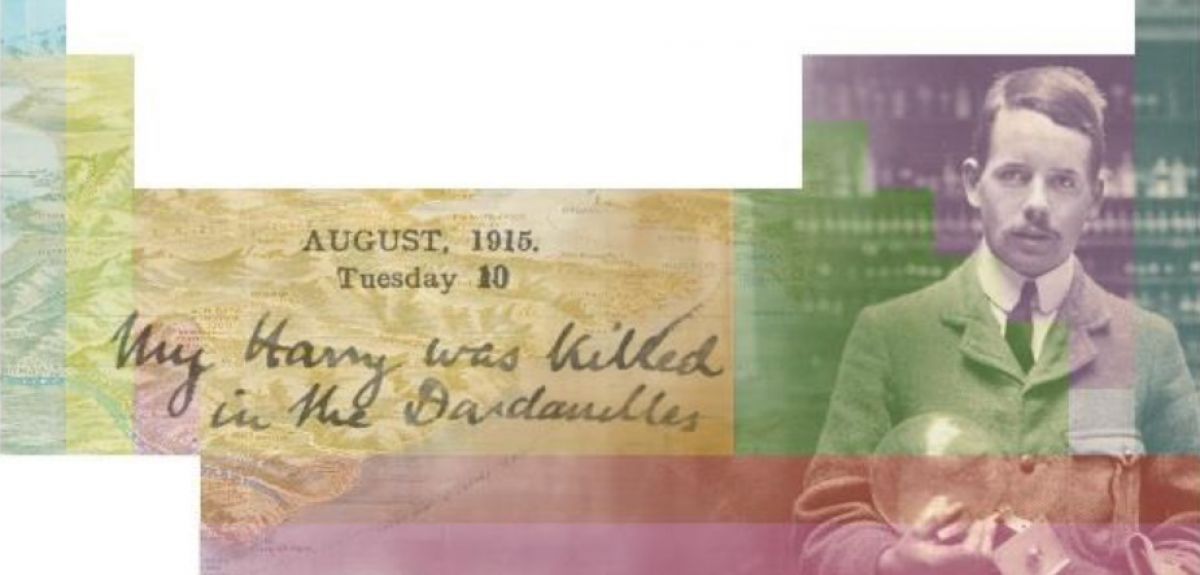
A new exhibition at the Museum of History of Science will tell the story of a promising English physicist killed during the First World War.
Henry 'Harry' Moseley was an exceptionally promising young English physicist in the years immediately before World War I. His work on the X-ray spectra of the elements provided a new foundation for the Periodic Table and contributed to the development of the nuclear model of the atom.
Yet Moseley’s life and career were cut short. He was killed in 1915, aged 27, in action at Gallipoli, Turkey.
With support from the Heritage Lottery Fund (HLF), the Museum of the History of Science is staging a centenary exhibition, 'Dear Harry…' – Henry Moseley: A Scientist Lost to War. This marks Moseley's great contribution to science and reveals the impact of his death on the international scientific community and its relationship with government and the armed forces.
The exhibition opens on 14 May and runs until 18 October 2015.
Using entries from Moseley's mother’s diary, Moseley's original scientific apparatus from the Museum's collections, and his own personal correspondence, the exhibition presents an intimate biographical portrait set against the wider stage of international scientific discovery and World War I.
Through his research and experiments in Oxford and Manchester – where he worked with 'father of nuclear physics' Ernest Rutherford – Moseley made significant and lasting impacts in both physics and chemistry.
Had he lived, the young Moseley was tipped to have been a prime candidate for one of the 1916 Nobel Prizes. Instead, as Isaac Asimov wrote, "in view of what [Moseley] might still have accomplished ... his death might well have been the most costly single death of the War to mankind generally".
The international scientific community was fleetingly re-united in its condemnation of the loss of such a scientific talent, and Moseley’s death led to wider changes in the way that science, scientific research, and scientists were used in war.
Thanks to the HLF’s Our Heritage grant award, the 'Dear Harry…' project will conserve apparatus and archives in the Museum’s collections, permit a subsequent permanent redisplay of this important material, and deliver a broad programme of public events, education work, and digital resources.
The funding has also allowed the Museum to partner with the Royal Engineers Museum, Library and Archive, the Royal Signals Museum, the Department of Physics at the University of Oxford, and Trinity College, Oxford, where Moseley studied. Rarely-seen artefacts from each of these collections will be featured in the exhibition.
'Dear Harry…' has been timed to allow many of the key dates in Moseley's preparations for Gallipoli, and ultimately his death in August 1915, to be presented exactly 100 years later.
A 'live blog', both online and in-gallery, will pick out this centenary anniversary using extracts from archive material to present the events and thoughts of Moseley 100 years to the day.
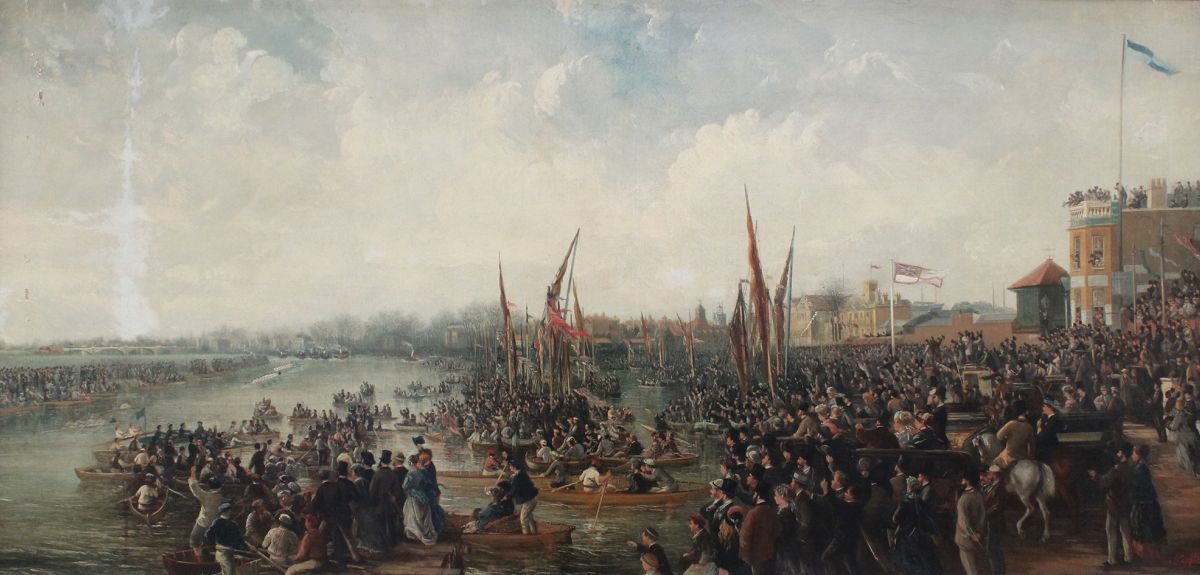
This weekend the Thames hosted an historic Boat Race, with the women's crew racing on the same course as the men for the first time. Professor Sally Shuttleworth, a historian at Oxford, leads 'Diseases of Modern Life', a project which explores the medical, literary and cultural responses in the Victorian age to the perceived problems of stress and overwork.
In a guest post for Arts Blog, Professor Shuttleworth compares yesterday's Boat Race to the race of 1863.
With the crowds, the launches, and the world's media watching, the Oxford and Cambridge boat race seems a fairly riotous occasion. Such disruption as we see, however, including Trenton Oldfield's protest in 2012, is as nothing compared to the experience in the mid-nineteenth century.
In 1863, the medical reformer Dr Benjamin Ward Richardson depicted the scenes on the banks of the Thames on the day of the boat race, with maniac equestrians charging through the crowds, cannons firing and blowing off fingers, and even noses: ‘Women screaming from balconies and windows: children falling from garden-walls, or rolling into the stream to be fished out by dogs, half drowned or dead’.
On the river itself, following the rowing boats, were ‘heavy, black, roaring, filibustering steamers, calling themselves “Citizens,” and so weighted with human yelling craft that one side is in the water and the helmsman thinks it a consolation that it could not possibly be a worse fate to go over altogether’.
How sedate we seem now, with our mildly drunken crowds, and carefully managed flotilla of launches, carrying media-men, and a few lucky university members. No lost fingers or noses, no half-drowned children; no black steamers freighted with yelling hordes.
Even the finish, with our excited television announcers proclaiming the results to the world, seems tame by comparison with the Victorian experience: ‘Pandemonium let loose, in such a burst of human throat, cannon throat, steam throat, as charges the very clouds with thunder, and telegraphs to Hercules the news that “Oxford has won”’.
This is the age of the telegraph, but Richardson depicts a wonderful mix of modes of communication: horses instantly dash off in all directions carrying the news, whilst the air is filled with pigeons, ‘ticketed “Oxford has won”’, flying away at sixty miles an hour, and that instrument of modernity, the telegraph, ‘dins every station in the kingdom’ with the news of Oxford’s victory.
Richardson's own interest in this scene of mayhem lies not so much in the spectacle itself, as in its implications for health. The above descriptions come from an article in the newly-founded Social Science Review on the consequences of physical overwork.
The Victorians, as many historians have noted, were deeply concerned about the possibilities of over-pressure on the brain from new modes of work, but less attention has been paid to their concerns with its physical correlate, over-pressure on the body.
Richardson is in favour of exercise, but in moderation. He warns of the dangers of the ‘competitive animal physics’ exhibited in the boat race. His verdict on the triumphant crew is alarming: there is not one 'who will not die so many years sooner by so much effort performed beyond his natural power'. Although extreme in its rhetoric, his argument chimes with current popular and medical concerns about excessive exercise.
In an interesting parallel with contemporary tales of individuals who move from sedentary lifestyles to over-active gym memberships, with fatal results, Richardson recounts the story of men who have ‘waxed fat’ and have joined the Volunteer force (the equivalent of our Territorial Army) "to work themselves down”, and have instead destroyed their health, and worse.
In opposition to the tenets of muscular Christianity, and the supreme faith placed in physical exercise and drill as training for the imperial mission, Richardson suggests that the Volunteer system, 'instead of imparting national strength, … is elaborating national weakness, by enforcing in excess exertion which, in moderation, would be most useful'.
Over the next decades, the Oxford and Cambridge boat race became the focus of repeated medical investigations in an attempt to determine whether placing such a strain on the body did indeed injure health.
Richardson, founder and President of the National Cycling Society, was strongly in favour of exercise, but retained a healthy scepticism towards the benefits derived from the boat race itself: 'Two boats holding crews half naked, said crews tugging might and main to gain a ridiculous staff, opposite and belonging to a “public” house.'
Would he have been surprised to learn that the tradition (with minor modifications) continues unabated to this day?
Diseases of Modern Life: Nineteenth-Century Perspectives is a five year research project, led by Professor Sally Shuttleworth, and funded by the European Research Council.
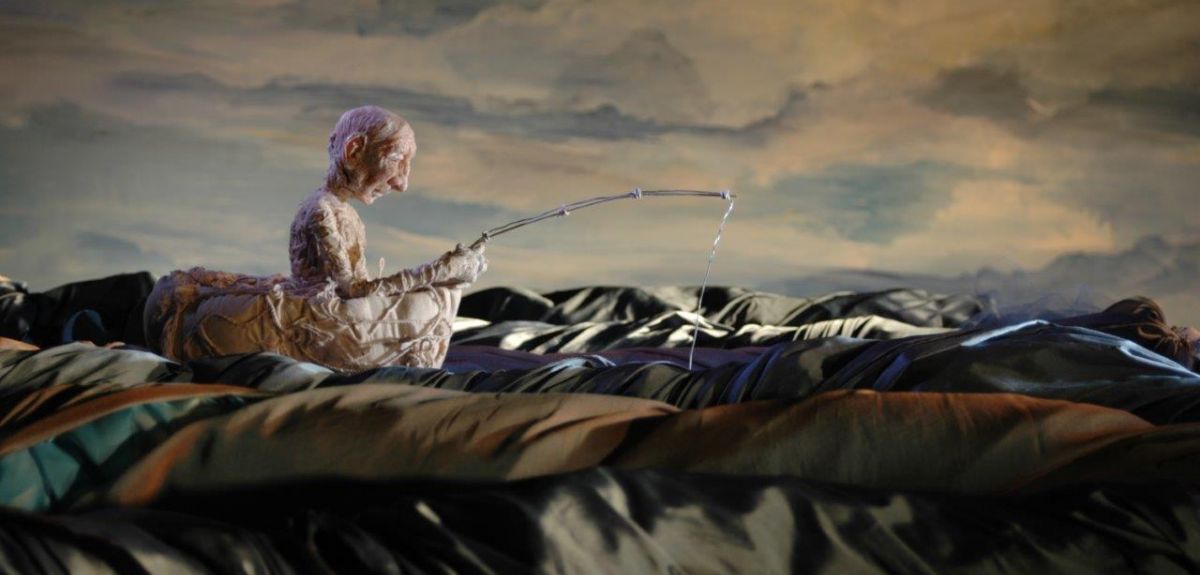
An exhibition about the effects of Alzheimer's co-organised by The Oxford Research Centre in the Humanities (TORCH) and the O3 Gallery opens in Oxford on Saturday.
'That Other Place' will be shown at the O3 Gallery in Oxford Castle Quarter from 4 to 24 April. The exhibition explores Alzheimer's disease from the perspectives of both sufferer and carer.
The collaboration is part of TORCH’s Humanities and Science series. It follows a TORCH seminar earlier this year, when an interdisciplinary panel of scholars explored the potential opportunities, and challenges, of engagement between the humanities and mental health.
The discussion was led by Professor John Geddes, Head of the Department of Psychiatry at Oxford. Professor Geddes said: 'Deep engagement between humanities and mental health may lead to better treatments. It may also enhance people’s experience of health services and lead to greater public engagement with the challenge of mental illness.'
Highlights of the exhibition include Fausto Podovini’s photographic series MIRELLA, which won the World Press Photo contest in 2013. These images chart the decline of the Mirella’s husband, Luigi, who began to show symptoms of Alzheimer’s aged 65. Mirella cared for Luigi for six years, including during the final year of his life when Luigi no longer recognised his wife.
Hayley Morris's stop-motion film UNDONE, winner of the Slamdance Award 2009, evokes the progressive loss of memory and identity in an Alzheimer’s sufferer.
Stephen Tuck, Director of TORCH, said: 'The Humanities and Science series builds on a longstanding tradition of interdisciplinary work at Oxford, by bringing unexpected disciplines together to address new research questions. One focus of the series has been mental health, which is a growing concern, and one which Oxford is particularly well placed to address.'
'Collaboration with museums and galleries is an integral part of TORCH’s mission,’ says Victoria McGuinness, Business Manager at TORCH. ‘Over the past year we have worked with the Ashmolean, the Museum of Natural History, the Museum of the History of Science and Compton Verney to organise research activity and events that enable exchange between researchers and the public. We are delighted to be staging our first exhibition with the O3 Gallery.'
Helen Statham, Director of the O3 Gallery, said: 'We are delighted to use this opportunity to bring together the artistic and academic life of the city to explore one of the most pressing issues of our time.'
- ‹ previous
- 151 of 252
- next ›
 Setting the agenda for the next century of quantum
 10 years on: The Oxford learning centre making an impact
 Mapping the Moon: the world’s first lunar atlas goes digital
  Oxford and The Brilliant Club: inspiring the next generation of scholars
 New course launched for the next generation of creative translators
 The art of translation – raising the profile of languages in schools
  Opening a window into the quantum world
 Tracking resistance: Mapping the spread of drug-resistant malaria
 Cities for cycling: what is needed beyond good will and cycle paths?