Features

If you don't have the energy to mark Burns Night by going to a ceilidh or cooking haggis, neeps and tatties, Arts Blog has a suggestion for how to mark the day.
We asked Fiona Stafford, Professor of English Language at Literature at Oxford University, to suggest a Robert Burns poem to share with our readers.
She picked ‘To A Louse, On Seeing One on a Lady’s Bonnet at Church’ - and here it is.
'Burns speaks to modern readers very directly because his observations of humanity still ring true, while at the same time a relatively simple poem often turns out to have numerous layers and hidden jokes,’ she says.
‘In 'To a Louse', the speaker is riveted by the steady progress of the louse he spots in the very elaborate and highly fashionable bonnet of a young lady who is evidently hoping to make an impression.
‘As the poem continues, it becomes clear that the joke is not just on the young lady, who is unaware of her little visitor, but also on the speaker, who is much more interested in the young lady (and, indeed, where the louse may be heading) than in the service, not to mention the minister, who doesn't even merit a mention and thus seems to be commanding the attention of no one.
‘The famous concluding prayer - 'To see oursels as others see us' - arises naturally from the situation, and reads as a common-sense reflection, but there is a further joke in that it's adapted from the contemporary moral philosophy of Adam Smith.
‘The speaker who has been addressing the louse in broad Scots turns out to be very well read and up to date in his thinking.'
Professor Stafford is currently interested in Burns and the natural world. Her latest book, ‘The Long, Long Life of Trees’, was published by Yale University Press last year. She has found that Burns has a real affinity to nature.
‘As a farmer, we might expect Burns to have had a fairly practical attitude to the land, but many of his poems reveal a sensitivity to the beauty of the local landscape and wildlife, as well as a rare ability to sympathise with non-human perspectives on the planet,’ says Professor Stafford.
‘Burns is one of the first poets to show concern over the clearance of woodlands by contemporary landowners and to influence attitudes by speaking up in verse for the plantation of indigenous trees. He was, in this way, an early voice for the environment and his enormous popularity and stature as Caledonia's Bard meant that his views carried weight.’

For those new to tech culture, or even just interested in how the industry and its many inventions work, the associated terminology can sometimes feel like an unknown, foreign language. But, like most things in life, when you remove the jargon and insert short, simple explanations for what things really mean, they become immediately less intimidating and more accessible to all.
The ScienceBlog tech nine is designed to give the less scientifically inclined a basic introduction to some of the industry’s more commonly used terms. This glossary will not guarantee that the reader speaks fluent techie overnight, but it is a useful conversation aid and gateway into the industry.
The name given to a fast growing, new or emerging company that has launched a product in response to a marketplace need or opportunity - think AirBnB, borrowmydoggy.com and Uber. Startup companies tend to rely on the backing of other more established businesses or investors to fuel early development.
2) Unicorn
Forget fantastical mystical horned horses, in the land of technology, the word is used to describe a startup company valued at over $1 billion. How do the two connect, you might ask? Well, one’s a mythical and much-sought after beast which countless authors have written extensively about, and the other’s a horse with a cone on its head. But, when you join the dots and think of them symbolically as rare (so rare, many see them as too good to be true), wonderful things, a picture emerges. For investors, unicorns are the ultimate business opportunity. Mention one in passing to a tech insider, and watch their eyes light up.
While more often spotted in the tech forests of Silicon Valley, Oxford University has its own unicorn in the shape of handheld DNA sequencer developer Oxford Nanopore, which was valued at £1.25bn after its recent £100m investment.
3) Tech cluster / innovation community
The ultimate power gathering, a tech cluster is the name given to a group of thriving tech companies, situated in close proximity to both each other and surrounding a renowned research university. The most famous example is California’s Silicon Valley, home to tech trailblazers’ eBay, Google, Facebook and Pixar, to name a few. Slightly lesser known and unfortunately named by comparison, the UK’s Silicon Roundabout, also known as Old Street Roundabout in East London, is growing rapidly and includes CrowdCube and Deliveroo.
Home to the top ranked university in the world, it is little surprise that Oxford is one of the most active tech clusters in Europe. The region is buzzing with innovators, entrepreneurs, and investors, with a rapidly increasing level of activity.
4) Spinouts
In the world of university innovation, a spinout is a company that has university research underpinning its core product of service. Markedly different to a regular startup, spinouts require a strong bond with the academic community to succeed and significantly more resources and time to get to market, but the overall chance of success is much higher and the impact of such companies can be literally world-changing. A great example of a successful spinout is Oxford University’s very own Oxbotica, who develop next generation autonomous vehicles.
Oxford University Innovation (OUI), the university’s research commercialisation company, is one of the most impactful offices of its kind, worldwide. In 2016, it set a European record for spinout generation, and will this year celebrate 30 years of operation, during which it has helped launch over 150 companies based on Oxford research.
5) Incubator
In the same way that hospital incubators protect babies, business incubators offer emerging entrepreneurs a safe space to grow, develop and test their abilities, until they are strong enough to fly solo. In the tech world, the term describes a flourishing business that supports the development of new enterprises by providing services and outreach support that make them stronger. Examples include, training, office space and resource.
Incubators, such as the one situated at OUI, play an increasing role in university life. At the start-up incubator, rising entrepreneurs receive bespoke support in a protected environment, where they can then benefit from learned experience, expert training and even financial support.
Not to be confused with the other, university-specific VC, venture capital describes a type of enterprise funding given to new or developing companies by more established, financially fluid organisations. Investors look at a chosen business and weigh up its potential, in terms of the number of employees and revenue generation, in return for financial equity. For a lot of emerging and startup businesses, venture capital is essential to their survival in the early stages of operation.
Although many dream of getting rich overnight, mindful investors know that in business, sustainability is the key to success. A counter balance to the short term outlook of VC, patient capital plays the long game and has a much longer view on returns from investments. This sort of investment has become crucial to supporting spinouts, which have a much longer development cycle than a traditional startup.
An example of patient capital is Oxford Sciences Innovation (OSI), which manages the university venture fund of Oxford University. Focused entirely on supporting spinouts, it is the largest such fund in the world.
8) Seed Funding
As the name implies, seed funding is financial support provided right at the start of a company’s lifecycle, to help them grow. Increasingly seen as a way to get companies off the ground, seed investors are typically high-net worth individuals (also known as angel investors) or small, dynamic funds focused on this pivotal early stage.
9) Stealth Mode
Keeping a secret, a secret, is not always easy, and a business in “stealth mode,” is essentially working to protect a big one of its own. The term is often used when a company wants to withhold information from competitors or to avoid sharing details about a new development. It is particularly common for startup companies to work this way, ahead of launch, while they test the water and build their brand and product identity.

“Siri, will it rain today?”, “Facebook, tag my friend in this photo.” These are just two examples of the incredible things that we ask computers to do for us. But, have you ever asked yourself how computers know how to do these things?
Machine learning is not a new concept but it is constantly evolving and the potential benefits of its capability are increasing by the second. A form of artificial intelligence, it provides computers with the ability to learn through experience, without being explicitly programmed to perform a task. As the computer receives more data, its algorithms become more finely tuned and over time it begins to recognise patterns and solve problems on its own - without the use of a programme. The more finely tuned the algorithm, the more accurate the computer can be in its predictions.
In their latest animation, Oxford Sparks, the University of Oxford’s digital science portal, outline how researchers have combined the power of statistics and computer science, to build algorithms capable of solving complex problems more efficiently while using less computer power.
Using machine learning this way is already informing medical diagnosis and strengthening the speed and capability of smartphones and social media, but its scope to revolutionise the world seems limitless.
View the video and learn more about the power of machine learning here:

Oxford students have helped to put on a multi-lingual poetry writing workshop at Oxford Spires Academy.
Pupils at the state secondary school in East Oxford were encouraged to express themselves through poetry in different languages.
The workshop was a collaboration between Oxford University’s Creative Multilingualism research project and Oxford Spires Academy’s poetry hub. It was led by award-winning Iraqi poet, Adnan Al-Sayegh, who has lived in exile since 1996 and been based in the UK since 2004.
‘One of the main aims of the Creative Multilingualism project is to show that the linguistic diversity in UK schools, and the UK in general, has tremendous potential both in terms of fostering productive communication across cultural groups, and in terms of creative thinking and writing,’ says Professor Katrin Kohl, director of the project.
‘These workshops encourage students to be creative in their own language and across languages.’
32 languages are spoken by children at Oxford Spires Academy, and the majority do not have English as their first language.
Students from Syria, Algeria, Tanzania, Pakistan and Sudan heard Mr Al-Sayegh speak about the importance of poetry, which he considers to be a basic human need.
He described how poetry is not restricted to the written word but is found in music and on the street, with the power to build bridges between people, as having a poetic heritage is something shared by all cultures.
A more detailed summary can be found here.
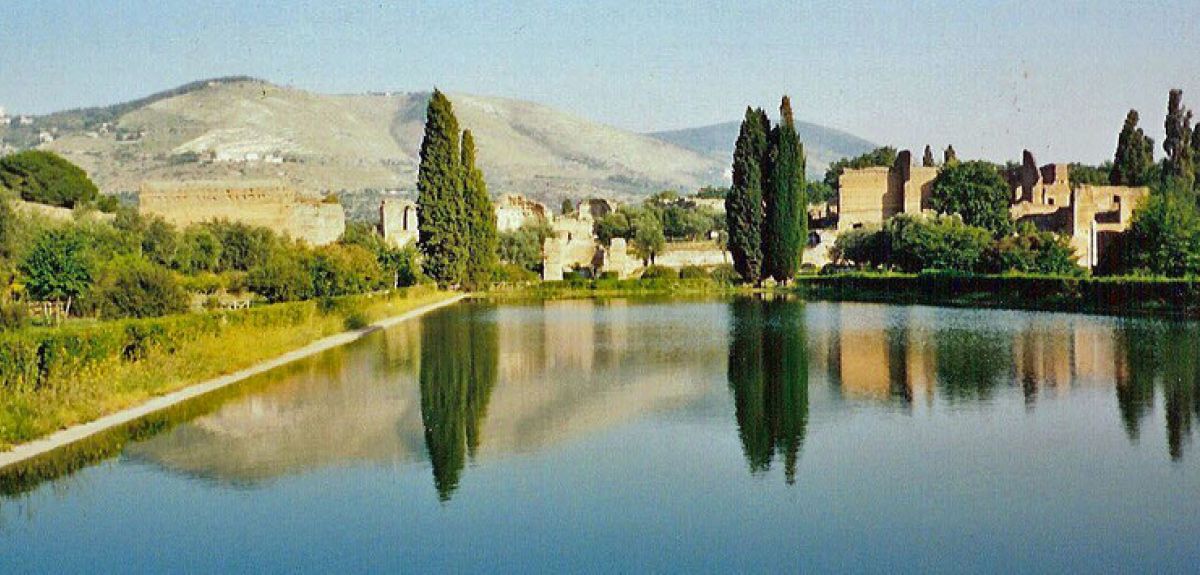
The first of Oxford University’s Slade Lectures for 2017 will be held tomorrow (18 January).
The Slade Lectures are annual lectures about art history. This year’s speaker is Caroline van Eck, who was appointed as Cambridge University’s first established professor of the history of art in October 2016.
Her public lectures will be held every Wednesday at 5pm in the Mathematical Institute on Oxford’s Radcliffe Observatory Quarter, between 18 January and 8 March.
'These lectures, with their starting point in artworks held here in Oxford in the Ashmolean Museum, promise to be intellectually enlivening as well as visually rich, and will be of interest to anyone who cares about how objects work their effects on the people who collect and view them,’ says Craig Clunas, Professor of the History of Art at the University of Oxford.
‘I am looking forward to these public and open lectures immensely, and look forward too to welcoming their audience to a highly stimulating series.'
The title of the lecture series will be ‘the material presence of absent antiquities: collecting excessive objects and the revival of the past’.
The Slade Lectures were founded in 1869 after a bequest from the art collector Felix Slade in 1869.
John Ruskin gave the first series of eight public lectures in 1870. In his inaugural lecture he announced that he was setting up the Ruskin School of Drawing, which is now the Ruskin School of Art.
For art history fans, here is Professor van Eck with a preview of this year's lectures:
'What happens when we consider the great changes that transformed the European art world around 1800 not, as is usual, from the perspective of the human actors or the institutions involved but from that of the objects, their presence, agency and materiality?
Starting from the outsize candelabra Piranesi made from Roman fragments excavated at Hadrian's Villa, two of which are now in the Ashmolean Museum, this year the Slade Lectures will trace the issues of authenticity, agency, and living presence these truly excessive objects raise, as well as the anthropological and psychological ramifications of the intense emotional investment by patrons, artists and collectors in Graeco-Roman objects.
Starting from the biographies of these candelabra and related artefacts, these Lectures will argue that a material turn took place in the decades around 1800 that affected both making and collecting art, as well as the origins of the major European museums.'
The full list of lectures is available here.
- ‹ previous
- 105 of 252
- next ›
 Setting the agenda for the next century of quantum
 10 years on: The Oxford learning centre making an impact
 Mapping the Moon: the world’s first lunar atlas goes digital
  Oxford and The Brilliant Club: inspiring the next generation of scholars
 New course launched for the next generation of creative translators
 The art of translation – raising the profile of languages in schools
  Opening a window into the quantum world
 Tracking resistance: Mapping the spread of drug-resistant malaria
 Cities for cycling: what is needed beyond good will and cycle paths?