Features
As the much anticipated Conservation Optimism Summit begins, Scienceblog talks to Professor EJ Milner-Gulland, Tasso Laventis Professor of Biodiversity in Oxford’s Department of Zoology. Co-creator of this landmark movement, she shares how she is working to protect some of wildlife’s most endangered species, what we can all do to be more environmentally conscious and why she has had enough of the doom and gloom around nature.
What was the inspiration behind the Conservation Optimism Summit?
The idea came about when I attended a lecture given by the great coral reef biologist Professor Nancy Knowlton, who founded the #OceanOptimism initiative. That campaign has done a fantastic job of highlighting positive stories about ocean conservation, and spreading them far and wide via social media.
Highlighting the challenges we face, rather than showing the progress that is being made to tackle them, makes people feel like there is nothing that they can do to help, when it really isn’t the case.
It got me thinking about how much we conservationists shoot ourselves in the foot by focusing on the negative. Highlighting the challenges we face, rather than showing the progress that is being made to tackle them, makes people feel like there is nothing that they can do to help, when it really isn’t the case. There is a lot to be proud of in conservation, and we need to be better at sharing it.
Once I had the idea in mind, I thought about how exciting it would be to have a Conservation Optimism event linked to the Earth Day events that people like Nancy Knowlton were also planning, and about the potentially powerful effect we could have in changing the conversation within conservation.
How does the format of the summit differ from other environmental campaigns?
Conservation Optimism is intended for everyone. Environmentalists, scientists, policy makers, academics, children – people in general. Our initiative encourages a global, collaborative way of thinking. While the only professional summit, specifically for conservationists, is taking place at Dulwich College, London, there are public events taking place all over the world. The flagship Earth Optimism event is organised by the Smithsonian Institute in Washington DC, but there are also events in Cambridge and elsewhere, so it is possible for people to get involved anywhere. My hope is that everybody who comes along not only enjoys themselves but comes away with a renewed commitment to protecting the natural world and a set of actions that they can implement themselves to make a difference.
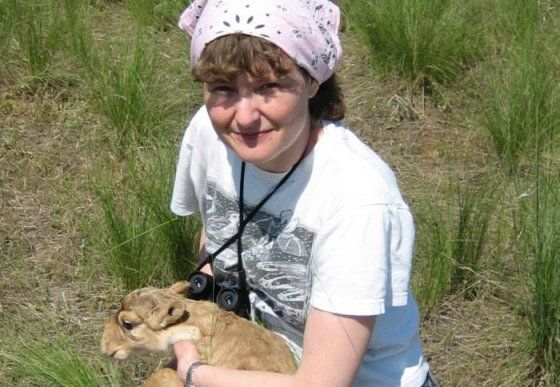 Image credit: EJ Milner-Gulland
The summit has been a culmination of months of planning and work, how do you plan to build on the initiative’s success in the future?
After the event we will sit down and analyse how people responded to the programme, did it inspire them or change their thinking or actions? Hopefully it will become an annual event, and more and more people around the world will get involved over time. The movement’s website will continue, and be updated with highlights from the summit and ideas to encourage people to stay connected with the Optimism movement.
What would you like the legacy of Conservation Optimism to be?
I hope conservationists will think hard about the way in which we approach our work, how we present it, and how we can be more forward-thinking and positive. We need to stop focusing on winning battles and collaborate to win the war. That begins and ends with the public working with us. We have to connect with them in a way that makes them feel that they can do something to change things.
Starting a community initiative, checking out local wildlife trust websites for news about public events, or simply replacing plastic bags with bags for life and plastic bottles for refillable ones, all helps. Plastic pollution is a huge threat to our oceans, with tragic consequences for wildlife. In all parts of the world, whether it's the UK or elsewhere, people can play a more active role in conserving their local wildlife. No matter where we live, every one of us can do more to protect the environment and get actively involved in conservation.
What’s next for you?
I’m going to Colombia in a couple of months to present at the International Congress on Conservation Biology and am looking forward to connecting with international colleagues and working how we can collaborate to tackle the challenges in our field.
What are the biggest challenges that you face in your work?
As scientists who are passionate about nature, it is challenging to make our work relevant to people's daily lives. Scientific language can be alienating; we need to bring nature to life in an exciting way that makes conservation interesting to people.
In today’s society everything we do as scientists has to have a real world impact to make it onto the agenda for governments and funders. People want to know ‘why should I care about this?’ and if we want to change the world for the better, we have to make a strong case that speaks to their needs and priorities.
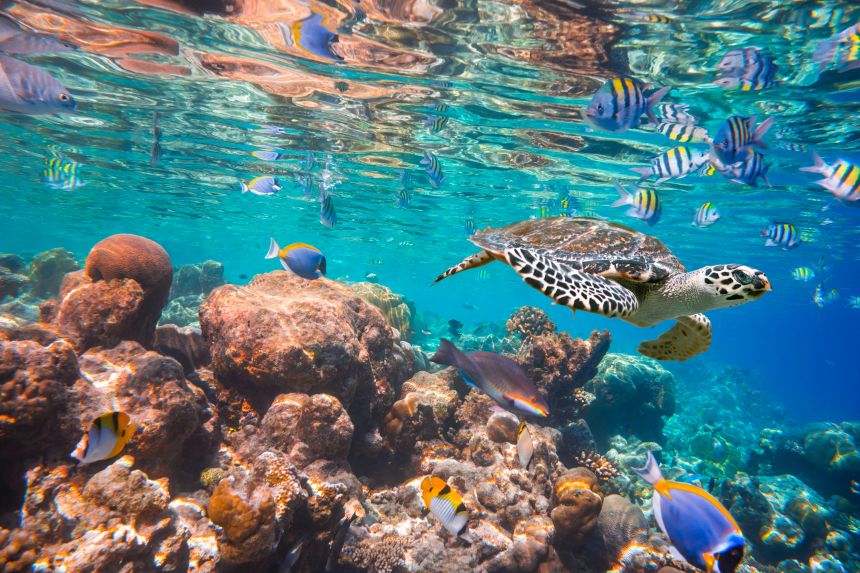 Professor Milner-Gulland was inspired to start Conservation Optimism, after attending a lecture given by the coral reef biologist Professor Nancy Knowlton, who founded the #OceanOptimism initiative.
Image credit: Shutterstock
Professor Milner-Gulland was inspired to start Conservation Optimism, after attending a lecture given by the coral reef biologist Professor Nancy Knowlton, who founded the #OceanOptimism initiative.
Image credit: ShutterstockAnd the opportunities that you enjoy the most?
For me it is the feeling that you are making a difference, changing the way people think about the natural world. I enjoy working with young people from around the world who are really passionate about conservation.
Starting a community initiative, checking out local wildlife trust websites for news about public events, or simply replacing plastic bags with bags for life and plastic bottles for refillable ones, all helps. Plastic pollution is a huge threat to our oceans, with tragic consequences for wildlife.
What achievement are you most proud of?
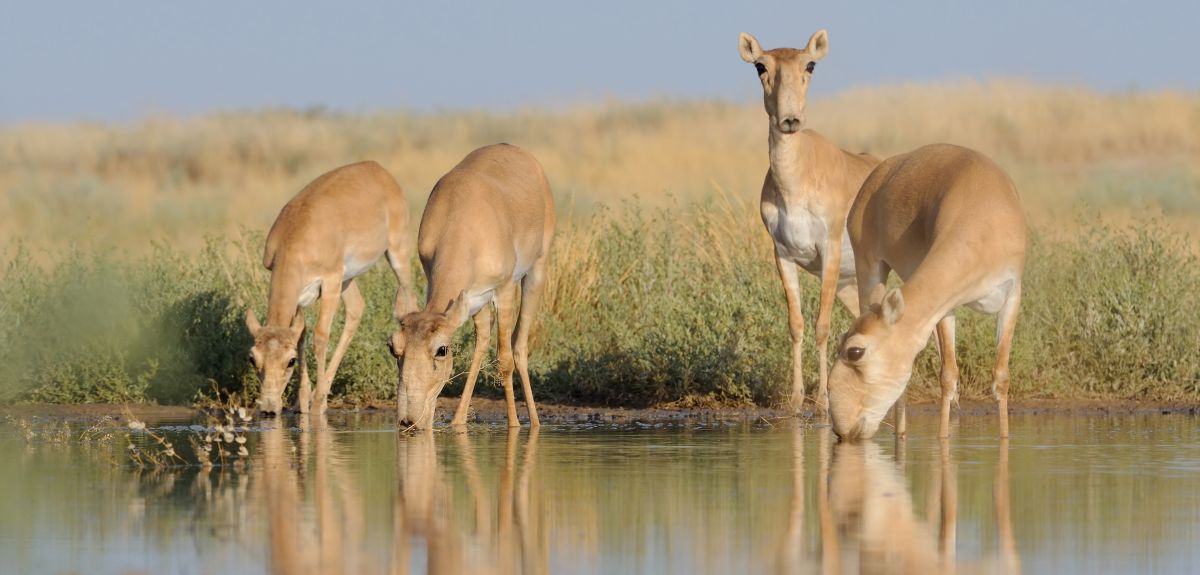
My ecological research in Central Asia with the saiga antelope. I’ve stuck with it for more than 25 years, through a time when uncontrolled poaching catapulted the species towards the brink of extinction,to now, when saiga numbers are increasing, and there is hope again. My research has played a part in in getting us to this point, and although it has not been without its challenges, I am very proud to have been involved.
Aside from Conservation Optimism, what other projects are you working on at the moment?
One exciting new initiative is the Oxford Martin’s School Illegal Wildlife Trade programme. The illegal and unsustainable trade in wildlife is a major threat to global biodiversity. I am working to understand the drivers and motivations of wildlife consumers to work out how we can change this behaviour.
Do you think there are any unique challenges to being a woman in science?
Balancing family time with your passion for research is a constant challenge. Fortunately, universities actively try to support people to achieve this, much more so than in many other jobs. It is important for people to realise that it doesn’t have to be all or nothing. It is possible to do well in science and have a life outside of your work.
Are there any changes that can be made to make this balance easier?
A lot of the problem comes from young people being employed on short term contracts before they achieve permanent positions, and that makes it hard to plan your life. Once you have the security of a permanent position there are lots of positive initiatives in place to support people who have family commitments. But making that step is really hard. Research grants like the Dorothy Hodgkin Fellowship which support people coming back into academia after a career break, are fantastic. These allow people to have research time to build their career when coming back, and make it easier to balance their various commitments.
How did you come to be a scientist?
I was raised in the British countryside, so grew up surrounded by nature and spent lots of time outdoors. I have always found biology fascinating, and was also fortunate to have a fantastic teacher who inspired me. Coming from a family who were keen to share their love and knowledge of nature with me was also an inspiration.
One piece of advice that you would give to other would be scientists entering the field?
Do what you love, rather than compromising on doing research that you feel you ought to do because it's fashionable or where the money is.
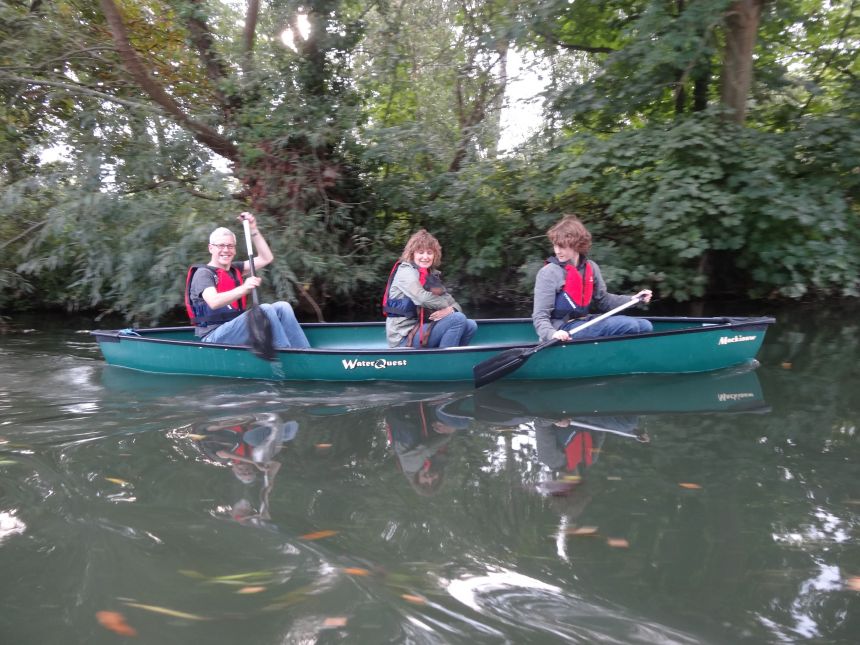 Professor Milner-Gulland pictured rowing, with her family
Prof Armand D’Angour tells Arts Blog about the power, excitement, and drama of ancient Greek music
Thinking about ancient Greek poetry and drama, we tend to overlook a very important aspect. 'All the great poetry, from Homer through to the lyric age, and the great Greek tragedians – most of that was music,' says Professor Armand D'Angour. It was sung, played, and even danced.
Armand D’Angour is a Professor in Classical Languages and Literature (Faculty of Classics) at Jesus College. Formerly a professional cellist, he is currently engaged on a project to reconstruct ancient Greek music.
'I try to bring together all the different elements,' he says. 'My particular expertise is in ancient metre and rhythm. The rhythms are quite complicated and their names are quite off-putting, so my approach is to say "Let’s just hear what we’re talking about".'
Experts on ancient music theory have long understood the general principles of Greek melody. 'Ancient Greek has a natural melody - there was a pitch change on different syllables of words,' says Prof D'Angour. Ancient documents confirm that song melodies generally imitated the natural rising and falling pitch of words.
Prof D’Angour is working on scores and literary texts preserved on papyri and stone with musical notation above the words. 'When you have an ancient text, very often it’s got bits missing, but because we know the rhythms, we can conjecture what was in the gaps,' he explains. 'So also with the music.'
The ultimate goal is not an ‘accurate’ reconstruction, which is not only impossible but would misrepresent what ancient Greek music was like. 'Music was mostly orally transmitted. It wasn’t written down, it wasn’t recorded,' says Prof D'Angour. 'You cannot ‘recapture’ any single performance, and they were all different. Music was variable, but within the framework of an idiom.'
'What I'm trying to do is understand the musical idiom of ancient Greece – the general melodic and rhythmic principles of music. I want to say: Look, this isn’t the way it was sung, but this accords with the prevalent melodic idiom. If ancient Greeks heard it now, they would understand it to be their kind of music.'
It is not that an understanding of ancient Greek music and musical notation has ever really been lacking. Thanks to treatises like that of Alypius (5th century AD), following on the Elements of Harmony by Aristoxenus of Tarentum (4th century BC) and Harmonics by Ptolemy (2nd century AD), we know what the signs mean and how the modal systems worked. What Prof D’Angour is doing is trying to make coherent musical sense of what we have.
Now that there is music to play, Prof D’Angour’s reconstructions can be performed with a whole chorus and the two main instruments that were used in ancient Greece: lyre (or kithara) and double pipes (aulos). 'We don’t have any archaeological records of lyres, because they were made from wood and animal gut which perished,' he says.
But from ancient vase painting and descriptions in texts we can tell more or less what the size, shape, and look they would have had. 'We can then make them and play them.'
We tend to talk as if there was just one kind of Greek music, but in fact 'there were hundreds of different kinds of music'. And it was as ubiquitous as it is now: you could hear it in the home, in the temple, in the theatre. 'And of course ancient authors tell us what effect it had: it was moving, it sounded tragic, it was joyful or triumphant,' says Prof D'Angour.
Ancient Greek conservatives like the philosopher Plato thought that the kind of music you listened to affected your character. “Popular” music wasn’t beautiful, therefore it was bad. However, it could be effective, exciting, sublime. 'It wasn’t beautiful according to traditional canons of beauty.'
Looking at contemporary times, Prof D'Angour notes that 'the same aesthetic debate was going on: is beauty the criterion of goodness in art and music? Music is also about power, excitement, drama, which may be no less important.'
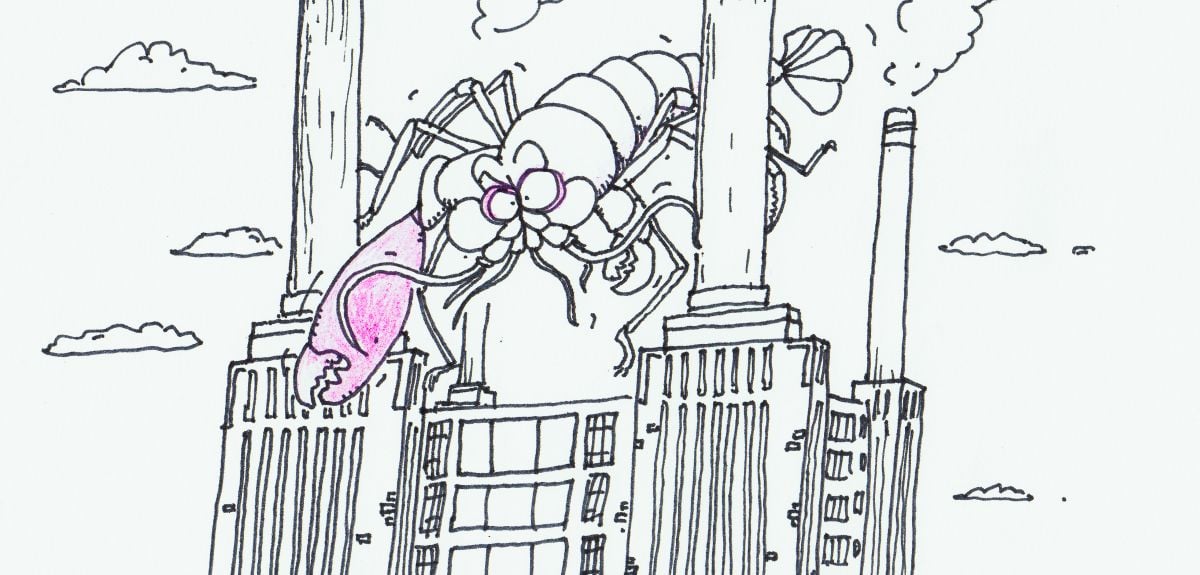
The discovery of a new species of pistol shrimp off the coast of Panama by a team of researchers including Dr Sammy De Grave of Oxford University’s Museum of Natural History was announced yesterday.
The news made headlines across the world – partly because of the shrimp’s bright pink claw, but also because Dr De Grave and his colleagues decided to name the shrimp Synalpheus pinkfloydi after the band Pink Floyd.
This gave journalists the chance to flex their headline-writing muscles. ‘Shrimp found on the Dark Side of the Lagoon,’ said the Oxford Times. Many went for the less imaginative ‘Shrimp Floyd’.
In trying to think of a headline for this article, Arts Blog came up with Brine On You Crazy Diamond, Goodbye Krill World, Fish You Were Here, Dark Side Of The Tuna and Another Shrimp In The Wall. All ended up in the bin.
Although this all seems like a lot of fun, naming the shrimp after Pink Floyd actually helped Dr De Grave and his team to get across the shrimp’s features: by closing its enlarged claw at rapid speed, the shrimp creates a high-pressure cavitation bubble.
When this bubble implodes, it creates one of the loudest sounds in the ocean, which is strong enough to stun or even kill a small fish.
That never happened to any of Pink Floyd’s fans who stood next to the amps during a gig.

100 years ago this week, the poet Edward Thomas died at the Battle of Arras in World War One.
Although he is celebrated as a war poet, Thomas’ poems rarely dealt directly with the conflict.
Dr Stuart Lee of the Faculty of English Language and Literature and IT Services started the First World War Poetry Digital Archive, which crowdsourced over 7,000 items of text, images, audio and video related to the First World War for teaching, learning and research.
Dr Lee says Thomas is a significant poet from the war era because, unlike the war-focused poems of Wilfred Owen and Siegfried Sassoon, his poetry represents what so many people back in the UK felt during the war.
'I think he’s a wonderful poet and he certainly deserves recognition because from that period he points us to another side of the war, the people who were at home who could just see the effects and playing on their mind,' he says.
'In poems like Rain and Owl he clearly is at home but his mind is going to those men on the front who are suffering for him and suffering for his country.
'He also presents probably what many people felt in terms of the attitudes of the war – he is not jingoistic and at the same time he’s not a pacifist, he’s right in the middle saying I don’t hate Germans and I don’t love England in the way the newspapers want me to, but I need to fight.
'It focuses us on the discussion of what we mean by a war poet and war poetry. We tend to think of Wilfred Owen and Siegfried Sassoon and the likes because they were competent poets and they write about their experience in the trenches, but of course the war like all wars affected people who never actually served, who were on the home service, or who just experienced the war.
'Thomas was one of those men who was tackling a great problem which many people had to face up to, of what involvement he should have in the war.'
Dr Lee was interviewed about Edward Thomas on the BBC World Service this week. The full interview can be found at 48 minutes 30 seconds.
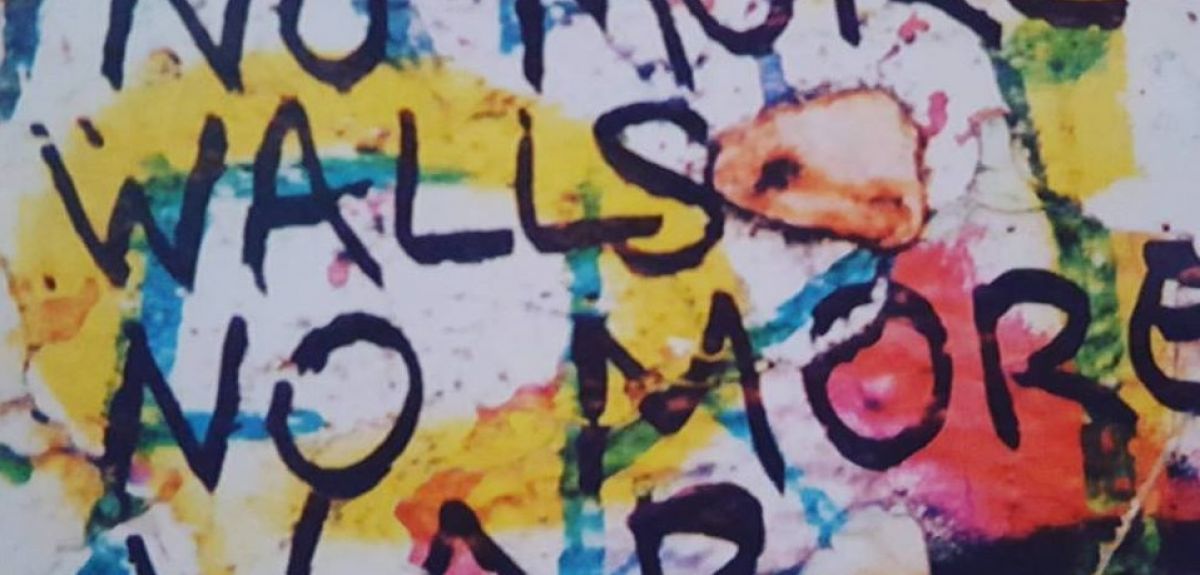
A new seminar series at Oxford explores different perspectives on violence.
It was set up by Rachel Kowalski at the beginning of this academic year, just a few weeks after beginning her doctorate in Irish history as a Wolfson Scholar.
‘I spoke to The Regius Professor of History, Lyndal Roper, about wanting to bring people from different disciplines together to talk about violence,’ she says. ‘She suggested that I start a reading group but I decided to take it a step further and launch a seminar series.
‘I enjoy the discursive element of a seminar, as opposed to that of a reading group or a lecture series. Each academic who featured spoke for an hour and then led 30 minutes of discussion, a format that proved to be successful.’
The purpose of the series is to study violence in its own right.
‘It is important to study 'violence' as a separate phenomenon to 'war', 'terrorism' or 'genocide', in order to understand why and how it happens,’ says Rachel. ‘The external factors and personal idiosyncrasies which drive and individual to commit violence can become lost in the greater narrative of a war or conflict.
'And the dynamics which shape the nature of any violent attack can only be surmised from understanding violence at a local or individual level. Why, for instance, are some attacks especially brutal, exceed what would be clinically required to take the life of an individual, and venture into what can only be perceived as cruelty?'
The series began with Dr Kieran Mitton from King's College London talking about ‘Irrational Actors in the Theatre of War’ focusing on Sierra Leone and the psychology behind violence. Many of Dr Mitton’s ideas about violence are found to be at the core of Rachel’s series as he argues that ‘normally when we delve into seemingly senseless acts of violence we can find a logic to them’.
The series has been varied in its content. It has covered Irish history, with Rachel’s own seminar on ‘Ethical Guerrilla Warfare, Terrorism, and the Provisional IRA’, Latin American topics, and other more general themes such as genocide.
A key feature of the series is that it is interdisciplinary. Many of the seminars were led by historians, but a number were conducted by political scientists and sociologists. A particular highlight for Rachel was managing to involve a literature specialist in the project.
'Matthew Voice, a Wolfson Scholar and PhD Candidate at Sheffield University, came to speak about ‘Contemporary attitudes towards marital violence in twentieth-century Ireland’ focusing on its depiction in memoirs,' she says.
'I wanted to take a step away from specific conflicts and look at violence generally. This meant I was able to look for speakers from different disciplines, as violence is relevant in many spheres.
'My only regret is that the series focuses solely on modern topics. I would have liked to have involved medievalists and classicists as violence is in no way a product of modernity.
'In the future I would like to collaborate with someone from another field to create an even broader series. This would hopefully allow me to advertise the series in a number of departments, which proved difficult this time round.'
It is rare for a DPhil candidate to launch a whole series of seminars that covers a multitude of disciplines and features a range of speakers from all over the country. With the attendees being a mixture of academics, postgraduates, undergraduates and members of the general public, Rachel’s audience has proven to be just as varied as her content.
Find out about the remaining four seminars here.
Rachel has previously been interviewed for our 'student focus' series.
- ‹ previous
- 99 of 252
- next ›
 Setting the agenda for the next century of quantum
 10 years on: The Oxford learning centre making an impact
 Mapping the Moon: the world’s first lunar atlas goes digital
  Oxford and The Brilliant Club: inspiring the next generation of scholars
 New course launched for the next generation of creative translators
 The art of translation – raising the profile of languages in schools
  Opening a window into the quantum world
 Tracking resistance: Mapping the spread of drug-resistant malaria
 Cities for cycling: what is needed beyond good will and cycle paths?