
Fossils reveal ‘latitudinal traps’ that increased the risk of extinction for marine species
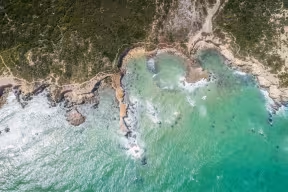
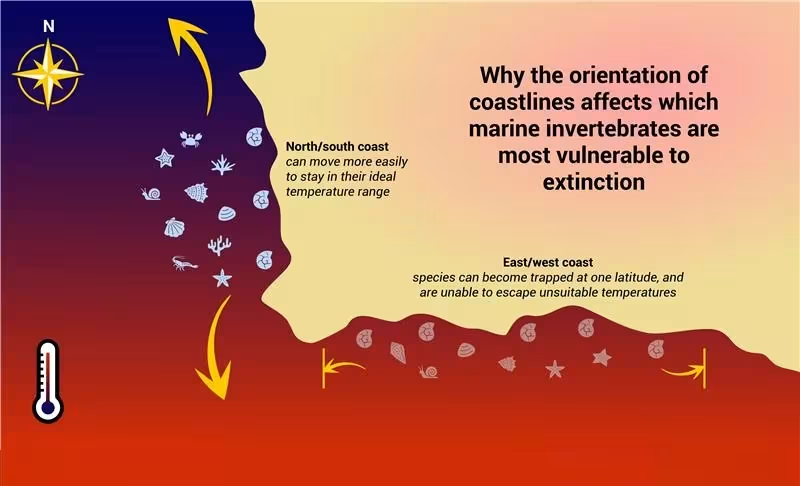
A new study led by researchers at the University of Oxford has shown that the shape and orientation of coastlines significantly influenced extinction patterns for animals living in the shallow oceans during the last 540 million years. In particular, animals living on convoluted or east-west orientated coastlines (such as those found in the Mediterranean and Gulf of Mexico today) were more likely to go extinct than those living on north-south orientated coastlines.

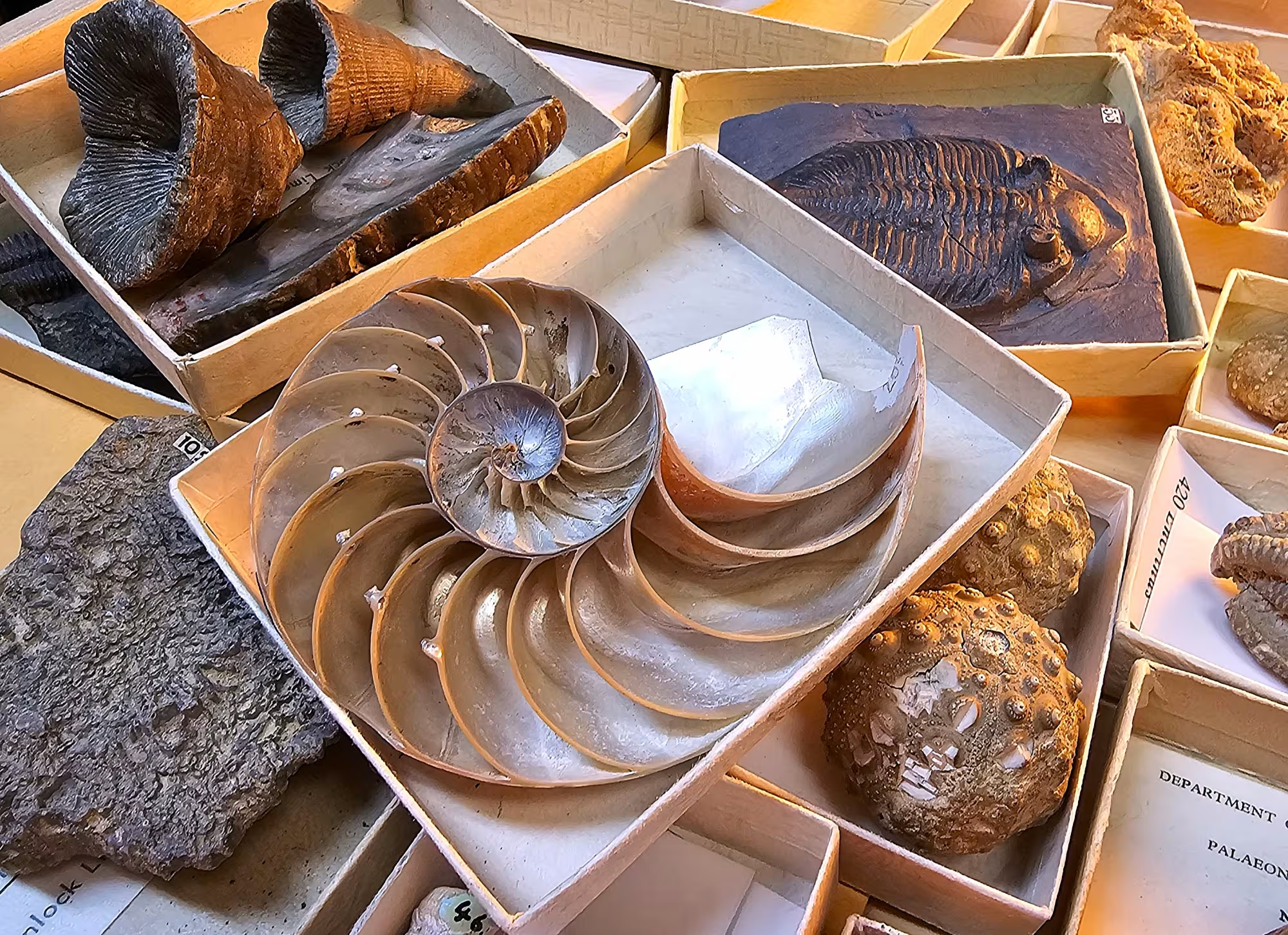
The researchers analysed over 300,000 fossils for over 12,000 genera of marine invertebrates, combining these with reconstructions of continental arrangements at different times in the past. This enabled them to run a powerful statistical model to test the hypothesis that the orientation and shape of a coastline influenced a taxon’s chance of extinction.
The model revealed that invertebrates living in environments such as east-west orientated coastlines, islands or inlands seaways, where migration to a different latitude was difficult, or impossible, were consistently more vulnerable to extinction than those which could move more easily in a northwards or southwards direction.
Palaeogeography could provide one explanation for why some mass extinctions are more severe than others – some continental configurations may make it harder for groups to avoid the extreme climate changes during these events.
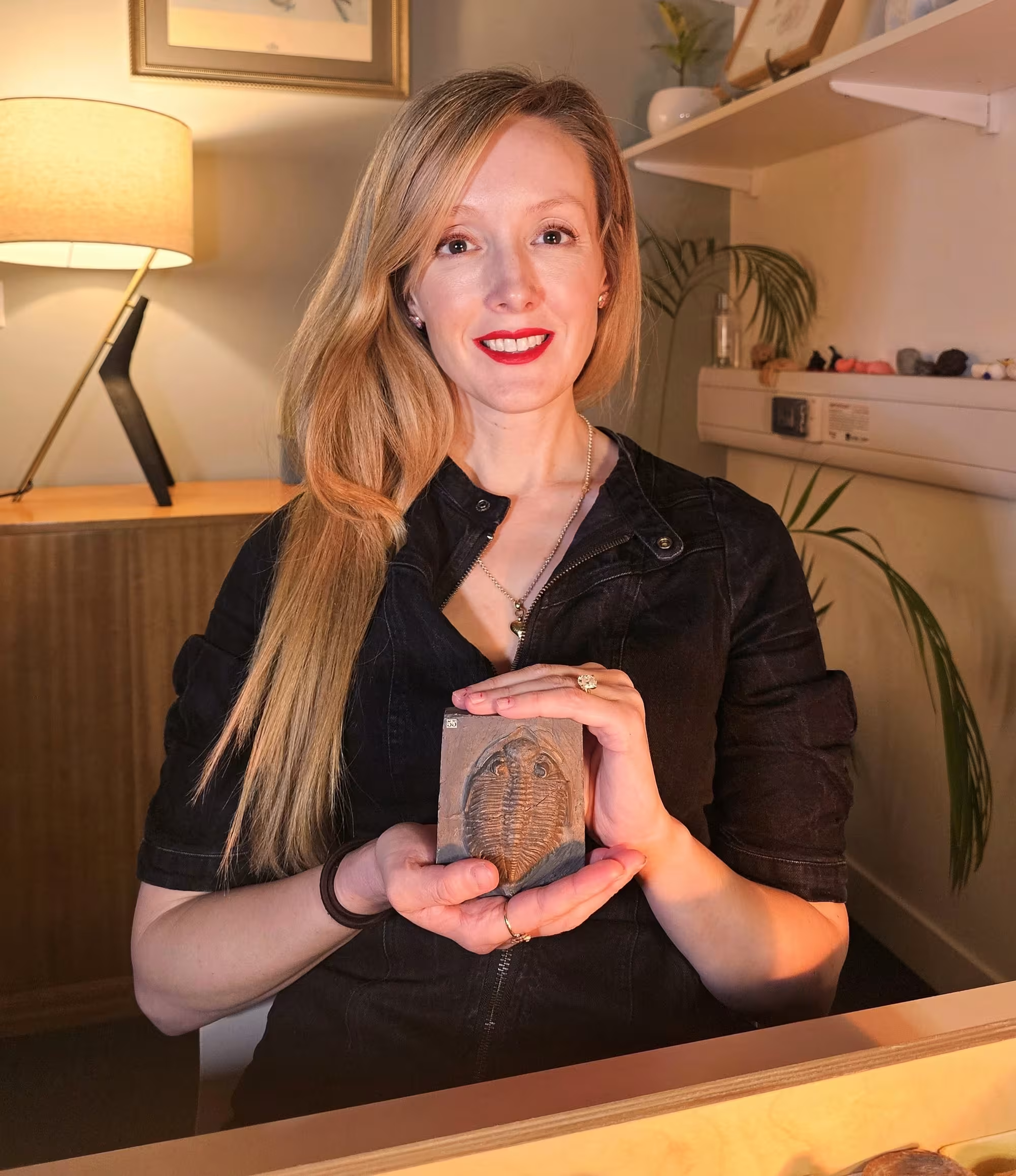
Lead author Dr Cooper Malanoski, Department of Earth Sciences
Study co-author Professor Erin Saupe (Department of Earth Sciences, University of Oxford) said: ‘Generally, coastlines with a north-south orientation better allowed species to migrate during periods of climate change, enabling them to stay within their ideal temperature tolerance range. This reduces their risk of extinction. Conversely, groups that are trapped at one latitude, because they live on an island or an east-west coastline, for example, are unable to escape unsuitable temperatures and are more likely to become extinct as a result.’
The researchers were also able to show that this effect was heightened during mass-extinctions and hyperthermal (extremely warm) periods, and that coastline geometry became even more important for survival during these times.
Lead author Dr Cooper Malanoski (Department of Earth Sciences) said: ‘This shows how important palaeogeographic context is – it allows taxa to track their preferred conditions during periods of extreme climate change. And palaeogeography could provide one explanation for why some mass extinctions are more severe than others – some continental configurations may make it harder for groups to avoid the extreme climate changes during these events.’
Professor Saupe added: ‘This work confirms what many palaeontologists and biologists have suspected for years – that a species' ability to migrate to different latitudes is vital for survival. By examining the fossil record of marine invertebrates restricted to shallow marine environments, we have been able to test this hypothesis with rigorous statistical analyses. An exciting next step is to see if we can observe this effect today.’
The study was conducted in collaboration with the University of California, Berkeley (USA), Stanford University (USA), University of Leeds (UK), and the Smithsonian Tropical Research Institute (Panama).
The study ‘Paleogeography modulates marine extinction risk throughout the Phanerozoic’ has been published in Science.
For more information about this story or republishing this content, please contact [email protected]


