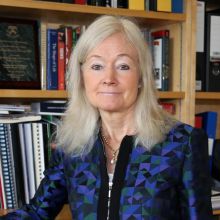
In spite of everything, many people still underestimate women, in general, and older women, in particular. They have clearly never encountered Kay Davies, the dynamic 70-year-old Oxford geneticist, who is ‘retiring’ after a lifetime’s research (but not really).
When disasters such as earthquakes happen, governments and humanitarian organisations need to rapidly allocate aid resources to facilitate recovery, minimise the number of people displaced and reduce the long-term effects. This is a complex task that needs be undertaken in a very short space of time, with potentially serious consequences if not done well.
Humans perceive the world around them with five senses – vision, hearing, taste, smell and touch. Many other animals are also able to sense the Earth’s magnetic field.
Scientists at the University of Oxford have discovered that classical nova explosions are accompanied by the ejection of jets of oppositely-directed hot gas and plasma, and that this persists for years following the nova eruption. Previously, such jets had only been encountered emanating from very different systems such as black holes or newly collapsing stars.
Genetics and genomics are increasingly in the news. People can buy genetic tests on the internet, without providing a medical reason or involving a health professional. But how useful is personal genetic health information, and are there any downsides to buying tests?
Imagine saving a million lives. While the world was in the first throes of the pandemic and paralysed in the face of the seemingly unstoppable spread of the coronavirus, two Oxford professors, Peter Horby and Martin Landray, started a trial which is estimated to have saved around one million lives with a £5 medicine that is available across the world.
A recent article published in the journal Nature Geoscience has highlighted the shocking under-representation of students from ethnic minority backgrounds in the Geosciences.