What if your boss was an algorithm? Imagine a world in which artificial intelligence hasn’t come for your job – but that of your manager: whether it’s hiring new staff, managing a large workforce, or even selecting workers for redundancies, big data and sophisticated algorithms are increasingly taking over traditional management tasks. This is not a dystopian vision of the future.
The theory of thermodynamics, commonly associated with the steam engines of the 19th century, is a universal set of laws that governs everything from black holes to the evolution of life. But with modern technologies miniaturising circuits to the atomic scale, thermodynamics has to be put to the test in a completely new realm.
The UNAIDS estimates that 38 million people currently live with human immunodeficiency virus (HIV) infection. Combination antiretroviral treatment has had great success in saving lives but is also associated with numerous medical and public health challenges. Vaccination remains the best and most cost-effective option for controlling HIV infection across the world.
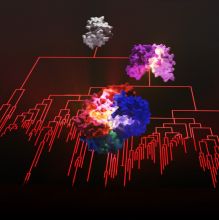
Most of the biological processes that keep us alive depend on multiple proteins working together. One of biology’s great puzzles is how this multitude of proteins and their complex interactions came to be.
Professor Louise Richardson, Vice-Chancellor of the University of Oxford, explores the international response to Covid-19 and the role of universities, who are working with colleagues across the globe to understand the disease and protect our communities.
From Darwin to the present day, creating a monograph is at the heart of biological science. It takes years of painstaking effort and attention to detail to describe and log each and every species in a genus, producing an encyclopaedic guide – the monograph. It is taxonomy at its most taxing.
Eleanor Stride has taken an unconventional path to becoming one of Britain’s leading scientists. She tells Sarah Whitebloom how she moved from dance to design and onto biomedical science, but being a 'woman in science' is not one of the identities she seeks.
When is a woman in science not a ‘woman in science’? When she is a woman in science.