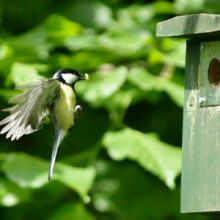
When oaks burst into life in spring populations of oak-leaf-eating caterpillars boom: this offers a food bonanza for caterpillar-munching birds looking to raise a family.
The electrical impulse that powers the workings of the brain and the heart begins with charged particles passing through cellular structures known as ion channels. Using the same technique used to decode the structure of DNA, an Oxford University team has been able to catch snapshots of an ion channel in action.
By recreating the extreme conditions similar to those found half-way into the Sun in a thin metal foil, Oxford University researchers have captured crucial information about how electrons and ions interact in a unique state of matter: hot, dense plasma.
Sexual reproduction produces new combinations of genes, a process that is thought to prevent the accumulation of harmful mutations. A study in Nature Genetics now provides the first experimental evidence that recombining genes stops harmful mutations from piling up in humans.
Today, at an event in London, the government has revealed the outcome of a review of UK regulations for driverless cars as well as the launch of trial projects in three locations.
Cyclic changes in the tilt of the Earth's axis and the eccentricity of its orbit have left their mark on hills deep under the ocean, a study published in Science has found.