Think of 'an academic' and your stereotype may well include a tendency to wordiness. In truth, while some may live up to that image, academic presentation is usually about distilling information rather than padding it.
We've been able to see them for over a hundred years, but only now are scientists beginning to get to the bottom of what's happening inside membraneless organelles – compartments within cells that really do have no boundaries.
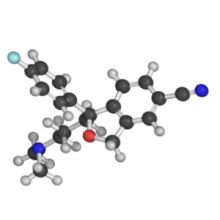
It can take some time before anti-depressant drugs have an effect on people. Yet, the chemical changes that they cause in the brain happen quite rapidly. Understanding this paradox could enable us to create more effective treatments for depression.
From fragrances and food flavourings to the building blocks of pharmaceutical drugs, fine chemicals – complex chemicals produced in small quantities to a high degree of purity – play a major role in our daily lives.
But producing these chemicals can come at a cost, both in monetary terms and the large amount of waste generated.
A team from Oxford University has teamed up with colleagues at Plymouth for a six week voyage of discovery around the North Atlantic on UK research ship RRS James Cook, as the Science Blog found out.
Let me start with a statement of the blindingly obvious: People are fundamental to health services. Design whatever health system you like but you'll still need people to deliver healthcare to those other people - patients.
People admitted to intensive care have experienced feelings of being trapped in metal tubes, alien abduction, and having a gun to their head, amongst other things. While none of this really happened, for patients struggling with hospital-acquired delirium they seemed all too real.
As reported by the BBC, scientists at Oxford University have built a mathematical model to explain the secrets of the chameleon's extraordinarily powerful tongue.
Previously, Science Blog has reported on the work of Dr Lingbing Kong in Oxford University's Department of Chemistry, who is exploring new methods of antibacterial vaccination that could combat the growing problem of antibiotic resistance.