
Oldest genetic evidence for domestic dogs identified in Europe and Türkiye
University of Oxford researchers have contributed to a new study which has uncovered the earliest genetic evidence for the existence of dogs. Using ancient DNA analysis, researchers identified dogs at archaeological sites dating to the Late Upper Palaeolithic, approximately 16,000–14,000 years ago – far earlier than the previous genetic record for dogs of around 10,900 years ago. The results have been published today in Nature.
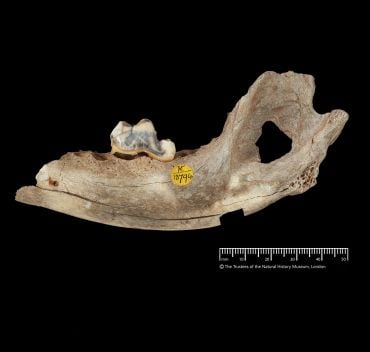 14,300-year-old dog jawbone from Gough’s Cave, UK © The Trustees of the Natural History Museum, London
Scientists have known that dogs emerged from grey wolf populations and they suspected that the process took place around the last Ice Age. Up to now, evidence from pre-agricultural archaeological sites has been limited and difficult to confirm. During the early phases of domestication, the skeletons of dogs and wolves were likely to have been indistinguishable, and their behavioural differences do not leave traces in the archaeological record.
Previous studies have mostly used very short DNA sequences and skeletal measurements to evaluate the earliest presence of dogs in the archaeological record. In this new study, the researchers recovered whole genomes from archaeological specimens excavated from Upper Palaeolithic sites. These included Pınarbaşı in Türkiye (dating to around 15,800 years ago) and Gough’s Cave in the UK (around 14,300 years ago), as well as two Mesolithic sites in Serbia (11,500–7,900 years ago and 8,900 years ago, respectively). They then compared the genomes with more than 1,000 modern and ancient dogs and wolves from across the world.
The results of these analyses confirmed that these bones belonged to dogs, and that they were already widespread across western Eurasia by at least 14,300 years ago.
Not only has this discovery pushed back the earliest direct evidence of dogs by 5,000 years, it also showed us that dogs and wolves were clearly separate, both biologically and in how humans interacted with them, at least 16,000 years ago.
Co-lead author Dr Lachie Scarsbrook (School of Archaeology)
Co-lead author Dr Lachie Scarsbrook (School of Archaeology, University of Oxford) said: ‘Not only has this discovery pushed back the earliest direct evidence of dogs by 5,000 years, it also showed us that dogs and wolves were clearly separate, both biologically and in how humans interacted with them, at least 16,000 years ago. This suggests that dog domestication likely took place sometime during the last Ice Age, more than 10,000 years before the appearance of any other domestic plants or animals, which really does secure their title as “man’s best friend”.’
These Palaeolithic dogs were genetically similar and were members of a population that expanded across the region between 18,500 and 14,000 years ago. They were more closely related to the ancestors of present-day European and Middle Eastern breeds, such as boxers and salukis, than to Arctic breeds like Siberian huskies. This indicates that today’s major dog genetic lineages must have been established by the Upper Palaeolithic.
Corresponding author Professor Greger Larson (School of Archaeology, University of Oxford) said: ‘By comparing the DNA from these ancient dogs with other ancient and modern populations, we were surprised to see just how closely related the earliest dogs were despite living more than 4,000 km apart. This suggests that the first dogs were a game changer and spread rapidly across Europe.’
We were surprised to see just how closely related the earliest dogs were despite living more than 4,000 km apart. This suggests that the first dogs were a game changer and spread rapidly across Europe.
Corresponding author Professor Greger Larson (School of Archaeology)
What role these dogs played in Palaeolithic communities is currently unclear. The remains were associated with several human hunter-gatherer populations that were genetically and culturally different. This suggests that the spread of dogs may have been linked to the migration and interaction of these groups, including Epigravettian and Magdalenian communities in Europe.
The study included an analysis of dietary isotopes led by researchers at the University of York and the Natural History Museum. This showed that people at Pınarbaşı likely fed dogs fish, which, together with evidence that the animals were intentionally buried, suggests a close interaction between people and their dogs. Suggestions of similar interaction were also seen at Gough’s Cave and a site in Germany, indicating dogs may have held cultural significance across Palaeolithic hunter-gatherer communities.
The study ‘Dogs were widely distributed in Western Eurasia during the Palaeolithic’ has been published today in Nature.
For more information about this story or republishing this content, please contact [email protected]

 Oxford tops QS World University Rankings in four subjects, named overall top for Humanities
 New study finds that stored sperm deteriorates across the animal kingdom
 Oldest genetic evidence for domestic dogs identified in Europe and Türkiye
 Expert Comment: From frontier to feedback loop - Why space must become circular
 Blood test may improve survival of childhood cancer in Africa
 Ancient DNA reveals new clues about the incredible journey of dogs in the Americas
 International research transforms understanding of the history of cats in Europe
 America’s very special relationship - with dogs.