New analysis of Deep Maniot Greeks reveals a unique genetic time capsule in the Balkans
A new genetic study has revealed that the people of Deep Mani, who inhabit one of the remotest regions of mainland Greece, represent one of the most genetically distinctive populations in Europe, shaped by more than a millennium of isolation. The findings, published today in Communications Biology, reveal that many lineages can be traced back to the Bronze Age, Iron Age, and Roman period of Greece.
Our study demonstrates how geography, social organisation, and historical circumstances can preserve ancient genetic patterns in certain regions long after they have become altered elsewhere.
Lead author, Associate Researcher Dr Leonidas-Romanos Davranoglou (Oxford University Museum of Natural History)
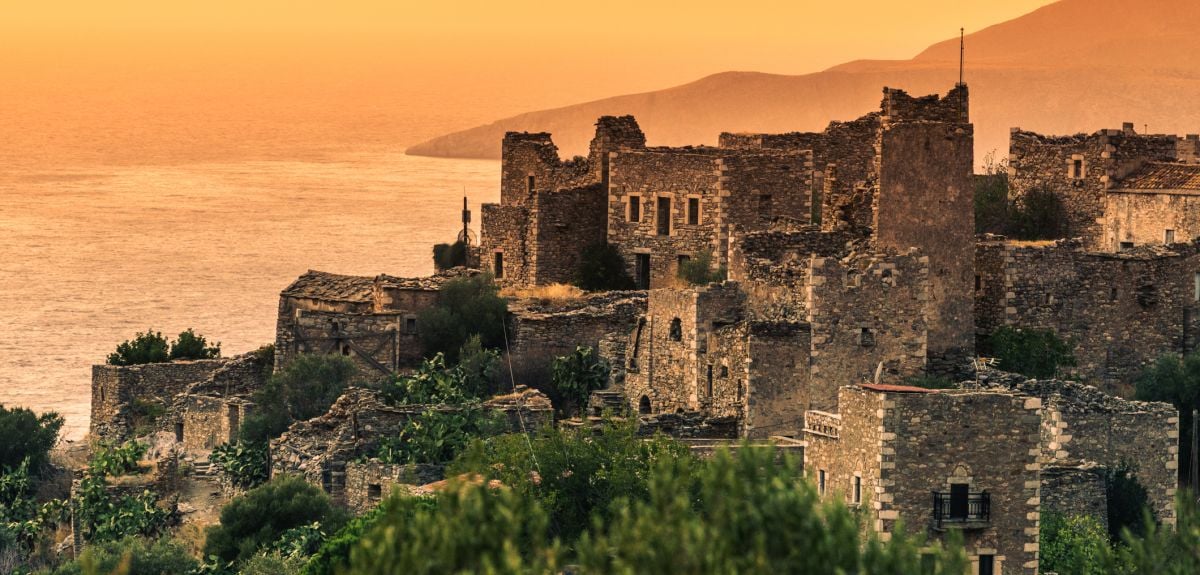
Set among rugged mountains, dramatic coastlines, and distinct stone tower houses, the Mani Peninsula of the Peloponnese, Greece, has long captivated travellers, historians, and writers, most famously, Jules Verne and Sir Patrick Leigh Fermor. Now, an international research group has found that the Deep Maniots living at the very southernmost tip of the peninsula form a rare genetic “island” within mainland Greece – predating the major population movements that reshaped the ancestry of mainland Greeks and other populations in the Balkans after the fall of Rome.
The research team, comprising scientists from the University of Oxford, Tel Aviv University, the National and Kapodistrian University of Athens, the Areopolis Health Centre, the European University Cyprus, and FamilyTreeDNA, found that Deep Maniots largely descend from local Greek-speaking groups living in the region before the Medieval era. In contrast to many other mainland Greek populations, they show little evidence of absorbing later incoming groups, such as the Slavs, whose arrival transformed the genetic and linguistic landscape of much of southeastern Europe.
The findings revealed that most paternal lineages trace back to Bronze Age, Iron Age, and Roman-era Greece. Their geographic and temporal dispersal lineages closely mirror the distribution of Deep Mani’s characteristic and globally unique megalithic residential and religious structures, supporting the hypothesis that present-day Deep Maniots may descend from the same communities that built and inhabited this landscape more than 1,400 years ago.
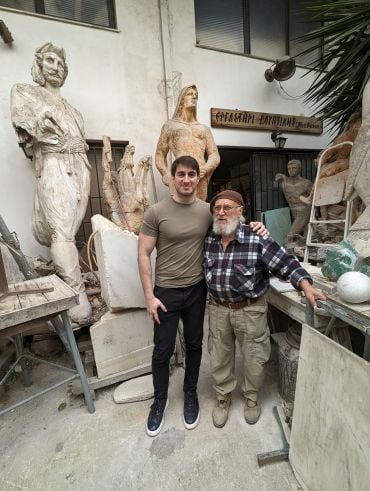 Lead author Dr Leonidas-Romanos Davranoglou (left) with Deep Maniot sculptor and painter Michalis Kassis. Credit: Vinia Tsopelas.
Maternal lineages, however, were found to be more diverse, reflecting sporadic contacts with populations from the eastern Mediterranean, the Caucasus, western Europe, and even North Africa. Senior author Professor Alexandros Heraclides (European University Cyprus) said: ‘These patterns are consistent with a strongly patriarchal society, in which male lineages remained locally rooted, while a small number of women from outside communities were integrated. Our study is the first to recover the untold histories of Deep Maniot women, whose origins were largely obscured by male-centred oral traditions.’
The study also revealed that over 50% of present-day Deep Maniot men descend from a single male ancestor who lived in the 7th century CE. Such an extreme pattern points to a period when the local population was reduced to very few families, likely because of plague, warfare, and regional instability. The results also indicated that the founders of some of the present-day Deep Maniot clans lived in the 14th and 15th centuries, suggesting that these clans may trace their origin to that period.
‘Many oral traditions of shared descent, some dating back hundreds of years, are now verified through genetics,’ said Athanasios Kofinakos, co-author and research advisor on Deep Mani genealogical and historical matters. ‘Deep Mani’s geographical isolation and limited economic resources galvanised the warlike character of the locals. In such a harsh environment, family alliances became paramount for individual and collective survival.’
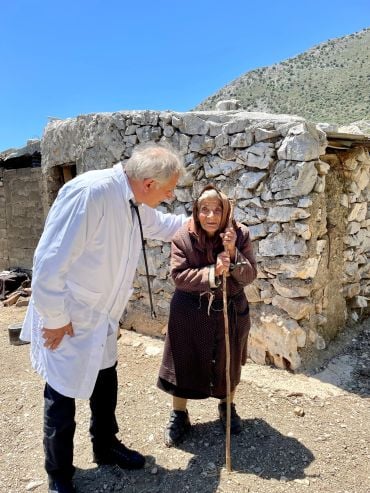 Anargyros Mariolis with a member of the Deep Maniot community. Credit: A. Mariolis.
The inhabitants of Deep Mani have long intrigued historians and archaeologists. While much of the Balkans experienced repeated waves of migration during Late Antiquity, historical sources describe Deep Mani as unusually resistant to outside control. Even the Eastern Roman Emperor Constantine VII Porphyrogenitus (905–959 CE) remarked on the Deep Maniots’ unusual origins, noting that they ‘are not of the lineage of the Slavs, but of the Romans of old who were called Hellenes.’* He further recorded that Deep Maniots continued worshipping the Olympian gods well into the 9th century,* which is an extraordinary oddity since the Empire had been fully Christianised many centuries earlier.
Together, these historical observations have long suggested that the inhabitants of Deep Mani followed a demographic and cultural trajectory distinct from much of the Greek-speaking world. The new genetic findings provide strong biological evidence supporting this view.
As many villages in Deep Mani are inhabited by a single clan, the research team worked closely with the community to ensure volunteers originated across multiple villages and clans, so that a representative range was included in the study. This approach was made possible by long-standing relationships of trust built over years of local medical and community service by co-author Dr Anargyros Mariolis, MD, Director of the Areopolis Health Centre.
The study ‘Uniparental analysis of Deep Maniot Greeks reveals genetic continuity from the pre-Medieval era’ has been published in Communications Biology.
For more information about this story or republishing this content, please contact [email protected]
* Constantine Porphyrogenitus, De administrando imperio , ed. G. Moravcsik, trans. English by R. j. H. Jenkins, Washington 1967.

 International trial finds rapid diagnostic testing alone does not reduce antibiotic prescribing for respiratory infections
 Oxford historian named 2026 Holberg Prize Laureate
 Researchers reveal a new class of molten planet
 New research reveals why some oesophageal cancers are so hard to treat
 Oxford and Serum Institute of India sign IP license agreement to advance NipahB vaccine candidate
 Ritual sacrifice or propaganda? Oxford-led research uncovers Europe's earliest victory rites
 Oxford chemists identify honey offering in a 2,500-year-old shrine
 Ancient linguistic clues reveal that the European Huns had Siberian roots