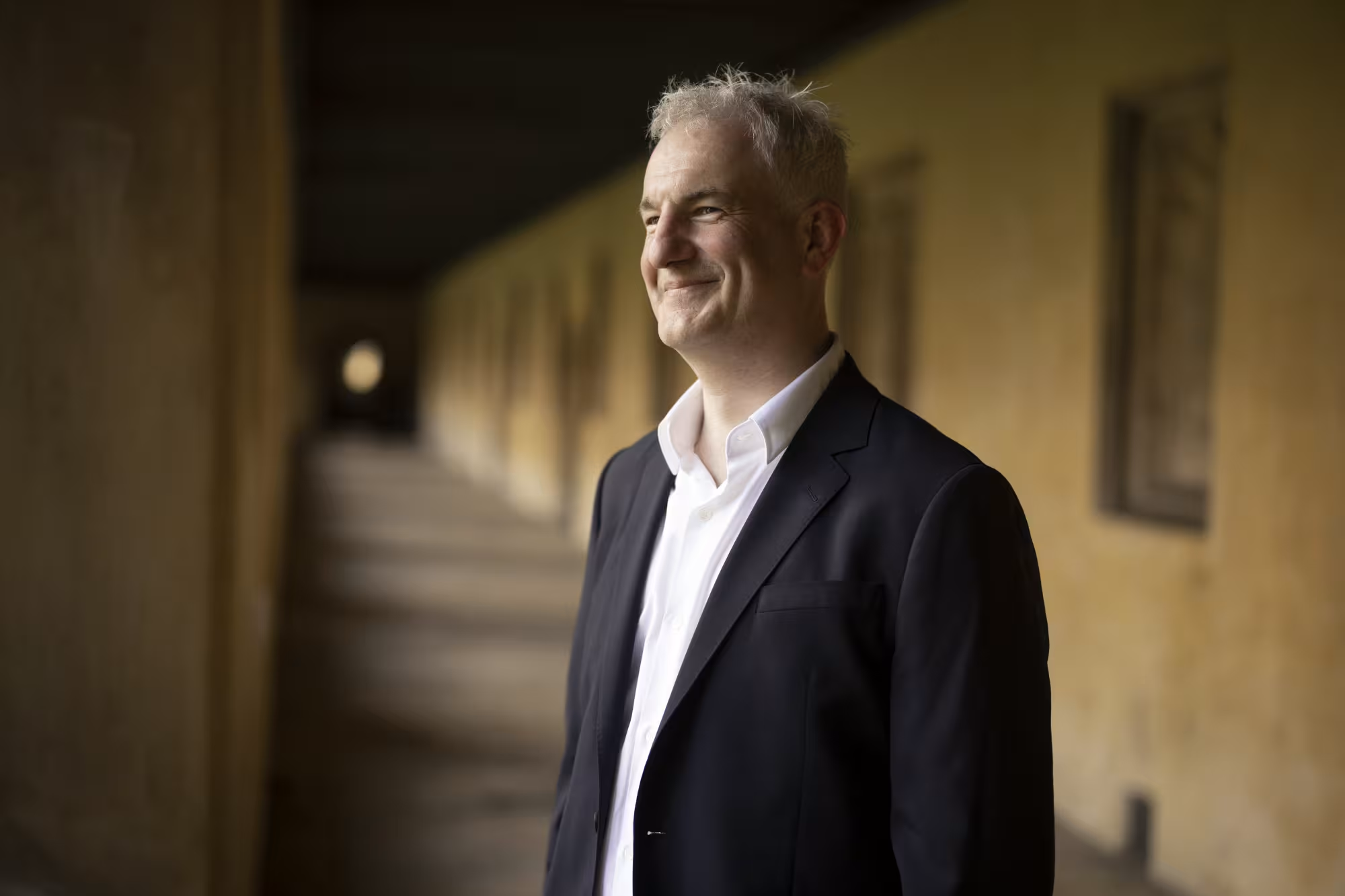
Professor Daniel Freeman
Chair of Psychology, Department of Experimental Psychology; Consultant Clinical Psychologist
Professor Daniel Freeman’s work aims to help improve the lives of people with mental health conditions by developing, testing and implementing new psychological interventions. Drawing on a variety of approaches, including epidemiological studies, psychological experiments, clinical trials and a ground-breaking virtual reality laboratory, he aims to develop carefully tested psychological treatments that will truly make a difference.
Academic profile
About
Professor Daniel Freeman is one of the UK’s leading clinical psychologists. His particular focus is on psychosis, especially the understanding and treatment of paranoia. He has developed the most effective psychological therapy for persecutory delusions: the Feeling Safe programme. He has also pioneered the use of virtual reality (VR) to assess, understand and treat mental health conditions. He has automated the delivery of psychological therapy in VR by use of a virtual coach.
He is committed to making knowledge of the best psychological research and treatments for mental health problems available to the general public. He has written a number of popular science books on mental health issues. Professor Freeman also presented the BBC Radio 4 series A History of Delusions.
Professor Freeman is a Fellow of the British Academy, British Psychological Society and the British Association of Behavioural and Cognitive Psychotherapies. He is a National Institute for Health and Care Research (NIHR) Senior Investigator. Professor Freeman works clinically in Oxford Health NHS Foundation Trust.
Expertise
- Mental health issues
- Paranoia
- Psychosis
- Schizophrenia
- Sleep difficulties, anxiety and depression
- Psychological therapy
- Cognitive behaviour therapy (CBT)
- Virtual Reality (VR)
Selected publications
- A 6-month supported online program for the treatment of persecutory delusions: Feeling Safer (2025)
- Paranoia: a journey into extreme mistrust and anxiety (2024)
- Developing psychological treatments for psychosis (2024)
- Explaining paranoia: cognitive and social processes in the occurrence of extreme mistrust (2023)
- Automated virtual reality therapy to treat agoraphobic avoidance and distress in patients with psychosis (gameChange) (2022)
- Virtual reality in the treatment of persecutory delusions: randomised controlled experimental study testing how to reduce delusional conviction (2016)
- Effects of cognitive behaviour therapy for worry on persecutory delusions in patients with psychosis (WIT): a parallel, single-blind, randomised controlled trial with a mediation analysis (2015)
- How cannabis causes paranoia: using the intravenous administration of ∆9-tetrahydrocannabinol (THC) to identify key cognitive mechanisms leading to paranoia (2015)
- The Stressed Sex: Uncovering the Truth about Men, Women, and Mental Health (2013)
- Paranoia and post-traumatic stress disorder in the months after a physical assault: a longitudinal study examining shared and differential predictors (2013)
Media experience
Professor Freeman has extensive media experience including national print and broadcast. He is a regular contributor to The Guardian.
Recent media work
- View all Professor Daniel Freeman's editorial in The Guardian here
- BBC Radio 4 series: A History of Delusions (BBC Radio 4, 2018)
- Google explores troll prevention in VR (BBC News, 2016)
- Paranoia 'reduced with virtual reality' (BBC News, 2016)
- Virtually life changing! VR headsets can cure paranoia by making wearers feel safe while facing their fears (Daily Mail, 2016)
- VR Virtual reality: the next frontier (Financial Times, 2016)
- Do tall people really deserve to earn more? (The Guardian, 2015)
Languages
EnglishProfessor Daniel Freeman: Understanding Paranoia and Extreme Mistrust