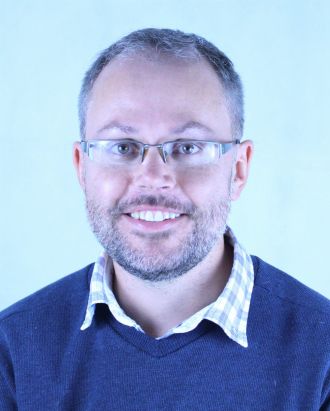
Dr Tim Viney
About
Dr Tim Viney is an Associate Professor of Neuroscience whose research focuses on how different types of brain cells support memory, navigation, orientation and other cognitive functions, and how these processes are disrupted in neurodegenerative disease. His work examines how networks of nerve cells, together with supporting brain cells such as glial cells and vascular cells, encode information and enable the recall of past experiences.
His research group records the electrical activity of individual nerve cells in awake, behaving mice and links this activity to each cell’s chemical identity and its connections within brain circuits. Using this approach, Dr Viney studies how coordinated patterns of activity (network oscillations) emerge in the brain and how they contribute to behaviour. In parallel, he investigates early pathological changes in the ageing human brain that can lead to memory loss, particularly in Alzheimer’s disease and other forms of dementia. A key aim of his work is to identify which specific brain cell types are most vulnerable to neurodegeneration and to understand how misfolded proteins (amyloids) begin to spread through brain circuits. This knowledge is intended to inform the development of more targeted, cell-type-specific therapeutic strategies.
Dr Viney completed his PhD at the Friedrich Miescher Institute in Switzerland, where he identified several distinct types of nerve cells in the mouse retina that contribute to both visual and non-visual functions. This work combined advanced electrophysiological recordings and two-photon laser microscopy with anatomical tracing and immunohistochemistry. After moving to the University of Oxford, he studied how inhibitory nerve cells regulate so-called 'place cells' in the hippocampus, a brain region essential for memory and spatial navigation. He later extended this work to other memory-related brain regions, including the basal forebrain and the thalamus. Parts of the thalamus play a crucial role in spatial orientation (our sense of direction) and are among the brain areas that show the earliest vulnerability in neurodegenerative disease, making them a central focus of his current research.
Expertise
- Neurodegenerative diseases: dementia, tauopathies, Alzheimer’s disease
- Memory and spatial cognition: memory formation, navigation, spatial orientation
- Brain circuit function: network oscillations, action potentials, excitation and inhibition
- Cell types and structure: nerve cells (neurons), glial cells, vascular cells, axons, dendrites
- Neuroanatomy (structure of neural circuits and regions)
- Neurophysiology (electrical activity and network dynamics)
- Neuropharmacology (receptors, channels, neurotransmitters, drug mechanisms)
- Experimental methods: in vivo electrophysiology, behavioural testing, light and electron microscopy, immunohistochemistry
Selected publications
- Pathological tau alters head direction signaling and induces spatial disorientation (2025)
- Early and selective localization of tau filaments to glutamatergic subcellular domains within the human anterodorsal thalamus (2024)
- Spread of pathological human Tau from neurons to oligodendrocytes and loss of high-firing pyramidal neurons in aging mice (2022)
- Sleep down state-active ID2/Nkx2.1 interneurons in the neocortex (2021)
- GABAergic Medial Septal Neurons with Low-Rhythmic Firing Innervating the Dentate Gyrus and Hippocampal Area CA3 (2019)
- Shared rhythmic subcortical GABAergic input to the entorhinal cortex and presubiculum (2018)
- Temporal redistribution of inhibition over neuronal subcellular domains underlies state-dependent rhythmic change of excitability in the hippocampus (2014)
- Network state-dependent inhibition of identified hippocampal CA3 axo-axonic cells in vivo (2013)
- Local Retinal Circuits of Melanopsin-Containing Ganglion Cells Identified by Transsynaptic Viral Tracing (2007)
Media experience
Dr Tim Viney has experience of print media and presenting his research in video interviews.
Recent media work
Languages
English